Using writing, and meditation, and ice cream, and reading, and dreams,

and a whole lot of other tools to rediscover who I am,

after six years living with a man with OCPD.


Showing posts with label Mental disorder. Show all posts

Sunday, June 9, 2013

Bud Clayman vs. Bradley Cooper

Bradley Cooper is, to conventional wisdom, HAWT. Yet another BC, once upon a time, was also HAWT.

Here's Bradley Cooper depicting Pat, from Silver Linings Playbook, with Oscar winner Jennifer Lawrence and an all-star cast:


And here's Bud Clayman in OC87: The Obsessive Compulsive, Major Depression, Bipolar, Asperger's Movie


What's the difference, besides Bradley Cooper being an actor who can quickly move on to The Hangover, Part Eleventy-Seven, or the next Hollywood flick?

Not so very much. As I discovered when my friend Sidney Patrick and I caught a showing of OC 87 on my birthday last June, BC (Bud Clayman) was sexy, charming, and smart... before mental illness tackled him.

There is no vaccine against mental illness.


Catherine Zeta-Jones
Cover of Catherine Zeta-Jones
It happens to smokin' hot men and sexy girls. (Charlie Sheen and Catherine Zeta-Jones, anyone?)

It is not nearly as glamorous in real life as in the Hollywood version.

Drugs have real side effects, like weight gain and sleepiness, which is why many mentally ill people resist or refuse to take them. They also have real co$t$, which is why some people who would take them, if they could only afford then, aren't on their meds, or are taking half the recommended dosage.


I was blown away by the lineup of pill bottles prescribed to Bud Clayman, to keep him approaching normalcy.

via OC87
And yet, I have to applaud Bud's courage in fighting his way back to sanity. It takes a hella lot more courage to swallow the pills, than to not swallow them.


Wheelchair Warriors Are Our Heroes. The Mentally Disabled? Not so  much.


Except in Hollywood. Hollywood loves the Drama of Mental Illness. But it generally glosses over the ugly dangly bits. Casts glamorous actors and actresses in the parts of the mentally ill, and almost never allows them to get fat, too dirty, or otherwise unphotogenic.


Cover of "Girl, Interrupted"
Cover of Girl, Interrupted
Maybe you've seen some of these:

  • Psycho
  • Sybil
  • A Beautiful Mind
  • Girl, Interrupted
  • Rainman
  • The Fisher King
  • One Flew Over the Cuckoo's Nest
  • Black Swan
  • Matchstick Men
  • The Aviator
  • Fatal Attraction
  • Lars and the Real Girl

There are hundreds more.

IRL (In Real Life), the people struggling with mental illness or developmental disabilities, like autism, can't call "cut" at the end of the scene and go back to "being normal."

I very much enjoyed Silver Linings Playbooks, which I caught on my friend Sid's birthday weekend. Sadly, unlike OC87 which she and I watched together on my birthday weekend, I had to see Silver Linings without her, because only a few months after OC87, the long term effects of living with a mentally disordered partner, and alcoholism, had taken Sid's life.

I encourage you to buy, rent, or stream, the much lesser known documentary OC87.


And support mental health issues. Via contributions to NAMI, and encouragement to your government representatives to provide funding and research grants for mental health issues.

Today, you may be one of the few lucky ones, with no family members or loved ones affected. Tomorrow?

Follow my blog with Bloglovin
Your thoughts?
 Related articles
Enhanced by Zemanta

Monday, April 23, 2012

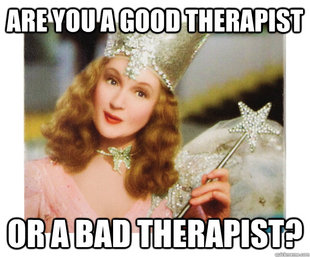
A-Z: Therapy Is Not A Dirty Word

IMO, more people are afraid of a bad therapist than a bad marriage. Generally those who've experienced a disastrous love relationship will be willing to try again with a new partner, but if they've had a bad therapy experience...!

Besides which, there's a huge stigma factor.

When we hear that someone has been "in therapy" for an extended period of time, our initial reaction is not, "Oh, what a brave and courageous person. Kudos to her/him for facing her/his issues head on and getting the help s/he needs." It's more along the lines of, "Wow, that person must be really f---ed up."Am I right?

I am ashamed to admit, I tend to think that way - and I know better! I've had long term counseling myself, and I'd do it again tomorrow.

Sometimes people get stuck in a rut, whether that rut is grief, PTSD, or choosing bad relationships. If our car is stuck in a rut, would we feel ashamed or embarrassed to need a little push getting out of the ditch? (Okay, maybe a little embarrassed, depending on how we got into that ditch.)

But if we'd been in a car accident, and needed physical therapy to recover the use of, say, an arm, wouldn't we commit to it for as long as it took to get the maximum use of our arm back?

Yes, there are personality clashes, and sometimes, despite any number of impressive degrees, we may have hit on a "bad" therapist, but mostly, therapy fails because:
  • We aren't seeing the right kind of therapist.
  • We aren't getting the right kind of therapy.
  • We aren't committed to the very hard emotional homework of being honest with our therapist, and working on the exercises or changes s/he suggests.
Here's the different types of therapists:
  • Psychotherapist
  • Psychologist
  • School Psychologist
  • Psychiatrist
  • Mental Health Counselor
  • Marriage & Family
  • Social Worker
  • Psychiatric Nurse
  • Pastoral Counselor
The amount of education and training required for each varies, from none to a substantial amount. A psychiatrist is actually an M.D. and can write prescriptions for medications (in a few states, so can a psychologist), but generally a psychiatrist will refer any ongoing therapy work to a psychologist.

Because someone is "lower on the food chain," does not necessarily mean he or she will be an ineffective therapist. For some problems and disorders, medication is not indicated.  For others it may be helpful on a short-term basis in conjunction with CBT or other brain retraining exercises; and for some people, long-term medication may be necessary. In yet others inpatient care may be required. A nutritionist may add needed support.

A good therapist will recognize when a client needs more help than s/he can provide, and be eager to steer her/his client to the right kinds of additional help.

Different types of therapy include:

  • Psychoanalysis
  • Cognitive Behavior Therapy (CBT)
  • Dialectic Behavior Therapy (DBT)
  • Antipsychotic and/or antidepressant medications, and/or mood stabilizers

A treatment once promoted, which fell into some disrepute, and now gaining some proponents is ECT (Electroshock Therapy) as a treatment for bipolar disorder and depression. Diet modification, music therapy, group therapy, yoga and mindfulness exercises; all can form an integral part of helping a person become as whole and mentally healthy as possible.


The most important factor in therapy success is being committed to it. If we are not willing to embrace the process and say, "Yes, this area of my life is causing me and my loved ones too much pain. I will do whatever it takes to make it better for everyone I love - including me," then no matter how experienced and skilled the therapist, no matter how effective the treatment, it's not going to work.

Changing lifelong behaviors and thinking patterns is hard, hard work. In an earlier post, I compared it to shifting the course of the river - the river tries to flow along the same channels it always has. This is where medication in partnership with therapy often works well, interrupting the old patterns long enough for new ones to form (they say about 90+ days is the minimum time frame to quit an old habit or form a new one).


I know people who are diagnosed as mentally ill who religiously follow their medication, exercise, diet, and therapy regimes. I know others diagnosed as mentally ill who are willing to try certain therapies but not others. I know some who refuse to see any kind of counselor, under any circumstances, even if it means being fired from a job or losing a spouse or partner, using the excuse of, "I saw a therapist once, and it didn't help." They believe all it takes is willpower and determination to not be disordered.

Guess which group is most successful at managing their condition?


My A-Z theme is Issues related to Mental Health or Mental Illness.

Have you ever had good or bad therapy?
Would you be willing to try it again?
Why or why not?
Enhanced by Zemanta

Tuesday, April 3, 2012

A-Z: Compulsion - That Irresistible Urge


Obsession and Compulsion go together like peanut butter and jelly, like love and marriage, like Wal-Mart and the sartorially-challenged.

But, sometimes, the cheese stands alone.

My A-Z theme is Issues related to Mental Health or Mental Illness.

From Dictionary.com:


com·pul·sion

   [kuhm-puhl-shuhn]  Show IPA
noun
1.
the act of compelling;  constraint; coercion.
2.
the state or condition of being compelled.
3.
Psychology . a strong, usually irresistible impulse to performan act, especially one that is irrational or contrary to one'swill.


When I think of compulsion, all by itself, I often think of Sleeping Beauty.  She was spelled and compelled to touch the spindle of the spinning wheel.  Was there a good reason? No. Was she really thinking about it? No. She did it, because she felt she had to.

Other behaviors can include compulsive eating. (A bowl of M & M's are dangerous for me.  If they're in front of me, I will keep eating them, hungry or not.)

I'm also a reformed nail-biter.  Other body habits that are compulsive (and really gross) include hair-pulling, skin picking, blemish squeezing, and a few other BFRB's. (Body-Focused Repetitive Behaviors), like nose-picking.

Yuck. Anybody still want that PB & J?

Compulsion is like a sneeze, or an itch that must be scratched.

Often, compulsion is part of the OCD or OCPD spectrum.  Someone with OCD may feel that she just can't do anything else until she flips a light switch on and off exactly eight times, or washes her hands five times.  An OCPD'r may feel that if he was shopping for groceries, and an item was omitted from the list, it cannot be purchased, even if he's standing right in front of the item, because items must be on the list first, before they can be purchased.

Compulsions are mindless, for the most part. How can you tell if you've crossed the line?

from Wikipedia:
People rely on compulsions as an escape from their obsessive thoughts; however, they are aware that the relief is only temporary, that the intrusive thoughts will soon return. Some people use compulsions to avoid situations that may trigger their obsessions. Although some people do certain things over and over again, they do not necessarily perform these actions compulsively. For example, bedtime routines, learning a new skill, and religious practices are not compulsions. Whether or not behaviors are compulsions or mere habit depends on the context in which the behaviors are performed. For example, arranging and ordering DVDs for eight hours a day would be expected of one who works in a video store, but would seem abnormal in other situations. In other words, habits tend to bring efficiency to one's life, while compulsions tend to disrupt it.
That's the key - does the compulsion interrupt one's life?  Does it bring pain and discomfort to the person who behaves compulsively, or to those around him/her?  If one was aware of the behavior, would one choose to stop, or keep eating those M & M's?

And then there's the compulsiveness attached to hoarding, which I'm not even going to get into now.

Mindfulness.  Therapy.  Meds if required.  If something is making your life worse, take whatever steps are necessary to make it better.


My A-Z theme is Issues related to Mental Health or Mental Illness.


Do you have any compulsions?
If you stopped, how did you stop?
Your thoughts?
Enhanced by Zemanta

Monday, April 2, 2012

A-Z: Borderline - Not Just a Tune You Can Dance To

People think "borderline" means part of this, part of that.  Perhaps the concept of borderline as being on the edge may be helpful in understanding Borderline Personality Disorder.

My A-Z theme is Issues related to Mental Health or Mental Illness.


Unfortunately, the real Borderline Personality Disorder doesn't come with choreography and cute hats.  It also goes beyond "being a little moody" or having PMS.

From NCBI, US National Library of Medicine:

People with BPD are often uncertain about their identity. As a result, their interests and values may change rapidly.
People with BPD also tend to see things in terms of extremes, such as either all good or all bad. Their views of other people may change quickly. A person who is looked up to one day may be looked down on the next day. These suddenly shifting feelings often lead to intense and unstable relationships.
Other symptoms of BPD include:
  • Fear of being abandoned
  • Feelings of emptiness and boredom
  • Frequent displays of inappropriate anger
  • Impulsiveness with money, substance abuse, sexual relationships, binge eating, or shoplifting
  • Intolerance of being alone
  • Repeated crises and acts of self-injury, such as wrist cutting or overdosing

Borderline Personality Disorder AwarenessBorderline Personality Disorder Awareness (Photo credit: Gemma.E.Taylor)


While they offer support and resources to people dealing with all Personality Disorders, the excellent site Out of the Fog was initially created by partners of those suspected or diagnosed with Borderline PD.  (Note: the DSM-V, currently under review and due "out" in 2013, may be renaming this disorder as Emotional Regulation Disorder (ERD) or Emotional Dysregulation Disorder (EDD).)

Suggested treatment includes DBT, Dialectical Behavior Therapy.

As with any mental disorder, your mileage may vary.  For anyone in a relationship with a disordered person, getting help for yourself and keeping the lifeline open to family, friends, and other support is vital.


My A-Z theme is Issues related to Mental Health or Mental Illness.


Do you know someone with Borderline Personality Disorder?
Do you have any good tips for managing a relationship 
with such a person?  Your thoughts?
Enhanced by Zemanta

Sunday, April 1, 2012

A-Z: Don't Forget About Anosognosia

1212mentalhealth-RW(Photo credit: Robbie Wroblewski)Anosognosia is a condition we're all familiar with, we just don't know the word.

My A-Z theme is Issues related to Mental Health or Mental Illness.

Self awareness springs from... the brain.  (stay with me here) When you stub your toe, yes, you feel the pain in your toe, but it's because the brain processes the messages from the nerve endings in your toe and sends back the message, "Pain.  Sharp, severe pain.  Cussing will commence now."

Pain is the body's way of saying, "Danger here, pay me some attention!"  Injuries like a stubbed toe can become seriously infected in a paralyzed person, because without pain, there is often no awareness of injury.

The brain also updates us on our general health and mental condition.  Every night, when we sleep, it "reboots," and we wake up in the morning, conscious that we are XX many years old, that we have a cold or a backache, and that we are happy or heartbroken.

In some people, with physical brain damage due to accident or stroke, and in some people with mental illness (who may also have physical damage to or abnormalities of the brain) the brain doesn't seem to "reboot" properly.  It restores an old backup, one that is not updated with the latest patches.  (Think the movie 50 First Dates.)

So the person who, yesterday, fully acknowledged his bi-polar disorder and the need for staying on his medication, may today insist he is just fine.  Not bi-polar, never been bi-polar - are you crazy?  Why would he need to take meds?

What we are coming to realize is that many people are not simply "in denial."  Yes, some people are, but others, genuinely and completely don't realize there is anything wrong with their brain because their brain tells them, "Everything's fine, move along, move along, nothing to see here."

There's an excellent book on the subject by Xavier Amador, who has pioneered a technique called LEAP to assist families and partners in dealing with those who insist, "I AM NOT SICK! I Don't Need Help!"

While anosognosia has not been intensively studied in mental disorders such as OCPD and Alzheimer's, the basic principles of Listen, Empathize, Agree, and Partner can also be applied to relationships where one person has that disorder, or even a boss or co-worker who's "difficult."

via SamirBaradwaj
Remember the parable of the Wind and the Sun, who had a contest to see which one could get a man to take off his cloak?  The harder the Wind blew, the harder the man clung to it.

Browbeating others to agree with us is simply something that doesn't "stick," long-term.  Those with OCPD and other illnesses seem to be most responsive to a person that they trust pointing them in certain directions.  Establishing that trust is the best way to work towards the goal.

The goal can't be to make the disordered person say, "By Jove, you're right.  I am wacko."  The goal is to persuade him/her to take some action: take their meds, throw away some of their hoard, stop nitpicking at one's child...


My A-Z theme is Issues related to Mental Health or Mental Illness.

Have you had any experiences with anosognosia in your life, 
either your own, or a loved one's?
Have you tried to blow somebody's cloak off with an argument?  
How'd that work?  Other thoughts?
Related articles
Enhanced by Zemanta

Friday, March 23, 2012

Trayvon Martin, George Zimmerman & Mental Illness

Kel-tec PF9 9mm via Wikimedia Commons
Is there anybody who has read in any depth about the stalking and killing of Trayvon Martin by George Zimmerman, who didn't start thinking, "That guy is crazy"?  Not simply racist (and I'm not trying to minimize the racial targeting aspect), but clearly, the guy was not in his right mind.

It goes beyond that for me.  I recognize some telltales that send chills down my spine.

If you're new to this blog, the Cliffnotes version is that I strongly believe my ex, although undiagnosed,  to have a mental  illness called OCPD.  It's a disorder that, despite being relatively common, many people have never even heard of.  It's often confused with OCD, even by mental health professionals.

And although most people with OCPD, just like those with every other mental illness, are more likely to be victims of a crime than perpetrators, I believe that some individuals with undiagnosed, untreated OCPD are currently a danger to themselves, their families, and the community at large.

Since I'm not a mental health professional, they won't take away my license if I speculate. So let me make my case for why I think this guy might have OCPD.

One person diagnosed with OCPD, related online how before his condition was better controlled, he walked around his neighborhood for hours every night, looking in parked car windows with a flashlight, to find and stop people "doing something wrong."  He was obsessed with protecting his family by catching...?  Car thieves? Teenagers and adulterers making out? Kids smoking a joint?   (This man was in the Midwest, not Florida, so it's not the same person.)

One of the markers of OCPD is:
  •  Is overconscientious, scrupulous, and inflexible about matters of morality, ethics, or values (not accounted for by cultural or religious identification)
Another (official) marker is this:
  • Adopts a miserly spending style toward both self and others; money is viewed as something to be hoarded for future catastrophes
The key phrase there is: future catastrophes, which is only lightly touched on in current versions of the DSM.  Those with OCPD almost always have catastrophic thinking.

If the forks are turned the wrong way in the dish drainer, you could prick your finger, develop blood poisoning, and die.  (Yes, more than one person with OCPD has explained this to me.)  An unlocked and open window at night on the second floor could invite a burglary.

If I was five or ten minutes late coming home from work, my ex never assumed, "Gee, she's working late," or "Maybe there was traffic."  He was sure I was in a car accident, or sleeping with my boss, or had been kidnapped and raped.  I would face furious tirades when I got home from work five-ten minutes late, and hadn't called (because I was rushing home) to let him know that everything was okay.  His mind always went to the dark place first.

And yes, my ex had weapons, ammo, and contingency plans for barricading the house and fending off intruders if there were earthquakes, riots, or other "civil unrest."

from one man with OCPD:
A couple of times a day the anxiety or gloom goes completely gaga and turns into catastrophe thoughts. That’s when the world really turns dark and sinister. That’s when I’m sure my wife and kids are being raped, murdered, kidnapped. They have been in car crashes and my wife must be seeing another guy. I get scared to the point of vomiting. These catastrophe thoughts will probably never leave me, but I am learning to control them.

A funny thing is that the catastrophe thoughts are always directed outwards. I’m never scared for my own safety. I’ve been a security guard for more than ten years, and I have never been worried in the line of duty. But if my wife’s ten minutes late, I’m a wreck. Again, it is “loss-of-control” issues. If my wife’s late I can’t do anything. If I run into a burglar I can do something about it myself.
One woman I know, recently divorced from her husband, talked about an incident when her husband was walking their small dog.  A car was passing by, full of teenagers, and one of them leaned out and yelled, "Nice dog, a--hole!"  The man was so infuriated he ran up to the car (it had stopped at a stopsign), yanked the 16 year-old out of the car, and punched him in the face.

He was arrested for assault, put on probation, but did not regret his actions, only the "unfair" restrictions his conviction put on him.  According to my friend, he felt fully justified in "punishing" the teenager and frequently said, if the circumstances were to repeat, he'd do it again.  Because "they can't be allowed to get away with stuff like that."

Here's another story from a wife with a suspected OCPD husband:
He has trouble with people: hates people who double park in front of the grocery store, hates people who throw their cigs out the window of a car, hates people who have big trucks, hates baby boomer generation, hates teenagers because they're stupid, blah, blah, blah...I could go on, but I'm sure you all get the picture.
He has had altercations with landscapers at our country club because he thinks they don't respect members. He's real big on respect: respect his space, his right to peace and quiet, etc and he gets enraged and has panic attacks to some degree if people don't act accordingly within his parameters of what is right. He hates liberals, gays, blacks, etc. He blathers on about how women have stripped men in America of their manhood and how he's the poor white man in America who gets no respect. He says he's tired of working hard for immigrants and those on welfare to benefit from his contribution to their system, etc. 
So, here's what MotherJones reporter Adam Weinstein gleaned from the 47 page police report logs of incoming calls by Zimmerman:
Most of the calls seem to cover mundanities: Zimmerman reported a male driving with no headlights; a yellow speedbike popping wheelies on I-4; an aggressive white-and-brown pitbull; an Orange County municipal pickup cutting people off on the road; loud parties; open garage doors; and the antics of an ex-roommate, Josh, that he'd thrown out of their apartment. On September 9, 2009, he called to report another pothole, this one on Greenwood road, advising the dispatcher that "it is deep and can cause damage to vehicles."
He especially had concerns about kids in the neighborhood. On June 16, 2009, shortly after school had let out for the summer, he called to complain about six to eight youths playing basketball near his development's clubhouse, "jumping over the fence going into pool area and trashing the bathroom," according to the dispatcher's notes. This past January, he called to report five or six children, ages 4 to 11, playing in the neighborhood. The kids, he told a dispatcher, "play in the street and like to run out [in front of] cars."
But when there weren't kids or garbage to report, he'd spend his evenings looking for would-be burglars. At 2:38 a.m. on Nov. 4, 2006, he called about a late-model Red Toyota pickup "driving real slow looking at all the [vehicles] in the complex and blasting music from his [vehicle]." It's not clear if Zimmerman feared the driver was a car thief, though car thieves tend not to blast music through the neighborhood while practicing their craft.
But even more than cars, he was concerned about black men on foot in the neighborhood. In August 2011, he called to report a black male in a tank top and shorts acting suspicious near the development's back entrance. "[Complainant] believes [subject] is involved in recent S-21s"—break-ins—"in the neighborhood," the call log states. The suspect, Zimmerman told the dispatcher, fit a recent description given out by law enforcement officers.
Three days later, he called to report two black teens in the same area, for the same reason. "[Juveniles] are the subjs who have been [burglarizing] in this area," he told the dispatcher.
And last month, on Feb. 2, Zimmerman called to report a suspicious black man in a leather jacket near one of the development's units. The resident of that townhouse, Zimmerman told dispatch, was a white male. Police stopped by to investigate, but no one was there, and the residence was secure.
How many calls to the police have you made in your life?  I'm betting if you're under 30 years old it's not even 4-6 times, let alone 46.  Yes, I too have called police to report domestic disturbances, dead animals in the road, and a few annoyingly loud parties.  And we should call and report these things to the appropriate agencies.

Zimmerman, however, seems to have been obsessed with reporting anything out of place.  People with OCPD tend to get very upset when they perceive things as out of place. This can be cans in the cupboard, a drop of water on the counter, or, perhaps, a young black kid in a hoodie.

Why does it matter?  Whether Trayvon was killed because of mental illness, or racism, or some combination of the two, he's still gone. I keep wanting to call him JAYvon, because that sweet face reminds me so much of my own son at his age, nicknamed Jay. When I touch the edges of this whole mess in my mind, I'm overwhelmed with grief and anger. How his parents manage to suck air in and out right now, I can't imagine.

It matters if Zimmerman is mentally ill, if Jared Loughner is mentally ill, if Andrea Yates and others who commit violent crimes are mentally ill because laws and social disapproval can't stop them. Laws and civil suits can punish the behavior after it's occurred, but they can't prevent similar murders from happening, time and again.

Obsession and fear is a deadly combination.  Add easily obtainable lethal weapons to the mix and the potential for tragedy increases even more.

We need to pay attention to mental illness, instead of cutting budgets for sufferers and their families.  We need to stop stigmatizing those brave enough to step forward and ask for help for everything from depression to OCPD to bi-polar disorder.  We need to spread the word about how much untreated mental illness hurts us all, from decreased productivity at work (for sufferers and families alike), to its impact on sexual assault and domestic violence.

Mental illness is the modern elephant in the living room, like alcoholism used to be.  Today, many people openly talk about being recovered alcoholics, or drug addicts, or gamblers.  Yet almost no one talks openly about having a mental illness, or having a loved one with a mental illness.  We tiptoe around it and pretend it's not there.

We need to study disorders like OCPD, to support those willing to battle the condition, and the families who live with a spouse, parent, child, or sibling with this condition. While the vast majority of those with OCPD will never physically hurt anyone, there are others out there, untreated, daily growing more paranoid and obsessed, who could very well "lose it" at any moment and hurt any number of innocent victims.

I know we can't prevent every tragedy from occurring, but we could prevent a lot more, if we so choose.


May the parents and family of Trayvon Martin find peace,
and justice in the end.
Enhanced by Zemanta