Using writing, and meditation, and ice cream, and reading, and dreams,

and a whole lot of other tools to rediscover who I am,

after six years living with a man with OCPD.


Showing posts with label stress. Show all posts

Monday, January 28, 2013

What Now, Brown Cow?


Now that we've finished Too Perfect, what's up next?

For me, perhaps, a bit of a break for a few weeks. Since the death of my beautiful friend Sidney in October, I have not only been struggling with grief and emotional pain, but also with severe physical pain.  Recently, after various exams, x-rays, MRI's,and other tests, I've been diagnosed with "frozen shoulder."

Fire shoulder might be a better description, of the way it feels. The treatment includes a cortisone shot (got it) and physical therapy. I'm also getting aquatic therapy, and it is improving, if more slowly than I might wish.

Note to self - there is a reason they tell you to pull the belt on the flotation belt tightly. Because it bugs when the thing rides up to just under your armpits.

It is also recommended that I stay away from the keyboard, as much as possible. So, while I'm not abandoning this blog, I may take some time off (or, depending on whether the Muse is jabbing me in the back, I may not).

As far as upcoming book reviews and discussion, the book that got the most votes in our survey was Lundy Bancroft's Why Does He Do That? Inside the Minds of Angry & Controlling Men.


From the Book Description:

"He doesn't mean to hurt me-he just loses control."
"He can be sweet and gentle."
"He's scared me a few times, but he never hurts the children-he's a great father."
"He's had a really hard life..."

Women in abusive relationships tell themselves these things every day. Now they can see inside the minds of angry and controlling men-and change their own lives. In this groundbreaking book, a counselor shows how to improve, survive, or leave an abusive relationship, with:

€ The early warning signs
€ Nine abusive personality types
€ How to tell if an abuser can change, is changing, or ever will
€ The role of drugs and alcohol
€ What can be fixed, and what can't
€ How to leave a relationship safely

Please, buy your own copy of the book  - put a book cover on it, if you must for your own safety, and tell your husband you're reading 50 Shades of Grey.  Get it on an e-reader.  If reading is difficult for you, get the audio version. Check it out from your library.  (Did you know you can also get e-books from the library?)

Let's read and discuss it together. I would also add - even if your angry and controlling person is female, there are many, many insights in this book that will be valuable to you.

Now off to make sure I have my towel and swimsuit. Hoo-boy, I am very grateful the water therapy ain't being videotaped, because I look like a dying whale thrashing around in the pool.

Enhanced by Zemanta

Tuesday, August 7, 2012

Too Perfect Tuesdays - Chap 9 - Work As A Means of Control

via Stuart Miles at FreeDigitalPhoto
This post continues with The Driving Forces: WORK AS A MEANS OF CONTROL from Chapter Nine.

This series looks at a small snippet of The book on the Perfectionist Personality, aka The Obsessive Compulsive disordered Personality, aka OCPD, each week. Please follow along, leave your comments, engage more on the FaceBook website... whatever your heart calls you to do.


When Being in Control Gets Out of Control by Allan E. Mallinger, M.D. and Jeanette DeWyze was published by Random House in 1992.  If   you believe you are dealing with OCPD or someone who is "Too Perfect," whether that's you or a loved one, please buy a copy of the book and read it for additional insights that will not all be covered in these excerpts.
WORK AS A MEANS OF CONTROL
Finally, many people see hard work as one of the most important tools for controlling their destinies, either indirectly, via the Scorekeeper (as I've already mentioned), or directly. Since many obsessives never feel financially or professionally secure enough, no matter how much money they have, or how impressive their accomplishments, they may feel enable to ever turn down any opportunity to work more. Or they may be afraid to take time off work because of the attendant loss of control over everything from in-house politics to ensuring that things are done "their way."

"Control - or the illusions thereof - is vitally important to workaholics," writer researcher Marilyn Machlowitz. "The question to achieve control is not simply a contest but a brutal, futile battle. Workholics' cluttered calendars represent an attempt to 'beat the clock.' Their lists [of things to do] are but 'a  way to organize the unorganizable.'... The perceived need for organization creates a tendency to cram all objectives into a stable, predictable, and inadequate amount of time in order to achieve a semblance of control."

***

If you slow down, 'It' might catch you. 'It' being the BoogeyMan, some nebulous childhood monster. Or your feelings, or some family duty you don't want to accept...

I have a friend who's always claimed the "never turn down work" mantra, yet when I offered to show him ways he could afford to do so (something that's part of my day job) he had countless reasons excuses why it wouldn't work for him. I'm something of a slow learner, but I finally figured out "having to work" was like his security blankie, something he clung to. He felt scared and directionless without "having to work," so he was always going to "have to."

via AndrewEick at Flickr Creative Commons Some rights reserved

How can someone challenge you if you say you "have" to work? They can't, because the average person does have to work to keep a roof over his/her head and the lights on.  "Having" to work becomes like a "Get out of Jail FREE" Monopoly card, a free pass from all other obligations.  And when the workaholic does free up some time, it's then treated like a precious jewel; the family of the workaholic is made to feel, not like this is their rightful due, but that the workaholic has done something heroic to create this time. A control issue all the way.


Does "having to work" give you a sense of security?
Will you put in extra hours, unpaid, to have something
"done right" at your job, rather than let someone else do it differently?
Your thoughts?
Enhanced by Zemanta

Saturday, April 28, 2012

A-Z: Yoga Strengthens Body & Soul

I admit it, people were all "You should try yoga, you should try yoga" for years, and I didn't want to, simply because I felt pushed towards it. And partly because it seemed kind of wussy and weird.

Then I hurt my back, and my physical therapists strongly recommended yoga. And I was hurting so much I thought, what the hey. I have nothing to lose.
While any regular exercise is good for a body, yoga is "do-able" even for most people with health conditions, whereas running or weight training may not be. 
 
I started with a DVD like this one (actually, I started with a video tape, and got DVD's later). DVD's work for me because I can do them at home, before work/shower, and not squander the time driving to/from a gym. Plus, there's the money issue - one flat amount, and you don't keep paying.


Yoga Zone Beginners: Introduction to Yoga [DVD]

 Yoga Conditioning for Weight Loss [DVD]For someone else, going out to a class might be the best solution.It's also a good idea consult your doctor to make sure yoga is safe for you (thought it's safe for almost everyone).

Later, I added more DVD's to my repertoire, so as not to get bored.

Once I got into a routine of daily yoga, I found that I felt more flexible, stronger, and better about life in general. When things were rough between me and my ex, and I skipped my morning yoga, I didn't feel nearly as capable of handling the stress.

All in my head? Maybe, and maybe not.

From the Mayo Clinic:
The potential health benefits of yoga are numerous and may include:
  • Stress reduction. With its quiet, precise movements, yoga draws your focus away from your busy, chaotic day and toward calm as you move your body through poses that require balance and concentration.
  • Increased fitness. As you learn and refine new poses, you may enjoy improved balance, flexibility, range of motion and strength. And this means you're less likely to injure yourself in other physical endeavors or in your daily activities.
  • Management of chronic health conditions. Yoga might help with a variety of health conditions, such as cancer, depression, pain, anxiety and insomnia, by helping with sleep problems, fatigue and mood. Yoga also can help reduce heart rate and blood pressure.
  • Weight loss. If you're overweight or have binge-eating disorder, yoga may help you make the healthy lifestyle changes necessary to gain control of your eating and drop those extra pounds.

 from Healthplus24:
Mental Health Benefits
A few benefits of yoga on mental health are:
  • improvements in concentration, memory, attention,
  • learning efficiency,
  • mood,
  • depth perception,
  • increases in well-being,
  • self-confidence,
  • social skills,
  • decrease/elimination in depression, anxiety, hostility, etc.

Yoga is helpful in reducing stress

Emotional distress is an increasing public health problem and yoga has been claimed to induce stress reduction and empowerment in practicing subjects. Yoga therapy has been shown to be associated with improved mood, and is possibly a useful way of reducing stress in patients admitted for psychiatric treatment.11Michalsen et al. showed in a study that women suffering from mental distress participating in a 3-month Iyengar yoga class show significant improvements on measures of stress, anxiety, well-being, vigor, fatigue and depression. Physical well-being is also increased, and those subjects suffering from headache or back pain reported marked pain relief.12

Yoga shown beneficial in psychotic treatment

Yoga practice has also been shown to improve different aspects of sleep in the elderly population.13Treatment of schizophrenia has remained unsatisfactory despite the availability of antipsychotics. A study by Duraiswamy et al. examined the efficacy of yoga therapy as an add-on treatment to the ongoing antipsychotic treatment. Patients were randomly assigned to either yoga therapy or physical therapy. Subjects in the yoga therapy group had significantly less psychopathology than those in the physical therapy group at the end of 4 months. They also had significantly greater social and occupational functioning and quality of life. Both nonpharmacological interventions contributed to reduction in symptoms with yoga therapy having better efficacy.14

I know yoga worked for me, and I went from being a skeptic to being a fan. If you haven't tried it, why wouldn't you see if it might be something good for you? Don't worry about doing the more extreme poses (I don't do 'em), just give it a few weeks and see if you like it. You have nothing to lose but your pain and stress.


My A-Z theme is Issues related to Mental Health or Mental Illness.

Are you a yoga fan, or have you never tried it?
If you've never tried it, what holds you back?
If you practice yoga, what do you like about it?

Tuesday, March 20, 2012

Too Perfect Tuesdays - Chapt 7 - The Costs of Worry and Rumination

This post continues with The Costs of Worry and Rumination from Chapter Seven.

This series looks at a small snippet of The book on the Perfectionist Personality, aka The Obsessive Compulsive disordered Personality, aka OCPD, each week. Please follow along, leave your comments, engage more on the FaceBook website... whatever your heart calls you to do.


Too Perfect, When Being in Control Gets Out of Control by Allan E. Mallinger, M.D. and Jeanette DeWyze was published by Random House in 1992.  If   you believe you are dealing with OCPD or someone who is "Too Perfect," whether that's you or a loved one, please buy a copy of the book and read it for additional insights that will not all be covered in these excerpts.

The Costs of Worry and Rumination
<snip>failure to forgive and forget is much more apt to provoke resentment than it is to elicit a loving or nurturing response.  And that's only one of the costs exacted by these destructive thought patterns.
Since both worry and rumination are unproductive by definition, they waste time and energy.  All the time spent on either could be better used - either in some other activity or by concentrating more fully on the task at hand.

Worry and rumination also exert physical costs.  They may deprive one of sleep, and some physicians believe that the feelings of tension and anxiety accompanying them can trigger (or worsen) other medical problems ranging from heart trouble to ulcers. They also tend to be mentally exhausting, not only draining one of intellectual energy but also robbing one of time that's much needed for creative rejuvenation.  Although they're not physical acts, worry and rumination can be very strenuous.

Similarly, most rumination carries with it a sense of retroactive control.  By chastising themselves for some pitfall they should have foreseen (even if there's no way they really could have), they are denying the frightening reality that mistakes are inevitable.

Worst of all is the senseless emotional pain obsessives inflict on themselves with these thoughts. Chronic worriers or ruminators fail to enjoy most aspects of daily life because of this habit. They don't fully experience even pleasurable moments - time filled with family and friends, music, laughter - under the weight of their oppressive thoughts.
***
Again, it all comes down to perspective. Obsessive people have lost (or perhaps, never had) perspective. Like a two or three year old who throws a tantrum because some small thing didn't go his way, my ex would be crushed if something didn't work out according to plan.  Unlike a two or three year old, however, he couldn't be distracted with something shiny.

Each disappointment, each betrayal (as he saw it) by me built up and built up in his mind. There was no forgiving and forgetting the minor things; there were no minor things. He was frequently exhausted, he complained of chest pain (heart? anxiety attacks?  who knows?), but in the end, he couldn't even enjoying making music with his best friend.


Has worry and rumination cost you pleasure in the moment?
Do you chew the past to bits?
Your thoughts?
Enhanced by Zemanta

Tuesday, May 31, 2011

Too Perfect Tuesdays - Chap 3 - Perfectionism vs. the Will to Excel
The Subjective Experience of Achievement

Plane Crash via Wikimedia Commons
This post continues with Perfectionism Versus the Will to Excel, and The Subjective Experience of Achievement, from Chapter Three.

This series will look at a small snippet of The book on the Perfectionist Personality, aka The Obsessive Compulsive disordered Personality, aka OCPD, each week. Please follow along, leave your comments, engage more on the FaceBook website... whatever your heart calls you to do.

Too Perfect, When Being in Control Gets Out of Control by Allan E. Mallinger, M.D. and Jeanette DeWyze was published by Random House in 1992.  If you believe you are dealing with OCPD or someone who is "Too Perfect," whether that's you or a loved one, please buy a copy of the book and read it for additional insights that will not all be covered in these excerpts.

Perfectionism Versus the Will to Excel
It's important to distinguish between perfectionism and a healthy will to excel, which is a reasoned desire to perform competently.  The latter is flexible and reasonable, while perfectionism is self-defeating, rigid, and drive.  While the healthy achiever usually takes intrinsic pleasure in doing a job well, making good decisions, and having his excellence recognized, he keeps a rational perspective.  He realizes that some tasks don't allow much room for error; if he happens to be a surgeon or a pilot, he takes the time to plan and prepare for his professional tasks and then carries them out in an exactly, thorough manner, with total attention to detail.  On the other hand, when he's preparing dinner for company or choosing a shirt, he can be far less exacting.  Unlike the perfectionist, he realizes that in these matters an error won't have major consequences and they don't warrant a lot of worry.  He usually can enjoy himself with even less than a perfect outcome.

from Monster Guide on
How to Measure for a Dress Shirt
Which is the perfect shirt & tie combo?
THE SUBJECTIVE EXPERIENCE OF ACHIEVEMENT
Even when the perfectionist and his healthier counterpart carry out a given activity flawlessly, they often differ in their subjective experience of that accomplishment.  A healthy will to excel tends to bring one pleasure, while perfectionism quite often is a source of pain. <snip>

The non-perfectionist doesn't need to be right all the time.  His security doesn't depend upon having a spotless record of being viewed as the ideal person.  But when he does achieve a goal or overcome an obstacle, he feels gratification, fulfillment, even joy.

The perfectionist, on the other hand, is apt to experience any given task or interaction as a test that will reflect his adequacy.  So it's always important for him to do things correctly, know the answer, make the "right" decision.  His goal and motives in any endeavor are so complicated that he can hardly avoid being preoccupied and tense.  When he does achieve excellence, he can rarely enjoy it.

***

This is what I referred to in an earlier post about the idea that those with OCPD lack a filter.  Obviously, we want our pilot, train engineer, and brain surgeon to pay meticulous detail to every checklist and warning light.  But not everything is not brain surgery.

It really doesn't matter if somebody wears a blue shirt with a solid black tie, or a patterned one.  A normal person doesn't obsess all day long about which shirt and tie to wear.  Even for a second date with somebody we really like.

Somebody with OCPD will spend the entire day planning their wardrobe choices.  Every decision is equally life-changing, every detail merits the same level of attention.  They spend vast amounts of time "churning" over some small decision that a normal person wouldn't spend more than ten seconds on.

In a restaurant, ordering a meal?  What if you pick the WRONG THING?  They can't seem to get to the place of, "Okay, if I get something I don't like, now I will have discovered I really don't like X, so next time I will order Y. If I'm still hungry, I can just eat more bread or get a really good dessert."  They may dither over the menu endlessly, and in the end, pick the same thing they always get, because that's the safe choice.

And oh, the not enjoying excellence!  Great tomato crop?  What are we going to do with all these tomatoes?!  Something wonderful gets turned into a tragedy.

It seems there is never a time to kick back and simply enjoy things having gone well.  Every occasion where things have gone well is simply Fate getting ready to kick us in the teeth (which is a flea I'm working to overcome, myself.)

Your thoughts?

Thursday, April 7, 2011

There Is No "Trying It On For Size"

Milton H. Greene [Public domain],
via Wikimedia Commons
Like a lot of women, I have no f@#king clue what size I wear, most of the time.  It's not my fault that I don't know.  Some clothing manufacturers vanity size their clothes - so that a size 12, like Marilyn wore, is today equivalent to a size 8.  Other don't do vanity sizing.  Still others size their clothing slightly smaller than industry norm.

I have had times in my life where a size 8 hung on me like a sack, while a size 14 was way too tight to wear.


Guys, now do you get why clothing shopping can be so stressful for women?

We learn what colors and styles suit us, mostly, and a general guess as to our current size for most clothing makers.  Still, women often need to do a lot of trying things on when shopping.

Let me meander over to the point.  One of the things I noticed about OCPD ex-b-f, was his absolute misery whenever I wanted to "try something on for size" around the house.  For instance, there was a spot on the wall that needed a picture, only we weren't which picture should go there.  My way of handling this would have been to hang the primary candidate, live with it for a few weeks, and see if it "felt" right to us.

His way was to think about it for 2-3 years, and only then could we hang the picture I wanted to put up (one that he brought into the relationship, btw, not one of my own.)   He would go absolutely spastic whenever I wanted to decorate for the holidays - and I love decorating for the holidays, all of the holidays, not just Christmas, but Valentines' Day, Easter, Fourth of July, Halloween...

This seems to be a pattern for many with OCPD, similar to something that autistics experience.  Nothing is supposed to change.  Ever.  If you've read earlier comments on this blog, you'll know that one reader has an OCPD husband who will rake the lawn down to dirt, because he can't stand it when there's a single leaf on the grass, even for one day.  I had a friend tell me about a similar "trying it on" experience.  She'd wanted a clock in her living room, and they were throwing one away at her work, so she brought it home and hung it in her living room.  She wasn't sure that she liked it, but hey, the price was right.  So she wanted to hang it and see if she liked it after a few days, or didn't.

Her (suspected Asperger's) boyfriend absolutely freaked out, could not sit still, couldn't focus on conversation with her, but sat drumming his fingers against his knee (stimming) because of this one change she'd done in her living room.  She had to take the clock down and rehang the picture she'd had up on that hook, so that he could calm down and get back to normal.  (Normal for him, that is.)

The other night I was on a chat session that included both people with OCPD and "nons."  I asked them about the "trying it on" experiment, and it was interesting as one of the OCPDrs tried to explain to me, that he needs to know a comparative value.  How can one know if the picture on the wall is good or not - you need something to compare it to (uh, a blank wall?) and who's to say, and how can one say, if this is a quantitively good or bad "fit"?

Another young man had posted that following being placed on medications (not just for OCPD, but for ADHD, and other conditions) he was able, for the first time in years, to go into a store and try on clothing, and buy pants that fit.  He had always felt too self-conscious and "weird" to try on pants before, so he would just guess at the size, and if he got them home and they didn't fit, he would throw them in the closet.  (Taking them back to the store would have been too embarrassing.)

Photo by dailyfood at Flickr
The idea that decisions about minor things don't have to be made, once, for all time <imagine a long reverb effect on the "for all time-time-time," please> seems to be beyond the grasp of many with OCPD.  It's not a case of this time they can choose the salmon at the restaurant, next time something different; they feel they must choose something good every single time, or... what, exactly?  We don't know, but it must be terrible.

This behavior is one of the things that drives Significant Others up the wall, and yet, it seems so petty when we speak or write about it.  So they don't want to order anything different when you go out to eat, so what?  So they don't like moving around the furniture, or putting up holiday decorations, what's the big deal?

One at a time, these things are all minor and no big deal, but all together, because the person with OCPD will often apply them to many, many areas in their life, it is a big deal.

What are your thoughts or experiences with this behavior?

Saturday, March 19, 2011

Men, Women, Children and Domestic Violence

So, dear readers, I not only read your comments but give them a lot of thought.  Especially this one.

My as-yet unmet friend and fellow blogger Thalia had posted: 
But what I keep coming back to in my head is this:

If I were in the process of recovering from a bad relationship, and I recognized that it had been co-dependent and controlling, perhaps even abusive (though I do not know if you consider your recent relationship so), and I were trying to unravel all that, I would think it a very good idea to pay close attention to how I react to known abusers. Especially if I found myself downplaying or ignoring that abuse (which you say you did know about), and even more so if I found myself expressing sympathy for that person. Because it could potentially have a lot to tell me about my self-image and who I tend to side with in these matters.

What I hear you saying in this sounds awfully close to me to If we just love them enough they'll change.
Let me address the last part first - if we just love them enough they'll change.  No. 

Well... maybe.  I believe that in some rare cases, love can "win over" somebody who has distorted thinking. 

Image via Karen's Whimsy
But when I say "love," I'm not talking about namby-pamby hearts-and-flowers let me get-that-fix-that be your adoring little doormat.  I'm talking love with muscles - love that sets firm, consistent boundaries, love that insists on therapy and emotional homework and does not tolerate being mistreated and disrespected for a single minute.  If you can show that kind of love, and if the other person realizes that if they don't change, you will walk out that door, never to return... in those circumstances, do I believe they will change?

I think it's possible.  I know a few people (very few people) who've done it.  I also believe that sometimes even with all the stars and moons and planets in alignment, with the best intentions in the world, the person with distorted thinking will not be willing or able to change.  And there's no amount of love - with or without muscles - that can make them.

I believe in most situations, sadly, change is not going to happen.  In hindsight, we might have done better to cut our losses and end it, sooner.  But we can only leave a relationship when we are emotionally ready to do so, no matter how little sense it makes to those on the outside, or how ready others think we should be.

Later, of course, we're asking ourselves What Was I Thinking?! 

If you're trying to be the good friend in a situation where someone is being abused, either verbally or physically, a good reference is Helping Her Get Free by Susan Brewster.

I know, with my ex
b-f, there is no going back.  I gave it my best shot, I swung and missed.  Ballgame over.  Time for the showers - and I'm talking a girly shower, with lots of fragrant shower gel and lather thingies and scented lotion.

On paying attention to how I think about abusers and abuse... I take it very seriously.  Although I recognize that there are false accusations of abuse out there, for the most part I also believe the woman, when an accusation is made.  Or child.  Or man.  I consider myself to have been in an abusive relationship, and just because it was "only" violent twice, and because I believe my former mate to be mentally ill, does not mean it did not have serious damaging effects on my heart and psyche.  For myself, the long-term, ongoing verbal and emotional abuse was far worse than the violence or threat of violence.  For another person it may be exactly the opposite.  We are all individuals, and what we went through will impact us in different ways.

I know that for myself, it's going to take much time and space and self-kindness and more time to recover myself.

On the "public" abusers... Thalia, you're right.  My personal jury is still deliberating, and I don't have one specifically reaction.  Am I too soft on them, to ready to make an excuse or find an extenuating circumstance?  Perhaps.  But as I sort out my many issues, I don't think that painting the world in black-or-white is healthy for me, either. 

Specifically, about Charlie Sheen - I know that I don't know.  I know that he has racked up a record of being arrested for domestic violence, and for threatening women in his circle.  I know that his recent behavior appears bi-polar.  This could mean he is bi-polar, or that his various drug abuses are mimicking the condition, or that he's putting on an act.  Or some combination of all three. 

I've now done some trolling on the Internet in search of the truth - and my conclusion is... I can't conclude.  Not without putting a lot more time into it, and frankly, I'm sick of it and him.  CS may be the biggest Male Chauvinist Pig of all time, who's gotten away with more than OJ Simpson and Kobe Bryant put together, or... "such a good person underneath all of it" as ex-fiance and shooting victim Kelly Preston recently claimed <rolling my eyes.>  I lean towards the MCP view, but who knows?  I don't really care about CS (not that I wish him ill,) except as an example for how difficult it is for families to "control" someone who seems to be mentally ill, no matter how publicly outrageous their behavior.

On abuse, in the generic: Sometimes I believe that abusers seeking Power Over a victim know exactly what they are doing.  That they can and do have control over their actions - for example, when they destroy possessions, they rarely destroy anything that they themselves value.  Those who batter their wives often choose to avoid the face or arms, because the bruises would show - that speaks to premeditation and control, in spades.  I believe that it's no accident that those who abuse the elderly or disabled in convalescent hospitals target those who are no longer able to speak coherently.  Or children.  Or hookers, the homeless, or smaller, frailer inmates - anyone perceived to be unprotected by society.

I think about this, and often I think that those who abuse - physically, sexually, emotionally - are evil, sadistic sociopaths.  And I feel a great deal of rage, and if I could wipe them off the earth simply by pressing a button, I'd get calluses on my button finger from jabbing it so many times! 
The Portable Red Button
from Nagzi at Flickr Creative Commons

And then I think of all we are learning about the brain these days.  That certain areas of brain function - controlling long-term decision-making, for example, mature later in life.  That there are patterns of anosognosia in people with organic brain damage, which are strikingly similar to what people with certain mental illnesses exhibit.  We now know certain diseases, like Alzheimers, are due to build-up of plaque and tangles which inhibit brain function.  We know that damage to certain areas of the brain reduces impulse control.  I lost a dear friend to MS a few years ago, and saw the gradual loss of body control and function that was a result of the deterioration of the myelin sheaths... in his brain.


from Boaz Yiftach at FreeDigitalPhotos

My grandmother was left-handed, and she grew up when the mindset was that being left-handed was simply a matter of "being stubborn."  That she could easily learn to use her right hand as well or better than her left, if she would only try.

I am no longer 100% convinced that all abusers are evil sociopaths.  Some are, I have no doubt.  Others... may be doing their best, struggling against the ways their brains are wired, or damage to the brain due to exposure to lead or who knows what substances, legal or illegal.  Or they may be mentally ill.

Does that make it okay for them to abuse others?  No.  If you are on the receiving end, whether of a punch, or a curse, does it make it feel better, to think "Gee, I guess he can't help himself?"  Hell no.  You are still bruised, and in many ways, hurt worse than if some stranger had come up to you, mugged you and stolen your money.  There is an awful, awful betrayal when somebody you are supposed to be able to love, supposed to be able to trust, is the very person you can't trust.

I think perhaps what Thalia voiced was she was hearing support and sympathy for the possibly mentally ill perpetrator, and not so much for the victim.  Maybe I did sound more sympathetic to the abuser than the victim (though I consider those coping with a mentally ill family member or loved one to be heroes first, victims second.)

My number one priority is for the victim.  We should support and help the victim, and never for a moment stop saying, "Not your fault.  You did not and do not deserve to be: hit, slapped, punched, threatened, berated, screamed at, belittled, ridiculed..." and not run past them in a rush to shower the abuser with sympathy for the stress s/he must have felt, being compelled to abuse, poor baby!

On statistics: I know statistics indicate that far more women are seriously injured by abusive men than are men by women, women by women, men by men... Not sure who takes the lion's share of abusing children, or the elderly but I'm guessing that's probably men, too.  Men usually have a size advantage over their mates, and are often (though not always) the primary breadwinner of the family.

Still, IMO going off on a "bad men vs. abused women" angle is not going to solve the problem.  We want abuse to stop, and in order to do so, we have to enlist everybody: men, women and children to be a part of the solution.  Segregation did not end in America because the African-American community was unhappy about it; the majority of (male white) lawmakers and the general population had to also become opposed to it.  It takes time to turn public opinion around on an issue.

I am not that old (at least, I'd like to think I'm not!) and I remember a time when it was both legal and socially acceptable for an American man to beat up and rape his wife, unless he really "went too far" and put her in the hospital.  Then people would frown, perhaps even whisper about him (although even then he would rarely go to jail.)  Thankfully, this is no longer considered okay.  So I have hope that social attitudes can continue to evolve in a positive direction, even if they're not moving as fast as I'd like.

Men who are not abusing women, but who have, perhaps, been abused by women (and I personally know several), or who know another man who has been abused, are not going to eagerly sign onto taking a stand against Domestic Violence if they perceive men are being singled out and blamed as the sole cause of the problem, and that abusive women are getting a free pass.  This cannot be "just" a women's issue - it needs to be an everybody issue, because everybody is hurt by Domestic Violence.

Children are terribly damaged by witnessing abuse in the home, whether it is fathers to mothers, or mothers abusing fathers, or perhaps an elderly relative in the home, or one sibling who is the family "goat," even if they themselves are not abused.  But I'm gonna go out on a limb here and say, whether they are boys or girls, children who witness abuse committed by men or women are more likely to bully other children in school and grow up to be abusive themselves, than children who do not grow up with an abusive parent of either sex.  Even if they do not become abusers, they are likely to be vulnerable to tolerating unacceptable behavior from future romantic partners (which is part of my own picture.)

IMO, as a society, we need to take a stand and say "Abuse is not okay.  Period."  We need to teach children that abuse isn't okay, regardless of who it comes from: mothers, fathers, stepfathers,  stepmothers, grandparents, teachers, religious leaders, neighbors, other children.  Never, under any circumstances, is verbal, emotional, or physical abuse acceptable.

That said, since we can't just push a button and cleanly get rid of abusers, we need to figure out what else we can do.  I do believe there are some shades of gray here, that someone may lash out physically once or twice in a lifetime, or during a mental illness crisis.  While that's still unacceptable behavior, absolutely, I am not sure that abuser is on the same "level" as somebody who routinely batters a partner, children or parent.  If these people are contrite, if they are ashamed and truly don't want to be verbally or physically abusive, let's see if we can retrain their brain patterns, so battering with fists or words isn't their go-to reaction in times of stress or frustration. 

And let's give those with whom they live enough training to recognize the danger signs and get out before their unstable members do start shooting, slicing, or otherwise "going postal" on the family.  Enough resources to be able to leave an unbalanced relationship, and to know that they are worthwhile people, that none of this is their fault.

I do have, perhaps, a rosy-glasses view of the world.  I would like to believe that Andrea Yates and Jared Loughner and Stanley Neace were not in their right minds when they killed.

I would like to believe that with more education, people will recognize mental illness earlier and find a way to get sick people help before tragedy occurs (even as this is made harder by cuts by many states in mental health funding due to budget shortfalls.)  I don't believe that wish is incompatible with the desire to end domestic violence and the worldwide oppression of women and children, but rather, is of a piece with it.

Maybe it's OCPD fleas, maybe I want to control what is uncontrollable, but I find it less frightening to live in a world where most people harm others because they've "gone crazy," because at least in theory, that can be prevented.  I don't want to believe I live in a world where most people who harm others, do it coldly, sanely, and rationally... just because they want to.

***

Please note, this very incomplete list of resources are not just for physical violence, but can offer help to those suffering verbal and emotional abuse as well.  Don't feel you have no "right" to ask for help because you've never been hit.  Abuse includes emotional, verbal, and financial, and these resources are there for you, too.

USA:
National Domestic Violence Hotline - 1-800-799-SAFE (7233)  TTY- 1-800-787-3224 
National Coalition Against Domestic Violence (includes downloadable guides for helping women in abusive relationships)
National Alliance on Mental Illness, aka NAMI

Canada:
National Clearinghouse on Family Violence - you will need to opt for English or French

UK:
Women's Aid - 0808 2000 247

Australia & New Zealand:
Domestic Violence Information Manual - phone numbers vary by territory

For Male Victims:
Menweb
Why Men Stay in Abusive Relationships


Your thoughts?
Got more links?

Saturday, March 12, 2011

The Charlie Sheen Dilemma

We've all been watching Charlie Sheen going through what seems to be a full-on bi-polar manic episode in the news - whether we want to or not.  (Full disclosure: I'm not his shrink, so I have no right to officially diagnose him, and am not claiming to - just taking an educated guess.)

from the Santa Monica NAMI walk in Oct 2010
http://www.nami.org/ offers much help & support to
those with mental illness and their loved ones.
I do have a beloved niece who's bi-polar, and many of the behaviors he's exhibiting: the expressions of feeling great, the hyper-activity, the weird nonsensical rhyming (Vatican assassins, anyone?) the long rambling sentences that almost sound logical... they're all too painfully familiar.  My family has been there, done that, got the T-shirt.

Even a layperson can conclude that, at least right now, this bright, talented man is many sandwiches short of a picnic (or in Charlie's case, several hookers short of a brothel.  Then again, maybe in his case...)

What many people don't realize is how limited the options a family has when somebody they love "goes Charlie Sheen."  You can't  "have somebody locked up" involuntarily unless they are an imminent physical danger to themselves or another person - and then, only temporarily.

"Somebody should stop him" is something I've heard.  How?  Football tackle?  Tranquilizer darts?  I would wager that every member of his family, his friends, lawyers and agents have, at one time or another, tried to "talk him down" but somebody who is manic isn't listening to anything but that voice in their head.

According to the letter from Warner Bros:  
 At the outset, let us state the obvious.  Your client has been engaged in dangerously self-destructive conduct and appears to be very ill.  For months before the suspension of production, Mr. Sheen's erratic behavior escalated while his condition deteriorated.  His declining condition undermined the production in numerous and significant ways.  Now, the entire world knows Mr. Sheen's condition from his alarming outbursts over just the last few weeks.  Warner Bros., CBS, and Chuck Lorre have done everything within their powers to get Mr. Sheen the help he so badly and obviously needs - entreating his family and representatives; visiting him at home; offering to rearrange production schedules to accommodate his treatment; and even making an airplane available to take him to a rehabilitation clinic before he reneged on his commitment to enter such a facility.
My beautiful, courageous bi-polar niece is struggling on the best she can, without insurance coverage (she's already consumed her lifetime cap), and certainly without an airplane standing by to take her to a top-notch treatment facility.  She'd have boarded one in a minute, she is battling this thing so desperately hard.

But even if there is all that available, if money is not an object, even if everyone in the family is saying, "Dude, you need help," there is only so much anyone outside the mentally ill person can do.  Sometimes they simply refuse to get help - and you can't make them.  You can beg, plead, reason with them, make ultimatums, bargains - but in the end, a person who has distorted thinking may or may not accept that there is anything wrong with him or her.  Sadly, my OCPD ex-b-f did not.

Usually, the illness is at least partially concealed in public, except in the most egregious of circumstances.  People outside the family don't normally see how, well, crazy, it can get in the home.  I'm not just talking about Bi-Polar Disorder, but Narcissism, Borderline, and yes, Obsessive-Compulsive Personality Disorder. 

Mind you, it's not all tiger blood, machetes and Crazy Rules.  Sometimes the symptoms are just - a little bit bad.  Quirky.  Kind of like a roller coaster; not every hill is the hugundous drop.  Sometimes there are long periods of time when life feels... relatively normal, and everyone hopes whatever was happening in the brain of the unstable person has finally sorted itself out.

Then there's another big drop, and you realize, buckle your seatbelts and pull down the safety bar, here we go again. 

Self-medicating, whether it's with cocaine, alcohol, Ecstacy, or other drugs, doesn't help - but it's important to understand, the drugs aren't usually causing the mental illness.  Sometimes they do, indeed, help the person feel and act more normally.  Other times, they exacerbate the problem and the erratic behavior. 

Mental illness may be partially caused by chemical or hormonal imbalances in the brain, and prescribed medications often help.  But adjusting the dosages, so that the person feels functional and isn't a virtual zombie or sleeping twenty hours a day, and there aren't horrific side effects, is a big challenge to medical professionals.  Certain drugs work beautifully for some people, and have zero effect on others, or over time, the beneficial effects wear off.  Needless to say, it's no fun to the mentally ill person who feels like a guinea pig, either.

If you don't have mental illness in your family (that you know of,) don't get too smug about your good genes, because often it occurs later in life.  What you can do to help, now: 
  • Be kind to everyone you can, especially if you know a friend or loved one is dealing with mental illness in the family.
  • Ask said friend or loved one what you can do to help.  Maybe you can't "make someone well," but maybe you could help with transportation issues for their school-age kids, or help them with homework, or gather and organize papers for their tax return...
  • I won't ask you not to laugh at the Charlie Sheens out there - when somebody is out in public proclaiming, "I'm an F-18, baby," you gotta laugh.  I laughed.  But when you're done laughing, be aware of how awful it is for the family and friends who are dealing with this behind closed doors.  Trust me, it's not all charm and hilarity.
  • Support NAMI and other programs, laws, and state and federal budgets that offer funding, education and support for the mentally ill.  In the 1980's the USA closed many facilities to treat the mentally ill - budget reasons, you know.  So, guess where many end up - in jail, at costs far exceeding those of the original facilities.  We've been penny-wise and pound-foolish.
  • Be aware of the stigma about mental illness, and work to speak more respectfully and mindfully about it.  People are well-aware that society thinks less of those with mental illness, and so, they hesitate to get treatment when symptoms are only beginning (and could most effectively be treated.)

I'm hoping that the one bright side to Charlie Sheen's public meltdown and weird pronouncements in so many recorded venues is, when he comes down, he will realize he really was "out there" and commit himself to a real, long-term treatment facility.

Even if he is a "rock star from Mars."

Your thoughts?

Sunday, February 20, 2011

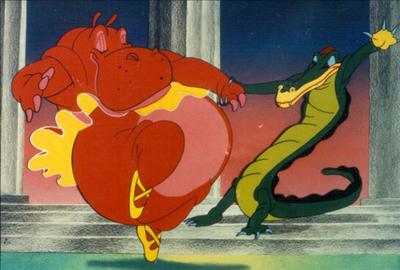
Wolf Woman or Hungry Hungry Hippo?

There's such a difference between knowing something in your head and feeling it in your heart. 

I know that my ex b-f had distorted thinking - about a lot of things, but particularly about food, diet, exercise, body image.  When last I saw him, he was obsessing over being "fat," having put on a few extra pounds around his middle, though at over 6' tall and 160 pounds, no one would accuse him of being overweight.

He would talk with longing in his voice for his teenage days, when he'd gotten down to 95 pounds.  (Of course, he was living off speed and cigarettes then, and it landed him in the hospital, but still...)  Not in the beginning, but after I moved in with him, he made constant derogatory comments about anyone he saw who was overweight - whether he saw them while we were driving, on TV, etc. ( if never to the actual face of an overweight person who happened to be friend or family.)  They were disgusting, they had no self-control (this from someone who would drink to passing out), they looked revolting, all fat people should be shot...

Mind you, when we met, this is how we looked as a couple. 
from Nighthawk News
I was in a "very big girl" stage, and while that didn't matter to him at all during the "honeymoon" period, when we were courting, before that ended I had begun dieting and stepped up my exercising - for me, not for him - and he was very pleased. 

Of course, it wasn't enough.  I got down to within five pounds of my high school weight, and while he would join in the praise around others who would tell me how great I looked, in private, he'd tell me I would look great - if I lost another 10-15 pounds.

Well.  And then his OCPD began rampaging in full about 101 different things, and I became stressed, depressed.  I stopped exercising as much, because he was so jealous of the time it took away from "us," I stopped being as careful about what I ate.  He rationed my food and rode me constantly, at home, about what I should or shouldn't "pig out" on, and I began binging at work during the day.

No surprise, the weight began creeping back up.  I haven't yet regained all that I had lost, over that two years I worked so hard to lose it; but I've regained a lot of it.  And I hate it.  I hate the way my body looks and the way my clothes don't fit and the fact I had to buy another pair of "fat" jeans today because my thunder thighs are about to bust out the sidewalls of my other fat jeans.


I gave myself permission (mentally if not emotionally,) to gain a little weight since the split, but I think now...  part of me didn't think it would really happen.  At first I gobbled up all kinds of "forbidden foods," a natural reaction, I knew (mentally!) to being starved of them/for them for the years I lived with ex b-f.  Like in the story told by Clarissa Pinkola Estes, a wolf that has been starved in the winter will go on a rampage when spring comes.

I figured once I got used to the fact that I could eat these foods, any time I wanted, and nobody was going to take them away from me, my cravings for them would stop, as Geneen Roth said, and for the most part that's happened.

So I'm trying to be kind to myself and I'm trying to be patient.  I've been learning about mindful eating and taking baby steps towards putting it into practice, the past few months.  


from Master Isolated Images at FreeDigitalPhotos
  I still am enjoying foods I wasn't "allowed" to have, then, but not in huge amounts.  I am not binging at work any more.  I am learning to recognize when I am approaching fullness and stopping then, not eating to the point of being overfull.  I am eating lots of broccoli and salads - because I actually enjoy them, and because I feel good about giving my body foods that are healthy for it.  I'm drinking lots of water and very little (though still some) soda.  I'm still doing regular exercise.  (Though I could be doing more - one can always be doing more exercise - I'm not doing less.)  I'm learning to recognize the pull of emotional hunger and to sit and breathe and acknowledge my feelings, instead of stuffing them down with food.

I know, calorie-wise, even if I'm not counting calories or points or carbs, I'm giving my body less of 'em.

So why am I still gaining weight?!?  I know, in my head, that I am taking the right approach.  I know, from bitter experience, that "regular" diets don't work, long-term.  Been there, done that, got the T-shirts - sized XL to L to M, and back again.  Twice.

But I'm scared.  I think I had this unrealistic vision in my mind, that I would start my baby steps of mindful eating, and as a reward, the Skinny Fairy would come bonk me on the head and I'd magically wake one morning, twenty pounds thinner overnight.  And I still hear my ex b-f's voice inside my head, telling me I'm a disgusting fat pig.

I don't want to be patient with myself.  I want results right now!!  And I want all those horrible, negative messages that I've introjected into my brain, from ex b-f, from magazines, from pop culture, to STFU already.

<Sigh.>  I'm just gonna have to do this the long, hard way, aren't I?  One positive affirmation, one baby step, one STFU to the negative messages, at a time.

Have you ever had to struggle with an issue like this?  Where you knew something, in your head, but it wasn't making it down into your heart where you really felt like you believed it? 

Tell me how you did it (please!) in the comments.