Using writing, and meditation, and ice cream, and reading, and dreams,

and a whole lot of other tools to rediscover who I am,

after six years living with a man with OCPD.


Showing posts with label verbal abuse. Show all posts

Thursday, October 31, 2013

What Did You Get in Your Bag?
A #Fat-Shaming Letter!

Everybody who's ever been an American kid can remember the thrill of Halloween: the excitement of deciding what to "be," the fun of dressing up and showing off to our grandparents and teachers, the excitement of going door to door "in disguise" to get treats from the neighbors.

And remember this part? Comparing the goodies with our friends?


This year, there's a nasty letter circulating on the 'net, that some woman calling herself "Cheryl" purportedly claimed to a radio station that she intended to hand out to those children she deems "moderately obese," instead of candy.


My hope is that "Cheryl" really enjoys cleaning TP and eggs off the side of her house.


What makes the Charlie Brown clip funny, is that we know and trust that adults wouldn't really give some kids candy, and give another child a rock. The inherent unfairness is obvious.


Now, there is some chatter that "Cheryl," and the letter itself, are a prank and it's not going to be passed out to kids after all. This is a good thing.

But here's what I find disturbing and a sign of sickness in our society.

That while most people are in agreement that the idea is horrific and cruel, a minority are openly expressing their support for "Cheryl" and this letter. They think the way to solve childhood obesity is by shaming fat children.

Basically, fat people in our society are treated much like Jews in early 1930's Germany - it was not only accepted, but expected you would harass them. (Mind you, I'm talking about the time before Jews and many other people were rounded up and sent to concentration camps, when they were "only" being spit on and beat up.)

Like Jews wearing a yellow star, or people of color living in a primarily white-skinned community, or those in a wheelchair, fat people never "pass" as "normal" people.

But unlike being a person of color or Jewish, being fat is a choice, right?


Actually, scientific evidence is pointing to many signs that obesity is very complicated. There are genetic factors, environmental factors, links to the influence of various poisons and chemicals that now permeate our bodies in a way they didn't a few hundred years ago. And there is also substantial evidence that people on various medicines "blow up" or lose weight, and it has nothing to do with willpower, diet or exercise. In a poignant rant on my other blog, TL Hamrick said:
As a person who was painfully thin until my early twenties, and struggled (and still struggle) with weight, especially at about age 30, when my PCOS went into full swing. I spent a good part of my 30's overweight or obese, lost weight, kept it off for about 2 years, received a treatment/implant that caused my diet/exercise to fail and gained it all back, plus... and lost it again. Now I am on the too skinny side due to a serious health issue that I am recovering from, and will I ever be morbidly obese again?
I hope not. But... if I am, I will continue my striving for health at any weight, and the body comments? Do. Not. Want.


Shaming People Doesn't Work - But Let's Do It Anyway


Let's put aside medical issues, and all the other reason people may be too fat. Let's accept (for a moment) the premise that there are many people who CHOOSE to be overweight because they are lazy and undisciplined, yada yada. Let's accept the (now scientifically disputed) premise that being even moderately overweight is unhealthy.

Therefore, as a society, we want to help these people lose weight.

What's the best way we, as a society can do this?

Scientific studies (I know, again with the science!) point out that shaming, whether self-shaming or shaming by frenemies and outsiders, not only doesn't work for long-term weight loss, it actually has been proven to have the opposite effect.

Okay. So when we point out to people that a) people are fat for many different reasons, and b) fat-shaming doesn't work, they stop, right?


That Would Make Sense, But No


I have found, though engaging with people on places like FaceBook and various chat boards, there are some people (OCPD? who knows?) who insist on their right to continue bullying fat people, even fat children, because "they are disgusting." Because "it's for their own good."

They express every intention to continue to hate on fat people, even fat children, who are at the mercy of genes, medicine, and parental control, for being fat. While at the same time, they want to assume the high moral ground. They want credit for being "good people," they are deeply offended when people call them even mild things like cruel or "willfully ignorant" or bullies.

But they are bullies.

My ex was like this, too, and that's one of many reasons he is my ex. He thought he was doing me a favor when he would tell me that I would look really good "if you lost another ten pounds" or when, if I dared to eat a modest lunch, he'd curl his lip in disgust and make a comment about me "pigging out again."

Even when I tried to talk to him about how harmful what he was doing was, to me and to our relationship, he could not adjust his settings.

If you are one of those people who feels justified in making negative comments about fat people (or skinny people, or white people, black people, people of a different religion, whatever), it's not because THEY have a problem.

It's because you do.


Have you ever been bullied about your weight?
Are you aware when a fat-shaming message comes out of your mouth?
Your thoughts?


Wednesday, June 5, 2013

Why Does He DO That? Introduction (Part 5)

We are reading, and, I hope, entering into a healthy discussion of the book Why Does He DO That? Inside the Minds of Angry and Controlling Men by Lundy Bancroft.


Please, do buy your own copy - both because I won't be excerpting all of it, and because this author deserves our $upport.


From the Introduction - How To Use This Book: 

<snip> You may feel ashamed of having a partner who sometimes behaves in unkind or bullying ways, and you may fear that people will be critical of you for not leaving him right away. Or you might have the opposite concern: that people around you are so fond of your partner that you question whether they will believe you when you describe how mean or abusive he can be. But, regardless of these anxieties, it is essential not to stay isolated with your distress or confusion about what is happening in your relationship. Find someone whom you can trust - it might even be a person you have never considered opening up to before - and unburden yourself. This is probably the single most critical step you can take toward building a life that is free from control and abuse.

If your partner’s controlling or devaluing behaviors is chronic, you no doubt find yourself thinking about him a great deal of the time, wondering how to please him, how to keep them from straying, or how to get him to change. As a result, you may find that you don’t get much time to think about yourself  - except about what is wrong with you in his eyes. <snip> I’m hoping that by answering as many questions as possible and clearing away the confusion that abusive behavior creates, I can make it possible for you to escape the trap of preoccupation with your partner, so that you can put yourself - and your children if you are a mother  - back in the center of your life where you belong. An angry and controlling man can be like a vacuum cleaner that successful woman’s mind and life, but there are ways to get your life back. The first step is to learn to identify what your partner is doing and why he does it, which is what the pages ahead will illuminate. But when you have finished diving deeply into the abuser’s mind, which this book will enable you to do, it is important to rise back to the surface and from then on try to stay out of the water is much as you can. I don’t mean that you should necessarily leave your partner - that is a complex and highly personal decision that only you can make. But whether you stay or go, the critical decision you can make is to stop letting your partner distort the lens of your life, always forcing his way into the center of the picture. You deserve to have your life be about you; you are worth it.
***

Shame Helps Keep Us Silent
If we have a partner who is abusive, it's hard to admit, even to ourselves. After all, we chose him (or her). Were we stupid - or blind? Besides, we have continued to stay with a person who treats us this way - what is wrong with us?

We may buy into his argument that we make him angry. Unfair as it seems, sometimes, it is still less unpalatable than admitting s/he is an angry person who would find reasons excuses to be abusive no matter what we did or didn't do.

Living with an abusive person becomes a Through the Looking Glass world where everything is backwards; they behave badly, we feel ashamed.

And yet, when we do begin speaking out, we find help, support, validation. The Emperor has no clothes, after all.


Disclaimer: The information and opinions posted here, and any comment responses, are not to be considered professional advice and are not intended to replace consultation with a qualified medical or mental health professional. If you are involved in a relationship that includes physical, financial, and/or emotional violence, please contact a professional for help and assistance.

In the US:

National Domestic Violence Hotline - 1-800-799-SAFE (7233)  TTY- 1-800-787-3224 
RAINN (Rape Abuse & Incest National Network)
National Coalition Against Domestic Violence (includes downloadable guides for helping women in abusive relationships)
National Alliance on Mental Illness, aka NAMI

International Resources linked here.

Your thoughts?

Wednesday, May 29, 2013

Why Does He DO That? Introduction (Part 4)

We are reading, and, I hope, entering into a healthy discussion of the book Why Does He DO That? Inside the Minds of Angry and Controlling Men by Lundy Bancroft.


Please, do buy your own copy - both because I won't be excerpting all of it, and because this author deserves our $upport.


From the Introduction - My Experience Working with Angry and Controlling Men:
Counseling abusive men is difficult work. They are usually very reluctant to face up to the damage that they have been causing women, and often children as well, and hold tightly to their excuses and victim blaming. As you will see in the pages ahead, they become attached to the various privileges they earn through mistreating their partners, and they have habits of mind and make it difficult for them to imagine being in a respectful and equal relationship with a woman.

From the Introduction - How To Use This Book: 

One of the prevalent features of life with an angry or controlling partner is that he frequently tells you what you should think and tries to get you to doubt or devalue your own perceptions and beliefs. I would not like to see your experience with this book re-create that unhealthy dynamic. <snip>  listen carefully to what I’m saying, but always think for yourself. If any part of what I describe about abusers doesn’t match your experience, cast it aside and focus on the parts that do fit. <snip> If you come upon sections that don’t speak to you - because you don’t have children, for example, or because your partner is never physically frightening - to skip ahead to the piece that can help you more.

Some women will find it being alone with this book is too difficult because it awakens feelings and realizations that are overwhelming. I encourage you to reach out for support from trusted friends and family as you go along. While reading this book is likely to be clarifying for you, it may also awaken awareness that can be painful or distressing. <snip> Again, don’t be stymied by the word abuse; the hotline staff is there to listen to you and to help you think about any relationship in which you are being treated in a way that is making you feel bad.
***

One of the biggest battles I had repeatedly with my ex is he tried, like Orwell's Big Brother, to control my thoughts. He would frequently begin a rant at me with, "You think blah blah blah," and at least that ticked me off enough that I refused to follow him down that particular rabbit hole.

Just like nobody gets to put baby in a corner, NOBODY gets in my face and TELLS me what I am thinking or what I "should" think. The full frontal assault was almost always a fail.


Other mental manipulations - and I am not sure they are/were all conscious - were much more successful at twisting my thoughts and perceptions, to get me to "behave." Acting hurt/wounded by something I said or did. The compliment with a sting in it, "You look good in that color, and if you just lost another five pounds, that dress would look fantastic." Those are the kinds of messages that kept replaying in my mind, planted seeds of doubt. Bruises are easy to recognize and point to, but the slow poisoning of heart and confidence through planting those ugly words and thoughts is much dirtier and more insidious.

Human beings all want others to do what we want, and are manipulative, to a certain degree. If I have a difficult subject to bring up with my boss, for example, I will wait until he is in a good mood (most of the time, luckily for me) and he has an open window of time (that one's more difficult) to really think about my issue and discuss it. Is that manipulation, or common sense? How about letting your partner know that you really, really want to see a certain concert or movie?

Where manipulation turns into abuse is when there is the lack of respect and an equal relationship. In most societies, even Western ones, there is an open assumption that "the man is the head of the house," and so sometimes, it's hard to see where an abusive attitude begins. Isn't church/temple/mosque/society telling the man that he is supposed to rule over "his" woman? If one party believes that he (or she) has the right to dismiss without discussion an idea or plan floated by his (or her) partner, it's not a relationship of equals.

My ex found it nearly impossible to compromise. He wanted to have things his way, the superior way. On occasion, he would allow me to have things my way, but there was very little of the give and take and negotiation that happens in a relationship of equals.

Once when I had described what I wanted, and why, he was (again) locked into the black-or-white thinking, and nastily accused me of  "always wanting things my way." I became so frustrated that I got very sarcastic with him.

"No," I said. "I am trying to work this out together. That's what grown-ups do. I put what I want out on the table, here," I gestured to the right hand side of the coffee table. "You put what you want out on the table, there," I gestured to the left hand side of the table. "Then we work together to try to meet in the middle and find a way for both of us to get our needs and wants satisfied. A win-win. That's what grown-ups do."

I think, in retrospect, that part of his issue was that he either didn't have or couldn't verbalize a position, but felt compelled (demand-resistance, knee-jerk reaction) to say no to what I was proposing, no matter what it was. He simply couldn't let me have the "win" of  "Yes, that sounds like a great idea."

I found it very difficult to work through this book and consider how much of it applied to me.

Yes, my boyfriend often called me names, had jealous spats, wouldn't work together with me. Yes, he frequently liked to refer to women as bitches - but he was only joking.

Even now I have a very hard time talking about it as abuse. But it was.

***

Disclaimer: The information and opinions posted here, and any comment responses, are not to be considered professional advice and are not intended to replace consultation with a qualified medical or mental health professional. If you are involved in a relationship that includes physical, financial, and/or emotional violence, please contact a professional for help and assistance.

In the US:

National Domestic Violence Hotline - 1-800-799-SAFE (7233)  TTY- 1-800-787-3224 
RAINN (Rape Abuse & Incest National Network)
National Coalition Against Domestic Violence (includes downloadable guides for helping women in abusive relationships)
National Alliance on Mental Illness, aka NAMI

International Resources linked here.

Your thoughts?

Wednesday, May 22, 2013

Why Does He DO That? Introduction (Part 3)

We are reading, and, I hope, entering into a healthy discussion of the book Why Does He DO That? Inside the Minds of Angry and Controlling Men by Lundy Bancroft.


Please, do buy your own copy - both because I won't be excerpting all of it, and because this author deserves our $upport.


From the Introduction - My Experience Working with Angry and Controlling Men:
For roughly the next five years I worked almost exclusively with clients were coming to the program voluntarily. They generally attended under heavy pressure from their female partners, who were either talking about leaving the relationship or had already done so. <snip> The men’s main motivation for seeking counseling was the hope of saving their relationships. It was common for them to feel some guilt or discomfort about their abusive behavior, but they simultaneously believed strongly in the validity of their excuses and justifications, so their feelings of remorse would not of been enough in themselves to have kept them in my program. In those early years, the clients I worked with were men who used far more verbal and emotional abuse and physical violence, although most of them had been physically intimidating or assaultive on at least a few occasions.

<snip>...with the result that court-mandated clients started at first to trickle and then to pour in the doors of our program. These men often had a much greater propensity for physical violence than our earlier clients, sometimes involving the use of weapons or vicious beatings resulting in hospitalization of their partners. Yet we observed that in other ways these men were generally not significantly different from our verbally abusive clients: their attitudes and excuses tended to be the same, and they used mental cruelty side by side with their physical assaults. Equally important was that the female partners of these battering men were largely describing the same distresses in their lives that we were hearing about from women who would been psychologically abused, showing us that different forms of abuse have similar destructive impacts on women.

<snip> my colleagues and I have been strict about always speaking to the woman whom our client has mistreated, whether or not the couple is still together. (And if he has started a new relationship, we talk with his current partner as well, which is part of how we became aware of the ways in which abusive men continue their patterns from one relationship to the next.) It is through these interviews with women that we’ve received our greatest education about power and control in relationships. The women’s accounts also have taught us that abusive men present their own stores with tremendous denial, minimization, and distortion of the history of their behaviors and that is therefore otherwise impossible for us to get an accurate picture of what is going on in an abusive relationship without listening carefully to the abused woman.
***

Their Attitudes and Excuses Tended to be the Same

I've heard many people argue that verbal abuse isn't real abuse. I've even made the same argument, myself. But if the abuser who hits "only" with words, dirty looks, and contemptuous body language, has the same attitude, and same goal - to cow and intimidate his/her victim, to make him/her "behave," as the abuser who hits with a closed fist, then it really isn't so different.


Different Forms of Abuse Have Similar Destructive Impacts

Sticks and stones... words will never hurt you, right? Unlike the well-meant childhood fibs about Santa and the Tooth Fairy (sorry if I'm blowing it for you), the LIE about words not hurting us could not be more untrue. I bet everyone reading this, everyone I know, can remember a stinging insult, a painful accusation or comment from our childhood and teen years.

Loser, weakling, incompetent, stupid, untrustworthy, clumsy, selfish... The terrible thing is, even as an adult, if someone we love and trust says something negative about our character or personality, and it hits us in an emotionally vulnerable spot, we'll keep "playing the tape" over and over again in our minds.

If someone tells me, "You're extremely short," I can easily laugh that off. If a stranger who is angry at me tells me, "That's awfully selfish of you," I can usually laugh that off as well - maybe she is trying to hurt me because I didn't go along with her selfish agenda, maybe I was behaving selfishly in that one particular instance.

But I don't want to think of myself as a selfish person. So if my partner says to me, "I can't believe how selfish you are. You're always thinking about yourself, never about other people," I will obsess endlessly over it - especially if he said such a thing more than once. This person knows and loves me. He wouldn't say something like that simply to hurt me. Maybe I am selfish. Hoping to win his approval/praise, I would jump through any number of hoops to prove to him that no, I'm not really selfish. No matter how much it cost me to do so.

And of course, there were always more hoops.


Disclaimer: The information posted here, and any comment responses, are not to be considered professional advice and are not intended to replace consultation with a qualified medical or mental health professional. If you are involved in a relationship that includes physical, financial, and/or emotional violence, please contact a professional for help and assistance.

In the US:

National Domestic Violence Hotline - 1-800-799-SAFE (7233)  TTY- 1-800-787-3224 
RAINN (Rape Abuse & Incest National Network)
National Coalition Against Domestic Violence (includes downloadable guides for helping women in abusive relationships)
National Alliance on Mental Illness, aka NAMI

International Resources linked here.

Your thoughts?

Wednesday, May 15, 2013

Why Does He DO That? Introduction (Part 2)

We're start reading, and, I hope, entering into a healthy discussion of the book Why Does He DO That? Inside the Minds of Angry and Controlling Men by Lundy Bancroft.


Please, do buy your own copy - both because I won't be excerpting all of it, and because this author deserves our $upport.


From the Introduction:
Another central goal of mine is to offer assistance to each woman who is struggling with how she is being treated in a relationship, regardless of what label she may put on her partner’s behavior. Words like control and abuse can be loaded ones, and you may not feel that they fit your particular circumstances. I’ve chosen to use the term abusers to refer to man who use a wide range of controlling, devaluing, or intimidating behaviors. In some cases I’m talking about fiscal batterers and at other times about men who use or insult their partners but never frighten or intimidate them. Some of the men I described in the pages ahead change moods so drastically and so often that a woman could never feel sure what they are like, much less attach a label. Your partner may be arrogant, or may play mind games, or may act selfishly over and over again, but his better aspects may make you feel that he is miles away from being an “abuser.” Please don’t let my language put you off; I’ve simply chosen the word abuser as a shorthand way of saying “men who chronically make their partners feel mistreated or devalued.” You can adopt a different term if you know one that fits your partner better. <snip>

If the person are involved with is the same sex as you are, you have a place here too. Lesbians and gay men who abuse their partners exhibit much of the same thinking, and most of the same tactics excuses, that abusive heterosexual men do. In this book I’ve used the term he for the abuser and she for the abused partner to keep my discussion simple and clear, but abuse lesbians and gay men are very much in my thoughts, right alongside of abuse straight women. Of course, you will need to change the gender language to figure relationship, for which I apologize in advance. You will also find a section in chapter 6 where I speak specifically about the similarities and differences in same-sex abusers.

Similarly, this book includes stories from men from a very wide range of racial and cultural backgrounds. Although the attitudes and behaviors of controlling and abusive men vary somewhat from culture to culture, I found that their similarities greatly outweigh their differences. If your partner is a person of color or an immigrant, or if you are a member of one of these groups yourself, you’ll find that much of what this book discusses, or perhaps all of it, fits your experience quite well. <snip> I further discuss some specific racial and cultural issues in chapter 6.

***

I never wanted to label it abuse.


He was sick, he was stressed out, he had a momentary lapse... And I absolutely loathed the word "victim" as applied to myself.  I am loving, smart, capable, and strong - how could someone like me be a victim?

Reality? He had a pattern of being controlling, demeaning, and verbally abusive to me.  I had a pattern of making excuses for him, and refusing to call it abuse - even to myself.

In the beginning, during the courtship or honeymoon stage, he treated me like he thought I was wonderful, special, valuable... almost all the time. That special treatment never entirely disappeared - and that is why we stay. We keep getting glimpses of who we think the real person, the kind, loving person is, under all the crap, and think if we just did - something - right, better, found the way to explain, we could once again have that incredible relationship with the person we loved.

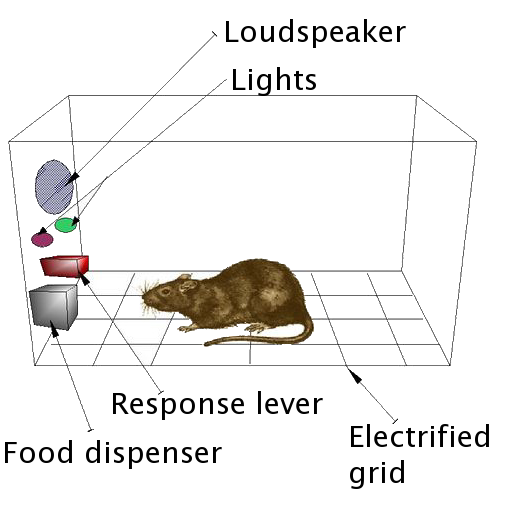
Like those rats in experiments, where if sometimes when they push a bar they get a treat, and sometimes an electric shock, we'll keep pressing that bar, hoping, that next time, it'll be good.

via Wikimedia Commons


Once more, on the male-female thing


Bancroft's book is (primarily) about male on female abuse. Our discussion, here, is not predicated on "bad men; helpless victimized women" because although there are a number of factors that often give men an unfair societal and legal advantage, yes, women abuse men too. Do not feel if you are a man being abused by a woman, that this book and our discussion has little to offer you. Please buy the book and read along.


Disclaimer: The information and opinions posted here, and any comment responses, are not to be considered professional advice and are not intended to replace consultation with a qualified medical or mental health professional. If you are involved in a relationship that includes physical, financial, and/or emotional violence, please contact a professional for help and assistance.

In the US:

National Domestic Violence Hotline - 1-800-799-SAFE (7233)  TTY- 1-800-787-3224 
RAINN (Rape Abuse & Incest National Network)
National Coalition Against Domestic Violence (includes downloadable guides for helping women in abusive relationships)
National Alliance on Mental Illness, aka NAMI

International Resources linked here.

Your thoughts?

Wednesday, May 8, 2013

Why Does He DO That? Introduction (Part 1)

We've begun reading, and, I hope, entering into a healthy discussion of the book Why Does He DO That? Inside the Minds of Angry and Controlling Men by Lundy Bancroft.

Please, do buy your own copy - both because I won't be excerpting all of it, and because this author deserves our $upport.


From the Introduction:


1212mentalhealth-RW
1212mentalhealth-RW
(Photo credit: Robbie Wroblewski)
I’ve been working with angry and controlling men for 15 years as a counselor, evaluator, an investigator, and have accumulated a wealth of knowledge from the 2000 or more cases with which I have been involved. I have learned the warning signs of abuse and control that a woman can watch out for early in a relationship. I’ve come to know what a controlling man is really saying, the meaning that is hidden behind his words. I’ve seen clues to recognizing when verbal and emotional aggression are heading toward violence. I found ways to separate out abusive men who are faking change from those who are doing some genuine work on themselves. And I have learned that the problem of the abusiveness has surprisingly little to do with how a man feels - my clients actually differ very little from nonabusive men and their emotional experience - and everything to do with how he thinks. The answers are inside his mind.

<snip> who can use what I have learned to help themselves recognize when they are being controlled or devalued in a relationship, to find ways to get free of abuse if it is happening, and to know how to avoid getting involved with an abusive man - or a controller or a user - next time. The purpose of this book is to equip women with the ability to protect themselves, physically and psychologically, from angry and controlling men.

To prepare for writing this book, I first generated a list of the 21 questions that women most often asked me about their abusive partner, questions such as:

"Is he really sorry?"
"Why do so many of our friends side with him?"
"Is he going to hit me someday?"


and many others. I then built my explanations around these concerns to make sure that women would be able to look here to find the information they urgently need. <snip>
***


Is He Going To Hit Me?


via kenfotos at freedigitalphotos
That's probably the #1 question for those who've been in a relationship where they have felt verbally battered and deeply frightened, but not yet hit... yet. And there are no guarantees; however, there are warning signs, which will be covered in this book. (Another reason I urge you to buy it now.)

That a person feels s/he has the right to degrade and belittle you is not a sign s/he respects you and values you. If s/he has "accidentally" hurt you - stepping on toes, an elbow in the wrong place, etc., this could be a real red flag that more is headed your way, especially if the response was not an abject apology on the part of the offender, but more a "well, you shouldn't have gotten in my way" attitude.

While many verbal abusers never "graduate" to physical abuse, it is well documented that verbal and emotional abuse always precedes physical violence.


Do not take your safety for granted, ever. 


If you are in a situation where your partner hurts you - even if it is "only" with words, please contact one of the hotlines down below and begin working out an emergency escape plan, even if as of right this minute, you feel sure you will never need one. Especially if you have children at home.

Worst case scenario if you have an escape plan and never need it, is you have "wasted" a few hours. Worst case scenario if you don't have a plan and need one, is it may cost you your life.

I never thought my boyfriend would hit me, either.

Till he did.


Disclaimer: The information and opinions posted here, and any comment responses, are not to be considered professional advice and are not intended to replace consultation with a qualified medical or mental health professional. If you are involved in a relationship that includes physical, financial, and/or emotional violence, please contact a professional for help and assistance.

In the US:

National Domestic Violence Hotline - 1-800-799-SAFE (7233)  TTY- 1-800-787-3224 
RAINN (Rape Abuse & Incest National Network)
National Coalition Against Domestic Violence (includes downloadable guides for helping women in abusive relationships)
National Alliance on Mental Illness, aka NAMI

International Resources linked here.

Your thoughts?
Enhanced by Zemanta

Wednesday, May 1, 2013

Why Does He DO That? Terminology Intro

We're going to start reading, and, I hope, entering into a healthy discussion of the book Why Does He DO That? Inside the Minds of Angry and Controlling Men by Lundy Bancroft.

 Please, do buy your own copy - both because I won't be excerpting all of it, and because this author deserves our $upport.


From the Note on Terminology:

In referring to angry and controlling men in this book, I’ve chosen in most cases the shorter terms abusive man and abuser. I’ve used these terms for readability and not because I believe that every man who has problems with angry or controlling behavior is abusive. I needed to select a simple word I could apply to any man who has recurring problems with disrespecting, controlling, insulting, or devaluing his partner, whether or not his behavior also involves more explicit verbal abuse, physical aggression, or sexual mistreatment. Any of these behaviors can have a serious impact on a woman’s life and can lead her to feel confused, depressed, anxious, or afraid. <snip>


via Wikipedia Commons

<snip> Controlling men fall on a spectrum of behaviors, from those who exhibit only a few of the tactics I describe in this book to those who use almost all of them. Similarly, these men run a gamut in their attitudes, from those who are willing to accept confrontation about their behaviors and strive to change them, to those who won’t listen to the woman’s perspective at all, feel completely justified, and become highly retaliatory if she attempts to stand up for herself. <snip> The level of anger exhibited by controlling man also shows wide variation, but unfortunately it doesn’t tell us much in itself about how psychologically destructive he may be or how likely he is to change, as we will see.

In addition, I have chosen to use the terms he to refer to the abusive person and she to the abused partner. I selected these terms for convenience and because they correctly described the great majority of relationships in which powers being abused.  <snip>.
***

No Gender Discrimination In Our Discussions Here


Mr. Bancroft's experience is with male abusers; he does not have the training or experience to address female-on-male abuse situations, therefore in this book, he does not address it, though he briefly covers controlling and angry dynamics in gay relationships. In most modern societies, even though "we've come a long way, baby" the reality is that men (in general) possess much more political, social, and economic power than women, and in second/third world countries, the power men hold over women is even more extreme. Men kill women and send them to the emergency room much more often than women kill or seriously injure men.

via David Castillo Dominici
at freedigitalphotos
This does not mean that female-on-male violence, especially emotional and verbal abuse, does not frequently occur, or that women in individual relationships cannot be just as angry and feel just as justified as the Angry and Controlling Men of the book title. Sadly, I know many men who've experienced abuse from their mothers or who have lived or still live in abusive relationships with a female partner.

Therefore, if that is your experience, please buy the book and follow along; you will almost certainly gain valuable insights.


Why Does A Discussion about Domestic Violence Belong on a Blog About OCPD?

Some may argue that there is little to no scientific evidence that domestic violence is linked to any mental disorder, including OCPD. I agree - there is no scientifically proven link. My counter-argument is that if the questions are never asked, how reasonable is it to assume that no links exist? Because of stigma and shame, both mental illness and domestic violence are vastly under-reported, under-studied, and misunderstood.
I would also add that statistics show people with a mental illness are far more likely to be victims of a violent crime than perpetrators. No intent here to demonize the mentally ill.

I can state that in my personal experience, and that of many other people with whom I have traded stories, domestic violence and mental illness or brain injury is often linked. This is part of the dynamic that influences our decision to stay in an abusive relationship, perhaps longer than we should. We perceive our partners not as deliberately abusive, but as sick - and what kind of heartless person would abandon a partner suffering from cancer, or heart disease?


Reality - it doesn't matter why we are being abused. Being abused hurts.


Disclaimer: The information and opinions posted here, and any comment responses, are not to be considered professional advice and are not intended to replace consultation with a qualified medical or mental health professional. If you are involved in a relationship that includes physical, financial, and/or emotional violence, please contact a professional for help and assistance.


In the US:

National Domestic Violence Hotline - 1-800-799-SAFE (7233)  TTY- 1-800-787-3224 
RAINN (Rape Abuse & Incest National Network)
National Coalition Against Domestic Violence (includes downloadable guides for helping women in abusive relationships)
National Alliance on Mental Illness, aka NAMI

International Resources linked here.

Your thoughts?

Sunday, October 28, 2012

This Time It's Personal

Right around the time I was leaving my OCPD ex, and voraciously reading everything I could on OCPD and hoarding, I came upon an interesting website called My Mother In Law Is Still Sitting Between Us. In it the author chronicled her boyfriend's efforts to clean out the hoarding house of his mother, who'd recently passed away.

Besides the train-wreck fascination of the pictures, the writing! Snappy, funny, insightful, and never mean-spirited or nasty. I fell in serious girl crush. And after finding that the author lived next door, so to speak, I got in touch with her. Once I convinced Sid I was not a crazy stalker-person, we did meet, and became good friends. I lured her into joining my writers critique group. Her voice and ideas were good for our group, and getting out of the house and talking about writing was good for her.  I frequently commented on her blog, and she was a frequent commenter here.

Her boyfriend is also OCPD, and the unhappy relationship dynamics that so many experience, that *I* experienced, were also part of her experience. He was a drinker/she was a drinker, even after it began to create serious health problems for her. She cut back.

Still, the relationship was eating her up on the inside, especially when, over two years into the clean-up process of the hoarding house, there was no end in sight. And of course, he could neither give it up nor hire someone to help. I tried to support Sid, as best I could, without pushing or telling her what to do.

It frustrated me to watch her spirit get eroded over time, drip, drip, drip, but still, it wasn't MY job to save her. She did have a supportive family. And Sid was the stubborn kind of person who needed to do things in her own way, in her own time. So mostly, I was the listening ear who understood, and who told her what a great person she was.

One of my online friends has pointed many to an excellent book called, "When the Body Says No," about the damaging health effects that accumulated stress may have on a person. See, sometimes if WE don't learn to say no, the body says it for us, by getting sick.  Or we swallow our feelings with alcohol, drugs, food, sex, shopping...


Sid was the kind of caregiving person who poured herself out for others.  She took pride in being STRONG, not asking for help, but giving it to others. She blogged and worked part time and was active in Children of Hoarders. She co-founded a local group called SoCalLady Bloggers. On October 8 she appeared as part of this streaming video chat on hoarding on Huffington Post.


Her ex was not and is not a bad person. In his own way, Greg, too, is heartbroken. He was the reason she was found, still clinging to life, after she missed a scheduled meeting with him and he would not let it go. I am very grateful that her parents and I got to say goodbye to her when she was still technically breathing, rather than after lying dead in her apartment for days. But his own overwhelming anxieties did not allow him to SEE how sick she was, or to help her in any meaningful way.  As she described here when she was going to visit her parents, very sick, and he got hung up on the cheapest train fare.

After another hospitalization this summer following that train trip, during which the b-f was anxious, bossy, "knew" more about what she needed to do than the doctors, and demanded attention and energy she simply didn't have left in her to give him, she realized that though she still loved him deeply, if she stayed with him, it would literally kill her. She'd already been making emotional plans to leave; her parents helped her out financially, and she moved into her own place a month ago.

Sid was SO happy in her new place. She could eat, walk, work on the computer, and breathe, without being criticized. She was so proud, showing off her new place - which had been IMMEDIATELY unpacked, no boxes hanging around for her! She showed me her cool rooftop patio and talked about having a party up there, excited, because her ex never wanted to have people over. She still loved him, and they were friendly, trying to work out the sale of their house amicably. She was taking her meds and NOT drinking and working hard to regain the weight she'd lost during the summer, but she was still so frail...

The damage to her body was too great, her remaining physical resources too low. She had a heart attack just a week ago due to the chemical imbalance in her body, and then another, in the hospital. No alcohol found in her system.

Last Monday I sat with her parents and her ex, in the hospital. Both before and after they turned off the respirator.  Today is her "Celebration of Life."

She was beautiful and vibrant and funny and 43 years old.

I am angry and heartbroken. This did NOT have to happen. For all of you still with a disordered partner - I am not telling or urging you to leave.  Only you can make that call, if or when it is right for you. But please, please, PLEASE, do not pour yourself out entirely for your partner and other people, until there is not enough left for your own body or soul. It may be the hardest thing you will ever have to do, but learn to put yourself FIRST.

Tuesday, April 24, 2012

A-Z - Unchosen Relationships - When You Can't Get Away

Sibling!
Sibling! (Photo credit: Gus Dahlberg)
We can choose our friends, but we can't choose our family. For the letter U today, I'm going to excerpt and comment upon the excellent piece from Out of the Fog.
Unchosen relationships are relationships with family members who suffer from personality disorders.
 And other mental illnesses.
Unchosen is a term used to describe those of us who did not choose their relationship to a person with a personality disorder. Some of us have parents with this disorder; others have a sibling, in-laws, or other familial relationships. We did not choose this relationship the same way a person chooses a relationship to a partner with or a friend with a personality disorder. 
With a spouse, love partner, neighbor, boss, co-worker, we can choose to leave the relationship, to move, to change jobs. It might be painful and very difficult, but we can get away. It's harder to get away from family, or to abandon a family member (sibling, parent, child) who has married a dysfunctional person; however, in those cases, we are normally dealing with the unpleasant in-law from an adult, rather than a child's, perspective.
For instance: someone who grew up with a personality disordered parent will have had a vastly different struggle than someone who had a relatively normal childhood, but ended up with a disordered partner. That doesn't mean the "Unchosen" person's pain is any greater or any less than the "Chosen" person's pain, but very often, the abuse and inappropriate behaviors modeled during his or her formative years will have deeply affected the Unchosen Non child's core sense of being (and well-being), and may have long-lasting impacts on trust, self-esteem and the ability to form or maintain healthy relationships in adulthood.
In the paragraph above, "non" refers to a child without a personality disorder.  Being a "non" as compared to a person with a personality disorder does not mean everything is a-ok with us. In fact, a non may have many other Issues, and behave inappropriately and harmfully to self and others, too.

I can personally testify that it is really hard to choose a healthy love relationship, when you have no friggin' clue how to recognize it. If there are no models in your family of origin, how do you even know what one looks like? TV and movies? Books?  

cast of Leave It To Beaver
I know that my own relationship with my OCPD ex was in large part an attempt to heal wounds left by my relationship with my narcissistic, alcoholic father. Sadly, my ex was just f---ed up in a different way. In large part because I was used to dysfunction, I missed the red flags, and when I did see them, I thought, well, now, with my adult skills, I could fix him.
When the personality disordered individual is a child, the pain and disruption is experienced by the entire family. Adults feel responsible, trapped, frustrated and depressed. Non-personality-disordered siblings feel fearful and neglected as their parents focus on the problems created by the disordered individual. 
Partly because of poor understanding of where mental disorders come from, there is the guilty assumption by parents that if only one had loved the child enough, been patient enough, done the right thing, his/her mental disorder would not be so severe. Or, possibly, there may be guilt for passing down defective genes or eating or drinking the wrong thing during pregnancy. Siblings may have very mixed feelings, especially as teenagers; sometimes loving their troubled sibling to pieces, other times perhaps even wishing s/he were dead. 
The Unchosen Relationship
To be in an unchosen relationship is difficult and often traumatizing. We are told repeatedly by society and well-meaning people that we "must," "should," "have to" (fill in the blank) because they - the personality disordered - are family. 
"After all, he is your father." Boy, if only I had a dollar for every time someone said that to me!
We are often asked to overlook continued abuses because the person is ill. In other instances we are expected to “be the bigger person” and stuff our emotions so as not to upset the ill family member. We are asked to parent our parent while still trying to have a life of our own. 

People who haven’t been where we have been truly have no idea what we live with. Some of us are constantly torn between trying to protect and heal ourselves and trying to have some sort of relationship with our families, however dysfunctional they may be. Others have decided that they no longer want a relationship with the ill family member. Many of us have been subjected to a lifetime of emotional, verbal, physical, and sometimes sexual abuse. These abuses do not disappear just because time has passed or because we are adults. Sometimes the worst scars cannot be seen.

In this section, you may see terms like NC (no contact) or LC (limited contact). Many people choose one or the other, or drift back and forth between them trying to find a balance with which they are comfortable. Some choose to try and tolerate what they can, when they can, knowing they are unable to completely remove themselves from a parent or other relative. Understand that what works for one simply does not work for everyone.
After decades of trying to begin a new relationship with my father, as an adult, which efforts were ignored and/or abused by him, I decided upon LC. It was the best way for me to forgive his past offenses and remember the good things about him (which I could count on my fingers). For myself, I couldn't "deal" with fresh offenses and his constant attempts at emotional manipulation.

My oldest sister chose to become more involved, supervising his finances and getting him placed in a good veteran's home facility, but even she drew the line at bring him into her home, or even into our state. Our other sister's choice was similar to mine, LC. When our father died last year, our middle sister chose to attend the memorial service, in support of our oldest sister. I chose to stay away - also in support of our oldest sister. Because once people began spouting the usual post-death BS about what a great guy the man was, I would probably have lost it and spoken up. This would have hurt my sister to no good purpose.

So I don't judge people who don't visit their parents or mentally ill siblings; don't call them, or make other efforts to avoid contact. It may show an admirable amount of restraint that they don't accidentally-on-purpose poison the person who's brought so much pain into their lives.

An Unchosen Perspective on Boundaries
It can be difficult to maintain or define boundaries when you are involved in a familial or otherwise unchosen relationship. Often, we are taught as children "not to make waves" or to “just get along;” that is, to not assert or define our own boundaries. As children we want to please our disordered parent and get along with a disordered sibling or relative; however, a personality disordered individual lacks appropriate personal boundaries of their own. This can result in inappropriate affectionate gestures and lack of personal privacy for the child. 
 This is why we should never "make" children kiss Aunt Clara, or sit on Santa's lap.
When our own personal boundaries are routinely broken, the message we learn is that our own needs and feelings don’t count - we are required to accept how others treat us without question. As we grow into adults, these lessons can become our way of life. We often feel taken advantage of, feel used or feel that our desires are unimportant. We become frustrated and angry that our boundaries are violated yet we are unable to express what, exactly, our boundaries are. 
In a healthy relationship, there are always boundaries. Children should be able to have their own special toys that they are not expected to share, for example, especially if they have a "special" sibling who tends to break or destroy much of what s/he plays with.


Constant yielding to a parent, sibling or relative becomes second nature. We lose our own sense of self and often find ourselves in unhappy relationships, jobs and life situations. The early lessons - that our feelings, views and opinions don’t count - continue to dominate our lives, sometimes subconsciously. 
We may feel we are only worthy if/when we are pleasing someone else. If we're doing something purely for ourselves - reading a book, watching a movie that nobody else in the household wants to watch, getting a massage - we may feel selfish, weird. 
This can result in poor life choices, from entering into careers or occupations that are a poor fit for us, to marrying the person we “should” rather than the person we love. The yielding to others we were taught as children can spill over into every relationship we have as adults. The consequences can be disastrous and painful. It sometimes feels as if we are living someone else’s life. 
Because we don't have our own sense of self, we may Rescue others and follow the pattern assuming responsibility for how we "make" others feel. I know people who keep themselves quite busy being problem scouts - spotting and "helping" other people's potential problems before they even have a chance to notice and take care of the issue, themselves.

Then the problem scout wonders why her adult children don't seem to show any initiative, or make poor decisions on the rare occasion they do decide something for themselves.
Learning to enforce boundaries takes practice and patience. Yet it can be done - and lead us to a healthier, happier life. You can read some more ideas on setting healthy boundaries in our boundaries section.
And here: Boundary Betty.  Boundaries are different than walls, but it may help to think of them as castle walls. Something from the outside is stopped on the other side of the moat. After thorough examination, either the drawbridge is let down and it's invited in, or it's turned away.

When we have weak or no boundaries, anything someone says to us, does to us or even does around us gets hustled right in. We arrange our universe around what we think is gong on. Somebody makes a strange face - we must have done something to annoy him. (When the reality is, maybe he's just suppressing a fart. It's not always all about us.)
Types of Unchosen Relationships
There are distinct categories of non-personality-disordered individuals who call themselves “Unchosen”:
Children forced to live in an environment where someone else is abused.
Please take note of the last. Even if the child is not him or herself battered, sexually or verbally abused, it is not healthy for children to live in an environment where they regularly witness one member of the household abuse another. Perhaps Grandpa has come to live with the family and he's a raging a-hole to his adult daughter, the child's mother. Perhaps the mother is personality-disordered and regularly tears the father a new one.

Yes, "splitting the household apart" might be painful and quite difficult. But please, consider that you may be training the child up to recreate a household just like the one s/he grew up in.

I get that leaving is not always possible. I know my mother wanted to leave my father, but when you have a young child, and are terminally ill with cancer, your options are limited. Besides which, that was the early 1970's, and women had only a fraction of the legal rights in divorce they have today.

Still, there were avenues she could have explored: moving in with friends or family members, perhaps. If she had the physical and emotional strength to pursue them. I don't blame her; I understand that when you live with someone whose view of the world is black-or-white, your own thinking tends to become that way as well. You fail to see there are not two choices; there are probably two dozen choices.

There are always options.  Please, please, please, do not bring children into the world when you are in a dysfunctional relationship, thinking that a baby will make everything better and help your partner heal. And if you already have children, please consider whether continuing in a household where a severely dysfunctional person lives is healthy for them. Leaving or throwing out the disordered person are not the only choices; I know a woman who actually sent her children away, to live with some family friends who acted as guardians for them. It broke her heart, and yet, was probably much better for them than continuing in that household.


My A-Z theme is Issues related to Mental Health or Mental Illness.

Are you in any unchosen relationships 
with a mentally disordered person?
Is this a new thing, or did it begin when you were a child?
How has it affected the way you see the world and relationships?
Enhanced by Zemanta

Saturday, April 21, 2012

A-Z: Finding A Scapegoat Doesn't Make Anyone All Better

The Scapegoat by William Homan Hunt via Wikimedia Commons

Got goats?

Most people understand what a scapegoat in modern terms is. It's the wide receiver who dropped the ball on the last play of the game (though the whole team played poorly up to that point); the department head who gets very publicly fired for carrying out the unfair policies set by her superiors; the husband who fails to properly read his wife's mind.

In ancient Syria, Greece, and Biblical times, an actual goat (or beggar, or cripple) was designated as the bearer of sins for the entire community. The scapegoat might be driven out of the community into an inhospitable region (theoretically taking all the evil/sin with it), where presumably it would in fact, die. Or it might be killed outright.

A similar concept was practiced in the Middle Ages, depicted in an old Night Gallery episode called Sins of the Fathers. The Sin-eater would consume food spread around the body of a dying or recently deceased person, so that the soul of the dead person would then be able to rest in peace or float to heaven, free of sin. Of course, if something happened to the village Sin Eater...

Except in certain religious connotations, nobody believes (on paper) in the concept of scapegoating anymore. As a parent with two children, say, we certainly wouldn't punish Child A because Child B misbehaved, right?

In practice... people do it all the time. (See butterfingered wide receiver, above.) Child B may be wearing down his mother's nerves all day long, but when Child A also does something annoying, that's when Mom snaps and takes it out on Child A. Fair? No. Human? Yes.

In real life, scapegoating and 'projection' go hand in hoof. Just as it felt too uncomfortable to drag around the guilt and sin in the village, for many people, acknowledging our own faults, shortcomings, and bad feelings is too heavy to carry. So it's got to be put over there, onto a target. Away from us.

See, we are good people. If there is something wrong, bad, or nasty in the room, it's because somebody else - not us - brought it in here.

From Wikipedia:
According to Sigmund Freud, projection is a psychological defense mechanism whereby one "projects" one's own undesirable thoughts, motivations, desires, and feelings onto someone else. 'Emotions or excitations which the ego tries to ward off are "split out" and then felt as being outside the ego...perceived in another person'.[4] It is a common process.[5] The related defense of 'projective identification differs from projection in that the impulse projected onto an external object does not appear as something alien and distant from the ego because the connection of the self with that projected impulse continues'.[6]
In one example of the process, a person might have thoughts of infidelity with respect to a spouse or other partner. Instead of dealing with these undesirable thoughts consciously, the subject unconsciously projects these feelings onto the other person, and begins to think thatthe other has thoughts of infidelity and that the other may be having an affair. In this way, the subject may obtain 'acquittal by his conscience - if he projects his own impulses to faithlessness on to the partner to whom he owes faith'.[7] In this sense, projection is related to denial, arguably the only more primitive defense mechanism than projection, which, like all defense mechanisms, provides a function whereby a person can protect the conscious mind from a feeling that is otherwise repulsive.
Let's say someone is what we might call "toxic." He seems frequently angry and bitter, is usually finding fault with other people, uses verbally abusive language, and rarely accepts responsibility for his actions.  If we have an interaction with this guy, he may attempt to project his bad feelings onto us, or use us as his scapegoat.

It's got to be pretty painful to walk around with a heart/body overflowing with anger and bad feelings. An emotionally unhealthy person is not going to be mindful, sit with his feelings, decide why they are occurring, and what action, if any, he wants to take when he feels upset. An unhealthy person is going to look for "the person who made me feel this way" as quickly as possible, and "let 'em have it."


If we tend to be Rescuers (see yesterday's post) we may accept, even encourage this person to "let it all out," even come to believe we deserve to be abused or called names, because, after all, we did forget to replace the batteries in the remote (or whatever the error was). Maybe we made a huge mistake, one that cost our boss an important contract. Anyway, we can suck it up and take it; we can "be the bigger person,"  and this will help the toxic person feel better.

No. If we do, we are only feeding fuel to an already unhealthy dynamic. No matter what has gone on, nobody "deserves" to be abused. (We might deserve to be fired, but even if we do, we do not deserve to be kicked on our way out the door.)

When we accept scapegoating, it's bad for us (obviously), but it is also bad for the abusers. They are experiencing momentary relief, true, but we are denying them the opportunity to deal in a healthy way with their feelings and problems. The underlying reasons why they are building up anger and resentment are not being addressed.

We can, firmly and politely, refuse to accept a truck load of toxic abuse dumped onto the front lawns of our hearts. We can put up a hand, and say, "Stop. If you cannot talk to me without name calling and abusive language, the conversation is over. Let me know when you are ready to speak to me respectfully, and I'll be happy to take up the subject again." (Caveat: if you live with a physically abusive person, this approach may not be safe. Please contact a domestic violence support network, and do whatever you need to do to stay safe. In the US, 1.800.799.SAFE www.thehotline.org.  A partial listing of facilities in other countries is available here.)

Everyone deserves to be treated with dignity and respect, and everyone should seek to treat others with dignity and respect, as well.


My A-Z theme is Issues related to Mental Health or Mental Illness.


Have you ever been scapegoated?
Ever scapegoated someone else, and realized it later?
How about projecting your bad feelings onto someone else?
Enhanced by Zemanta