Using writing, and meditation, and ice cream, and reading, and dreams,

and a whole lot of other tools to rediscover who I am,

after six years living with a man with OCPD.


Showing posts with label advice. Show all posts

Friday, September 6, 2013

When The Body Says No


When we have been prevented from learning how to say no, our bodies may end up saying it for us.
Why do some people get sick, become disabled, or even die from diseases like cancer, ALS, Alzheimer's, while others with the same exposure to environmental toxins never get sick? Why do some people get cancer that goes into remission, and others, like my mother, die from it?
Studies at the US National Cancer Institute found that natural killer (NK) cells, an important class of immune cells we have already met, are more active in breast cancer patients who were able to express anger, to adopt a fighting stance and who have more social support.... The researchers found that emotional factors and social involvement were more important to survival than the degree of disease itself.

I am still working to absorb and learn the many lessons this book presents, both for myself as a human being, as a daughter trying to come to terms with the death of my mother and of others I've loved, and (probably least importantly) as a writer trying to create believable characters.

We often treat our bodies as if they are separate from our hearts, minds, and emotions, kind of like a biological automobile. As if a health "breakdown" is a purely mechanical problem that can be fixed by diet, exercise, the right pills, and adjusting air pressure in the tires.

Reality: Emotions affect the body.

Watch a scary movie. Even though you are in no physical danger, doesn't your heart pound, your breath get tight in your chest? Read a sexy novel. If it's good enough, you'll feel rigidity in certain body parts, wetness in others. Receive a gift. From your partner, tickets for a dream vacation may make you feel happy and excited; from your cat, a squirming rat may make you feel queasy.

When the Body Says NO examines studies and examples of psychoneuroimmunoendocrinology: the way the body's nervous system, immune defenses and endocrine or hormonal apparatus all work together. (Called the PNI system in short, because psychoneuroimmunoendocrinology is a mouthful.) It looks at patients for whom Dr. Maté has consulted, as well as more famous case studies, from Stephen Hawking (ALS) to Betty Ford (substance abuse, breast cancer) to Gilda Radner (ovarian cancer, bulimia) to Ronald Reagan (Alzheimer's).


Stress - More Than A Feelin'

Stress consists of the internal alterations – physical or not – that occur when the organism perceives a threat to its existence or well-being.
via inserbia.info
Stress - if a bear appears - can save your life. Stress triggers the PNI system to send, "Let's get the hell out of Dodge!" or "Stand and fight!" messages throughout the body.

Just like circulation to the extremities will shut down in freezing temperatures, because you can survive without a toe, or two, stress (temporarily) shuts down the systems that kill cancer cells or other long-term threats, process food products in the digestive tract, and more. Like Scotty on Star Trek diverting all energies to the warp drive, your body gives "all she's got, Captain" where it thinks it will be needed, on a totally automatic level.
The stress response is nonspecific. It may be triggered in reaction to any attack – physical, biological, chemical or psychological – or in response to any perception of attacker threat, conscious or unconscious. The essence of threat is a destabilization of the body’s homeostasis, the relatively narrow range of physiological conditions within which the organism can survive and function. To facilitate fight or escape, what needs to be diverted from the internal organs and muscles, and the heart needs to pump faster.

Whenever stress occurs, even when we don't consciously feel stressed, changes occur in our bodies.

Stress, as we will define it, it is not a matter of subjective feeling. It is a measurable set of objective physiological events in the body, involving the brain, the hormonal apparatus, the immune system and many other organs. Both animals and people can experience stress with no awareness of its presence.

That whole "with no awareness of its presence" aspect cannot be overemphasized. The physiological effect on the body is the same whether we are aware or unaware of stress. Especially for children who experience recurring stress, the state of being stressed can become the New Normal.
Eventually, having unmet needs or having to meet the needs of others is no longer experienced as stressful. It feels normal. One is disarmed.

Recurring or chronic stress (such as being an abused child, or watching a parent be habitually abused by his/her partner, while being unable to intervene), being neglected, leaves permanent marks, both on the immune system and other bodily defenses (think of the story of the Boy Who Cried Wolf), and in the relationship patterns we form later in life. We are more likely to choose life partners whose behaviors mirror those we knew growing up, whether those behaviors were healthy or unhealthy.
For those habituated to high levels of internal stress since early childhood, it is the absence of stress that creates unease, evoking boredom and a sense of meaninglessness. People may become addicted to their own stress hormones, adrenaline and cortisol... To such persons stress feels desirable, while the absence of it feels like something to be avoided.
Chronic stress actually changes the way our brains function.
In people who’ve experienced chronic stress, the prefrontal cortex and related structures remain in a state of hypervigilance, on the lookout for danger. Pre-frontal activation is not a conscious decision by the individual; rather, it is the result of the automatic triggering of nerves pathways program long ago.
In situations where the body's balance is continually disrupted in response to a perceived threat, the balance of the body is thrown out of whack, And whenever that happens, cancer, or other long-term diseases, have the perfect opening to take over.


Natural Born Killers - The Body's Best Friend


In a healthy body, there are NK cells, which serve as the body's Angels of Death.

Just like in any factory, the body frequently produces cells which which would be labeled abnormal or flawed, but inside the body, there is no TJ Maxx or Nordstrom's Rack to send "irregular" material.

NK cells track down abnormal cells, such as cancer cells and destroys them, so that the majority of cells in the body are healthy and functional.


There have been many cases where the NK cells have caused full remission of cancer, most significantly in cases of melanoma (skin cancer). Why this cancer and not others? Why in some cases and not others? It can't be wholly attributed to DNA, environmental toxins (or lack thereof), but to family systems and work environment systems.

When the Body Says No refers to several studies in which tiny clumps of cancer are often found in an elderly person's body after death from other causes. Perhaps as we age we all have tiny clusters of cancer growing in our bodies, which our NK cells routinely eliminate before they are large enough to be detected.
In short, for cancer causation it is not enough that DNA damage occur: also necessary is failure of DNA repair and/or an impairment of regulated cell death. Stress and the repression of emotion can negatively affect both of those processes.


The Blame Game


On thing that has made me uneasy in reading similar books, such as Louise Hay's You Can Heal Your Life, is my perception (or misperception, perhaps) that the victim was being blamed for his/her own illness. Dr. Maté debunks that idea:
Blaming the sufferer – apart from being morally obtuse – is completely unfounded from a scientific point of view.
He doesn't even jump on the easy way many shrinks do - it's all the mothers' fault. While be acknowledges that hurts/patterns learned during childhood or generationally may have a lasting effect:
Emotionally draining family relationships have been identified as risk factors in virtually every category of major illness, degenerative neurological conditions to cancer and autoimmune disease. The purpose is not to blame parents or previous generations or spouses but to enable us to discard beliefs that prove dangerous to our health.

The point of doing so is that we can recognize and interrupt those patterns, rather than repeat them.

We are not doomed, the helpless victims of our genes and environmental toxins and terrible childhoods, destined to get sick and not be able to do anything about it. I think that's a good message.


Differentiation: Dance Space of Champions


Remember the wonderful rehearsal scene in Dirty Dancing where Johnny (Patrick Swayze) explains to Baby (Jennifer Grey) "This is my dance space, that is your dance space"? Everyone needs good physical and emotional boundaries to be healthy.

When we are born, we have no boundaries. We assume the whole world, including Mother, revolves around US. We don't understand or realize that Mother is a separate being, that she doesn't feel our hunger, wet diaper, tummy cramps at the same instance we feel them.
A fundamental concept in family systems theory is differentiation, defined as “the ability to be in emotional contact with others yet still autonomous in one's emotional functioning.” The poorly differentiated person “lacks an emotional boundary between himself and others and lacks a ‘boundary’ that prevents his thinking process from being overwhelmed by his emotional feeling process. He automatically absorbs anxiety from others and generates considerable anxiety within himself.”
Later, we realize that when we are scared, hurt, cold, etc., Mother doesn't necessarily share our feelings. Just as we don't share her feelings. But in some cases, we will be emotionally enmeshed with Mother (or Father) and take on the role of protecting her:
The child of an unhappy mother will try to take care of her by suppressing his distress so as not to burden her further. His role is to be self-sufficient and not “needy”...

What it all boils down to is a lack of clear boundaries.

Boundaries are that thing that says: 
This is my dance space, this is your dance space. 

When boundaries get confused within the body itself, when the body cannot recognize, "This is ME; this is Other," then we get diseases where the body's immune system doesn't defend against intruders, but is so confused it attacks its own cells, as is the case in MS, ALS, schleroderma, and other auto-immune diseases.

Anger - The Emotion We Love to Hate


Especially as women, we are socially conditioned to think of anger as a "negative" emotion. If we are "nice girls/women," we won't get angry with people.
“I never get angry,” a Woody Allen character says in one of his movies, “I grow a tumor instead.” Throughout this book we've seen the truth of that droll remark in numerous studies of cancer patients.

Here's the problem: we can't control being angry. Anger, according to this and other research, is the natural reaction of an organism to perceived loss, or threat of loss. Picture an angry wild animal warning another off his/her kill (see the bear, above). Usually animals do not fight to the death over a meal or a mate, but the creature with the biggest display of anger wins. "I won't let you take this from me" is the message.

Being angry is not about being a Mean Girl. It is not about going into a rage.
If you ask in physical, physiological terms what they are experiencing in their body when they feel rage, for the most part, people describe anxiety in one form or another.

Allowing oneself to feel angry in the appropriate circumstances can be an empowering experience.
The repression of anger and the unregulated acting out of it are both examples of the abnormal release of emotions that is at the root of disease.... The real experience of anger “is physiologic experience without acting out. The experience is one of a surge of power going through the system along with the mobilization to attack. There is, simultaneously the complete disappearance of all anxiety.”
I had just finished reading When the Body Says No, when in October 2012, my super-kind, beautiful friend Sidney Patrick died of a heart attack, in large part due to cirrhosis of the liver. She was 43.

She epitomized the disease-sufferer profiled within this book; swallowing feelings with food, drugs, or alcohol, always being kind and supportive of everyone but herself.
The inability to process and express feelings effectively, and the tendency to serve the needs of others before even considering one’s own, are common patterns in people who develop chronic illness. These coping styles represent a blurring of boundaries, the confusion of self and non-self on the psychological level.

I remember telling Sid's mother, shortly after Sid passed, "I am so angry." I was hurt, I was grieving, but over all, I felt so angry at the waste, at being deprived of my friend, who I loved and needed.

I remember so many conversations with Sid; whenever the subject would turn to her, she would divert the conversation as swiftly as possible to other people. She was wholly uncomfortable addressing her own needs, hurts, and dreams. Her long-term boyfriend was mentally ill, often called her names and verbally abused her, even when she was in the hospital, yet she did not want to be cruel enough to "abandon" him.

She did, belatedly, realize that something had to change. After being released from the hospital in August 2012, she told me,"If I stay with him, it's going to kill me."

That is the exact same feeling I had, after being diagnosed in 2009 with "unusual" breast lumps and cysts, which spurred me to break with my then-boyfriend in 2010.

Sadly, Sid was right. She left him in September 2012. If only she had left a month or two earlier...


Betty Ford, Betty Koschin Diehl, and Breast Cancer


Betty Ford was, of course, the first Lady of the United States of America, wife of a fairly ambitious politician. My mother, Betty Koschin Diehl was, comparatively, a nobody; eldest daughter in a family of four children. She signed up to serve in the military (Coast Guard) during WWII, as did many women. Besides the name, both women were diagnosed with breast cancer in the same approximate era, and received similar medical treatment.
Research has suggested for decades that women are more prone to develop breast cancer if their childhoods were characterized by emotional disconnection from their parents or other disturbances in their upbringing; if they tend to repress emotions, particularly anger; if they lack nurturing social relationships in adulthood; and if they are the altruistic, compulsively caregiving types.
Betty Ford's mother was a perfectionist; Betty never felt as though she measured up to her mother's standards. Betty Koschin's mother: also harsh and demanding.
The emotional repression, the harsh self judgment and the perfectionism Betty Ford acquired as a child, through no fault of her own, are more than a “good recipe for alcoholism.” They are also a “good recipe” for cancer of the breast.
Both Betty's had husbands whose professional and emotional needs came first. My mother suppressed anger, definitely, though her husband was a "rager." Altruistic, compulsively caregiving - yep. Additionally, in her last year of life, my father decided to transplant our family to another state, away from my mother's supportive network of family and friends.

My mother's breast cancer, which had been in remission, returned, and killed her. She was 49.


Emotional Competence - Who Dat?


The goal of When the Body Says No, and life, isn't to whine about what a raw deal we got (think about that scene in Slumdog Millionaire where the way out is through the outhouse), but figure out what tools we do have, and work toward becoming emotionally competent. Regardless of how we were raised, we can do this.

Emotional competence requires
  • the capacity to feel our emotions, so that we are aware when we are experiencing stress;
  • the ability to express our emotions effectively and thereby to assert our needs and to maintain the integrity of our emotional boundaries;
  • the facility to distinguish between psychological reactions that are pertinent to the present situation and those that represent residue from the past. What we want and demand from the world needs to conform to our present needs, not to unconscious, unsatisfied needs from childhood. If the situations between past and present blur, we will perceive loss or the threat of loss where none exists; and
  • the awareness of those genuine needs that do require satisfaction, rather than the repression for the sake of gaining the acceptance or approval of others.

We may have had little control about what happened to us as children, but we can take control of how we handle our emotions now. By taking control, that doesn't mean pretending life is all kittens and rainbows, or suppressing "negative" emotions like anger or fear, but learning to recognize what we feel, when we feel it.


When the Body Says No closes with seven specific "A" areas of healing:Acceptance, Awareness, Anger:
Since anger does not exist in a vacuum, if I feel anger it must be in response to some perception on my part. It may be a response to loss or the threat of it in a personal relationship, where it may signal a real or threatened invasion of my boundaries. I am greatly empowered without harming anyone if I permit myself to experience the anger and to contemplate what may have triggered it.
Autonomy, Attachment, Assertion, and Affirmation.

This post is reblogged with permission from Writing in Flow.

Have you read this book? What did you think?
How do you deal with anger?
Do you suppress any emotions (that you know of)?


Enhanced by Zemanta

Saturday, July 23, 2011

You've Got To Fight Dirty To Take On OCPD

Feeling weak and powerless isn't just about body size and strength.
A pattern I've noticed among those who love a partner with OCPD, when they finally have that light bulb moment, is first, a tremendous feeling of relief.  Wow, that's what this is!  It's not me - and it's not really him/her either.  It's a mental disorder.

Then there's hope, which is sometimes deflated when those who've been battling for a while tell them how hard this is.  And a certain discounting of how hard it might be.  Surely that's an exaggeration.  Or, maybe it was like that for them, but it won't be like that for us.  I know my partner really loves me.

There's also a dismissal of certain tactics, because they seem... mean.  Setting firm boundaries.  Refusing to accept bad treatment, even for a moment.  Refusing to JADEShouldn't we ease into this?  I know s/he can be reasonable at times.  I don't know if I can hold my ground.

If you truly want to help your partner with OCPD, you've got to realize that succumbing to pity when s/he is "under the influence" of OCPD behavior, telling yourself that s/he can't help her/himself doesn't work.  Yes, understand it's not deliberate, and yes, feel sorry for the person with OCPD, but you need to get fightin' mad at OCPD, the disorder.

A person with OCPD can't help the compulsions, the anxiety, the way s/he feels inside.  But s/he can learn to stop the behaviors - if s/he really wants to.  Bad habits can be broken, and good habits can be formed.

For myself, what helped was imagining that OCPD was an evil crack-whore third wheel to our relationship.  If it had been me and the b-f, we could have worked things out just fine, but OCPD-the-crack-whore didn't want us to work things out.  She wanted my b-f to herself, so she could run things her way, and get her next fix, though like all junkies, the more fixes she got, the more she wanted, and the shorter time it would be till her next fix.

OCPD, like a true alcoholic or junkie, will do anything, say anything (and probably mean it) to get that next fix.  The only effective way to fight is to not get sucked into that rabbit-hole of distorted thinking, to maintain our own clarity, and be willing to do whatever we have to do to defend the boundaries and yes, to be "mean" if we have to.

There are two songs that come to mind" Alice Cooper's No More Mr. Nice Guy, and this one, that you not have heard:
 
The title cut, Fight Dirty, from Charlie in 1979

lyrics by Terry Thomas
I've been a nice guy too long, I must make myself strong
Gotta make myself harder than nails
I've been learning real quickly, there's no-one gonna trick me
If the try, well they surely will fail

Gonna learn to fight dirty, ain't no-one gonna hurt me
I'll soon know every trick of the trade

When I think of the times I've been cheated
And the times that I've been badly treated - it makes me mad
Tried to keep all my options wide open
All I get are those promises broken - it makes me mad
And it makes me so sad that I've got to change

I've been cornered and now I will fight back
Gonna push, gonna watch all those smiles crack - I'll make them mad
I will show all those people no favours
I have finished with my best behaviour - I'll make them mad
But it makes me so sad that I've got to change

I've been a nice guy too long, now I know I've been wrong
I've been used and I've just realised
All that haze has been lifted, I'm no longer restricted
Oh, the nice guy you knew has just died
No More Mr. Nice Guy by Robert A. Glover is another book highly recommended by many male partners of OCPD wives and girlfriends.  (See the GoodReads bookshelves on the right for recommendations for books already read and on the to-be-read list.)

Begging bullies, "Please don't kick sand in my face," never worked for anyone, and it doesn't work with OCPD, either.  But just like building up the body, you can (and must) build up your relationship muscles, and refuse to let OCPD beat you up anymore.  Your mental/emotional muscles will take time and energy to develop, and if you're like a lot of partners, at the end of your rope, you might feel like you don't have it in you.  The pay-off is being better emotionally developed, with better boundaries, is not wasted effort, but will pay off in every aspect of your life.

Will it save your relationship?

In all honesty, probably not.  It didn't save mine, and I know very few people who have managed a long-term "successful" relationship with an OCPD partner. It's still your best shot.

After all, how's what you've been doing working out for you?

Sometimes I wonder, if I'd known about OCPD earlier on, if I'd begun enforcing boundaries and practicing not JADEing before I was physically and emotionally spent, might it have made a difference?  Possibly.  I have to say, the year I spent with my (now) ex after learning about OCPD and "fighting dirty" was substantially better for both of us.

But the behaviors didn't disappear, and I reached a point where I wasn't willing to live with the hoarding, the OCPD, and he wasn't willing to get professional help.  I needed and realized I deserved, to have a home where I felt emotionally safe, not on constant guard for the next attack.  My only regret is his choice to refuse help, not mine to leave.

I truly hope your story has a different ending.

Please share your feedback, and any experience with "Fighting Dirty", 
in the comments, below.

Sunday, February 27, 2011

Bowling for Babies

So, after a life where everything I wanted to do was on the back burner, I am fighting not to put everything on the front burner, all at the same time. 

Chicago Public Library
I don't know what the cornice is supposed to be, nor do I
quite "get" the button-like things.  However, it's a
LIBRARY, therefore, it is AWESOME.
 Anonymous suggested on Wolf Woman or Hungry Hungry Hippo that I create a vision board, and since I take every comment quite seriously (please don't advise me to go jump off a bridge, 'kay?), that idea took over my brain this past week or so.

So, in between things I had to do - like, oh, paying work, washing a load of undies - I've been planning my vision board.  I looked up and cut out headers from the Los Angeles Times Book Section, and the New York Times Book Section,  in that special Gothic font they use, since I hope to be listed there someday.  I printed out a picture I'd taken of the Chicago Public Library with its cool cornices.

I printed out pictures of great places I've been to which I'd like to return someday like Zion National Park, the Grand Canyon, the Library of Congress (stunning, beautiful, breathtaking) in Washington, DC, the Sierra Mountains of California and the Milwaukee Lakeside Art Museum and south-central Pennsylvania where I spent my teen years.  I printed out pictures from my visit to Queen Califia's Magic Circle in Escondido, where, if you're not already high (I wasn't), you'll feel like you're tripping on psychotropic drugs.
Queen Califia's Magic Circle Garden
Escondido, California

La Sagrada Familia via Wikimedia Commons
Under construction since 1862

I printed out pictures of places I haven't yet been but really want to go, The Tower of London and Hever Castle (where Anne Boleyn grew up) and The Alhambra and Stonehenge and Versailles.  I printed out a picture of La Sagrada Familia for my vision board, because if ever there's an emblem of "Dream Big," it's La Sagrada Familia, still under under construction after more than 100 years, like a medieval church.) 

I printed out pictures about mindfulness and body image, including one of ME and this wonderful set of sculptures from the Getty.


This is NOT me - just one of a billion other skinny girls.  I put the
picture of ME and these sculptures at the middle of my vision board.  Around
them I wrote, "Changing Woman" (from the Native American tradition)
Learn to Love.... the Skin I'm in
Every Size has its beauty... Every shape has a function
Right now I am beautiful

And I printed a jillion pictures of BABIES.  I dream of babies, a lot.  A Witch's Book of Dreams, which I bought following a recommendation from my as-yet-unmet friend Thalia, says that "Baby" represents "giving birth to an infant can represent a new aspect of oneself, a brand new idea, or a creative project.  A Divine Child or Wonder Baby, one who walks and talks, is an archetypal image signifying the birth of the divine within us, the new son/sun of hope emerging.  Very positive."

So, I printed pictures of babies for my vision board.  I printed pictures of babies crawling, up stairs and hills.  Of toddlers hugging each other, giggling, chortling with glee.  I printed pictures of a toddler leading on his younger sister, thinking "Original Release + Sequel."  I printed a picture of myself, about 3-4 years old, sticking out my tongue for the camera.  Of a young girl in a skirt made of rainbow colored scarves.  Of babies white, African, Asian.  Of identical twins (one of my favs) in t-shirts bearing the legends "Copy" (on one shirt) and "Paste" (on the other.)

And I had a lot of fun doing this, but, if you haven't done the math yet, totally ran out of space on my vision board.   When I stopped at the store after work on Friday in the pouring rain, to buy (what seemed then) a huge piece of foam board, I was naively thinking, "Well, I guess I can cut this in half."

I didn't need to cut it in half.   I could have done 20 vision boards, and not had enough space for all the picture I had printed, for all the things I still want to write down and print on it.

I did the cutting and pasting all day yesterday, putting aside an uncountable number of pictures that there was simply no room for, and then, last night, I did dream about babies.  About needing to feed my babies.  About trying to keep track of all my babies (a hint, perhaps, that I'm becoming overextended?)

And I dreamed about bowling


I dreamt about trying to bowl, and that I kept getting stopped by.. something.  I would get ready to bowl and I was interfering with somebody else.  I got placed into my own lane and the power was off, or the pin-setter didn't work.  Everybody that I had been trying to bowl with was long since finished, and it would have been real easy to say, "Okay, I quit, this isn't happening for me today," yet for some unknown reason, I was determined to battle on.  I went to bowl and the holes in my ball were too small - it wasn't my ball at all - or the finger holes were too big.  I went to the service window to try to get my ball and they were still working on cleaning it.

I checked a Witch's Book of Dreams, but there were no answers there.  Apparently, either witches don't bowl (and here I was, about to send in my check and membership application!)  Or, at least, they don't generally dream of bowling.  My Dreamer's Dictionary for the 21st Century did offer a clue:
Dreams of bowling symbolize focus and concentration on a goal.  <aha!  like, perhaps, my much-neglected novel?!>  They may suggest that you will strike it rich if you engage in life and get out of your rut.
Well, I am not sure I want to "strike it rich."  I would like to be able to earn enough from my writing to quit my day job, and buy a nice house (although my solo apartment is ten times better than living with nitpicking OCPD ex-b-f.) 

So, there!  to life, expectations, and
dirty undies!

But obviously, my subconscious was trying to send me a message, so, for the first part of the day (after yoga and breakfast, of course) I worked on my much-neglected novel.  I rewrote the first chapter to add more Heart, per The Editor Devil.  And the 2nd, 3rd, 4th and 5th.

I feel good about the work I did on the novel.  And on the vision board.  And on my dirty undies.

Even if I have left much undone, I have also made much progress.  How about you?

Sunday, February 20, 2011

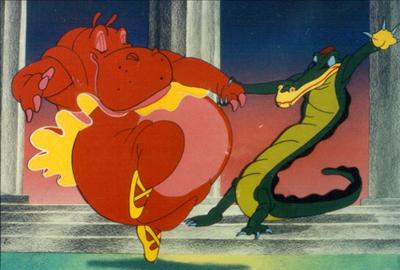
Wolf Woman or Hungry Hungry Hippo?

There's such a difference between knowing something in your head and feeling it in your heart. 

I know that my ex b-f had distorted thinking - about a lot of things, but particularly about food, diet, exercise, body image.  When last I saw him, he was obsessing over being "fat," having put on a few extra pounds around his middle, though at over 6' tall and 160 pounds, no one would accuse him of being overweight.

He would talk with longing in his voice for his teenage days, when he'd gotten down to 95 pounds.  (Of course, he was living off speed and cigarettes then, and it landed him in the hospital, but still...)  Not in the beginning, but after I moved in with him, he made constant derogatory comments about anyone he saw who was overweight - whether he saw them while we were driving, on TV, etc. ( if never to the actual face of an overweight person who happened to be friend or family.)  They were disgusting, they had no self-control (this from someone who would drink to passing out), they looked revolting, all fat people should be shot...

Mind you, when we met, this is how we looked as a couple. 
from Nighthawk News
I was in a "very big girl" stage, and while that didn't matter to him at all during the "honeymoon" period, when we were courting, before that ended I had begun dieting and stepped up my exercising - for me, not for him - and he was very pleased. 

Of course, it wasn't enough.  I got down to within five pounds of my high school weight, and while he would join in the praise around others who would tell me how great I looked, in private, he'd tell me I would look great - if I lost another 10-15 pounds.

Well.  And then his OCPD began rampaging in full about 101 different things, and I became stressed, depressed.  I stopped exercising as much, because he was so jealous of the time it took away from "us," I stopped being as careful about what I ate.  He rationed my food and rode me constantly, at home, about what I should or shouldn't "pig out" on, and I began binging at work during the day.

No surprise, the weight began creeping back up.  I haven't yet regained all that I had lost, over that two years I worked so hard to lose it; but I've regained a lot of it.  And I hate it.  I hate the way my body looks and the way my clothes don't fit and the fact I had to buy another pair of "fat" jeans today because my thunder thighs are about to bust out the sidewalls of my other fat jeans.


I gave myself permission (mentally if not emotionally,) to gain a little weight since the split, but I think now...  part of me didn't think it would really happen.  At first I gobbled up all kinds of "forbidden foods," a natural reaction, I knew (mentally!) to being starved of them/for them for the years I lived with ex b-f.  Like in the story told by Clarissa Pinkola Estes, a wolf that has been starved in the winter will go on a rampage when spring comes.

I figured once I got used to the fact that I could eat these foods, any time I wanted, and nobody was going to take them away from me, my cravings for them would stop, as Geneen Roth said, and for the most part that's happened.

So I'm trying to be kind to myself and I'm trying to be patient.  I've been learning about mindful eating and taking baby steps towards putting it into practice, the past few months.  


from Master Isolated Images at FreeDigitalPhotos
  I still am enjoying foods I wasn't "allowed" to have, then, but not in huge amounts.  I am not binging at work any more.  I am learning to recognize when I am approaching fullness and stopping then, not eating to the point of being overfull.  I am eating lots of broccoli and salads - because I actually enjoy them, and because I feel good about giving my body foods that are healthy for it.  I'm drinking lots of water and very little (though still some) soda.  I'm still doing regular exercise.  (Though I could be doing more - one can always be doing more exercise - I'm not doing less.)  I'm learning to recognize the pull of emotional hunger and to sit and breathe and acknowledge my feelings, instead of stuffing them down with food.

I know, calorie-wise, even if I'm not counting calories or points or carbs, I'm giving my body less of 'em.

So why am I still gaining weight?!?  I know, in my head, that I am taking the right approach.  I know, from bitter experience, that "regular" diets don't work, long-term.  Been there, done that, got the T-shirts - sized XL to L to M, and back again.  Twice.

But I'm scared.  I think I had this unrealistic vision in my mind, that I would start my baby steps of mindful eating, and as a reward, the Skinny Fairy would come bonk me on the head and I'd magically wake one morning, twenty pounds thinner overnight.  And I still hear my ex b-f's voice inside my head, telling me I'm a disgusting fat pig.

I don't want to be patient with myself.  I want results right now!!  And I want all those horrible, negative messages that I've introjected into my brain, from ex b-f, from magazines, from pop culture, to STFU already.

<Sigh.>  I'm just gonna have to do this the long, hard way, aren't I?  One positive affirmation, one baby step, one STFU to the negative messages, at a time.

Have you ever had to struggle with an issue like this?  Where you knew something, in your head, but it wasn't making it down into your heart where you really felt like you believed it? 

Tell me how you did it (please!) in the comments.