Using writing, and meditation, and ice cream, and reading, and dreams,

and a whole lot of other tools to rediscover who I am,

after six years living with a man with OCPD.


Showing posts with label catastrophic thinking. Show all posts

Saturday, December 29, 2012

Empathy vs. Sympathy vs. File Not Found

When we say we want a partner to demonstrate empathy, is perhaps what we really mean  sympathy?

From Dictionary.com

em·pa·thy

1.  the intellectual identification with or vicarious experiencing of the feelings, thoughts, or attitudes of another.
2.  the imaginative ascribing to an object, as a natural object or work of art, feelings or attitudes present in oneself. By means of empathy, a great painting becomes a mirror of the self.

sym·pa·thy

1.  harmony of agreement in feeling, as between persons or on the part of one person with respect to another.
2.  the harmony of feeling naturally existing between persons of like tastes or opinion of congenial dispositions.
3. the fact or power of sharing the feelings of another, especially in sorrow or trouble; fellow feeling, compassion, or commiseration.
4.  sympathies
    a.  feelings or impulses of compassion.
    b.  feelings of favor, support or loyalty: It's hard to tell where your sympathies lie.
5.  favorable or approving accord; favor or approval: He viewed the plan with sympathy and publicly backed it.

The point has been made by some of my friends battling OCPD is that it's not that they necessarily lack empathy (though sometimes they do). In fact, when someone they love is hurting, they are often all knotted up inside, hurting with and for their partner, but often, none of that shows on the outside.

Spock
Spock (Photo credit: Tram Painter)
(Others do state they feel little to nothing for others inside. Mr. Spock is their role model; they take pride in working off a pure logic, no emotions model of behavior.)

It's not really fair to expect another person to be a mind-reader and to know what we need, especially if we know or suspect s/he has trouble "connecting" with emotions, let alone ours.  One spouse shared that when she is sick with a cold or the flu, what she wants is to be periodically checked on, for her partner to offer to bring her water or juice or soup or tissue. Her husband wants to be left the hell alone, just let him go to bed, close the door, and don't bother him.

So, until they actually discussed this, they were each irritating the hell out of one another. The wife felt unloved and neglected, the husband annoyed by her solicitousness.  "Do unto others as you would have them do unto you" is an excellent rule of thumb, but sometimes it requires some fine-tuning.

Sometimes the hugs need to be coached.
 
I became very good at "coaching my hugs," communicating my needs to my (now) ex. After kissing him hello and expressing how glad I was to see him, I might specifically say to him, "I had a really miserable day at work today.  Can I bend your ear for 15 minutes and just vent? I don't need solutions, just to let off steam. And a big hug afterwards, maybe a back rub."  What I would receive might be:
a.  "Sure, can I make you a drink first while you change out of your work clothes?"* Followed by decent listening, and a hug - sometimes good, sometimes Sheldon-style. (But never, ever the back rub. Back rubs are icky.)
b.  "You think you had a hard day? Listen to this..."
c.  Allowed to begin, but interrupted five minutes into my rant by his work horror stories
d.  Interrupted by advice, "I can't believe you put up with that! You should just tell that client to stick it up their ass..."
e.  "Well, my day didn't start off very well, either, because somebody forgot to wash her cereal bowl, like I have time to clean up after other people all day long."
 *the "change out of one's work clothes" issue was a big deal to him - the idea of relaxing and eating dinner before changing clothes was unthinkable.  Now that I'm on my own, sometimes I change, and sometimes I don't, and if I spill food on my work clothes, I... wash them. What a concept!

Empathy (software)
Empathy (software) (Photo credit: Wikipedia)
I don't think the problem, in b-d, above, was that he wasn't feeling empathy - clearly, he was emotionally connecting with my "hard day at work" meme.  But instead of giving me the sympathy and support I had asked for, he often springboarded into his own head and his own needs.

On a side note, what he never, ever initiated was negotiation:
a.  "Honey, I am hungry and grouchy - can we postpone your rant till after dinner when I can listen better?"
b.  "Yes, but can we flip a coin, winner goes first, loser goes second? Because I need to vent about my day, too."

In other posts, I've talked about the all-or-nothing, black-or-white nature of disordered thinking, how the idea that people could meet in the middle and both could get their needs met, was something he could only grasp in theory, not in practice. Either it was my way or his way, rarely our way.


One issue that has repeatedly surfaced is lack of support for partners or children of (many, not all) OCPD'rs in a health crisis emergency situation, and not simply because of differing expectations. When I was ill, or experiencing some health scares, my ex refused to come with me to my doctor's appointment, though I invited him and told him it would be extremely helpful to me.

One of my sweet friend Sid's last blog posts included this:
I had a medical procedure, and my doctor scheduled a follow-up appointment on a Thursday. A Thursday where my sister and her family would be visiting my parents' one hour south of where I live.

As I'm often wont to do, I decided to shove "all of my crap into one bag" and go into work that day, go to my follow-up appointment, take Friday off, and hop on the train to visit with my family for the weekend.

First, I look at train schedules. I have two options: Amtrak which goes straight through but the train station is a slight drive south of my folks' home, or Metrolink which is closer to their home but I'd have to change trains.

No decision: Amtrak.

Greg felt differently, however.

G:  You are SO selfish! Now your parents have to go out of their way to get you!

S:  They won't mind.

G: And Metrolink is a few dollars cheaper!

S:  Yes it is.  Could you give me a ride to the station after my doctor's appointment?

G:  Absolutely not. Not if you're taking Amtrak. So selfish, Sid.

This went on for several hours, for a train ride he wasn't taking.

In preparation for the appointment, Greg often reminds me to ask such-and-such of the doctor. I usually ask the questions and share the answers with him, but I never seem to ask it right, or enough, etc. Big point of contention for him almost every time.

S:  If you do take me to the train, you could first GO to the doctor's appointment with me and ask your questions in person. That way you'll know what was asked and exactly what the doctor said without my watering anything down.

G:  No way. NO ONE goes to their partner's doctors appointment. That's crazy.

S:  I don't know. I've seen it happen quite often, but if you're not comfortable... Just trying to get you the information first hand, Dear.

G:  I'll make a list of questions for you to ask the doctor.

S:   No thank you. If you want to control the questions you can do it in person, Sweetheart.

When I refused his question list, Greg refused to assist.  I just planned on taking a cab instead.  Must less agita.
Condensing, a bit: Another friend drove her to the train station. The porters assisted her onto and off of the train (and she ended up vomiting green bile while on the train).
But when I got off the train my mom saw a skeleton, my sister thought I was dead, and apparently I talked in circles that entire first night.

After eating that first meal, my family could see my face fill out a bit within an hour or two.

That weekend with my family, I ate, I slept, and just hung out with loved ones, feeling very safe and accepted.

Unbeknownst to me, my doctor had seen a chemical imbalance between my sodium and potassium in my bloodwork.  Sis talked to a nurse friend of hers who said that my circular discussions were consistent with that condition.

Monday, I returned to Burbank, but instead of beginning a battery of tests at appointments all week, I would admit myself to the hospital for the tests, have a sodium IV round-the-clock, and go through a diet modification and education.
When she got out of the hospital after the tests, Sid was still so weak she could barely walk even short distances. She looked like a Somalian famine victim, except for the red hair and freckles. The "support" she received from Greg while in the hospital was so draining, physically and emotionally, that she asked him to not to come back for the rest of her time there. Two months later, she was dead.  While Sidney was an adult woman, who could and should have taken better care of herself, I also believe that with a more sympathetic and supportive partner, she might still be alive.

I believe that in Sid's situation, in my similar experiences, in those of other people who have shared stories of a denial/refusal to help a loved one during a health crisis - it's not that the OCPD'r doesn't have empathy, doesn't care. So if we think we could have a better result, if only they had more empathy - maybe we're going in the wrong direction. Maybe they already have gobs of empathy, crippling amounts of empathy, but they need training/help in sympathy.

I posed this question on the free forums site: We all know (I hope) that if your spouse tells you, "Honey, I think I broke a bone; will you please drive me to the emergency room?" that The Right Thing to do is get the car keys and not argue - am I right?

Here was one reply, from someone with an OCPD spouse and mother, who suspects perhaps a bit of OCPDness in herself:
I see it as denial or deliberate self-delusion based on caring too much, rather than caring too little. My mental model of it (Note the term mental model - I'm not saying that it's an accurate reflection of anyone's thinking) is:

- It's the OCPDer's job to discover, implement, and enforce all of the rules that keep the universe spinning and keep anything bad from ever, ever happening.

- Something bad happened.

These two things are incompatible. They lead to a choice between two equally intolerable conclusions:

- Bad stuff just happens sometimes, with no way to prevent it, or

- The OCPDer committed an error in performing his job to ensure that nothing bad ever happens.

We know that the first is true. The OCPDer may logically know the same thing. But emotionally, no. To accept that is, I think, to undermine the whole underpinning for OCPD. It would be an instantaneous cure. That's not going to happen.

And the second is equally intolerable. If the OCPDer can make mistakes re: things that are desperately important, like their spouse, then the whole protective structure that they've built around themselves is utterly worthless.

So it's necessary to go on to less logical but more palatable explanations. Some possible explanations that I can see are:

- Nothing bad has actually happened; the event is just an ordinary everyday thing.

- The bad thing is not the OCPDer's fault, it's the fault of the person that it happened to.

- The OCPDer doesn't actually care about the person. Look at them, after all, how imperfect and annoying they are.
Another interesting reply to the question: We all know (I hope) that if your spouse tells you, "Honey, I think I broke a bone; will you please drive me to the emergency room?" that The Right Thing to do is get the car keys and not argue - am I right? came from someone diagnosed with and struggling with this disorder:
Yes, you're right. :) But you're right in a language the OCPDr, at least in my experience, doesn't grasp in practice. Intellectually, in theory, in fantasy, sure. But in taking action? That alien, otherness that I often speak of - this is the heart of it.

What happens in these situations is a system breakdown, "file not found," from what I can tell. The rest - any action the OCPD'r does actually take - is fallout, dysfunctional, nonfunctional, whatever. Shame, frustration, fear, become defensiveness, anger, blame.

Empathy & compassion flow on impulse, a word more often associated with things like fun and spontaneity. But when you think about situations calling for empathy, some being illnesses, accidents, emergencies, these are unmapped territories that a person acts on with impulse, to caretake, to help, to allow the other to heal and feel better, without concern for doing it right. I'm not talking morally here, I'm talking protocol, even where and when protocol simply doesn't apply. We impose the word moral here sometimes in regard to the OCPDr but as I have before, I disagree with that. OCPD'rs work with plans and maps and protocol, those sorts of sanctioned "right" ways. But no two situations like these are alike, even if an illness repeats, or some detail may be similar, there are so many x factors that each one is completely unknown and uncharted. There's literally no conduit for the empathy to flow from.

Now, if a situation does repeat closely enough, or I've observed someone else taking the exact same action that's called for - I may do fine. If my brain detects a match, inside what happens is "aha, I know this one. I can do this one." Break a second bone a week later and I'll drive you to the ER without hesitation, so long as there's a clean & clear view of action to be taken.

sympathy doll
sympathy doll (Photo credit: brendaj)
So, IMO, it's not that those with this disorder lack empathy - but they lack sympathy. They can't express what they feel in a way that is helpful to you. Much like a computer given a command it doesn't recognize, you'll get: File Not Found.  Maybe the average person doesn't need a script, doesn't need to be coached in the appropriate length of a hug, or not to argue with a partner who needs a ride to the hospital or a train station, but those with this and similar disorders do.

To expect them to "exceed their programming limitations" in times of crisis is akin to expecting your bird to start catching mice.


The problem is that when you as the partner are experiencing the heart attack, broken bone, or life-threatening illness, you may not have the time or patience to clearly and calmly help your partner or parent through their meltdown over your health crisis.

Your thoughts?


Enhanced by Zemanta

Friday, February 10, 2012

How the Buddha Girl Got Cracked

As I was decorating my new apartment last year, I saw a photo of this small Buddha woman/girl in one of my many catalogs and fell in love with her. (FYI, I was once the catalog queen of the West Coast, though I have cut down substantially) She radiated peace, tranquility, compassion. I decided I must have her, that she would help me keep focused on being Zen, letting go, breathing.

Eventually, as things settled down, I decided she belonged in my bathroom. Bought a couple of white floating shelves - but she didn't look good on a white shelf. Bought a dark shelf, and gave the white ones to a friend.

She looked awesome.

But... she's fairly substantial, weighing about four pounds. And I live in SoCal. Earthquake country.

So of course, the next project was finding museum wax to secure her on the shelf, in case of earthquake, so she wouldn't come flying off the shelf and brain me in the head as I was seated on my white porcelain meditating spot. Should said earthquake occur while I was *ahem* Taking Care of Business.

Done. Now, here's where the fleas come in. *scratching*   I could have put a single daub of museum wax on the bottom center, and she would probably have been just fine. But, being accustomed to OCPD-think, I decided to place three daubs of museum wax under her, one at each corner, and really press her down on the shelf, hard. Better overdoing than doing just enough, right?

Photo via mksystem at Flickr
Fleas, or just a good healthy scratch?

Buddha Girl was fine for one night, then she cracked.

At first I was really distraught.  Thought about throwing her away, and getting a new, uncracked one.  or perhaps using wood stain (or my cheap and easy go-to, colored markers) to minimize the appearance of said crack.

Then I realized, Buddha Girl is even better now.  She's my reminder that overdoing doesn't always work out for the best.  A reminder to check for fleas.  A reminder that sometimes flawed and cracked is better than perfect.

Now I look at her (several times a day, depending on my water consumption) and smile.


She's cracked and flawed.  I'm cracked and flawed.

And we're both perfect, just the way we are.

Do you have a talisman, picture, or some reminder 
that being flawed is perfectly okay?
Your thoughts?


Enhanced by Zemanta

Thursday, April 14, 2011

I Want To Be On A Death Panel


Photo by artist Richard Heeks
Because after all, we're all going to die anyway.

I know, that thought makes most of us uncomfortable.  We don't know, after all, what's on The Other Side, and that's kinda scary.  Some people believe in Heaven (and Hell), some people who believe in reincarnation, some people believe in nirvana, some people believe in being gods on other planets or any number of intriguing possibilities.  And some believe that one is just gone, the consciousness dissolved into nothingness.

But despite any number of fascinating stories from people who were clinically pronounced dead and "came back"  (but were they really, truly dead?) we don't know.

What we do know, for a fact, is we're not getting out of this place alive.

Many of us live like there's an actual, physical Reaper, and if we keep running/busy/active enough, we'll be able to avoid death.  Like he's a bill collector or something.  ("Pull down the shades, turn off the light and the TV, we'll pretend we're not home.")


OCPDrs carry it to extremes, but many people are so worried about what could happen in the future, what terrible thing is lurking around the corner, about protecting against every possible calamity, they fail to enjoy any of the wonderful things that are all around them, every minute of every day.  They're too busy finding green baby galoshes - because it might rain, sometime, in Southern California, and the baby's feet might get wet, and then he might get sick, and then he might die.

They're not so much Pro-Life, as they are Anti-Death.

We have to accept that we are going to die, and we have to accept that people we love are going to die.  That pain and loss are part of the admission price to this crazy Carnival called Life.  We can deny it, we can act like martyrs, and refuse to enjoy the Carnival - as if not enjoying life will entitle us to get more of it.  Hunh?

We can fight to be Cleopatra (Queen of Denial), and live like we have all the time in the world, but we don't.  We need to think about what's on our personal Bucket Lists, our dreams, and work on making them happen.  Is your dream to see the Grand Canyon?  Eat a hot dog on Coney Island?  Watch a taping of The Price Is Right?

Like Captain Picard would say on Star Trek: TNG, "Make it so."

And as far as the death panel thing, yep, there's a whooooole bunch of people I'd pull the plug on.  I don't believe, if one is extremely ill and/or 90+ years old, or in a persistent vegetative state, that it benefits anyone to take extreme measures to keep that person "alive."  (Okay, maybe the hospitals which are making a buck benefit from the care of said "person.") 

I believe that the soul has departed long before, but let's say, just for the point of argument, that it hasn't.  Let's say that the soul and spirit is still in that poor battered shell of a human body, unable to move, wipe itself, or communicate.

Could there be any worse torture than to be trapped there helplessly for weeks, months, years, not able to get out or let people know you're still in there?  To have to watch and listen to hours on end of daytime television programming?  (Whether your preference is Fox or MSN, you know they're gonna have it tuned to the other channel.)  To perhaps be in constant pain, either severe or low-grade, but nobody does anything about it because they don't know about it, and they think there is no pain?

I truly wouldn't wish such a fate on my worst enemy, and I have promised to come back and haunt anyone who does that to me.  (And not in a nice, Casper-the-Friendly-Ghost way.)  If we want to be kind and loving, we should let the person go, allow him or her to move on to...  whatever happens next.  Unless, of course, we know for a fact that the person we are "saving" would want us to fight for every breath.  I know some people in that horrible situation, knowing it's not a kind choice, but it's what their loved one wanted, so they are reluctantly carrying out those wishes.  (I'm so sorry!)

We've come a long way, in terms of preserving the physical bodies of those who would have died, 150, even 50 years ago, but that isn't always a good thing.  As a society, I think we need to reconsider what we often do to people in the last months of their lives, all in the name of "saving" them.  Saving them for what?  More torture? 

Just because we can hook somebody up to any number of modern gizmos and keep the heart beating and the lungs artificially pumped full of air and run a tube down somebody's throat to drip nutrients, doesn't mean we should.  Is an all-out battle to "buy" someone an extra two months of extreme pain, in a hospital, away from the comfort of family and pets and loved ones, always worth it?  (One friend recounted to me at her father's death, she counted - and then recounted, because she was sure she must have made a mistake - 187 tubes and wires running into his body.  187!!)

Newsweek had an interesting article recently on The Myth of Aging Gracefully.  Because of denial, we think we'll be one of the ones who's hardy, running marathons and making love into our nineties, and then drop instantly dead of a convenient heart attack or stroke, but it doesn't always work that way.
There is a 50–50 chance that anyone who survives to blow out 85 candles will endure years of significant mental or physical disability. The risk of Alzheimer’s disease doubles in every five-year period over 65. Furthermore, two thirds of Americans older than 85 are women, who usually become poorer as they age. Many won’t die at home, with the best care money can buy, as Sargent Shriver did in January, but in a Medicaid-funded nursing facility after their life savings have been exhausted.
What about living with gusto and passion?  What about accepting that death comes one to a customer, sooner or later, and making peace with that concept?  Telling loved ones every time you talk to them, that you love them, and treating them with love and kindness now? 

Image via Karen's Whimsy
For myself, I have my own Advance Medical Directive all filled out - copies with my sisters, doctor, and one in the glove compartment of my car.  Not to mention my threat to haunt people.  Your choices may be different from mine, but if you don't already have your AMD filled out, do it now.  No more excuses, no more waiting, no more "I'll do it when I have time," as if you know for sure you''ll have that time.

Cleopatra, Queen of Denial, didn't come to a very nice end, after all.

What are your thoughts on life, and death? 
What are you doing to live your life fully now?
Click a Reactions button, or leave a comment, below.


Sunday, April 3, 2011

Sick of It

I've been battling a cold this past week or so.  I think I have it licked, but you never know.

This is sick in a good way, by kamshots at Flickr
I don't get sick often, but when I do, I tend to get really sick.  In fact, the last time I got sick was over Memorial Day weekend, almost a year ago.  Which spurred the anxiety that caused my ex b-f to blow up, which caused me to reach my "Get Help or I'm outta here" point.

I understand better now, that with OCPD (which as one friend half-jokes, stands for Only Contemplates Potential Disasters) a cold is never just a cold.  It's always a Possibly Fatal Infection, for everyone in the household.

Mind you, I suspect that me getting sicker than "normal" the last few times I got sick - colds progressing to sinus infections or bronchitis - probably had a great deal to do with living with a cigarette smoker, even though he religiously used ashtrays designed to trap much of the smoke.  Not good for the lungs, and on a few occasions, I brought up the idea that him stopping smoking would be good for both of us.  He agreed, even said a few times he wished he could, but that he knew he was too deeply addicted to even try to stop.  Well, we all know, if you think you can't do something, you can't, end of story.  I know the stress of living with him wore down my stamina and immune system, too. 

But I never dreamed of scolding him for me getting sick, as he would me. 

I've now heard stories from other partners of untreated OCPDrs that they can behave extremely badly when illness or injury occurs to someone they love (not every person with OCPD does this, but many do.)  Broken arms, appendicitis, or a head cold, all could (potentially) lead to The Worst Possible Outcome, which means since their head is already speeding ahead to imaging this, the Perfectionist Personality may totally lose whatever emotional equilibrium they have, and be on their worst behavior.

In a normal relationship, being hurt or under the weather generally elicits sympathy from a partner.  In some cases, the Perfectionist Personality will resist or actually refuse to drive their partner to the emergency room, or help with a temporary bandage for a cut.  They may even berate their partners for being so careless and inconsiderate to get sick or injured in the first place.


We may be able to cope to a certain extent, with an OCPD loved one when we feel well.  Setting boundaries, not taking things personally, remembering not to JADE...  But when we're hurt or feeling crappy, the OCPD  lack of expressed empathy, and fussing over their own worries can be especially hard to take. 

Sound effects, too!  Available via Amazon
My ex-boyfriend actually would be quite solicitous of me when I was sick, make me homemade chicken soup (which I loathed.) I know he was expressing his love and concern the best way he could.  The problem was, he couldn't express it in the way I needed.  Even when I specifically said, I would like to eat or drink this, I would like to do X, I would like to nap now - or not nap now, he couldn't hear it.  He expected me to be sick the way he had it scripted in his mind.

What a sad, torturous messy way to think, to live.  I am so glad I can just get sick now.  If I truly need help, I can ask family or friends to make a Kleenex or ginger ale run for me, as necessary.  Without getting bitched at because I wouldn't have gotten sick if I'd been more careful, or being micromanaged as to what I should eat or drink or when I should nap.

What were your experiences with OCPD sickness & health?  
Click a Reaction button or leave a comment, below 
(you can still be anonymous if you like.)

Tuesday, March 22, 2011

Too Perfect Tuesdays - Chapter Two, The Myth of Control

This post continues with The Myth of Control, from Chapter Two.

This series will look at a small snippet of The book on the Perfectionist Personality, aka The Obsessive Compulsive disordered Personality, aka OCPD, each week. Please follow along, leave your comments, engage more on the FaceBook website... whatever your heart calls you to do.

Too Perfect, When Being in Control Gets Out of Control by Allan E. Mallinger, M.D. and Jeanette DeWyze was published by Random House in 1992. 


If Garp could have been granted one vast and naive wish, it would have been that he could make the world safe. For children and for grownups, the world struck Garp as unnecessarily perilous for both.

--John Irving
The World According to Garp

Everyone needs some self-control, and some mastery over his or her environment, just to survive. But many obsessives have a disproportionate need for control - one that is driven and rigid, rather than reasonable and flexible.

This exaggerated need stems from an irrational conviction that perfect control can ensure safe passage through life. <snip>

What are the roots of this myth? I believe that children who will become obsessive are terrified by the awareness of their own vulnerability in a world they perceive as threatening and unpredictable.. In order to maintain a sense of calm and to navigate sanely through life, they must somehow ward off or deny this awareness. So they come to believe that, through control of themselves and their personal universe, they can protect themselves against the dangers in life, both real and imagined. If they could articulate the myth that motivates their behavior, they might say: "If I try hard enough, I can stay in control of myself, of others, and of all the impersonal dangers of life (injury, illness, death, etc.) In this way I can be certain of safe passage."

Obsessive people continue to embrace this myth at an unconscious level throughout their lives. Though they will acknowledge that such total control is impossible, the myth nonetheless continues to influence their behavior from its place deep within.
***

We all know - nobody's getting out of this place (life) alive.  Yet most of us do take what we think are reasonable measures, to protect ourselves, and those we love.

Those with OCPD go past the "belts-AND-suspenders," let's double-check for safety mentality.

Most people who know me would not call me a crazy reckless person.  I always buckle my seat beat, and look both ways before I cross a street.  I floss my teeth and see my dentist and doctors for regular check-ups.  I drive slowly and carefully in the rain.  My ex b-f had gotten to a paranoid place where he refused to go anywhere in the car if it was raining - or was even predicted to rain.  Even a light drizzle.

I've heard of OCPDrs who won't let their children use automatic opening umbrellas - because they could poke somebody's eye out.  (Has that ever happened, in the entire history of push-button umbrellas opening?)

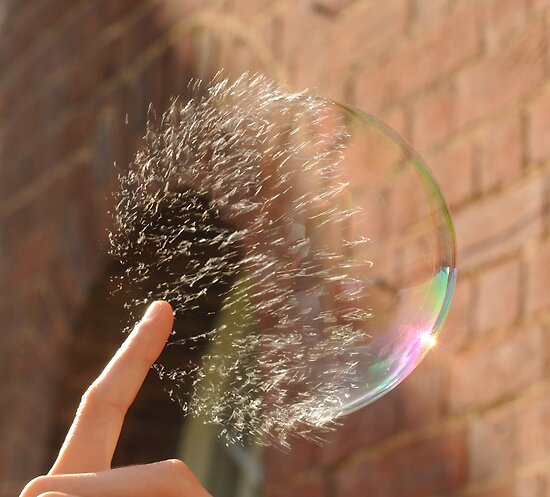
The excessive need for safety and control can create major conflicts between those with OCPD and those who love them.  They would wrap the whole world in bubble-wrap, if they could.  Double layers.  Maybe spray a coat of lacquer over the top, just to make sure it's all well-sealed.  And that includes their partners and children.

Problem is, we don't want to be sealed in bubble wrap. 

“I was wondering what the mouse-trap was for,” said Alice.
“It isn’t very likely there would be any mice on the horse’s back.”
“Not very likely, perhaps,” said the Knight;
“but if they do come, I don’t choose to have them running all about.”
from Old Books
So, there is often major conflict over what constitutes "reasonable" safety precautions.  They may feel, because of our sadly lackadaisical attitude towards obvious dangers like driving in the rain when you don't have to (for instance, to a family gathering,) push-button umbrellas and plugged-in toasters, that they have to take over not only keeping themslves safe, but keeping us safe.  And protecting our homes from all the chaos we (slackers) leave in our wake - a frequent complaint of ex-b-f was that he had to follow around after me, "picking up" and "fixing" things I had left undone.

I'm sure he truly felt that way.  That mousetraps on a horse... well, you never know, do you?  Unlike a "normal" person, those with OCPD don't ever seem to get to a mental place where they say, "Okay, I've done enough for now to protect myself and my family from possible danger.  Now I can relax." 

They very rarely seem to feel they can relax, under any circumstances.

Instead, if all around seems to be under control for the moment, their minds are busy seeking out new, or future dangers, to safeguard against those.

Have you ever gone to ridiculous lengths to insure safe passage through life?
Do you believe , perhaps not consciously, that if you do everything "right," exercise, proper diet, etc., you can prevent most health problems or injury?  Or do you accept that "Shit Happens"?