Using writing, and meditation, and ice cream, and reading, and dreams,

and a whole lot of other tools to rediscover who I am,

after six years living with a man with OCPD.


Showing posts with label excuses. Show all posts

Wednesday, May 15, 2013

Why Does He DO That? Introduction (Part 2)

We're start reading, and, I hope, entering into a healthy discussion of the book Why Does He DO That? Inside the Minds of Angry and Controlling Men by Lundy Bancroft.


Please, do buy your own copy - both because I won't be excerpting all of it, and because this author deserves our $upport.


From the Introduction:
Another central goal of mine is to offer assistance to each woman who is struggling with how she is being treated in a relationship, regardless of what label she may put on her partner’s behavior. Words like control and abuse can be loaded ones, and you may not feel that they fit your particular circumstances. I’ve chosen to use the term abusers to refer to man who use a wide range of controlling, devaluing, or intimidating behaviors. In some cases I’m talking about fiscal batterers and at other times about men who use or insult their partners but never frighten or intimidate them. Some of the men I described in the pages ahead change moods so drastically and so often that a woman could never feel sure what they are like, much less attach a label. Your partner may be arrogant, or may play mind games, or may act selfishly over and over again, but his better aspects may make you feel that he is miles away from being an “abuser.” Please don’t let my language put you off; I’ve simply chosen the word abuser as a shorthand way of saying “men who chronically make their partners feel mistreated or devalued.” You can adopt a different term if you know one that fits your partner better. <snip>

If the person are involved with is the same sex as you are, you have a place here too. Lesbians and gay men who abuse their partners exhibit much of the same thinking, and most of the same tactics excuses, that abusive heterosexual men do. In this book I’ve used the term he for the abuser and she for the abused partner to keep my discussion simple and clear, but abuse lesbians and gay men are very much in my thoughts, right alongside of abuse straight women. Of course, you will need to change the gender language to figure relationship, for which I apologize in advance. You will also find a section in chapter 6 where I speak specifically about the similarities and differences in same-sex abusers.

Similarly, this book includes stories from men from a very wide range of racial and cultural backgrounds. Although the attitudes and behaviors of controlling and abusive men vary somewhat from culture to culture, I found that their similarities greatly outweigh their differences. If your partner is a person of color or an immigrant, or if you are a member of one of these groups yourself, you’ll find that much of what this book discusses, or perhaps all of it, fits your experience quite well. <snip> I further discuss some specific racial and cultural issues in chapter 6.

***

I never wanted to label it abuse.


He was sick, he was stressed out, he had a momentary lapse... And I absolutely loathed the word "victim" as applied to myself.  I am loving, smart, capable, and strong - how could someone like me be a victim?

Reality? He had a pattern of being controlling, demeaning, and verbally abusive to me.  I had a pattern of making excuses for him, and refusing to call it abuse - even to myself.

In the beginning, during the courtship or honeymoon stage, he treated me like he thought I was wonderful, special, valuable... almost all the time. That special treatment never entirely disappeared - and that is why we stay. We keep getting glimpses of who we think the real person, the kind, loving person is, under all the crap, and think if we just did - something - right, better, found the way to explain, we could once again have that incredible relationship with the person we loved.

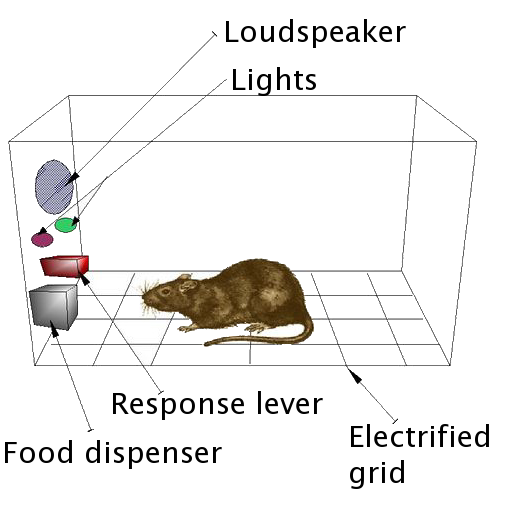
Like those rats in experiments, where if sometimes when they push a bar they get a treat, and sometimes an electric shock, we'll keep pressing that bar, hoping, that next time, it'll be good.

via Wikimedia Commons


Once more, on the male-female thing


Bancroft's book is (primarily) about male on female abuse. Our discussion, here, is not predicated on "bad men; helpless victimized women" because although there are a number of factors that often give men an unfair societal and legal advantage, yes, women abuse men too. Do not feel if you are a man being abused by a woman, that this book and our discussion has little to offer you. Please buy the book and read along.


Disclaimer: The information and opinions posted here, and any comment responses, are not to be considered professional advice and are not intended to replace consultation with a qualified medical or mental health professional. If you are involved in a relationship that includes physical, financial, and/or emotional violence, please contact a professional for help and assistance.

In the US:

National Domestic Violence Hotline - 1-800-799-SAFE (7233)  TTY- 1-800-787-3224 
RAINN (Rape Abuse & Incest National Network)
National Coalition Against Domestic Violence (includes downloadable guides for helping women in abusive relationships)
National Alliance on Mental Illness, aka NAMI

International Resources linked here.

Your thoughts?

Tuesday, August 28, 2012

Too Perfect Tuesdays - Workaholism and Your Mate


Santa Barbara pier
This post continues with The Costs of Workaholism: The Poisoning of Personal Relationships - Workaholism and Your Mate from Chapter Nine.

This series looks at a small snippet of The book on the Perfectionist Personality, aka The Obsessive Compulsive disordered Personality, aka OCPD, each week. Please follow along, leave your comments, engage more on the FaceBook website... whatever your heart calls you to do.


When Being in Control Gets Out of Control by Allan E. Mallinger, M.D. and Jeanette DeWyze was published by Random House in 1992.  If   you believe you are dealing with OCPD or someone who is "Too Perfect," whether that's you or a loved one, please buy a copy of the book and read it for additional insights that will not all be covered in these excerpts.
Workaholism and Your Mate
As for your spouse, workaholism may not cause problems if you're both comfortable spending only limited time together. But when this is not the case, one partner's workaholism can make the other's life a lonely purgatory. Resentful, angry spouses often find ways of retaliating by withholding affection, undercutting their partner's standing with the children, having affairs, spending too much money, or otherwise making their discontent manifest. They may ultimately seek a divorce.

<snip> too much work is likely to take its toll on your sex life. <snip> The sex researchers cite, " the kinds of husbands and wives who relentlessly search for new ways to occupy their time and use their energies - making more money, advancing in a career, caring for children, improving homes, doing community work, accumulating possessions - in short, doing anything that feels like work... In that scheme of things, a sexual relationship has virtually no place. Coitus does because it is translated into a task, a chore, an obligation, a performance, something to be done."

***
We've all seen the ads - the couple on a sunset patio, holding hands from their side-by-side bathtubs. Ridiculous, of course, and yet... what the ads are selling isn't really boner pills. It's the idea of intimacy, closeness with one's partner, sharing an experience.

Sex can be a big part of that, but not if you turn it into a chore. Or into, "I'm in the mood, right now, so let's do it, right now." Not that I, personally, mind a quickie here and there, but other times I need a little time to get my motor running. I want the hand-holding and sunset walks on the beach.

 A couple years before we split up, my ex and I took a trip up the California coast. I got my sunset walk on the beach - only I didn't, because he wouldn't walk with me. No hand-holding, no sharing the moment, just two people who happened to be in the same place at the same time.

Sunset at Pismo Beach.
Not even close enough to capture both our shadows in the same picture.


Oh, we did have moments on the trip when we did connect - overall, it was a very good trip - but always on his terms, if and when he wanted. There was little mutuality. Most of the time, we'd be twenty, thirty feet apart, wherever we went.  (And there were the times when he had a total meltdown and behaved horribly, including one evening out with a couple of his friends at a restaurant.)

He never saw these guys at all, because he was off having a snit fit  about what restaurant we were going to eat in, and when I beckoned him to come over, I believe he flipped me off and walked in the opposite direction.

I am less lonely now, without a boyfriend, than I was when I was with him.


Do you value work over your partner, or know someone who does?
Has your sex life become another item on the to-do list?
Your thoughts?
Enhanced by Zemanta

Thursday, March 8, 2012

Faux-pology, Anyone?
More Like A Three-Pronged Attack

photo from Tactical Awareness & Combat Techniques
Ranted at, screamed at, even; called names and ridiculed in every way possible, and then, later, getting a feeble apology laced with excuses, and then, the day after that, a long list of justifications as to why it really wasn't the abuser's fault in the first place.  We made them do it; in fact, they're the real victim here.

This dynamic has been all over the news lately, because of the egregious and very public bad behavior of radio commentator Rush Limbaugh.  But it's something those of us who've lived with or loved somebody with a personality disorder have experienced, over and over again.  And sometimes, when we've been in the fog long enough, we actually blamed ourselves, because we couldn't forgive and forget.

Didn't they say they were sorry?  Isn't an apology good enough for us?

Let's use this whole incident to examine the cycle, from offense to faux-pology to backpedaling.

Part 1 - The Attack

Sandra Fluke, a 30-year old law student from Georgetown, appeared at a Congressional hearing to testify about how the lack of insurance coverage for birth control harms fellow students, including those who desperately need hormonal contraceptives for medical conditions.

Via Wikimedia
Regardless of whether one agrees or disagrees with Ms. Fluke (pronounced fluk), according to Georgetown University President, John J. DeGioia, someone who does not agree with her opinion:
“She was respectful, sincere, and spoke with conviction. She provided a model of civil discourse.”
Fluke did not verbally attack anyone.  She did not name any names, except in reference to those sponsoring a particular bill. She did not ask "the government" to give her anything for free, and she did not mention her own or anyone else's sex life, except obliquely. (That one friend was married, that another was gay.)

Wealthy radio commentator and drug abuser Rush Limbaugh went on a three day tirade against this young woman.  As shown in the linked video, his tone of voice, his body language, and the lewd suggestions he made (you owe us a sex tape) are particularly vile and disgusting.  He attacked her for things she never said.  For her (alleged) need for condoms in elementary school.   He accused her of "having so much sex it's a wonder she can walk." (Sick imagination? Deliberate slander?)   There's transcripts of her testimony available, so if he had watched or even listened to it, and forgotten the specifics, he could have referred to it, if he wished to respectfully voice his opinion on anything she actually said. But spewing slander and spittle, judging by the video clips, is more his style.


Part 2- The Consequences and Faux-Apology

Many Americans, be they supporters of Ms. Fluke's position, or simply women who don't appreciate being called sluts because they use birth control - and the men who love them - took offense to this extreme bullying of a private citizen via public airwaves.  They began contacting sponsors of Mr. Limbaugh's radio program.  Said sponsors begin jumping ship, one after another after another.

After many (at least nine, possibly twelve) advertisers had ended or suspended their advertising with the program, Limbaugh releases the following written press release as an "apology."


Yep, it was not really a personal attack.  The problem was with the "word choices," not with the deliberate distortion of Ms. Fluke's testimony.  Coming, as it did, only after the program began hemorrhaging sponsors, the timing is entirely suspect.

Part 3 - The Backpedaling; The Aggressor as "Victim"

Additional verbal "apologies" begin on Limbaugh's radio program the following Monday that basically retract what little apology was given.  “I acted too much like the leftists who despise me.” Limbaugh claimed, “In fighting them on this issue last week, I became like them....I descended to their level....I became like the people we oppose.”

He whines about the sponsors (the meanies!) abandoning not him, but his listeners.  You see, he's really the victim here. Betrayed. He's not responsible for the vitriol that pours from his mouth; it's those other people, they made him do it.  They set him up.  Everyone should be sorry for him.  Then he continues attacking Fluke - albeit without the "two words" that he apologized for.

***

I don't know if Rush Limbaugh is actually, diagnosably mentally ill with a Personality Disorder (though I suspect he is).  But I do know that, as far as it comes to dealing with someone with untreated OCPD or another Personality Disorder - this whole scenario is waaaaay too familiar.

First prong of the attack: The fight. It's not a fair fight, where you and your partner are trying to understand one another's point of view, come to a compromise you can both live with. Where perhaps you passionately disagree, but still are using respectful words and language and giving one another plenty of opportunity to be heard. On the other side, your partner is hurling everything but the kitchen sink at you.  Regardless of whether you're left emotionally crushed, in a virtual puddle on the floor, they're going to win the fight.

Next, while you are emotionally bruised and bleeding and hurt, comes either no apology at all, or a faux-pology.  The lips might say, "I'm sorry," but the body language, tone, vocal inflection, and word choices indicate, "I'm still furious."

There's a cliche in movies, "You're not sorry, you're sorry you got caught."  If your partner had not felt compelled by circumstances to issue an apology, they wouldn't be doing it. And they resent you for it.

So now, you have the bitter choice to accept an apology that does not feel genuine in any sense whatsoever, or refuse to accept it, and "become the bad guy."  This is the second prong of the attack. No matter what, it's a lose-lose scenario for you.

Third prong of the attack: Even if you do accept the apology, the spin begins.  Within a week your partner is making you pay with the Stomping but Silent Treatment, snide remarks, and other insinuations because you made him/her feel bad.  You provoked a fight.  If you didn't accept the apology right away, you were holding a grudge.  If you did accept it verbally, but your tone and body language betrayed that you still felt hurt, well, you were just trying to make your partner feel bad.  You were being manipulative.


If you have been in a verbally or emotionally abusive relationship for long enough, you might even believe it.  Feel guilty because you can't simply forgive and forget, and move on. If you are a [Christian, Buddhist, Pagan, fill  in the blank] you might have it thrown in your face that you're certainly not being a very good one.

No. We are not obligated to face personal attack after personal attack with a gracious smile.  Not when it comes from a partner - who we should be able to trust - nor when it comes from somebody bigger and more powerful than us.  That is bullying, plain and simple.

When and if we accept an apology, it is totally up to us.  We are not bad people if we refuse to accept some mumbled words, or even a press release, that screams out "I'm saying sorry because I feel I have to, but it's not like I'm really sorry."  We are not obligated to accept an apology that drips with sincerity, until we are emotionally ready to do so.

We get it. The offender wants to be let off the hook, as quickly as possible.  Not. Our. Problem.  We get to set the timeline on this, not the offender.

And whether an apology is accepted or not, it is not ever, ever acceptable for the attacker to come around with another salvo, when we haven't yet healed from the first attack.  That simply demonstrates how phony the supposed apology was in the first place.

As a P.S. on this - it is not up to Ralph Reed, Mitt Romney, Bill Maher, or any other man (or woman), to accept RL's apology.  It is up to not only Sandra Fluke, but every woman offended by slut-shaming and personal attacks, to accept or reject it, in such time as we choose, if we choose. To discuss it until we are ready to let it go, and not before.  Shame on the Good Ol' Boys' Club for trying to play the game of "Okay, we don't want to discuss this any more, so the conversation is over."

The conversation's just getting started.

Have you ever been through a three-stage fight cycle like this?
Been put in the position of being pressed to accept a faux-pology?

Related articles
Enhanced by Zemanta

Tuesday, October 18, 2011

Too Perfect Tuesdays - Chapt 4 - Making Romantic Commitments & Your Choice

This post continues with Making Romantic Commitments & Your Choice  from Chapter Four.

This series will look at a small snippet of The book on the Perfectionist Personality, aka The Obsessive Compulsive disordered Personality, aka OCPD, each week. Please follow along, leave your comments, engage more on the FaceBook website... whatever your heart calls you to do.

Too Perfect, When Being in Control Gets Out of Control by Allan E. Mallinger, M.D. and Jeanette DeWyze was published by Random House in 1992.  If you believe you are dealing with OCPD or someone who is "Too Perfect," whether that's you or a loved one, please buy a copy of the book and read it for additional insights that will not all be covered in these excerpts.

 Making Romantic Commitmenta
Next time you're torn by an ultimatum, either to make a commitment or end an important relationship, clarify the thoughts that are causing your anxiety.  You'll probably find two sets of concerns locked in battled within you.
If I don't commit:
  • I will will guilty about dashing X's hopes after all this time.
  • I might discover late that I want him or her back
  • I might never again meeting someone who could love me as much.
  • His/her leaving will make me unbearably sad.

But if I do make the commitment:
  • I might wind up regretting that I chose X and be trapped by my conscience in a bad relationship.
  • I'll be accepting the intolerable certainty of never falling in love again.
  • Someone with whom I could have a better relationship might come along, and I would be tied up.
  • I'll be giving up my freedom, and just thinking about that feels horrible, almost like dying.
Now consider these more reasonable beliefs:
  • Although it's sad and painful to end a love relationship, you would recover from such a loss (as would your loved one).  The pain would be neither intolerable nor endless, even though it might seem that way for a while. <snip>
  • On the other hand, if you did make the commitment, it wouldn't be irreversible.  No commitment to a relationship ever is.  Though you shouldn't ever enter a relationship with the idea of bailing out when it gets difficult, if it becomes clear that it won't work, even after every effort to resolve the problems, you can end it.  It would be difficult, but you could if you had to.
  • If you're so close to committing to X, how unsuitable a choice could he or she be?  X might well have some flaws, like most human beings, and it's true that a better choice for you might someday appear, but don't use these arguments to disguise an exaggerated fear of commitment.  If the main obstacle is your terror of closing options, the same problem is bound to come up in future relationships, no matter who your partner is.
  • Finally, it's true that giving up the fantasy of ever having a new love is a painful loss, but it's not unbearable unless you decide it is.  If you insist on telling yourself you can't stand the thought of giving that up, fine.  Have it your way.  But you don't have to think that.  <snip>

Your Choice

I'm not making a blanket recommendation that you commit to your current romance, job, or anything else; I don't have to live with the results.  You alone must decide how much of your reluctance is legitimate and how much is your fear of commitment.
If it's only reasonable caution, you'll resolve your doubts as new data come in.  But if the main obstacle is a fear of decisions and commitments, data won't help.  In fact, you'll just use this additional information to justify your paralysis.  You'll waver, anguished, until external matter decide for your or until you can't stand vacillating anymore and jumo in or out on impulse.
<snip> You can choose to see commitment as an unbearable risk, and the end of your freedom.  Or you can choose to see it as the only way to stop this chronic feeling of painful isolation and lost time.
***

Madonna did Justify My Love, maybe we can ask Lady Gaga to do a song called Justify My Paralysis.

When I look back over my life, my regrets have to do with the men I haven't kissed (granted, I've kissed quite a few), the chances I didn't take re: dating, careers, new activities.  I regret staying in bad love and job relationships because of fear - fear of being alone, or never finding someone else, or finding another job.  And from what I hear, everyone else is the same - they regret the dreams they didn't risk.

My biggest risk - taking 6 months off from work/looking for work after a lay-off, and pursuing writing a book.  Did it sell?  No.  Do I regret that time - absolutely NOT.

Second biggest - moving in with OCPD ex, although I had some misgivings.  I did everything that was in me to make that relationship work.  I'm sorry it didn't work; I'm not sorry I tried.  Even though it didn't, even though in many ways it was an emotionally damaging relationship, in many other ways I am emotionally richer and deeper because of it.  So, no regrets.

Life really and truly does work out - if you decide you're going to make it work out.

What's the biggest risk you decided not to take?
Do you regret "the one that got away" - a relationship that ended 
because you wouldn't commit?
Thoughts, feelings, comments?

Tuesday, July 26, 2011

Too Perfect Tuesdays - Chapt 3
Not So Perfect Relationships
Cutting the Clutter

This post continues with Rising Above Perfectionism: CUTTING THE CLUTTER, from Chapter Three.

This series will look at a small snippet of The book on the Perfectionist Personality, aka The Obsessive Compulsive disordered Personality, aka OCPD, each week. Please follow along, leave your comments, engage more on the FaceBook website... whatever your heart calls you to do.

Too Perfect, When Being in Control Gets Out of Control by Allan E. Mallinger, M.D. and Jeanette DeWyze was published by Random House in 1992.  If you believe you are dealing with OCPD or someone who is "Too Perfect," whether that's you or a loved one, please buy a copy of the book and read it for additional insights that will not all be covered in these excerpts.

Rising Above Perfectionism


CUTTING THE CLUTTER
Streamline your life, from your verbal style to your physical surroundings.  <snip>  The irrational worries mentioned earlier will keep trying to assert themselves.  They are habits.  Don't let them in.  Imagine them pulling you away from the current and, just as in completing a task, slap your hand on the desk, and say "Move!" take a deep breath, relax and refocus, then get going. 
If it is excess belongings that are cluttering your life, make the effort to pare them down.  <snip>  Another hidden rationalization for hoarding items goes like this: you want to do certain things with the items someday (sew that torn dress, read that magazine, repair that car), so you're saving them until you have more time.  To get rid of them would be to admit defeat - that you'll never do those things you feel you ought to do.

Once again, look at your personal history and ask yourself how likely you are to have a lot more spare time in the foreseeable future.  If the answer is"not very likely," then why are you saving these items?  Is it to avoid facing the fact that you can't do everything that "should" be done - that you're not perfect?  Wouldn't it be better to face that fact than to continue living with a useless pile of clutter?
***


It would be better... but hoarders can't do it.  Most non-hoarders will look at a scrap of paper with a mystery phone number written on it, shrug, and toss it, with perhaps a momentary twinge of loss/annoyance.

From Stuff: Compulsive Hoarding and the Meaning of Things by Randy O. Frost & Gail Stekete
Even losses that were not emotional were troubling, particularly the loss of a potential opportunity. I got a sense of this one day as we excavated in Irene's TV room. She came across a piece of paper with a telephone number written on it. Judging from its depth in the pile and the fact that it was yellowing, it had been there for quite some time, possibly years. Clearly, she had written it in haste on whatever she could find. As was the case for most of the information in the pile from which it came, she had not taken the time to identify it or put it in a phone or address book — it was just a number on a piece of paper. When she picked it up, she exclaimed, "Oh, a phone number! I'll put it here on the pile where I can see it and deal with it later."

"Why do you think it is worth keeping that number?" I asked. She said, "Well, I made an effort to write it down, so clearly it was important to me. And it will just take a minute to call and find out what it is. I don't want to do it now, though, because it will interrupt us." She hadn't made the call in all the years the paper had sat in the pile. Whether making the call would have helped her make a decision about keeping the number is uncertain. Perhaps the idea of a potential opportunity that the number provided was better than the reality provided by making the call.
Irene would churn - sort through the same stacks of paper, newspaper clipping, etc., over and over again.  To a lesser extent, I know I do this myself.  For whatever stupid reason, it bugs the hell out of me to "do" file folder labels, so I'll wait until I have at least a dozen or so to do, then prepare them, slap them on the file folders, and only then do I put everything neatly away.

I can relate to the "getting stuck," not wanting to admit I will never finish that cross-stitch project or read that magazine which contains some really good articles.  But I can - and do - get over it.  I may have a cluttered desk, but most of my home is not cluttered.  I keep things I need & use (food, clothes, shampoo, etc.), things that make me money (computer, software, reference material), and work on keeping the things I love (books!) to a reasonable level.

People who share moderate amounts of "stuckness" have recommended FlyLady as a helpful resource.

My ex still has jeans he wore in high school, with busted zippers, in a size he'll never wear again.  A large collection of scarves, gloves, and hats (we live in SoCal, and never went skiing.  Surely one, or even two sets, would have been plenty.)  The videotape collection, previously mentioned.  A non-working street motorcycle last registered in 1978.  So much stuff that did not make his or our life any richer, that he spent twenty times as much time churning over as it would have taken him to put them up on Craigslist, and goodbye!

I would be very interested to hear of anyone who has had long-term success in treating a hoarder.  It seems like all the success stories I have heard relate to those whose tendency to hoard is nipped by a partner in the beginning stages, not reversed in someone who already had piled up too much "I could find a use for that!" stuff.


If you have any links, please share, below.
Or, if you have stories of how YOU have battled hoarding tendencies. 

P.S. check out MIL Still Between Us, Tetanus Burger (both with wonderful pictures.) 

Tuesday, June 28, 2011

Too Perfect Tuesdays - Chapt 3
Not So Perfect Relationships
Social Inhibititions & Being Right

This post continues with Not So Perfect Relationships, from Chapter Three.

This series will look at a small snippet of The book on the Perfectionist Personality, aka The Obsessive Compulsive disordered Personality, aka OCPD, each week. Please follow along, leave your comments, engage more on the FaceBook website... whatever your heart calls you to do.

Too Perfect, When Being in Control Gets Out of Control by Allan E. Mallinger, M.D. and Jeanette DeWyze was published by Random House in 1992.  If you believe you are dealing with OCPD or someone who is "Too Perfect," whether that's you or a loved one, please buy a copy of the book and read it for additional insights that will not all be covered in these excerpts. 

Not So Perfect Relationships

The most serious effects of perfectionism can be seen in personal relationships.  Such problems spring from
  • the fear of having other people see one's flaws
  • the need to be right about everything
  • a constantly critical attitude

SOCIAL INHIBITIONS
Let's look first at the fear of letting other people see one's shortcomings.  This fear is responsible for a variety of social inhibitions that can range in intensity from slight apprehension to full blown terror, complete with pounding heartbeat, weakness, upset stomach, and other symptoms.

<snip> While the form of the specific fear may vary widely, most socially inhibited people harbor distorted fears of being noticed and having their flaws exposed.  The vast majority feel themselves to be under scrutiny much more than is the case, and they believe that others will reject them or will respect them less if any slips or imperfections show through.  <snip>

BEING RIGHT - AT ALL COSTS
A different way in which perfectionism can damage personal relationships stems from the perfectionistic need to be right -about everything.  Errors are anathema to the perfectionist, but everyone is wrong sometimes.  (After all, perfectionism is a myth.  Human existence cannot be mistake-free.)  Lots of obsessives will admit in abstract terms that they make mistakes.  Being able to recognize one's shortcomings is, after all, part of being "the perfect person."  However, perfectionistic obsessives tend to avoid owning up to specific errors, particular in important matters, and this often alienates other people.

It's simply unpleasant to be around someone who always has to show he was right.  <snip>

Perfectionists often try to talk their errors away.  In a discussion, they gently hammer away at their opponents' position until the others back down, if just from fatigue.  Or they will explain how their position was misunderstood.  They nimbly dodge admitting their own culpability.

Should a mistake be absolutely undeniable, they may still have trouble calmly acknowledging their error.  Often they will become defensive, tossing off so many buts, howevers, and other qualifications that their listeners can barely hear the admission within the verbal thicket.  Even in admitting error, perfectionists seem to be saying they they were... semi-right.  Somehow they make it seem that, given the circumstances, being slightly in error was the most intelligent position to have taken.  Throughout, they fail to notice how repelled others can be by this stubborn pretense at infallibility.

<snip>perfectionistic obsessives may even try to convince a hurt or angry friend that his feelings are inappropriate or "wrong."  <snip>  One person will blurt out to the other, "You shouldn't feel that way!"  In each case the obsessive may be surprised when the other person feels alienated still further after being proved "wrong" for feeling a certain way.  The obsessive fails to see the damage done by trying to transform a sharing of feelings into a debate: all too often it pushes the other person into keeping future complaints to himself while smoldering under the surface.  <snip>

***
When I was in my teens, and early twenties, when buying feminine hygiene products at the grocery store I would seek out a female cashier and bagger.  It was simply too humiliating to have a man handle such intimate items, because if they did, they would know that I used them.  They might even think I was menstruating right at that very moment.  The horror!

Well.  I got over it.  I realized that even the male cashiers and baggers handled such items dozens of  times a day, and gave it no more thought than if I was buying tomatoes or shampoo.  They.  Couldn't.  Care.  Less.  If they were thinking about anything while handling my purchases, it was probably about what time they got off work, or how they were going to spend their paycheck, or that cute girl (or guy) that just got hired.

Somehow, those with OCPD are stuck into "they're all thinking about me, they're all looking at me" mode, which becomes self-fulfilling.  If you feel particularly self-conscious and act that way, people will look at you more.  I'm not sure if it's egotism, or immaturity, but mostly, just as in my tampon example, above, we all need to realize that people care a lot more about their own affairs than about us.

I think everybody, perfectionist or not, tends to be at least somewhat defensive about making mistakes.  I don't like finding that I've made a mistake, but I've learned to accept that I do.  I even call attention to my mistakes at work.  "I forgot to do X, I filled out this form the wrong way; I missed picking up the message; now here's how I suggest correcting it."  I work at devising systems, for myself and others in my department, not that prevent mistakes from being made, but that will detect them quickly. My bosses appreciate that I'm more focused on making things work, than trying to deflect blame or Covering My A$$.

Ex was the dinner-preparer, and on rare occasion, he would over or undercook something.  He did learn to joke about that (somewhat), but his attitude towards most mistakes was defending the pass at Thermopylae (think The 300).  Nothing was going to get through or be admitted without a long and bitter battle.

shirt available from Spreadshirt.com
As noted above, that kind of stance is highly detrimental to a relationship.  I experienced all of the defensive tactics noted above: the wall of argument, the admission buried in a pile of qualifications, being told my feelings were wrong, being told I shouldn't feel what I felt...  It's emotionally exhausting, and it erodes trust. 

I had one friend who was actually (somewhat) supportive of our relationship, and who was liked by the ex and welcome in our home ( a very short list), until... she offended him (in his eyes.)  She and I had gone out somewhere, it was a hot summer day, and when she dropped me off, she got out of the car to greet him.  She was a very fastidious person, and he'd been working outside, with no shirt on.  He wanted to hug her hello/goodbye, in all his sweaty glory.  She insisted on shaking hands, instead, which I believe wounded his vanity tremendously.  He couldn't forgive her for the "insult," and nothing I could say would convince him otherwise.

From then on, she was a horrible snob, no longer welcome in our home, and I met bitter resistance to going out to do girly things with her (which was perhaps every other month.)  If I even mentioned her name, I met with petty complaints and ugliness, which encouraged me to keep my feelings to myself.  There was an ever-growing list of Unmentionables.  I don't think he ever sat down and thought about how that kind of behavior did not bring us closer together, but drove us apart.  He would pay lip service to "better communication" being essential to our relationship, he would even bring it up, but how can you communicate with someone who can't accept your feelings or admit being wrong?

Have you lived through the Debate that Wouldn't Die?
Are you more likely to find a winning lottery ticket on the sidewalk 
than have your Perfectionist admit having made a mistake?

Tell about it in the comments.

Tuesday, June 14, 2011

Too Perfect Tuesdays - Chapter 3: The Completion Complex

This post continues with Performance Pitfalls: The Completion Complex, from Chapter Three.

This series will look at a small snippet of The book on the Perfectionist Personality, aka The Obsessive Compulsive disordered Personality, aka OCPD, each week. Please follow along, leave your comments, engage more on the FaceBook website... whatever your heart calls you to do.

Too Perfect, When Being in Control Gets Out of Control by Allan E. Mallinger, M.D. and Jeanette DeWyze was published by Random House in 1992.  If you believe you are dealing with OCPD or someone who is "Too Perfect," whether that's you or a loved one, please buy a copy of the book and read it for additional insights that will not all be covered in these excerpts.


THE COMPLETION COMPLEX

A trait related to the need to be flawless is the need to be thorough.  Bowing to this pressure when preparing a presentation of written report, the perfectionist will include far more information than necessary.  He can't draw the line between what is and isn't important, and he can't risk leaving something out for  fear someone will think he wasn't fully informed.  <snip>

Among countless examples of this behavior, one is provided by the teacher who feels driven to give the perfect lecture.  She fastidiously  presents reams of background information, but then finds herself having to rush through the very issues to which she was building.  In fact, her students often can't follow her increasingly frantic lectures and walk out without having absorbed the main point.

<snip> However, the obsessive's chief motive in covering topics in such fine detail is usually his exaggerated fear of omitting something that will turn out to be important.  This fear blinds the person to the fact that too much detail can dull the impact if his main points, boring and confusing listeners rather than clarifying.  If every base has to be touched and all pros, cons and caveats acknowledges, communication is sterile.  It lacks color, force and focus.  Perfectionism once again winds up detracting from overall performance, rather than enhancing it.

***

One thing I want to say about my beautiful, self-aware OCPD friends - they do know how to laugh at themselves.   The photo joke above was posted on one of my support boards by somebody who has OCPD, and many of the aware OCPDrs joined it to laugh at it, and, ruefully, at themselves.

Nobody wants to be on the receiving end of a massive info-dump.  Again, I think this goes back to my analogy of a malfunctioning or over-sealed filter - those with OCPD really don't know how to filter what's A level important, B level important, C level important.  So everything is included, in one big pile o' crap.  With the result that nothing makes sense.

They did not get the show biz memo: Always leave the audience wanting more.

When I ask what's wrong with my car, for instance, what I really want to know is just three things: 1) How long is it going to take you to fix it, 2) How much is it going to cost, and 3) Is it my fault the whatever-it-is broke, so I can avoid breaking it again in the future?  I don't want to know about the entire history of the internal combustion engine, or how my whatever-it-is works compared to twenty other models of cars.  That makes you happy to know these things, good for you, but I. Don't. Care.

Sometimes I battle the TMI (Too Much Information) tendency in myself, but mostly, people (at least who do not have OCPD) tell me I do a decent job communicating, both verbally and via writing.

How about you?

Thursday, June 9, 2011

Slutwalk LA Update - Over At Health for the Whole Self

Katie McLaughlin writes (and I follow) one of the best blogs on the Internet about learning to get in balance with one's body, self-acceptance, and, yes, HEALTH, over at Health for the Whole Self.  She's kindly allowed me to guest on her blog with an update from Slutwalk LA.

One of the most horrible things that happens to young (and not so young) women is that we are expected to be pretty, attractive, and sexy - and at the same time, blamed if we are too sexy.  Called sluts, and possibly sexually assaulted.  Then blamed by police, even friends and family, for being sexually assaulted.

Yet, on the other hand, if we dress modestly, if we choose not to engage in sexual activity... we're told to loosen up.  Not be so uptight.  (And not any safer from sexual assault, either.)  We're constantly put in a lose-lose situation.

Slutwalk is about calling bullshit on these crazy pressures, and saying, from now on, we will decide what we do with our own bodies.  And we won't let anyone make us feel ashamed.

For more on Slutwalk LA, please click over to Health for the Whole Self.

Tuesday, April 12, 2011

Too Perfect Tuesdays - Chapt 2 (cont) Control Over Others

Fun kinds of games by MaryTClark on Flickr
This post continues with Control Over Others, Control Through Irreproachability, and Control Games, from Chapter Two.

This series will look at a small snippet of The book on the Perfectionist Personality, aka The Obsessive Compulsive disordered Personality, aka OCPD, each week. Please follow along, leave your comments, engage more on the FaceBook website... whatever your heart calls you to do.

Too Perfect, When Being in Control Gets Out of Control by Allan E. Mallinger, M.D. and Jeanette DeWyze was published by Random House in 1992.  If you believe you are dealing with OCPD or someone who is "Too Perfect," whether that's you or a loved one, please buy a copy of the book and read it for additional insights that may not all be covered in these excerpts.
CONTROL OVER OTHERS
The second aspect of the Myth of Control is the need to control others.  <snip>  Most direct are those who rigidly insist that their employees, children, and spouses do things their way, never considering how such a dictatorial attitudes  makes other people feel.  Like anyone else, these obsessives usually want others to view them as kind and nonjudgmental, and are usually surprised when they are not seen that way.  They just can't bring themselves to do what it takes to win that reputation; they can't step back and let the people around them act in their own individual styles.

CONTROL THROUGH IRREPROACHABILITY
<snip> they strive to make people think well of them, always.  The main objective underlying this strategy is to leave no room for criticism.  In early childhood, we learn which behaviors and abilities are labeled "good" by parents, teachers, and others.  Many obsessives master these skills, developing a brilliant facility for identifying those attitudes and behaviors considered virtues in each new social situation and them adopting them absolutely.  Thoughts or images incompatible with this image of perfection are suppressed or rejected.

<snip>  Robert did experience anxiety during this period, especially when he found himself a bit less universally admired, but he also found that the sky didn't fall when he allowed himself to be more genuine and less perfect.  As he gradually stopped hating himself for his phoniness, he became better able to let people get close.  When somebody liked him, he knew it wasn't because of some role he was playing.  He trusted that person's positive response more.  <snip>

Like other aspects of the control myth, trying to control other people's feelings by being wonderful has major drawbacks.  For one thing, it's impossible.  You simply can't embody everyone's idea of virtue.  Anyone who tries is bound to incur someone's disapproval sooner or later.  And when the obsessive can't prevent someone from being angry with him, rejecting him, or doubting his abilities or character, he may find it impossible to let it go.  Often he'll ruminate about the incident, unable to relax, until he devises a way to "fix" it.

CONTROL GAMES
Subtly manipulative control games are another way in which obsessives strive to assert their power over others.  Such power plays whisper: "I've got the upper hand here.  I decide whether or not we will interact.  And if we do, I decide the beginning, ending, and content of those interactions."  Note that I say whisper; you very well may not recognize that you're the object of such tactics.  In fact, the obsessive himself usually is not conscious that he's doing it.  Part of the nature of these ploys is that each has an alternate, perfectly reasonable explanation.  When your colleague shows up several minutes late for a meeting, it may well be that a last-minute phone call unavoidably delayed her.  But when this happens repeatedly, you have to wonder if her slight tardiness doesn't spring from an unconscious need to demonstrate that she, and not other people, decides when she's got to be somewhere.

<snip> The tactic of making another person wait can assume a variety of guises.  It may involve prolonging a decision.  Perhaps you need to know what your spouse if planning for Friday evening, so you can decide whether you're free to attend a professional meeting.  But your spouse just can't seem to come to a decision, leaving you stymied.

<snip>  All these interpersonal control tactics do accomplish their aim to a degree.  However, their net result is often painful and destructive because ultimately they obstruct the sense of connection and intimacy that all humans need and crave.

***

This is where we tend to have the most battles; when Perfectionists try to control us.  My ex would often scold, "I have to show you how to do everything," because I did few things "right" in his eyes, from the way I opened the gate to the driveway, to the way I washed my hands and carried in bags from the grocery store.  Let alone the Shower Rules.

At first, I would do it his way, or JADE (Justify, Argue, Defend and Explain.  The best way to deal is to not JADE;) as those of you who've tried those techniques know, they don't work.  Those with OCPD will simply argue you into the ground until you give up out of exhaustion, and whether you do one or three things his way, he won't do the next thing your way.  He will find 15 more things you're not doing his way.

I've tried to be perfect and irreproachable, myself: the top student in class, the most attractive woman in the room, the best at whatever I turned my hand to.  Like that really worked out!  And so, I've found that despite being a "failure" more often than not, I do pretty well, and most, if not all, people truly like imperfect, unglamorous me.  I'm "over" trying to kill myself to be The Best at something, but will put in as much effort as I think the task deserves.

I've come to realize I have other, more covert Perfectionists in my life, who are, indeed, trying to live in a way that leaves no room for criticism, and whose criticism and control games can be subtle.

ME: I'm going to do X.

Other Person:  Well, that's one way to do it.

Not a criticism, exactly, just a hint of disapproval and suggestion that OP has a (much) better way.  In the past, I'd always bite, and ask, "Oh, what do you suggest, ye wonderful wise person?"   or perhaps, even get into an argument about it.  Now, I'm learning to either ignore the comment, or say cheerfully, "Yep, that's the way it suits me, right now."  Or ask for a suggestion, if I'm interested - but I'm not manipulated into it any more.

On the lateness issue - I have a friend who's always an hour late to anything.  And he used to whine to me about how people didn't understand, how they always took it as a mark of disrespect, blah-blah.  Well, we are still (more distant) friends, and when we plan to meet, anywhere, I always bring a book along and plan to wait for an hour (sometimes it's even less) but now turn a deaf ear to his complaints of busyness and inability to control his lateness.  Like other people aren't busy, too?

It is disrespectful and insulting.  Our friendship has become more distant, in part because I have come to recognize his manipulations and excuses for what they are.  I don't have time and emotional energy for that BS any more.  One very good thing that has come about, as I rediscover myself after being with an OCPDr, is I am recognizing unhealthy dynamics in many of my other relationships, and am working to change them as well.

I, too, have tried to be a "too perfect" friend and confidant, and I realize I need to be my own best friend.  If people think I'm not as "nice" anymore... oh well!

Your thoughts?

Tuesday, March 29, 2011

Too Perfect Tuesdays - Chapter Two - Self Control & Thinking in Extremes


Cows cows cows
from aWorldTourer at Flickr
Do you ruminate like a cow?
 This post continues with Self-Control & Thinking in Extremes, from Chapter Two.

This series will look at a small snippet of The book on the Perfectionist Personality, aka The Obsessive Compulsive disordered Personality, aka OCPD, each week. Please follow along, leave your comments, engage more on the FaceBook website... whatever your heart calls you to do.

Too Perfect, When Being in Control Gets Out of Control by Allan E. Mallinger, M.D. and Jeanette DeWyze was published by Random House in 1992.
Self discipline is the mark of maturity, is it not?  We all admire the person who eats and drinks in moderation; who works at maintaining a fit, well-conditioned body; who is even-tempered; who manages to persevere even at difficult, unsupervised tasks.  But in their unconscious quest for absolute self-control, many obsessives carry such solid virtues to self-destructive extremes.

As I think back to my own days in medical school, I remember students who would not only study long hours but would deny themselves even the most legitimate breaks for eating, exercising, talking with other students, or entertainment.  Would reasonable breaks really have caused a dip in their grade-point averages?  Wouldn't an occasional Saturday off have improved the quality of their lives and their personal growth?  The answers are obvious, but there was no way you could have convinced these people.  They were deft at rationalizing their behavior (e.g., "I'm no genius - I need more study time."). 
I call these reason rationalizations because, while they may have been true, there was another, deeper and more powerful force driving these students to such extremes.  Though they probably weren't conscious of it, many feared that if they let their self-control slip just once, they might have less of it the next time, and still less thereafter.  They feared they would ultimately lose their hard-won diligence completely and become paralyzed or helpless, unable to accomplish anything.  Of course this "thinking" goes on somewhere below the surface, where it doesn't have the benefit of scrutiny, analysis, and revision. 
When obsessives lapse while dieting or trying to quit smoking or drinking, they may have trouble moving beyond their lapse and refocusing on the goal.  Instead they're apt to feel distraught over the transgression, and to dwell on it.  And why?  Not because they seriously think that one slip will make them fat, sick or drunk, but rather because they lost control.  They failed to make themselves do what they decided to do, and if such a slip occurred once, who knows where it could lead?

THINKING IN EXTREMES

These examples point up an important characteristic of many obsessives: they tendency to think in extremes.  To yield to another person, for example, may be felt as a humiliating total capitulation.  Similarly, to tell one lie, break one appointment, tolerate a spouse's criticism just once, or shed a single tear is to set a frightening precedent.  One patient told me she couldn't miss a single workout because it make her feel she couldn't trust herself, and that frightened her.

This all-or-nothing thinking occurs partly because obsessives rarely lie in the present.  They think in terms of trends stretching into the future.  No action is an isolated event; each is merely a part of something bigger, so every false step has major ramifications.

Such distorted thinking can cause a host of problems.  I've know obsessives, for instance, who had trouble relaxing and enjoying first dates because they were so preoccupied with the possible remote consequences of such occasions.  ("Would I want to marry this person?")  In all-or-nothing thinking, one's perspective is badly distorted; there's a failure to step back and remind oneself that going out with someone doesn't commit one to any long-term romance.

Another consequence of such thinking is that it aggravates the pain of worry and rumination.  Obsessives tend to envision the worst possible outcome of a scenario and then worry as if such a scenario had in fact come to pass.  Or they will mentally magnify small personal gaffes into something far more serious,  Some of my patients have had trouble sleeping after briefly losing their composure in a therapy group, assuming that others had judged this "emotional lapse" as harshly as they themselves did.
***


Actually despite the song title being "All Er Nuthin'" it's a pretty good look at a couple setting boundaries with each other.  Will Parker won't marry Ado Annie if she continues her, eh, triflin' ways, and she won't have him out cattin' on the town, either.

All-or-nothing thinking - boy, am I familiar with that one!  Ex-boyfriend drove himself harder than anyone else ever would.  When he was dieting (which was most of the time, since he was convinced he was getting fat,) he would skip meals and of course, since I had my own weight and diet issues, he'd accuse me of "lack of control" because in fact I did want to eat more than once daily.  The nausea and headaches I suffered when I went too long between meals were not physical, in his opinion, but because of my lack of discipline.  He thought very highly of his own "self-control" and I'm sure this was anorective thinking, the idea that "I'm in control, I can conquer my hunger," along with disdain for weak-willed sisters like myself who wanted... moderate amounts of food at reasonable intervals.

If I had a dollar for every time he said "pigging out," "heifer," "slim" (with a sneer in his voice), "wide load," or "are you eating again?" kinds of comments, even when I was slim... I could probably pay my rent for a year.  I'm having to work very hard now to silence that voice inside my head, as I work on learning mindful eating.

Another all-or-nothing thing - we couldn't "do" more than one thing in a day.  For example, if we had a family party to attend in the late afternoon, the whole day had to be set aside for showering and grooming for the party.  He could not get his arms around the idea that we could, perhaps, clean the garage or wash windows until 11:00, then still have plenty of time to shower and get ready for a 5:00 party a 30 minutes drive away.  Nope, all or nothing.  Either a day was totally committed to household chores, or it was committed to social activities.  (And then usually the next day had to be spent in emotional recovery from the strain of said social event.)

I've heard a lot of stories about those with OCPD terrified to date, because there are expectations.  What if you're on a date with someone and don't like them?  From what I've heard, it's totally carried out in their minds to being trapped for 12 years in an unhappy marriage.  Or someone who is desperately in need of a job, but is afraid to send out a resume to X company because they're not absolutely sure they want to work for the company, because what if it's a really crappy place to work?  Hello, they haven't even asked you to come for an interview, let alone made a job offer!  All or nothing, distorted thinking, folks.

Katie from Health for the Whole Self posted about Ten Cognitive Distortions adapted from The Feeling Good Handbook by David Burns (which will be reviewed on this blog, in the not-so-near future.  Gotta get through Too Perfect, first!)  While her adaptations apply specifically to those grappling with eating disorders, a great exercise would be to apply and adapt them to whatever one's "thing" or biggest weakness is, whether it's body-image, dating, job anxieties...

And ruminating...  ex b-f would chew over some negative thing, over and over and over again.  Not in a positive way, as in, "Let's unpack this, see why it happened, and take steps to try and prevent it in the future," but in a way that usually got him as angry and upset, sometimes even more so, than when whatever unpleasant event first occurred.  I believe that in some cases, as he retold himself the story over and over again, that he embellished details in his mind that made it worse or more painful every time.

In his case, he usually latched onto some awful thing that he believed someone had done to him.

Others chew over wrongs they believe they have done to others, and work themselves into feeling terribly guilty.  Katie had a recent blog post where she believed she'd said something offensive and was having trouble letting it go, until her husband told her to stop being a cow (he meant this with love.)

This is one I tended to do, myself, though as I get older, I'm realizing that... sorry, Ego!  What I say is usually not the most important thing on somebody's else's mind.  So, even if I'm more than usually tactless, I haven't ruined their day or life (unless they're OCPD, in which case, no matter how much care and tact I exercised, I might have said the "wrong" thing anyway.)

Got a self-control or thinking in extremes story?
Your thoughts?

Saturday, March 19, 2011

Men, Women, Children and Domestic Violence

So, dear readers, I not only read your comments but give them a lot of thought.  Especially this one.

My as-yet unmet friend and fellow blogger Thalia had posted: 
But what I keep coming back to in my head is this:

If I were in the process of recovering from a bad relationship, and I recognized that it had been co-dependent and controlling, perhaps even abusive (though I do not know if you consider your recent relationship so), and I were trying to unravel all that, I would think it a very good idea to pay close attention to how I react to known abusers. Especially if I found myself downplaying or ignoring that abuse (which you say you did know about), and even more so if I found myself expressing sympathy for that person. Because it could potentially have a lot to tell me about my self-image and who I tend to side with in these matters.

What I hear you saying in this sounds awfully close to me to If we just love them enough they'll change.
Let me address the last part first - if we just love them enough they'll change.  No. 

Well... maybe.  I believe that in some rare cases, love can "win over" somebody who has distorted thinking. 

Image via Karen's Whimsy
But when I say "love," I'm not talking about namby-pamby hearts-and-flowers let me get-that-fix-that be your adoring little doormat.  I'm talking love with muscles - love that sets firm, consistent boundaries, love that insists on therapy and emotional homework and does not tolerate being mistreated and disrespected for a single minute.  If you can show that kind of love, and if the other person realizes that if they don't change, you will walk out that door, never to return... in those circumstances, do I believe they will change?

I think it's possible.  I know a few people (very few people) who've done it.  I also believe that sometimes even with all the stars and moons and planets in alignment, with the best intentions in the world, the person with distorted thinking will not be willing or able to change.  And there's no amount of love - with or without muscles - that can make them.

I believe in most situations, sadly, change is not going to happen.  In hindsight, we might have done better to cut our losses and end it, sooner.  But we can only leave a relationship when we are emotionally ready to do so, no matter how little sense it makes to those on the outside, or how ready others think we should be.

Later, of course, we're asking ourselves What Was I Thinking?! 

If you're trying to be the good friend in a situation where someone is being abused, either verbally or physically, a good reference is Helping Her Get Free by Susan Brewster.

I know, with my ex
b-f, there is no going back.  I gave it my best shot, I swung and missed.  Ballgame over.  Time for the showers - and I'm talking a girly shower, with lots of fragrant shower gel and lather thingies and scented lotion.

On paying attention to how I think about abusers and abuse... I take it very seriously.  Although I recognize that there are false accusations of abuse out there, for the most part I also believe the woman, when an accusation is made.  Or child.  Or man.  I consider myself to have been in an abusive relationship, and just because it was "only" violent twice, and because I believe my former mate to be mentally ill, does not mean it did not have serious damaging effects on my heart and psyche.  For myself, the long-term, ongoing verbal and emotional abuse was far worse than the violence or threat of violence.  For another person it may be exactly the opposite.  We are all individuals, and what we went through will impact us in different ways.

I know that for myself, it's going to take much time and space and self-kindness and more time to recover myself.

On the "public" abusers... Thalia, you're right.  My personal jury is still deliberating, and I don't have one specifically reaction.  Am I too soft on them, to ready to make an excuse or find an extenuating circumstance?  Perhaps.  But as I sort out my many issues, I don't think that painting the world in black-or-white is healthy for me, either. 

Specifically, about Charlie Sheen - I know that I don't know.  I know that he has racked up a record of being arrested for domestic violence, and for threatening women in his circle.  I know that his recent behavior appears bi-polar.  This could mean he is bi-polar, or that his various drug abuses are mimicking the condition, or that he's putting on an act.  Or some combination of all three. 

I've now done some trolling on the Internet in search of the truth - and my conclusion is... I can't conclude.  Not without putting a lot more time into it, and frankly, I'm sick of it and him.  CS may be the biggest Male Chauvinist Pig of all time, who's gotten away with more than OJ Simpson and Kobe Bryant put together, or... "such a good person underneath all of it" as ex-fiance and shooting victim Kelly Preston recently claimed <rolling my eyes.>  I lean towards the MCP view, but who knows?  I don't really care about CS (not that I wish him ill,) except as an example for how difficult it is for families to "control" someone who seems to be mentally ill, no matter how publicly outrageous their behavior.

On abuse, in the generic: Sometimes I believe that abusers seeking Power Over a victim know exactly what they are doing.  That they can and do have control over their actions - for example, when they destroy possessions, they rarely destroy anything that they themselves value.  Those who batter their wives often choose to avoid the face or arms, because the bruises would show - that speaks to premeditation and control, in spades.  I believe that it's no accident that those who abuse the elderly or disabled in convalescent hospitals target those who are no longer able to speak coherently.  Or children.  Or hookers, the homeless, or smaller, frailer inmates - anyone perceived to be unprotected by society.

I think about this, and often I think that those who abuse - physically, sexually, emotionally - are evil, sadistic sociopaths.  And I feel a great deal of rage, and if I could wipe them off the earth simply by pressing a button, I'd get calluses on my button finger from jabbing it so many times! 
The Portable Red Button
from Nagzi at Flickr Creative Commons

And then I think of all we are learning about the brain these days.  That certain areas of brain function - controlling long-term decision-making, for example, mature later in life.  That there are patterns of anosognosia in people with organic brain damage, which are strikingly similar to what people with certain mental illnesses exhibit.  We now know certain diseases, like Alzheimers, are due to build-up of plaque and tangles which inhibit brain function.  We know that damage to certain areas of the brain reduces impulse control.  I lost a dear friend to MS a few years ago, and saw the gradual loss of body control and function that was a result of the deterioration of the myelin sheaths... in his brain.


from Boaz Yiftach at FreeDigitalPhotos

My grandmother was left-handed, and she grew up when the mindset was that being left-handed was simply a matter of "being stubborn."  That she could easily learn to use her right hand as well or better than her left, if she would only try.

I am no longer 100% convinced that all abusers are evil sociopaths.  Some are, I have no doubt.  Others... may be doing their best, struggling against the ways their brains are wired, or damage to the brain due to exposure to lead or who knows what substances, legal or illegal.  Or they may be mentally ill.

Does that make it okay for them to abuse others?  No.  If you are on the receiving end, whether of a punch, or a curse, does it make it feel better, to think "Gee, I guess he can't help himself?"  Hell no.  You are still bruised, and in many ways, hurt worse than if some stranger had come up to you, mugged you and stolen your money.  There is an awful, awful betrayal when somebody you are supposed to be able to love, supposed to be able to trust, is the very person you can't trust.

I think perhaps what Thalia voiced was she was hearing support and sympathy for the possibly mentally ill perpetrator, and not so much for the victim.  Maybe I did sound more sympathetic to the abuser than the victim (though I consider those coping with a mentally ill family member or loved one to be heroes first, victims second.)

My number one priority is for the victim.  We should support and help the victim, and never for a moment stop saying, "Not your fault.  You did not and do not deserve to be: hit, slapped, punched, threatened, berated, screamed at, belittled, ridiculed..." and not run past them in a rush to shower the abuser with sympathy for the stress s/he must have felt, being compelled to abuse, poor baby!

On statistics: I know statistics indicate that far more women are seriously injured by abusive men than are men by women, women by women, men by men... Not sure who takes the lion's share of abusing children, or the elderly but I'm guessing that's probably men, too.  Men usually have a size advantage over their mates, and are often (though not always) the primary breadwinner of the family.

Still, IMO going off on a "bad men vs. abused women" angle is not going to solve the problem.  We want abuse to stop, and in order to do so, we have to enlist everybody: men, women and children to be a part of the solution.  Segregation did not end in America because the African-American community was unhappy about it; the majority of (male white) lawmakers and the general population had to also become opposed to it.  It takes time to turn public opinion around on an issue.

I am not that old (at least, I'd like to think I'm not!) and I remember a time when it was both legal and socially acceptable for an American man to beat up and rape his wife, unless he really "went too far" and put her in the hospital.  Then people would frown, perhaps even whisper about him (although even then he would rarely go to jail.)  Thankfully, this is no longer considered okay.  So I have hope that social attitudes can continue to evolve in a positive direction, even if they're not moving as fast as I'd like.

Men who are not abusing women, but who have, perhaps, been abused by women (and I personally know several), or who know another man who has been abused, are not going to eagerly sign onto taking a stand against Domestic Violence if they perceive men are being singled out and blamed as the sole cause of the problem, and that abusive women are getting a free pass.  This cannot be "just" a women's issue - it needs to be an everybody issue, because everybody is hurt by Domestic Violence.

Children are terribly damaged by witnessing abuse in the home, whether it is fathers to mothers, or mothers abusing fathers, or perhaps an elderly relative in the home, or one sibling who is the family "goat," even if they themselves are not abused.  But I'm gonna go out on a limb here and say, whether they are boys or girls, children who witness abuse committed by men or women are more likely to bully other children in school and grow up to be abusive themselves, than children who do not grow up with an abusive parent of either sex.  Even if they do not become abusers, they are likely to be vulnerable to tolerating unacceptable behavior from future romantic partners (which is part of my own picture.)

IMO, as a society, we need to take a stand and say "Abuse is not okay.  Period."  We need to teach children that abuse isn't okay, regardless of who it comes from: mothers, fathers, stepfathers,  stepmothers, grandparents, teachers, religious leaders, neighbors, other children.  Never, under any circumstances, is verbal, emotional, or physical abuse acceptable.

That said, since we can't just push a button and cleanly get rid of abusers, we need to figure out what else we can do.  I do believe there are some shades of gray here, that someone may lash out physically once or twice in a lifetime, or during a mental illness crisis.  While that's still unacceptable behavior, absolutely, I am not sure that abuser is on the same "level" as somebody who routinely batters a partner, children or parent.  If these people are contrite, if they are ashamed and truly don't want to be verbally or physically abusive, let's see if we can retrain their brain patterns, so battering with fists or words isn't their go-to reaction in times of stress or frustration. 

And let's give those with whom they live enough training to recognize the danger signs and get out before their unstable members do start shooting, slicing, or otherwise "going postal" on the family.  Enough resources to be able to leave an unbalanced relationship, and to know that they are worthwhile people, that none of this is their fault.

I do have, perhaps, a rosy-glasses view of the world.  I would like to believe that Andrea Yates and Jared Loughner and Stanley Neace were not in their right minds when they killed.

I would like to believe that with more education, people will recognize mental illness earlier and find a way to get sick people help before tragedy occurs (even as this is made harder by cuts by many states in mental health funding due to budget shortfalls.)  I don't believe that wish is incompatible with the desire to end domestic violence and the worldwide oppression of women and children, but rather, is of a piece with it.

Maybe it's OCPD fleas, maybe I want to control what is uncontrollable, but I find it less frightening to live in a world where most people harm others because they've "gone crazy," because at least in theory, that can be prevented.  I don't want to believe I live in a world where most people who harm others, do it coldly, sanely, and rationally... just because they want to.

***

Please note, this very incomplete list of resources are not just for physical violence, but can offer help to those suffering verbal and emotional abuse as well.  Don't feel you have no "right" to ask for help because you've never been hit.  Abuse includes emotional, verbal, and financial, and these resources are there for you, too.

USA:
National Domestic Violence Hotline - 1-800-799-SAFE (7233)  TTY- 1-800-787-3224 
National Coalition Against Domestic Violence (includes downloadable guides for helping women in abusive relationships)
National Alliance on Mental Illness, aka NAMI

Canada:
National Clearinghouse on Family Violence - you will need to opt for English or French

UK:
Women's Aid - 0808 2000 247

Australia & New Zealand:
Domestic Violence Information Manual - phone numbers vary by territory

For Male Victims:
Menweb
Why Men Stay in Abusive Relationships


Your thoughts?
Got more links?