Using writing, and meditation, and ice cream, and reading, and dreams,

and a whole lot of other tools to rediscover who I am,

after six years living with a man with OCPD.


Showing posts with label critical. Show all posts

Wednesday, May 15, 2013

Why Does He DO That? Introduction (Part 2)

We're start reading, and, I hope, entering into a healthy discussion of the book Why Does He DO That? Inside the Minds of Angry and Controlling Men by Lundy Bancroft.


Please, do buy your own copy - both because I won't be excerpting all of it, and because this author deserves our $upport.


From the Introduction:
Another central goal of mine is to offer assistance to each woman who is struggling with how she is being treated in a relationship, regardless of what label she may put on her partner’s behavior. Words like control and abuse can be loaded ones, and you may not feel that they fit your particular circumstances. I’ve chosen to use the term abusers to refer to man who use a wide range of controlling, devaluing, or intimidating behaviors. In some cases I’m talking about fiscal batterers and at other times about men who use or insult their partners but never frighten or intimidate them. Some of the men I described in the pages ahead change moods so drastically and so often that a woman could never feel sure what they are like, much less attach a label. Your partner may be arrogant, or may play mind games, or may act selfishly over and over again, but his better aspects may make you feel that he is miles away from being an “abuser.” Please don’t let my language put you off; I’ve simply chosen the word abuser as a shorthand way of saying “men who chronically make their partners feel mistreated or devalued.” You can adopt a different term if you know one that fits your partner better. <snip>

If the person are involved with is the same sex as you are, you have a place here too. Lesbians and gay men who abuse their partners exhibit much of the same thinking, and most of the same tactics excuses, that abusive heterosexual men do. In this book I’ve used the term he for the abuser and she for the abused partner to keep my discussion simple and clear, but abuse lesbians and gay men are very much in my thoughts, right alongside of abuse straight women. Of course, you will need to change the gender language to figure relationship, for which I apologize in advance. You will also find a section in chapter 6 where I speak specifically about the similarities and differences in same-sex abusers.

Similarly, this book includes stories from men from a very wide range of racial and cultural backgrounds. Although the attitudes and behaviors of controlling and abusive men vary somewhat from culture to culture, I found that their similarities greatly outweigh their differences. If your partner is a person of color or an immigrant, or if you are a member of one of these groups yourself, you’ll find that much of what this book discusses, or perhaps all of it, fits your experience quite well. <snip> I further discuss some specific racial and cultural issues in chapter 6.

***

I never wanted to label it abuse.


He was sick, he was stressed out, he had a momentary lapse... And I absolutely loathed the word "victim" as applied to myself.  I am loving, smart, capable, and strong - how could someone like me be a victim?

Reality? He had a pattern of being controlling, demeaning, and verbally abusive to me.  I had a pattern of making excuses for him, and refusing to call it abuse - even to myself.

In the beginning, during the courtship or honeymoon stage, he treated me like he thought I was wonderful, special, valuable... almost all the time. That special treatment never entirely disappeared - and that is why we stay. We keep getting glimpses of who we think the real person, the kind, loving person is, under all the crap, and think if we just did - something - right, better, found the way to explain, we could once again have that incredible relationship with the person we loved.

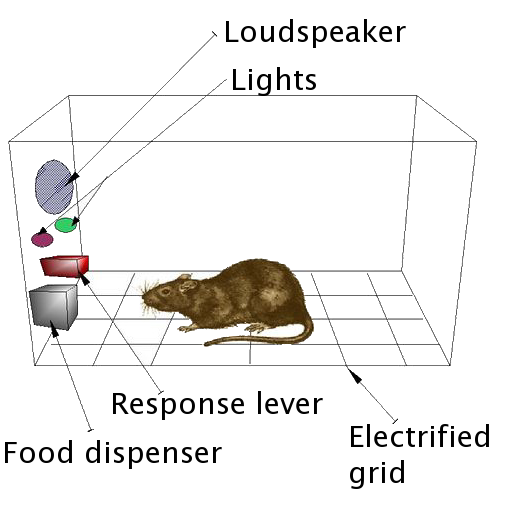
Like those rats in experiments, where if sometimes when they push a bar they get a treat, and sometimes an electric shock, we'll keep pressing that bar, hoping, that next time, it'll be good.
via Wikimedia Commons


Once more, on the male-female thing


Bancroft's book is (primarily) about male on female abuse. Our discussion, here, is not predicated on "bad men; helpless victimized women" because although there are a number of factors that often give men an unfair societal and legal advantage, yes, women abuse men too. Do not feel if you are a man being abused by a woman, that this book and our discussion has little to offer you. Please buy the book and read along.


Disclaimer: The information and opinions posted here, and any comment responses, are not to be considered professional advice and are not intended to replace consultation with a qualified medical or mental health professional. If you are involved in a relationship that includes physical, financial, and/or emotional violence, please contact a professional for help and assistance.

In the US:

National Domestic Violence Hotline - 1-800-799-SAFE (7233)  TTY- 1-800-787-3224 
RAINN (Rape Abuse & Incest National Network)
National Coalition Against Domestic Violence (includes downloadable guides for helping women in abusive relationships)
National Alliance on Mental Illness, aka NAMI

International Resources linked here.

Your thoughts?

Tuesday, August 9, 2011

Too Perfect Tuesdays - Chap 3 - Critiquing the Critic & Better Than Perfect

This post continues with CRITIQUING THE CRITIC and Better Than Perfect from Chapter Three.

This series will look at a small snippet of The book on the Perfectionist Personality, aka The Obsessive Compulsive disordered Personality, aka OCPD, each week. Please follow along, leave your comments, engage more on the FaceBook website... whatever your heart calls you to do.

Too Perfect, When Being in Control Gets Out of Control by Allan E. Mallinger, M.D. and Jeanette DeWyze was published by Random House in 1992.  If you believe you are dealing with OCPD or someone who is "Too Perfect," whether that's you or a loved one, please buy a copy of the book and read it for additional insights that will not all be covered in these excerpts.

CRITIQUING THE CRITIC
<snip>  As with any habit, the key to change lies in increasing your awareness.  A habit survives by being sneaky - an automatic part of you that you don't even notice.  Don't let it continue being automatic.  <snip> Change it!
First, catch yourself as often as possible thinking judgmental thoughts about your spouse, child, or employee.  Notice how unpleasant the feeling is - the disappointment, resentment, or disgust you are experiencing.  Even the momentary self-righteous boost to your own self-esteem is hollow and painful.  Acknowledge that your assessment might be accurate: that your child, for instance, really does bite his nails, or have a slight lisp.  Then notice that having made the observation is doing you no good whatsoever; that this habit hurts and it has few redeeming qualities compared with the devastation it causes.
<snip>  [Various techniques to snap out of it detailed here]
One thing that perpetuates the bad habit is the fact that you have erroneously come to equate intelligence with your ability to find fault, so the fault-finding is hard to give up.  <snip>  ironically, one of your biggest faults - your pickiness - is painfully obvious to everyone, and it pushes people away.
Keep asking yourself what good your hypocritical nature is doing you versus what it costs.  Your child or spouse may be imperfect, but that doesn't mean you have to do anything about it, nor will your being upset change anything.  You are making yourself unhappy unnecessarily.  If you have a legitimate and constructive gripe, fine.  Express it.  But don't cripple your relationships out of a need to be preoccupied with what's wrong; with effort, it becomes just as easy to focus on what's right.  <snip>
Better Than Perfect
<snip>  You don't have to know everything or perform according to some mythical specification in order to be worthwhile, loved, or happy.
Who ever taught you otherwise?  What genius convinced you that you should never make mistakes?  Or that making mistakes proves something is wrong with you?  <snip> And who is doing that to you now?
***

In some cases, if someone has have asked for your help, it may be okay to help them.  "Sally, please look at this grocery list and see if I've forgotten anything," or "Can you read this short story and see if if makes sense to you?"

When you are always ripping people a new one, or jumping in to "help" when they have not asked for your assistance, it doesn't result in making them emotionally closer to you.  How do you feel about the people who find fault with you?

If you want people to feel close to you, to respect and perhaps, even love you, being critical is not the way to go.  It's like gargling with garlic to freshen your breath.

Unless you are The Critic, who is sort of adorable, but even he'd be hard to take 24/7.


As Too Perfect points out, who is telling you that if you're not perfect you won't be loved? Is it someone outside yourself (who, perhaps has distorted thinking)?  Or is it your very own critic you've fed, raised, and cared for inside your head?
 
Time to tell the inner critic to STFU, or give him/her an eviction notice.

Have you ever gotten in the bad habit of criticizing others 
to distract from your own faults?

Thoughts on this post?  (Feel free to click a Reactions button.)

Tuesday, July 5, 2011

Too Perfect Tuesdays - Chap 3 -
Not So Perfect Relationships
Pickiness

This post continues with Not So Perfect Relationships - Pickiness, from Chapter Three.

This series will look at a small snippet of The book on the Perfectionist Personality, aka The Obsessive Compulsive disordered Personality, aka OCPD, each week. Please follow along, leave your comments, engage more on the FaceBook website... whatever your heart calls you to do.

Too Perfect, When Being in Control Gets Out of Control by Allan E. Mallinger, M.D. and Jeanette DeWyze was published by Random House in 1992.  If you believe you are dealing with OCPD or someone who is "Too Perfect," whether that's you or a loved one, please buy a copy of the book and read it for additional insights that will not all be covered in these excerpts.


Pickiness

<snip> there is another variation of perfectionism: an exaggerated inclination to be upset over the flaws in other people or things.  <snip>

While most people would prefer an ideal spouse to an imperfect one, they generally accept that much of life is imperfect, and they don't invest too much time or energy in fretting over minor flaws in their mates.  If you're a critical obsessive, however, you're a true expert at finding fault with anything, and you can't help feeling upset over the shortcomings you find.

<snip> Sarah sadly admitted that her perfectionism had undermined several relationships:  <snip> With her ex-husband, Edward, she morosely acknowledged," I was constantly on his back - criticizing his opinions, his appearance, the way he handled money, his interactions with our son.  He finally started to keep things from me just to avoid my disapproval.

Ultimately, Edward grew resentful toward Sarah because he had come to feel so inhibited around her.  His resentment then spilled into other aspects of their relationship.  He lost interest in their sexual relationship and began spending less time with her.  <snip>  She became even more citical, perpetuating the problem.

Their five-year-old son, Jonathan, also felt belittled by Sarah's pickiness.  <snip> When she praised an art project, or his performance at a Little League game, she couldn't help throwing in a hint as to how he might do better next time.  When she watched him interact at a social event, her attention was always seduced by the things he didn't do well.

Upon reflection, Sarah could readily recognize the destructive impact of her constant fault-finding, but she felt powerless to change.  She'd always been picky, to her this trait seemed an immovable pillar of her being, and she even took some pride in it.  She saw herself as more discerning than most people.  <snip>

If, like Sarah, you constantly focus on the negative, this tendency is likely to sabotage not only your relationships but also your general enjoyment of life.  The speck on the glass not only catches your attention but also robs you of the pleasure of drinking from it.  <snip> The thing you hear loudest is the static most people ignore.

***

I think as much or more than any other facet of OCPD, that pickiness can destroy a relationship.  And as the author points out, many who have this trait take pride in it.  They are more observant, they care more, they pay attention to things other people miss.

If you think some trait makes you superior to others, why would you try to overcome it?  You won't.    Though he would occasionally apologize for being too picky, my ex conveyed that he was doing so as a sop to my feelings, not because he truly believed there was anything wrong with his behavior.  He, too, was proud of his "discernment."

Part of trust is feeling like you can expose your weaknesses to your partner, your friend, your parent, and that person still "has your back."  I couldn't trust him, because he was untrustworthy.  In the beginning, I shared with him some of my most intimate fears, doubts, and shame.  Later, I realized it was not emotionally safe to disclose any fears, weaknesses or doubts to him, because they would - not might be, would - later be used as weapons against me.

When you are constantly criticized, though you know it's a facet of this disorder, and you "shouldn't" take it personally, it's pretty much impossible to block it all out.  It's like standing in the pouring rain - even if you're wearing boots, a raincoat, and holding an umbrella, if it rains hard enough and you stand in it long enough, some of the wet is going to get through.

Most people like to spend time with... people who make them feel good.  Being called an assortment of derogatory names on a daily basis, being constantly criticized for not being "good enough" by someone who is supposed to be on your side, is a love-killer.  Generally not a sexual turn-on, either.

With my ex, I think partly he used sex to try to make up for the other ways he'd hurt me, but in the last few years... too much hurt, too many insults to be kissed away.  In the end, I really didn't want him touching me, at all.

I shudder at the stories I've heard of children who were nitpicked by one or both of their OCPD parents.  Never good enough.  It's the kind of pain that haunts forever.


Have you had to battle pickiness, your own or someone else's?
Please, share how you overcame it, or learned to stop most of it.


Saturday, May 7, 2011

The Use and Misuse of Anger


from BarbaraWilliams2010 at Flickr

Sometimes we trick ourselves into believing a lot of bullshit.

For example, the idea that anger is a "bad" emotion.  That "nice" people (especially nice girls) don't get good and angry sometimes.  That we should always forgive people, even when they continue to do or say hurtful things to us, over and over again.

How's that workin' out for you? 

It sure didn't work for me.

Jules over at Big Girl Bombshell is hosting his month's Self-Discovery series, and her word is ANGER.

At first, I thought, anger?  Not something light and fluffy, kittens and rainbows and lemony-fresh thoughts?  Then I realized I was once again buying into the myth that anger is a bad thing. 

Can anger be abused?  Absolutely.  I know people for whom anger is their go-to emotion.  Seems like they always keep a pot o' rage simmering on the stove, and the smallest slight, misunderstanding, or disagreement gets hoarded and tossed in the pot, a scalding weapon ready to throw in the face of their Significant Others in future arguments.  "Yes, but remember in 1998 when you said I looked stupid in my Leprechaun costume and striped stockings?"

For those AngryMen and AngryWomen, anger may have become addictive.  Anger is certainly a "safer" emotion than acknowledging fear, doubt, uncertainty.  It can be used as a weapon to control loved ones, whether it's the bitter cold, ice queen treatment (my ex was a pro at the Silent but Stomping manner), or the typical volcanic eruption that everyone in the family tiptoes around, fearful lest anything set it off.


from Wikimedia Commons

People also stuff anger down, with food (this would be me), sex, shopping, exercise, work...  I don't know how many times I would not allow myself to feel angry at something, and then later... Many days, weeks, months, pounds later - someone would do something that made me legitimately angry - say, took a parking spot, and smiled and flipped me the bird while doing so, and I would inwardly boil for hours about it.

Well.  The reason something as minor as a pilfered parking spot could make me furious for hours is all that bottled up anger.  I've come to realize that sooner of later, I'm going to have to experience all my deferred emotions: anger, sorrow, loneliness, fear...  Like a credit card, eventually everything that hasn't been paid or felt will come due.  With interest.

When it came to my OCPD ex, I had to finally get good and angry about the way he treated me.  Yes, maybe he's mentally disordered, maybe he couldn't help it, but dammit, I did not deserve to be treated that way.  By anybody.

Righteous anger is an essential part of motivating ourselves to make changes in ourselves, in our homes, in our world.

I'm learning (oh, so slowly!) to be more mindful, in the moment.  To try to let myself breathe and figure out what I'm feeling.  Am I feeling angry?  Is it real anger, or is it fear-in-drag (like when a child dashes across the street, almost getting hit by a car, and his parent swats his bottom)?

Okay, I'm feeling angry.  Why am I feeling angry?  Am I feeling anger in proportion to the offense, or am I dragging a lot of old baggage into it?

Now, what do I want to do with my anger?  This is where a lot of people blow it, literally.  What we do with our anger is a CHOICE, and there are always many choices.  We can scream at a loved one, or a stranger.  We can punch a hole in a wall, kick the cat, go for a swim, write a nasty letter, eat an entire cheesecake, take a deep breath and explain to the person why their suggestion is unacceptable, and offer an alternative, or try dozens of other things. 

from http://www.icanhascheezburger.com/
If we scream at a loved one, and try to excuse it, later, "I couldn't help it, you made me so angry," we're into Bullshit Territory again.  It's possible that their actions or speech did, indeed, make us feel angry, but screaming was our choice.  Possibly even the best choice for that particular situation, but we are lying to ourselves if we tell ourselves we couldn't have done anything but scream.

If we feel that someone is continually taking advantage of us in some way, getting angry is fine, but then we have choices.  Always borrowing the car without permission?  We make sure that person no longer has access to the keys.  We may, in fact, have to end a job, a marriage, or a friendship once we begin acknowledging our anger; or our anger may enable truly meaningful changes to take place.

I'm glad I'm learning how to sit with my anger.
How about you?  Got a lesson learned about anger?

Wednesday, March 23, 2011

NASCAR, Mental Illness, Women, & the Affordable Care Act

Contrary to popular stereotype, people who love NASCAR aren't inbred, big-bellied, red-necked hicks, but come from every walk of life.  I know plenty of smart, funny, well-educated people who follow Jimmie Johnson, Ryan Newman, Jeff Gordon and other drivers.  I've watched plenty of NASCAR races myself, and have even attended a NASCAR race, where I happily sat on Junior (okay, I sat on a Dale Earnhardt Junior cushion.  Never mind what my fantasies were.)

[Disclaimer:  This particular post is going to go a bit political, which is something I normally try to avoid here.   However, I strongly feel that taking care of those in our society who are vulnerable - children, pregnant women, the mentally ill and disabled, the elderly, and those who care for and love all of the above - is an important issue, related to my main blog subject.  Skip reading any further if you don't want to hear how that relates, IMO, to a currently controversial subject, the Affordable Care Act.]

Sorry, turned a bit left there (but then, if you know NASCAR, you know that it's all about turning left.)  Right now when everybody is being asked to sacrifice, where teachers are being told to suck it up and do more for less, when CEO's and those sitting on fat trust funds aren't asked to sacrifice at all, when many in Congress are complaining that we can't afford the Affordable Care Act, when mental health services are being slashed all over the country, because of costs, it seems wrong that one of the sacred cows, whose Budget Cannot Be Touched, is NASCAR.  With an annual price tag of 7 million dollars, plus two-three million more or so tossed in, but who's counting?

I'm not saying there aren't good reasons for the Army to sponsor NASCAR - there are.  I actually agree with the Pentagon's logic, that it makes more sense to advertise for Army recruits through NASCAR sponsorship than, say, at chess tournaments.  However, there used to be some perks attached to men earning more money and having ultimate power over women's lives.  If your ship hit an iceberg, men generally hung back and let the women and children board the lifeboats first.

Nowdays - no more perks for you, ha ha, you silly women who wanted equality!  We'll pretend to give it to you, but you'll still earn less than a man does for the same job skillset and experience, and you can get to the back of the line for the lifeboats, too!  If there are cuts to be made in funding, we won't apply them to everyone universally, just to the stuff that's less important (to men.) 
Here's one thing that I didn't realize. "Before the law was enacted, a 22-year-old woman could pay 150 percent more than a 22-year-old man for the exact same health insurance. Yet her coverage often failed to meet her needs. Thanks to the law, in 2014 it will be illegal to charge women extra for health insurance." From Dr. Carrie's Better Living
Now, you might read that and think, yes, but women get pregnant, and men don't, so it's only fair for women to be charged more.  Then I did some digging.  What "failed to meet her needs" means is, women were often offered plans that did not cover birth control, pregnancy, or childbirth, at all - and still had to pay more than men!  The little pink pill was not covered (birth control), but the oval blue pill (Viagra) was.  How fair (or smart) is that?


Original Photo via spaceodissey via Flickr

Have you ever been pregnant; perhaps had a miscarriage, or C-section?  Sorry, some insurers consider that a pre-existing condition

Did you ever experience or report domestic violence?   Good for you that you escaped, bad for you that you dared to report it.  But even if you didn't officially report it to the police, too many visits to the ER for "falling down the stairs" and you're high risk and could be denied health insurance in 8 states and Washington, DC.

Of course, mental illness is also a pre-existing condition.  For which, under ACA, insurance companies can no longer deny coverage.  This is huge improvement, if not a step far enough.

Used to be,  if you had a child born with a health problem, or diagnosed later with autism or a mental illness, heaven help you, because that's about all who would.  If you were even able to get health insurance coverage for the child, under the parents' health plan, when s/he turned 18, goodbye coverage, never mind if s/he was stable enough to attend college or get a job.
 
What the Affordable Care Act does, is level the playing field somewhat.  It makes the insurance companies play fairer (as long as they are based on "the bottom line" and turning a quarterly profit, insurance companies will continue to be more focused on cutting costs and denying services than on playing fair with their rate-payers.)  The ACA gives women, children, and men, too, a better chance at a healthier life, with expanded coverage for preventative care and vaccinations.  This saves every American taxpayer money, because healthier, insured people don't use the emergency room as their sole medical care, leaving the bill for somebody else to pay.

From Texas' Comptroller's Office

Does the ACA "stick it" to small businesses or cause a loss of jobs?  No, it actually offers small businesses a tax credit for insuring their employees, and claims that it will result in lost jobs are rated totally false by PolitiFact.

How about the idea that the ACA increases the deficit - which the US really can't afford?  Not so in the long-term, says the non-partisan Congressional Budget Office.  Much like repairing a roof before existing leaks cause major structural damage, the costs are significant up-front, but in the long run, save much more money than allowing the roof to fall in and having to rebuild roof, support beams, and walls.

Civilized societies find a way to take care of their weaker members: pregnant women, children, the elderly, the disabled, the mentally ill.  They support those who are thrust into a family caregiving role: taking care of Grandpa who has Alzheimer's, or an autistic child, or a soldier home from war with brain injuries or PTSD.  (Caregivers being usually, but not always, women.)  That the United States, wealthy as it is, can allow those living off inherited wealth, and large corporations to avoid taxes (legally, if not morally,) while we are told "but we can't afford to insure all Americans," and the middle class gets squeezed almost out of existence is obscene, IMO. 

There's a joke that goes, a corporate CEO, a union worker, and a Tea-Bagger are seated at a table.  In the middle of the table is a plate holding a dozen cookies.
There may actually be more than a dozen cookies here.

The CEO immediately grabs 11 of the cookies.  "Watch out," he says to the Tea-Bagger,  "That greedy union guy wants a piece of your cookie."

As Americans, we need to be standing together against greed and for fairness, and not be tricked by those who are hogging all the cookies, into squabbling over the crumbs.

But, some wail, most of the people for voted for ACA didn't even read the whole thing!  True.  (That's also true those of are calling for its repeal.)  

I have on my bookshelf two big fat tomes: Webster's Dictionary, and Roget's Thesaurus.  Must I read and analyze every single word before I decide if they're a helpful resource or not?  Or, can I decide based on spot-checks and professional reviews by non-biased sources?  If one takes the position that a Congress Rep can only vote for a bill that s/he has read in its entirety, the logical counterpoint is that a Rep can only vote against or move to repeal a bill that s/he has read in its entirety.  (Think that's gonna happen anytime soon?)

Is the Affordable Care Act perfect?  Hell, no!  Lots of places it needs to be tweaked, fixed, and adjusted - just like every other major piece of legislation that has ever been passed in America.  The idea that we can only have a good law if it's "perfect" and if everyone agrees on it, right from the start... that's really an OCPD-think, black-or-white argument. 

Somebody with OCPD will want to trash something out of general principal (aka Demand Resistance,) simply because s/he didn't have control over the process.  They'd rather do nothing, than take action to repair the roof that all agreed was leaking, if it can't be done all at once, perfectly.  And really, who can agree on how to fix the roof, when there are so many companies to get bids from, so many colors to choose for roofing materials, but if we choose, say, burnt sienna as the roofing color, will we still be able to get replacement tiles 15 years from now?  Or maybe we shouldn't get tiles at all, maybe we should get a slate roof, let's throw out all the bids and start the process all over again from the beginning...

Enough!  The roof was leaking, and it's been repaired.   Only a total idiot would rip off a roof and expose their house to the elements without having something better to immediately hammer into place.

The ACA is better - not perfect - but better - for working families and their children, than what we had before.  It's more fair to women than the previous free market free-for-all (which was free for nobody.)  It offers more protection and help to those with mental illness and disabilityEnough help?  No, but more than there had been.  We can (and should) work together to improve it, but enough of the babble about repeal.


And to those whining about the costs?  Sorry, you got drowned out by Ryan Newman revving his engine, I couldn't hear you.

Comments respectful in tone and language will be welcomed, 
along with any factual links.
Trolls will be sent back to their bridges.

Tuesday, March 1, 2011

Too Perfect Tuesdays: Chapter One Continued

This post continues with more from Chapter One.

This series will look at a small snippet of The book on the Perfectionist Personality, aka The Obsessive Compulsive disordered Personality, aka OCPD, each week.  Please follow along, leave your comments, engage more on the FaceBook website... whatever your heart calls you to do.

Too Perfect, When Being in Control Gets Out of Control by Allan E. Mallinger, M.D. and Jeanette DeWyze was published by Random House in 1992.


Chapter One
The Obsessive Personality  (continued) 
If there is a single quality that characterizes obsessive people it is a powerful, unconscious need to feel in control - of themselves, of others, and of life's risks.  One of the primary ways in which this needs manifests itself is perfectionism.  A whole family of personality traits is rooted in these two needs - to be in control and to be "perfect."  These include:
  • a fear of making errors
  • a fear of making a wrong decision or choice
  • a strong devotion to work
  • a need for order or firmly established routine
  • frugality
  • a need to know and follow the rules
  • emotional guardedness
  • a tendency to be stubborn or oppositional
  • a heightened sensitivity to being pressured or controlled by others
  • an inclination to worry, ruminate, or doubt
  • a need to be above criticism - moral, professional, or personal
  • cautiousness
  • a chronic inner pressure to use every minute productively

By my definition, someone is obsessive if his or her personality is predominantly colored by traits from this family - in any combination.  Many of these traits, when they aren't exaggerated or rigid, are valuable qualities.  It's hard to imagine someone succeeding in our society today without some degree of self-discipline, for example, or some desire to work hard and avoid errors.  But some people are "too perfect."  The obsessive traits in their personality are so dominant and inflexible that these virtues actually cause a host of problems.

<snip> I see how unaware most obsessives are that they're harming themselves; they recoil from any hint that their heavy burdens could be self-imposed.  Most have grown up believing that you can never be too careful, hardworking, thorough, prepared or organized.  In fact, they're often proudest of the very traits that cause them the most harm.
The book goes on to tell stories about people coming to see the doctor for physical symptoms, or because a partner insisted they get help, not because the Perfectionists recognized any problem with their lifestyle or attitudes.  It tells about Laura, who took on a crushing workload, refused to delegate tasks, and felt she had to be all things to all people.  About Raymond, a workaholic surgeon who wouldn't open up about his own feelings, bullied his wife and passed judgment on everything from her cooking to her political opinions, and then was heartbroken when she embarked on an affair because she felt lonely and unloved.

***

I can relate to Raymond's wife.  When my ex b-f would cry, I would reach out my arms to hold him, and he would either barely tolerate it, or shrug me off.  When I would have a bad day or bad dream, he would never spontaneously hold me or ask me to talk it out.  Sometimes when I specifically asked for it, he would hold me or let me talk about some feelings; other times even when I asked he'd turn me down, or give me a short, wooden hug.  It's very hard not to take that kind of emotional rejection personally.


from Andrew Petro - Creative Commons
 Everyone I've met on chat boards can tell a story about a couch/car/bed that took years to purchase, because the Perfectionist had to get the right one.  No matter how old, broken, uncomfortable or the old one was.  (2+ years for our couch.)  About frugality beyond making sense, about traumatic scenes because a routine may have been interrupted.  The horror! 

And the rules, the rules, the rules!  Almost everyone has a story of the Crazy Rules

Demand-Resistance and demand sensitivity - there will be more on that to follow, but even a perceived demand may meet with an automatic no.  (For example, many partners resent doing something for Valentines' Day, because they feel it's expected of them by society, whether or not their partner has asked for special treatment, and then exhibit resentment to their partners for the implied "demand.")  There's a lot of withholding of feelings that goes on, of not feeling trusted or supported.

Checking for fleas again:  I'm frugal, for the most part (I do use every fragment of paper on my steno pads!) but will not, as many Perfectionists do, eat dicey leftovers to save a few dollars.  The potential cost of getting sick and missing work, of having to go to the doctor or emergency room, to my way of thinking, outweighs the pain of throwing away fifty cents worth of food that might still be good.

I do tend to reflexively take the devil's advocate position, which is certainly an oppositional trait.  Hmmm.  I believe in following rules when they make sense, but don't believe any rules are always right.  One should obey the speed limit, for example, but what if you've got somebody in your car in dire straits and you're rushing her to the hospital?  I do feel that pressure to be productive all the time, but I also make myself take down time, and I'm learning not to feel quite so guilty about it.

What your flea count?  Do you have a furniture purchase from hell story?
Tell me about it in the comments.

Tuesday, February 22, 2011

Too Perfect Tuesdays: Book Review - Chapter One, The Obsessive Personality

On Amazon for as low as less than $3
Too Perfect, When Being in Control Gets Out of Control by Allan E. Mallinger, M.D. and Jeanette DeWyze was published by Random House in 1992.

This series will look at a small snippet of The book on the Perfectionist Personality, aka The Obsessive Compulsive disordered Personality, aka OCPD, each week.  Please follow along, leave your comments, engage more on the FaceBook website... whatever your heart calls you to do.


Chapter One
The Obsessive Personality
This is a book about people who are too perfect for their own good.

You know them.  You may be one of them.  And if you are, you have much to be proud of.  You're one of the solid, good people of the world: honest, reliable, hardworking, responsible, exacting, self-controlled.

But for many people there is also a dark side to the perfection.  The very traits that bring them success, respect and trust can also cause them serious problems.  These people aren't fully able to savor relationships with others and with the world at large, nor are they at ease with themselves in their universe.  Consider:
  • The person so driven to meet professional and personal goals that she can't abandon herself to a few hours of undirected leisure without feeling guilty or undisciplined.
  • The person so preoccupied with making the right choice that he has difficulty making even relatively simple decisions usually regarded as pleasurable: buying a new stereo, choosing where to go on vacation.
  • The person so finicky that his pleasure is spoiled if everything isn't "just so."
  • The "thinkaholic" whose keen, hyperactive mind all too often bogs her down in painful worry and rumination.
  • The perfectionist, whose need to improve and polish every piece of work causes her to devote much more time than necessary to even inconsequential assignments.
  • The person so intent on finding the ultimate romantic mate that he seems unable to commit to any long-term relationship.
  • The person so acclimated to working long hours that she can't bring herself to cut back, even when confronted with evidence that overwork is ruining her health or her family relationships.
  • The procrastinator who feels angry at his "laziness" - unaware that the real reason he is unable to undertake tasks is that his need to do them flawlessly makes them loom impossibly large.

<snip>  Recent articles and books have also made the lay public aware of obsessive-compulsive disorder (OCD), the malady that drives its sufferers to such acts as repeated hand-washing, checking routines, or other paralyzing rituals.

When I use the term obsessive, however, I mean something quite different.  I'm referring to a personality type, not to an isolated behavior or clinical disorder like OCD.
***

I (this is now I the blogger, not I the book author) began this blog because I was coming "out of the fog" with a Too Perfect personality, someone whose need to control me led to verbal and emotional abuse.  I know my life wasn't the only one which was "Perfectly Awful;" his was pretty dreadful too.
Morro Bay & the Morro Bay Rock on the Cali Coast

This is not to say that life with OCPD ex-bf was torture-chamber horrible 24/7; it wasn't.  There were some wonderful times together, fabulous trips, fun giggling times watching TV, making love and happy family celebrations.  If it was horrible 24/7, nobody would stay with these people.  We who love these troubled people have had great times - especially in the beginning of the relationship. 

We may even sense the root of this disorder - overwhelming anxiety.  So because we know there's a good person in there - a worried person, but a good one - we may hang in there.  We'll help them to see they don't have to be perfect, that we love them, flaws and all (as we wish they'd love us.)  Hoping with enough love and patience and kindness, we can "fix" them. 

Doesn't work.  Because each of us can only fix ourselves, and as they mention in the first paragraph, the person with this issue often doesn't perceive that his "strengths" are killing him, and his relationships.  Just as an alcoholic or drug addict must recognize he has a problem and be willing to get help, so must the Perfectionist.

Mine wasn't willing or able to do that.

So why, now that I'm out, hash this all over again?  Because I'm not over it, yet, I am still processing a lot of thoughts, feelings and emotions.  Because someday, I'd like to have another relationship - and next time, I want to recognize the warning signs for somebody like this.  Because I'd like to help my friends - the ones I know, the ones I haven't met, yet - to understand this better, too, and to share in our mutual journey of healing.

And because I know that I have some of these traits, too.  To the point they damage my life?  I don't think so... but I haven't been thinking clearly in a very long time.  Something that happens to those in a relationship with a disordered person is they pick up fleas: the behaviors, habits, and sometimes even thought patterns of the other person.  I want to make sure that I pick off each and every flea, keeping only those traits that make my life better, in moderate amounts.

I have problems with the first item, here, the feeling that just kicking back and having a good time is wrong, somehow.  That pleasure must be earned.  I don't stress over buying things - I try to research and make a careful choice, and then trust that I have and let it go.  I tend to make the best of a bad situation; nothing spoils a good time for me.  But I do tend to get bogged down in worry and rumination.  I don't get slowed down trying to create perfect work, though I do procrastinate over things I don't enjoy doing, like filing.  A commitment-phobe.  Hmmm.  Maybe.  I don't work long hours, although right now, I do work a day job then come home and write for several hours.

I'm thinking my flea infestation - at least on these points - isn't too bad.  How about yours?

Have you read Too Perfect
Did you experience a light bulb moment?
Or are you having one now?

Sunday, February 20, 2011

Wolf Woman or Hungry Hungry Hippo?

There's such a difference between knowing something in your head and feeling it in your heart. 

I know that my ex b-f had distorted thinking - about a lot of things, but particularly about food, diet, exercise, body image.  When last I saw him, he was obsessing over being "fat," having put on a few extra pounds around his middle, though at over 6' tall and 160 pounds, no one would accuse him of being overweight.

He would talk with longing in his voice for his teenage days, when he'd gotten down to 95 pounds.  (Of course, he was living off speed and cigarettes then, and it landed him in the hospital, but still...)  Not in the beginning, but after I moved in with him, he made constant derogatory comments about anyone he saw who was overweight - whether he saw them while we were driving, on TV, etc. ( if never to the actual face of an overweight person who happened to be friend or family.)  They were disgusting, they had no self-control (this from someone who would drink to passing out), they looked revolting, all fat people should be shot...

Mind you, when we met, this is how we looked as a couple. 
from Nighthawk News
I was in a "very big girl" stage, and while that didn't matter to him at all during the "honeymoon" period, when we were courting, before that ended I had begun dieting and stepped up my exercising - for me, not for him - and he was very pleased. 

Of course, it wasn't enough.  I got down to within five pounds of my high school weight, and while he would join in the praise around others who would tell me how great I looked, in private, he'd tell me I would look great - if I lost another 10-15 pounds.

Well.  And then his OCPD began rampaging in full about 101 different things, and I became stressed, depressed.  I stopped exercising as much, because he was so jealous of the time it took away from "us," I stopped being as careful about what I ate.  He rationed my food and rode me constantly, at home, about what I should or shouldn't "pig out" on, and I began binging at work during the day.

No surprise, the weight began creeping back up.  I haven't yet regained all that I had lost, over that two years I worked so hard to lose it; but I've regained a lot of it.  And I hate it.  I hate the way my body looks and the way my clothes don't fit and the fact I had to buy another pair of "fat" jeans today because my thunder thighs are about to bust out the sidewalls of my other fat jeans.


I gave myself permission (mentally if not emotionally,) to gain a little weight since the split, but I think now...  part of me didn't think it would really happen.  At first I gobbled up all kinds of "forbidden foods," a natural reaction, I knew (mentally!) to being starved of them/for them for the years I lived with ex b-f.  Like in the story told by Clarissa Pinkola Estes, a wolf that has been starved in the winter will go on a rampage when spring comes.

I figured once I got used to the fact that I could eat these foods, any time I wanted, and nobody was going to take them away from me, my cravings for them would stop, as Geneen Roth said, and for the most part that's happened.

So I'm trying to be kind to myself and I'm trying to be patient.  I've been learning about mindful eating and taking baby steps towards putting it into practice, the past few months.  


from Master Isolated Images at FreeDigitalPhotos
  I still am enjoying foods I wasn't "allowed" to have, then, but not in huge amounts.  I am not binging at work any more.  I am learning to recognize when I am approaching fullness and stopping then, not eating to the point of being overfull.  I am eating lots of broccoli and salads - because I actually enjoy them, and because I feel good about giving my body foods that are healthy for it.  I'm drinking lots of water and very little (though still some) soda.  I'm still doing regular exercise.  (Though I could be doing more - one can always be doing more exercise - I'm not doing less.)  I'm learning to recognize the pull of emotional hunger and to sit and breathe and acknowledge my feelings, instead of stuffing them down with food.

I know, calorie-wise, even if I'm not counting calories or points or carbs, I'm giving my body less of 'em.

So why am I still gaining weight?!?  I know, in my head, that I am taking the right approach.  I know, from bitter experience, that "regular" diets don't work, long-term.  Been there, done that, got the T-shirts - sized XL to L to M, and back again.  Twice.

But I'm scared.  I think I had this unrealistic vision in my mind, that I would start my baby steps of mindful eating, and as a reward, the Skinny Fairy would come bonk me on the head and I'd magically wake one morning, twenty pounds thinner overnight.  And I still hear my ex b-f's voice inside my head, telling me I'm a disgusting fat pig.

I don't want to be patient with myself.  I want results right now!!  And I want all those horrible, negative messages that I've introjected into my brain, from ex b-f, from magazines, from pop culture, to STFU already.

<Sigh.>  I'm just gonna have to do this the long, hard way, aren't I?  One positive affirmation, one baby step, one STFU to the negative messages, at a time.

Have you ever had to struggle with an issue like this?  Where you knew something, in your head, but it wasn't making it down into your heart where you really felt like you believed it? 

Tell me how you did it (please!) in the comments.