Using writing, and meditation, and ice cream, and reading, and dreams,

and a whole lot of other tools to rediscover who I am,

after six years living with a man with OCPD.


Showing posts with label book review. Show all posts

Sunday, May 4, 2014

Back in the Saddle?

April 15-3
April 15-3 (Photo credit: cj&erson)
Not quite, but soon. This spring has been one that has been overwhelming, as I coped with:

  • Extremely demanding day job (hint: no let-up until April 15).
  • Oldest sister undergoing chemo treatment for a rare form of cancer.
  • Her husband simultaneously declining in health due to a stroke combined with a failing liver. He required 24/7 nursing care, and was released from the hospital in February. While I was mostly only able to help on the weekends, I also became airport shuttle for family members flying in to help care for him.

    He passed on April 19.

Since this ordeal began, I've not had the time, energy, nor motivation to write, neither here nor elsewhere, but I am beginning to feel "stirrings" again.

In the meantime, we have held the first of two memorials/"celebrations of life" for my brother-in-lawlove. He was a beautiful, if damaged soul, who entered my life when I was four, so, yes, I am deeply grieving, even if also relieved he is no longer in pain nor struggling for breath. And our family awaits word on the latest tests that may indicate whether my sister's cancer is in remission... Or not.

In the meantime, I'm reading "Your Mind is What Your Brain Does For a Living" which offers a mix of memoir, CBT, mindfulness exercises, and transactional analysis.  So far, it is neither blowing me out of the water with new insight, nor gluing me to the page with the brilliance of the writing; HOWEVER, for those battling ocpd, it may offer important tips for you.

Sometimes it just takes looking at something from a different angle for the light bulbs to go off. There's a heavy focus on computer programming analogies and understanding how the brain is wired, and can be REwired, that could potentially be helpful.

Wishing health and healing to all my readers, and their loved ones. I'll be back when I can.
Enhanced by Zemanta

Friday, September 6, 2013

When The Body Says No


When we have been prevented from learning how to say no, our bodies may end up saying it for us.
Why do some people get sick, become disabled, or even die from diseases like cancer, ALS, Alzheimer's, while others with the same exposure to environmental toxins never get sick? Why do some people get cancer that goes into remission, and others, like my mother, die from it?
Studies at the US National Cancer Institute found that natural killer (NK) cells, an important class of immune cells we have already met, are more active in breast cancer patients who were able to express anger, to adopt a fighting stance and who have more social support.... The researchers found that emotional factors and social involvement were more important to survival than the degree of disease itself.

I am still working to absorb and learn the many lessons this book presents, both for myself as a human being, as a daughter trying to come to terms with the death of my mother and of others I've loved, and (probably least importantly) as a writer trying to create believable characters.

We often treat our bodies as if they are separate from our hearts, minds, and emotions, kind of like a biological automobile. As if a health "breakdown" is a purely mechanical problem that can be fixed by diet, exercise, the right pills, and adjusting air pressure in the tires.

Reality: Emotions affect the body.

Watch a scary movie. Even though you are in no physical danger, doesn't your heart pound, your breath get tight in your chest? Read a sexy novel. If it's good enough, you'll feel rigidity in certain body parts, wetness in others. Receive a gift. From your partner, tickets for a dream vacation may make you feel happy and excited; from your cat, a squirming rat may make you feel queasy.

When the Body Says NO examines studies and examples of psychoneuroimmunoendocrinology: the way the body's nervous system, immune defenses and endocrine or hormonal apparatus all work together. (Called the PNI system in short, because psychoneuroimmunoendocrinology is a mouthful.) It looks at patients for whom Dr. Maté has consulted, as well as more famous case studies, from Stephen Hawking (ALS) to Betty Ford (substance abuse, breast cancer) to Gilda Radner (ovarian cancer, bulimia) to Ronald Reagan (Alzheimer's).


Stress - More Than A Feelin'

Stress consists of the internal alterations – physical or not – that occur when the organism perceives a threat to its existence or well-being.
via inserbia.info
Stress - if a bear appears - can save your life. Stress triggers the PNI system to send, "Let's get the hell out of Dodge!" or "Stand and fight!" messages throughout the body.

Just like circulation to the extremities will shut down in freezing temperatures, because you can survive without a toe, or two, stress (temporarily) shuts down the systems that kill cancer cells or other long-term threats, process food products in the digestive tract, and more. Like Scotty on Star Trek diverting all energies to the warp drive, your body gives "all she's got, Captain" where it thinks it will be needed, on a totally automatic level.
The stress response is nonspecific. It may be triggered in reaction to any attack – physical, biological, chemical or psychological – or in response to any perception of attacker threat, conscious or unconscious. The essence of threat is a destabilization of the body’s homeostasis, the relatively narrow range of physiological conditions within which the organism can survive and function. To facilitate fight or escape, what needs to be diverted from the internal organs and muscles, and the heart needs to pump faster.

Whenever stress occurs, even when we don't consciously feel stressed, changes occur in our bodies.

Stress, as we will define it, it is not a matter of subjective feeling. It is a measurable set of objective physiological events in the body, involving the brain, the hormonal apparatus, the immune system and many other organs. Both animals and people can experience stress with no awareness of its presence.

That whole "with no awareness of its presence" aspect cannot be overemphasized. The physiological effect on the body is the same whether we are aware or unaware of stress. Especially for children who experience recurring stress, the state of being stressed can become the New Normal.
Eventually, having unmet needs or having to meet the needs of others is no longer experienced as stressful. It feels normal. One is disarmed.

Recurring or chronic stress (such as being an abused child, or watching a parent be habitually abused by his/her partner, while being unable to intervene), being neglected, leaves permanent marks, both on the immune system and other bodily defenses (think of the story of the Boy Who Cried Wolf), and in the relationship patterns we form later in life. We are more likely to choose life partners whose behaviors mirror those we knew growing up, whether those behaviors were healthy or unhealthy.
For those habituated to high levels of internal stress since early childhood, it is the absence of stress that creates unease, evoking boredom and a sense of meaninglessness. People may become addicted to their own stress hormones, adrenaline and cortisol... To such persons stress feels desirable, while the absence of it feels like something to be avoided.
Chronic stress actually changes the way our brains function.
In people who’ve experienced chronic stress, the prefrontal cortex and related structures remain in a state of hypervigilance, on the lookout for danger. Pre-frontal activation is not a conscious decision by the individual; rather, it is the result of the automatic triggering of nerves pathways program long ago.
In situations where the body's balance is continually disrupted in response to a perceived threat, the balance of the body is thrown out of whack, And whenever that happens, cancer, or other long-term diseases, have the perfect opening to take over.


Natural Born Killers - The Body's Best Friend


In a healthy body, there are NK cells, which serve as the body's Angels of Death.

Just like in any factory, the body frequently produces cells which which would be labeled abnormal or flawed, but inside the body, there is no TJ Maxx or Nordstrom's Rack to send "irregular" material.

NK cells track down abnormal cells, such as cancer cells and destroys them, so that the majority of cells in the body are healthy and functional.


There have been many cases where the NK cells have caused full remission of cancer, most significantly in cases of melanoma (skin cancer). Why this cancer and not others? Why in some cases and not others? It can't be wholly attributed to DNA, environmental toxins (or lack thereof), but to family systems and work environment systems.

When the Body Says No refers to several studies in which tiny clumps of cancer are often found in an elderly person's body after death from other causes. Perhaps as we age we all have tiny clusters of cancer growing in our bodies, which our NK cells routinely eliminate before they are large enough to be detected.
In short, for cancer causation it is not enough that DNA damage occur: also necessary is failure of DNA repair and/or an impairment of regulated cell death. Stress and the repression of emotion can negatively affect both of those processes.


The Blame Game


On thing that has made me uneasy in reading similar books, such as Louise Hay's You Can Heal Your Life, is my perception (or misperception, perhaps) that the victim was being blamed for his/her own illness. Dr. Maté debunks that idea:
Blaming the sufferer – apart from being morally obtuse – is completely unfounded from a scientific point of view.
He doesn't even jump on the easy way many shrinks do - it's all the mothers' fault. While be acknowledges that hurts/patterns learned during childhood or generationally may have a lasting effect:
Emotionally draining family relationships have been identified as risk factors in virtually every category of major illness, degenerative neurological conditions to cancer and autoimmune disease. The purpose is not to blame parents or previous generations or spouses but to enable us to discard beliefs that prove dangerous to our health.

The point of doing so is that we can recognize and interrupt those patterns, rather than repeat them.

We are not doomed, the helpless victims of our genes and environmental toxins and terrible childhoods, destined to get sick and not be able to do anything about it. I think that's a good message.


Differentiation: Dance Space of Champions


Remember the wonderful rehearsal scene in Dirty Dancing where Johnny (Patrick Swayze) explains to Baby (Jennifer Grey) "This is my dance space, that is your dance space"? Everyone needs good physical and emotional boundaries to be healthy.

When we are born, we have no boundaries. We assume the whole world, including Mother, revolves around US. We don't understand or realize that Mother is a separate being, that she doesn't feel our hunger, wet diaper, tummy cramps at the same instance we feel them.
A fundamental concept in family systems theory is differentiation, defined as “the ability to be in emotional contact with others yet still autonomous in one's emotional functioning.” The poorly differentiated person “lacks an emotional boundary between himself and others and lacks a ‘boundary’ that prevents his thinking process from being overwhelmed by his emotional feeling process. He automatically absorbs anxiety from others and generates considerable anxiety within himself.”
Later, we realize that when we are scared, hurt, cold, etc., Mother doesn't necessarily share our feelings. Just as we don't share her feelings. But in some cases, we will be emotionally enmeshed with Mother (or Father) and take on the role of protecting her:
The child of an unhappy mother will try to take care of her by suppressing his distress so as not to burden her further. His role is to be self-sufficient and not “needy”...

What it all boils down to is a lack of clear boundaries.

Boundaries are that thing that says: 
This is my dance space, this is your dance space. 

When boundaries get confused within the body itself, when the body cannot recognize, "This is ME; this is Other," then we get diseases where the body's immune system doesn't defend against intruders, but is so confused it attacks its own cells, as is the case in MS, ALS, schleroderma, and other auto-immune diseases.

Anger - The Emotion We Love to Hate


Especially as women, we are socially conditioned to think of anger as a "negative" emotion. If we are "nice girls/women," we won't get angry with people.
“I never get angry,” a Woody Allen character says in one of his movies, “I grow a tumor instead.” Throughout this book we've seen the truth of that droll remark in numerous studies of cancer patients.

Here's the problem: we can't control being angry. Anger, according to this and other research, is the natural reaction of an organism to perceived loss, or threat of loss. Picture an angry wild animal warning another off his/her kill (see the bear, above). Usually animals do not fight to the death over a meal or a mate, but the creature with the biggest display of anger wins. "I won't let you take this from me" is the message.

Being angry is not about being a Mean Girl. It is not about going into a rage.
If you ask in physical, physiological terms what they are experiencing in their body when they feel rage, for the most part, people describe anxiety in one form or another.

Allowing oneself to feel angry in the appropriate circumstances can be an empowering experience.
The repression of anger and the unregulated acting out of it are both examples of the abnormal release of emotions that is at the root of disease.... The real experience of anger “is physiologic experience without acting out. The experience is one of a surge of power going through the system along with the mobilization to attack. There is, simultaneously the complete disappearance of all anxiety.”
I had just finished reading When the Body Says No, when in October 2012, my super-kind, beautiful friend Sidney Patrick died of a heart attack, in large part due to cirrhosis of the liver. She was 43.

She epitomized the disease-sufferer profiled within this book; swallowing feelings with food, drugs, or alcohol, always being kind and supportive of everyone but herself.
The inability to process and express feelings effectively, and the tendency to serve the needs of others before even considering one’s own, are common patterns in people who develop chronic illness. These coping styles represent a blurring of boundaries, the confusion of self and non-self on the psychological level.

I remember telling Sid's mother, shortly after Sid passed, "I am so angry." I was hurt, I was grieving, but over all, I felt so angry at the waste, at being deprived of my friend, who I loved and needed.

I remember so many conversations with Sid; whenever the subject would turn to her, she would divert the conversation as swiftly as possible to other people. She was wholly uncomfortable addressing her own needs, hurts, and dreams. Her long-term boyfriend was mentally ill, often called her names and verbally abused her, even when she was in the hospital, yet she did not want to be cruel enough to "abandon" him.

She did, belatedly, realize that something had to change. After being released from the hospital in August 2012, she told me,"If I stay with him, it's going to kill me."

That is the exact same feeling I had, after being diagnosed in 2009 with "unusual" breast lumps and cysts, which spurred me to break with my then-boyfriend in 2010.

Sadly, Sid was right. She left him in September 2012. If only she had left a month or two earlier...


Betty Ford, Betty Koschin Diehl, and Breast Cancer


Betty Ford was, of course, the first Lady of the United States of America, wife of a fairly ambitious politician. My mother, Betty Koschin Diehl was, comparatively, a nobody; eldest daughter in a family of four children. She signed up to serve in the military (Coast Guard) during WWII, as did many women. Besides the name, both women were diagnosed with breast cancer in the same approximate era, and received similar medical treatment.
Research has suggested for decades that women are more prone to develop breast cancer if their childhoods were characterized by emotional disconnection from their parents or other disturbances in their upbringing; if they tend to repress emotions, particularly anger; if they lack nurturing social relationships in adulthood; and if they are the altruistic, compulsively caregiving types.
Betty Ford's mother was a perfectionist; Betty never felt as though she measured up to her mother's standards. Betty Koschin's mother: also harsh and demanding.
The emotional repression, the harsh self judgment and the perfectionism Betty Ford acquired as a child, through no fault of her own, are more than a “good recipe for alcoholism.” They are also a “good recipe” for cancer of the breast.
Both Betty's had husbands whose professional and emotional needs came first. My mother suppressed anger, definitely, though her husband was a "rager." Altruistic, compulsively caregiving - yep. Additionally, in her last year of life, my father decided to transplant our family to another state, away from my mother's supportive network of family and friends.

My mother's breast cancer, which had been in remission, returned, and killed her. She was 49.


Emotional Competence - Who Dat?


The goal of When the Body Says No, and life, isn't to whine about what a raw deal we got (think about that scene in Slumdog Millionaire where the way out is through the outhouse), but figure out what tools we do have, and work toward becoming emotionally competent. Regardless of how we were raised, we can do this.

Emotional competence requires
  • the capacity to feel our emotions, so that we are aware when we are experiencing stress;
  • the ability to express our emotions effectively and thereby to assert our needs and to maintain the integrity of our emotional boundaries;
  • the facility to distinguish between psychological reactions that are pertinent to the present situation and those that represent residue from the past. What we want and demand from the world needs to conform to our present needs, not to unconscious, unsatisfied needs from childhood. If the situations between past and present blur, we will perceive loss or the threat of loss where none exists; and
  • the awareness of those genuine needs that do require satisfaction, rather than the repression for the sake of gaining the acceptance or approval of others.

We may have had little control about what happened to us as children, but we can take control of how we handle our emotions now. By taking control, that doesn't mean pretending life is all kittens and rainbows, or suppressing "negative" emotions like anger or fear, but learning to recognize what we feel, when we feel it.


When the Body Says No closes with seven specific "A" areas of healing:Acceptance, Awareness, Anger:
Since anger does not exist in a vacuum, if I feel anger it must be in response to some perception on my part. It may be a response to loss or the threat of it in a personal relationship, where it may signal a real or threatened invasion of my boundaries. I am greatly empowered without harming anyone if I permit myself to experience the anger and to contemplate what may have triggered it.
Autonomy, Attachment, Assertion, and Affirmation.

This post is reblogged with permission from Writing in Flow.

Have you read this book? What did you think?
How do you deal with anger?
Do you suppress any emotions (that you know of)?


Enhanced by Zemanta

Wednesday, June 5, 2013

Why Does He DO That? Introduction (Part 5)

We are reading, and, I hope, entering into a healthy discussion of the book Why Does He DO That? Inside the Minds of Angry and Controlling Men by Lundy Bancroft.


Please, do buy your own copy - both because I won't be excerpting all of it, and because this author deserves our $upport.


From the Introduction - How To Use This Book

<snip> You may feel ashamed of having a partner who sometimes behaves in unkind or bullying ways, and you may fear that people will be critical of you for not leaving him right away. Or you might have the opposite concern: that people around you are so fond of your partner that you question whether they will believe you when you describe how mean or abusive he can be. But, regardless of these anxieties, it is essential not to stay isolated with your distress or confusion about what is happening in your relationship. Find someone whom you can trust - it might even be a person you have never considered opening up to before - and unburden yourself. This is probably the single most critical step you can take toward building a life that is free from control and abuse.

If your partner’s controlling or devaluing behaviors is chronic, you no doubt find yourself thinking about him a great deal of the time, wondering how to please him, how to keep them from straying, or how to get him to change. As a result, you may find that you don’t get much time to think about yourself  - except about what is wrong with you in his eyes. <snip> I’m hoping that by answering as many questions as possible and clearing away the confusion that abusive behavior creates, I can make it possible for you to escape the trap of preoccupation with your partner, so that you can put yourself - and your children if you are a mother  - back in the center of your life where you belong. An angry and controlling man can be like a vacuum cleaner that successful woman’s mind and life, but there are ways to get your life back. The first step is to learn to identify what your partner is doing and why he does it, which is what the pages ahead will illuminate. But when you have finished diving deeply into the abuser’s mind, which this book will enable you to do, it is important to rise back to the surface and from then on try to stay out of the water is much as you can. I don’t mean that you should necessarily leave your partner - that is a complex and highly personal decision that only you can make. But whether you stay or go, the critical decision you can make is to stop letting your partner distort the lens of your life, always forcing his way into the center of the picture. You deserve to have your life be about you; you are worth it.
***

Shame Helps Keep Us Silent
If we have a partner who is abusive, it's hard to admit, even to ourselves. After all, we chose him (or her). Were we stupid - or blind? Besides, we have continued to stay with a person who treats us this way - what is wrong with us?

We may buy into his argument that we make him angry. Unfair as it seems, sometimes, it is still less unpalatable than admitting s/he is an angry person who would find reasons excuses to be abusive no matter what we did or didn't do.

Living with an abusive person becomes a Through the Looking Glass world where everything is backwards; they behave badly, we feel ashamed.

And yet, when we do begin speaking out, we find help, support, validation. The Emperor has no clothes, after all.


Disclaimer: The information and opinions posted here, and any comment responses, are not to be considered professional advice and are not intended to replace consultation with a qualified medical or mental health professional. If you are involved in a relationship that includes physical, financial, and/or emotional violence, please contact a professional for help and assistance.

In the US:

National Domestic Violence Hotline - 1-800-799-SAFE (7233)  TTY- 1-800-787-3224 
RAINN (Rape Abuse & Incest National Network)
National Coalition Against Domestic Violence (includes downloadable guides for helping women in abusive relationships)
National Alliance on Mental Illness, aka NAMI

International Resources linked here.

Your thoughts?

Wednesday, May 29, 2013

Why Does He DO That? Introduction (Part 4)

We are reading, and, I hope, entering into a healthy discussion of the book Why Does He DO That? Inside the Minds of Angry and Controlling Men by Lundy Bancroft.


Please, do buy your own copy - both because I won't be excerpting all of it, and because this author deserves our $upport.


From the Introduction - My Experience Working with Angry and Controlling Men:
Counseling abusive men is difficult work. They are usually very reluctant to face up to the damage that they have been causing women, and often children as well, and hold tightly to their excuses and victim blaming. As you will see in the pages ahead, they become attached to the various privileges they earn through mistreating their partners, and they have habits of mind and make it difficult for them to imagine being in a respectful and equal relationship with a woman.

From the Introduction - How To Use This Book

One of the prevalent features of life with an angry or controlling partner is that he frequently tells you what you should think and tries to get you to doubt or devalue your own perceptions and beliefs. I would not like to see your experience with this book re-create that unhealthy dynamic. <snip>  listen carefully to what I’m saying, but always think for yourself. If any part of what I describe about abusers doesn’t match your experience, cast it aside and focus on the parts that do fit. <snip> If you come upon sections that don’t speak to you - because you don’t have children, for example, or because your partner is never physically frightening - to skip ahead to the piece that can help you more.

Some women will find it being alone with this book is too difficult because it awakens feelings and realizations that are overwhelming. I encourage you to reach out for support from trusted friends and family as you go along. While reading this book is likely to be clarifying for you, it may also awaken awareness that can be painful or distressing. <snip> Again, don’t be stymied by the word abuse; the hotline staff is there to listen to you and to help you think about any relationship in which you are being treated in a way that is making you feel bad.
***

One of the biggest battles I had repeatedly with my ex is he tried, like Orwell's Big Brother, to control my thoughts. He would frequently begin a rant at me with, "You think blah blah blah," and at least that ticked me off enough that I refused to follow him down that particular rabbit hole.

Just like nobody gets to put baby in a corner, NOBODY gets in my face and TELLS me what I am thinking or what I "should" think. The full frontal assault was almost always a fail.


Other mental manipulations - and I am not sure they are/were all conscious - were much more successful at twisting my thoughts and perceptions, to get me to "behave." Acting hurt/wounded by something I said or did. The compliment with a sting in it, "You look good in that color, and if you just lost another five pounds, that dress would look fantastic." Those are the kinds of messages that kept replaying in my mind, planted seeds of doubt. Bruises are easy to recognize and point to, but the slow poisoning of heart and confidence through planting those ugly words and thoughts is much dirtier and more insidious.

Human beings all want others to do what we want, and are manipulative, to a certain degree. If I have a difficult subject to bring up with my boss, for example, I will wait until he is in a good mood (most of the time, luckily for me) and he has an open window of time (that one's more difficult) to really think about my issue and discuss it. Is that manipulation, or common sense? How about letting your partner know that you really, really want to see a certain concert or movie?

Where manipulation turns into abuse is when there is the lack of respect and an equal relationship. In most societies, even Western ones, there is an open assumption that "the man is the head of the house," and so sometimes, it's hard to see where an abusive attitude begins. Isn't church/temple/mosque/society telling the man that he is supposed to rule over "his" woman? If one party believes that he (or she) has the right to dismiss without discussion an idea or plan floated by his (or her) partner, it's not a relationship of equals.

My ex found it nearly impossible to compromise. He wanted to have things his way, the superior way. On occasion, he would allow me to have things my way, but there was very little of the give and take and negotiation that happens in a relationship of equals.

Once when I had described what I wanted, and why, he was (again) locked into the black-or-white thinking, and nastily accused me of  "always wanting things my way." I became so frustrated that I got very sarcastic with him.

"No," I said. "I am trying to work this out together. That's what grown-ups do. I put what I want out on the table, here," I gestured to the right hand side of the coffee table. "You put what you want out on the table, there," I gestured to the left hand side of the table. "Then we work together to try to meet in the middle and find a way for both of us to get our needs and wants satisfied. A win-win. That's what grown-ups do."

I think, in retrospect, that part of his issue was that he either didn't have or couldn't verbalize a position, but felt compelled (demand-resistance, knee-jerk reaction) to say no to what I was proposing, no matter what it was. He simply couldn't let me have the "win" of  "Yes, that sounds like a great idea."

I found it very difficult to work through this book and consider how much of it applied to me.

Yes, my boyfriend often called me names, had jealous spats, wouldn't work together with me. Yes, he frequently liked to refer to women as bitches - but he was only joking.

Even now I have a very hard time talking about it as abuse. But it was.

***

Disclaimer: The information and opinions posted here, and any comment responses, are not to be considered professional advice and are not intended to replace consultation with a qualified medical or mental health professional. If you are involved in a relationship that includes physical, financial, and/or emotional violence, please contact a professional for help and assistance.

In the US:

National Domestic Violence Hotline - 1-800-799-SAFE (7233)  TTY- 1-800-787-3224 
RAINN (Rape Abuse & Incest National Network)
National Coalition Against Domestic Violence (includes downloadable guides for helping women in abusive relationships)
National Alliance on Mental Illness, aka NAMI

International Resources linked here.

Your thoughts?

Wednesday, May 22, 2013

Why Does He DO That? Introduction (Part 3)

We are reading, and, I hope, entering into a healthy discussion of the book Why Does He DO That? Inside the Minds of Angry and Controlling Men by Lundy Bancroft.


Please, do buy your own copy - both because I won't be excerpting all of it, and because this author deserves our $upport.


From the Introduction - My Experience Working with Angry and Controlling Men:
For roughly the next five years I worked almost exclusively with clients were coming to the program voluntarily. They generally attended under heavy pressure from their female partners, who were either talking about leaving the relationship or had already done so. <snip> The men’s main motivation for seeking counseling was the hope of saving their relationships. It was common for them to feel some guilt or discomfort about their abusive behavior, but they simultaneously believed strongly in the validity of their excuses and justifications, so their feelings of remorse would not of been enough in themselves to have kept them in my program. In those early years, the clients I worked with were men who used far more verbal and emotional abuse and physical violence, although most of them had been physically intimidating or assaultive on at least a few occasions.

<snip>...with the result that court-mandated clients started at first to trickle and then to pour in the doors of our program. These men often had a much greater propensity for physical violence than our earlier clients, sometimes involving the use of weapons or vicious beatings resulting in hospitalization of their partners. Yet we observed that in other ways these men were generally not significantly different from our verbally abusive clients: their attitudes and excuses tended to be the same, and they used mental cruelty side by side with their physical assaults. Equally important was that the female partners of these battering men were largely describing the same distresses in their lives that we were hearing about from women who would been psychologically abused, showing us that different forms of abuse have similar destructive impacts on women.

<snip> my colleagues and I have been strict about always speaking to the woman whom our client has mistreated, whether or not the couple is still together. (And if he has started a new relationship, we talk with his current partner as well, which is part of how we became aware of the ways in which abusive men continue their patterns from one relationship to the next.) It is through these interviews with women that we’ve received our greatest education about power and control in relationships. The women’s accounts also have taught us that abusive men present their own stores with tremendous denial, minimization, and distortion of the history of their behaviors and that is therefore otherwise impossible for us to get an accurate picture of what is going on in an abusive relationship without listening carefully to the abused woman.
***

Their Attitudes and Excuses Tended to be the Same

I've heard many people argue that verbal abuse isn't real abuse. I've even made the same argument, myself. But if the abuser who hits "only" with words, dirty looks, and contemptuous body language, has the same attitude, and same goal - to cow and intimidate his/her victim, to make him/her "behave," as the abuser who hits with a closed fist, then it really isn't so different.


Different Forms of Abuse Have Similar Destructive Impacts

Sticks and stones... words will never hurt you, right? Unlike the well-meant childhood fibs about Santa and the Tooth Fairy (sorry if I'm blowing it for you), the LIE about words not hurting us could not be more untrue. I bet everyone reading this, everyone I know, can remember a stinging insult, a painful accusation or comment from our childhood and teen years.

Loser, weakling, incompetent, stupid, untrustworthy, clumsy, selfish... The terrible thing is, even as an adult, if someone we love and trust says something negative about our character or personality, and it hits us in an emotionally vulnerable spot, we'll keep "playing the tape" over and over again in our minds.

If someone tells me, "You're extremely short," I can easily laugh that off. If a stranger who is angry at me tells me, "That's awfully selfish of you," I can usually laugh that off as well - maybe she is trying to hurt me because I didn't go along with her selfish agenda, maybe I was behaving selfishly in that one particular instance.

But I don't want to think of myself as a selfish person. So if my partner says to me, "I can't believe how selfish you are. You're always thinking about yourself, never about other people," I will obsess endlessly over it - especially if he said such a thing more than once. This person knows and loves me. He wouldn't say something like that simply to hurt me. Maybe I am selfish. Hoping to win his approval/praise, I would jump through any number of hoops to prove to him that no, I'm not really selfish. No matter how much it cost me to do so.

And of course, there were always more hoops.


Disclaimer: The information posted here, and any comment responses, are not to be considered professional advice and are not intended to replace consultation with a qualified medical or mental health professional. If you are involved in a relationship that includes physical, financial, and/or emotional violence, please contact a professional for help and assistance.

In the US:

National Domestic Violence Hotline - 1-800-799-SAFE (7233)  TTY- 1-800-787-3224 
RAINN (Rape Abuse & Incest National Network)
National Coalition Against Domestic Violence (includes downloadable guides for helping women in abusive relationships)
National Alliance on Mental Illness, aka NAMI

International Resources linked here.

Your thoughts?

Wednesday, May 15, 2013

Why Does He DO That? Introduction (Part 2)

We're start reading, and, I hope, entering into a healthy discussion of the book Why Does He DO That? Inside the Minds of Angry and Controlling Men by Lundy Bancroft.


Please, do buy your own copy - both because I won't be excerpting all of it, and because this author deserves our $upport.


From the Introduction:
Another central goal of mine is to offer assistance to each woman who is struggling with how she is being treated in a relationship, regardless of what label she may put on her partner’s behavior. Words like control and abuse can be loaded ones, and you may not feel that they fit your particular circumstances. I’ve chosen to use the term abusers to refer to man who use a wide range of controlling, devaluing, or intimidating behaviors. In some cases I’m talking about fiscal batterers and at other times about men who use or insult their partners but never frighten or intimidate them. Some of the men I described in the pages ahead change moods so drastically and so often that a woman could never feel sure what they are like, much less attach a label. Your partner may be arrogant, or may play mind games, or may act selfishly over and over again, but his better aspects may make you feel that he is miles away from being an “abuser.” Please don’t let my language put you off; I’ve simply chosen the word abuser as a shorthand way of saying “men who chronically make their partners feel mistreated or devalued.” You can adopt a different term if you know one that fits your partner better. <snip>

If the person are involved with is the same sex as you are, you have a place here too. Lesbians and gay men who abuse their partners exhibit much of the same thinking, and most of the same tactics excuses, that abusive heterosexual men do. In this book I’ve used the term he for the abuser and she for the abused partner to keep my discussion simple and clear, but abuse lesbians and gay men are very much in my thoughts, right alongside of abuse straight women. Of course, you will need to change the gender language to figure relationship, for which I apologize in advance. You will also find a section in chapter 6 where I speak specifically about the similarities and differences in same-sex abusers.

Similarly, this book includes stories from men from a very wide range of racial and cultural backgrounds. Although the attitudes and behaviors of controlling and abusive men vary somewhat from culture to culture, I found that their similarities greatly outweigh their differences. If your partner is a person of color or an immigrant, or if you are a member of one of these groups yourself, you’ll find that much of what this book discusses, or perhaps all of it, fits your experience quite well. <snip> I further discuss some specific racial and cultural issues in chapter 6.

***

I never wanted to label it abuse.


He was sick, he was stressed out, he had a momentary lapse... And I absolutely loathed the word "victim" as applied to myself.  I am loving, smart, capable, and strong - how could someone like me be a victim?

Reality? He had a pattern of being controlling, demeaning, and verbally abusive to me.  I had a pattern of making excuses for him, and refusing to call it abuse - even to myself.

In the beginning, during the courtship or honeymoon stage, he treated me like he thought I was wonderful, special, valuable... almost all the time. That special treatment never entirely disappeared - and that is why we stay. We keep getting glimpses of who we think the real person, the kind, loving person is, under all the crap, and think if we just did - something - right, better, found the way to explain, we could once again have that incredible relationship with the person we loved.

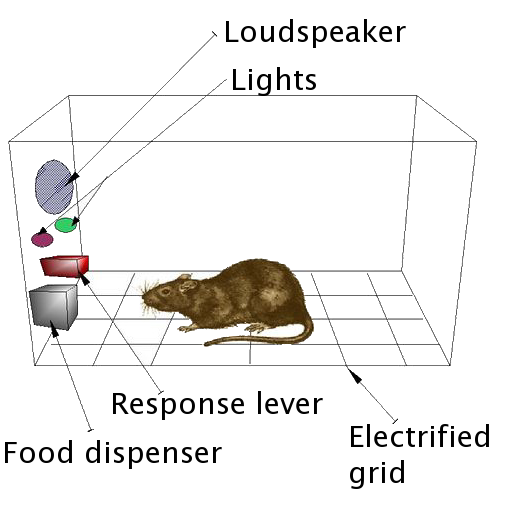
Like those rats in experiments, where if sometimes when they push a bar they get a treat, and sometimes an electric shock, we'll keep pressing that bar, hoping, that next time, it'll be good.

via Wikimedia Commons


Once more, on the male-female thing


Bancroft's book is (primarily) about male on female abuse. Our discussion, here, is not predicated on "bad men; helpless victimized women" because although there are a number of factors that often give men an unfair societal and legal advantage, yes, women abuse men too. Do not feel if you are a man being abused by a woman, that this book and our discussion has little to offer you. Please buy the book and read along.


Disclaimer: The information and opinions posted here, and any comment responses, are not to be considered professional advice and are not intended to replace consultation with a qualified medical or mental health professional. If you are involved in a relationship that includes physical, financial, and/or emotional violence, please contact a professional for help and assistance.

In the US:

National Domestic Violence Hotline - 1-800-799-SAFE (7233)  TTY- 1-800-787-3224 
RAINN (Rape Abuse & Incest National Network)
National Coalition Against Domestic Violence (includes downloadable guides for helping women in abusive relationships)
National Alliance on Mental Illness, aka NAMI

International Resources linked here.

Your thoughts?

Wednesday, May 8, 2013

Why Does He DO That? Introduction (Part 1)

We've begun reading, and, I hope, entering into a healthy discussion of the book Why Does He DO That? Inside the Minds of Angry and Controlling Men by Lundy Bancroft.

Please, do buy your own copy - both because I won't be excerpting all of it, and because this author deserves our $upport.


From the Introduction:


1212mentalhealth-RW
1212mentalhealth-RW
(Photo credit: Robbie Wroblewski)
I’ve been working with angry and controlling men for 15 years as a counselor, evaluator, an investigator, and have accumulated a wealth of knowledge from the 2000 or more cases with which I have been involved. I have learned the warning signs of abuse and control that a woman can watch out for early in a relationship. I’ve come to know what a controlling man is really saying, the meaning that is hidden behind his words. I’ve seen clues to recognizing when verbal and emotional aggression are heading toward violence. I found ways to separate out abusive men who are faking change from those who are doing some genuine work on themselves. And I have learned that the problem of the abusiveness has surprisingly little to do with how a man feels - my clients actually differ very little from nonabusive men and their emotional experience - and everything to do with how he thinks. The answers are inside his mind.

<snip> who can use what I have learned to help themselves recognize when they are being controlled or devalued in a relationship, to find ways to get free of abuse if it is happening, and to know how to avoid getting involved with an abusive man - or a controller or a user - next time. The purpose of this book is to equip women with the ability to protect themselves, physically and psychologically, from angry and controlling men.

To prepare for writing this book, I first generated a list of the 21 questions that women most often asked me about their abusive partner, questions such as:

"Is he really sorry?"
"Why do so many of our friends side with him?"
"Is he going to hit me someday?"


and many others. I then built my explanations around these concerns to make sure that women would be able to look here to find the information they urgently need. <snip>
***


Is He Going To Hit Me?


via kenfotos at freedigitalphotos
That's probably the #1 question for those who've been in a relationship where they have felt verbally battered and deeply frightened, but not yet hit... yet. And there are no guarantees; however, there are warning signs, which will be covered in this book. (Another reason I urge you to buy it now.)

That a person feels s/he has the right to degrade and belittle you is not a sign s/he respects you and values you. If s/he has "accidentally" hurt you - stepping on toes, an elbow in the wrong place, etc., this could be a real red flag that more is headed your way, especially if the response was not an abject apology on the part of the offender, but more a "well, you shouldn't have gotten in my way" attitude.

While many verbal abusers never "graduate" to physical abuse, it is well documented that verbal and emotional abuse always precedes physical violence.


Do not take your safety for granted, ever. 


If you are in a situation where your partner hurts you - even if it is "only" with words, please contact one of the hotlines down below and begin working out an emergency escape plan, even if as of right this minute, you feel sure you will never need one. Especially if you have children at home.

Worst case scenario if you have an escape plan and never need it, is you have "wasted" a few hours. Worst case scenario if you don't have a plan and need one, is it may cost you your life.

I never thought my boyfriend would hit me, either.

Till he did.


Disclaimer: The information and opinions posted here, and any comment responses, are not to be considered professional advice and are not intended to replace consultation with a qualified medical or mental health professional. If you are involved in a relationship that includes physical, financial, and/or emotional violence, please contact a professional for help and assistance.

In the US:

National Domestic Violence Hotline - 1-800-799-SAFE (7233)  TTY- 1-800-787-3224 
RAINN (Rape Abuse & Incest National Network)
National Coalition Against Domestic Violence (includes downloadable guides for helping women in abusive relationships)
National Alliance on Mental Illness, aka NAMI

International Resources linked here.

Your thoughts?
Enhanced by Zemanta

Wednesday, May 1, 2013

Why Does He DO That? Terminology Intro

We're going to start reading, and, I hope, entering into a healthy discussion of the book Why Does He DO That? Inside the Minds of Angry and Controlling Men by Lundy Bancroft.

 Please, do buy your own copy - both because I won't be excerpting all of it, and because this author deserves our $upport.


From the Note on Terminology:

In referring to angry and controlling men in this book, I’ve chosen in most cases the shorter terms abusive man and abuser. I’ve used these terms for readability and not because I believe that every man who has problems with angry or controlling behavior is abusive. I needed to select a simple word I could apply to any man who has recurring problems with disrespecting, controlling, insulting, or devaluing his partner, whether or not his behavior also involves more explicit verbal abuse, physical aggression, or sexual mistreatment. Any of these behaviors can have a serious impact on a woman’s life and can lead her to feel confused, depressed, anxious, or afraid. <snip>


via Wikipedia Commons

<snip> Controlling men fall on a spectrum of behaviors, from those who exhibit only a few of the tactics I describe in this book to those who use almost all of them. Similarly, these men run a gamut in their attitudes, from those who are willing to accept confrontation about their behaviors and strive to change them, to those who won’t listen to the woman’s perspective at all, feel completely justified, and become highly retaliatory if she attempts to stand up for herself. <snip> The level of anger exhibited by controlling man also shows wide variation, but unfortunately it doesn’t tell us much in itself about how psychologically destructive he may be or how likely he is to change, as we will see.

In addition, I have chosen to use the terms he to refer to the abusive person and she to the abused partner. I selected these terms for convenience and because they correctly described the great majority of relationships in which powers being abused.  <snip>.
***

No Gender Discrimination In Our Discussions Here


Mr. Bancroft's experience is with male abusers; he does not have the training or experience to address female-on-male abuse situations, therefore in this book, he does not address it, though he briefly covers controlling and angry dynamics in gay relationships. In most modern societies, even though "we've come a long way, baby" the reality is that men (in general) possess much more political, social, and economic power than women, and in second/third world countries, the power men hold over women is even more extreme. Men kill women and send them to the emergency room much more often than women kill or seriously injure men.

via David Castillo Dominici
at freedigitalphotos
This does not mean that female-on-male violence, especially emotional and verbal abuse, does not frequently occur, or that women in individual relationships cannot be just as angry and feel just as justified as the Angry and Controlling Men of the book title. Sadly, I know many men who've experienced abuse from their mothers or who have lived or still live in abusive relationships with a female partner.

Therefore, if that is your experience, please buy the book and follow along; you will almost certainly gain valuable insights.


Why Does A Discussion about Domestic Violence Belong on a Blog About OCPD?

Some may argue that there is little to no scientific evidence that domestic violence is linked to any mental disorder, including OCPD. I agree - there is no scientifically proven link. My counter-argument is that if the questions are never asked, how reasonable is it to assume that no links exist? Because of stigma and shame, both mental illness and domestic violence are vastly under-reported, under-studied, and misunderstood.
I would also add that statistics show people with a mental illness are far more likely to be victims of a violent crime than perpetrators. No intent here to demonize the mentally ill.

I can state that in my personal experience, and that of many other people with whom I have traded stories, domestic violence and mental illness or brain injury is often linked. This is part of the dynamic that influences our decision to stay in an abusive relationship, perhaps longer than we should. We perceive our partners not as deliberately abusive, but as sick - and what kind of heartless person would abandon a partner suffering from cancer, or heart disease?


Reality - it doesn't matter why we are being abused. Being abused hurts.


Disclaimer: The information and opinions posted here, and any comment responses, are not to be considered professional advice and are not intended to replace consultation with a qualified medical or mental health professional. If you are involved in a relationship that includes physical, financial, and/or emotional violence, please contact a professional for help and assistance.


In the US:

National Domestic Violence Hotline - 1-800-799-SAFE (7233)  TTY- 1-800-787-3224 
RAINN (Rape Abuse & Incest National Network)
National Coalition Against Domestic Violence (includes downloadable guides for helping women in abusive relationships)
National Alliance on Mental Illness, aka NAMI

International Resources linked here.

Your thoughts?

Tuesday, January 22, 2013

Too Perfect Tuesdays - Epilogue

This post concludes with the Epilogue.

This series has looked at a small snippet of The book on the Perfectionist Personality, aka The Obsessive Compulsive disordered Personality, aka OCPD, each week. Please follow along, leave your comments, engage more on the FaceBook website... whatever your heart calls you to do.


When Being in Control Gets Out of Control by Allan E. Mallinger, M.D. and Jeanette DeWyze was published by Random House in 1992.  If   you believe you are dealing with OCPD or someone who is "Too Perfect," whether that's you or a loved one, please buy a copy of the book and read it for additional insights that will not all be covered in these excerpts.

Epilogue

Habit is habit, and not to be flung out of the window, but coaxed downstairs a step at a time.   ~
Mark Twain
In summary, the obsessive personality style is a system of many normal traits, all aiming toward a common goal: safety and security via alertness, reason, and mastery. In rational and flexible doses, obsessive traits usually favor not only survival, but success and admiration, as well.

The downside is that you can have too much of a good thing. You are bound for serious difficulties if your obsessive qualities serve not the simple goals of wise, competent, and enjoyable living, but an unrelenting need for fail-safe protection against the vulnerability inherent in being human. <snip>

<snip> The single most important step is one you can take right now: acknowledge that the source of much of your unhappiness may not be your boss, the state of the economy, your spouse's shortcomings, but something within you! Acknowledge that the main obstacles to feeling fulfilled in your relationships, work, or leisure (if you have any) may be such things as your perfectionism, workaholism, rigidity, and other overdeveloped obsessive characteristics.

<snip> ...please understand that this book [nor this blog] is not a substitute for therapy with a competent professional. <snip> With or without professional assistance, your most important means to progress will be, quite simply, sustained hard work. But then that's your strong suit, isn't it?
***

Is it difficult to find a therapist who understands OCPD/Anankastic Personality Disorder? Yes. Many, many mental health professionals have never even heard of such a beastie, or confuse it with OCD.  Here's one true story:

My DH was diagnosed by a neuro-psychiatrist. He had extensive bloodwork, CT scan, several days of urine collection, significant assessment type "tests", and even his mother had to respond to a lot of questions about what he was like as a child. Even with all of that, he was diagnosed with OCD. It wasn't until I joined his yearly psychiatrist visits that I raised the issue of OCPD and the doctor concurred.  

It seems very difficult to determine OCPD unless someone close to the patient (in his inner circle) is able to answer many questions regarding the treatment they receive and observe on a daily basis. My experience has been that DH thinks he is wonderful and would never consider himself an arrogant, nasty, obnoxious person (at times) with underlying anger with almost constant anxiety and intermittent depression.

An obsession with creating and enforcing order,
and being RIGHT, is more about OCPD than OCD.

It's frustrating, trying to find a professional who can help you, who understands that OCPD is not OCD, but it is worth the effort.  Even if the mental health professional doesn't know or understand the condition, yet, it is still possible that s/he may have some effective strategies that make life a little easier.  For the partner or child of an affected person - go, go go!

Now this? OCD all the way, baybee.


I think counseling saved my life, certainly my sanity, during a time when I was losing it.  I don't mean to denigrate the efforts of friends and family - they are invaluable as a support system.

Yet sometimes there are things we don't want to tell them, out of fear/shame, or just not wanting our (perhaps dysfunctional) family all up in our business.  We might tell less than is helpful - because we don't want to be judged and scolded, or because we don't want them to hate our partner.  Likewise our friends.  If our situation is so painful, they don't "get" why we don't leave.  Or they offer suggestions that might work  - when both people are "normal." Things like "Just be patient," or "Go ahead and let him/her have his way," which Does Not Work when one partner in the relationship is dysfunctional.

They also tend to take our side, whereas a good mental professional will call us on our sh-t - and sometimes, we need a neutral referee to tell us, "You blew it there." To help us through the exercises we need to become healthier in our interactions.

Let me reiterate - just because we might have an OCPD partner/parent/child/co-worker, does not mean that WE don't have our own hot messes that need attention.  So good therapy is essential for getting our own house(s) in order.

But if you are one of those people who is constantly irritated by an effed-up world that never does things The Right Way or up to your (extremely high and admirable) standards, if you believe your way of thinking is (always) a gift and you are surrounded by stupid, lazy people, you would be well served by seeking therapy with as open a mind as you can manage.

None of us have to live with constant emotional pain. Discomfort, sometimes, sure. Pain, no.

You deserve better. Go get it.
Your thoughts?

Tuesday, January 15, 2013

Too Perfect Tuesday - Reinforce Positive Changes Sensitively

This post continues with Living With the Obsessive: 7 - Reinforce Positive Changes - But Do It Sensitively from Chapter Ten.

This series looks at a small snippet of The book on the Perfectionist Personality, aka The Obsessive Compulsive disordered Personality, aka OCPD, each week. Please follow along, leave your comments, engage more on the FaceBook website... whatever your heart calls you to do.


When Being in Control Gets Out of Control by Allan E. Mallinger, M.D. and Jeanette DeWyze was published by Random House in 1992.  If   you believe you are dealing with OCPD or someone who is "Too Perfect," whether that's you or a loved one, please buy a copy of the book and read it for additional insights that will not all be covered in these excerpts.

7 - Reinforce Positive Changes - But Do It Sensitively
<snip> If your spouse, parent, co-worker or friend does begin to behave less obsessively, you need to realize that this is a real accomplishment that shows not only strength and courage, but a commitment to making your relationship better. Often it's an act of love.

<snip> Drawing attention to changes in the obsessive may make him uneasy. For one thing, he may still feel tentative about the changes, and too blatant an acknowledgment of them may make him feel more committed to maintaining them than he can tolerate.

You must also consider the impact of the obsessive's all-or-nothing thinking. If you react too strongly to the slightest improvement (if, for example, he comes home from work an hour earlier than usual), he may fear that you'll expect him to do it every night. If you comment favorably on his decreased demands for orderliness, again his anxiety might rise. He may think that now you'll expect him to change still more, and he may dig in his heels. <snip>


You'll probably do better to reinforce behavioral improvements in only the most subtle, gentle ways. Effective reinforcers vary from one person to another. Most people like such things as affection, praise, or sex, but not everyone. Some respond best to silence, food, or even distances. You have to tune into your obsessive and discern his or her specific reinforcers.

<snip> she identified some of her own behaviors that were pushing David away - pouncing gleefully upon any signs that he was leaning toward a stronger commitment, for instance. Instead Barbara learned to make little or no fuss when he showed signs of moving closer to her. In fact, she would redouble her efforts to maintain her own separate interests (as hard as that was for her initially).

<snip> She found that the more independence she achieved and the more fulfilled she became by her own separate interests, the stronger she became. Her mental picture of herself, who she was meant to be, became clearer and more cohesive. She also was more certain of what she wanted and didn't want, and about what she would and would not tolerate from David. Ultimately she felt more capable of taking care of herself should the relationship end. But that didn't happen. With less pressure on him, David became more comfortable with intimacy and with spending more time together. Eventually he was able to commit himself to engagement and finally marriage. His basic personality type didn't change; he remained fairly obsessive, while Barbara was not particularly so. Yet they were able to enrich both their lives by being together.
***
Some people have compared winning over an obsessive to courting a cat - I would go a step further and say it's like winning over a feral cat. Move too quickly, slobber over it too much, or try to drag it into your lap, and it's going to scram in the opposite direction, possibly after shredding you like a wheel of cheese as it exits.  Ignore it, and it may come check you out.

from Icanhazcheezburger

I've blogged here before about my mistake in praising a specific meal my ex made too highly; something he made at least 2-3 times each month in the first two years we lived together. My birthday was coming up, and he asked what I would like for dinner that night; I named that dish, and went into too much detail about how much I liked it, and how well he made it.  Demand-resistance kicked in; not only did he have excuses as to why he couldn't make it for me for my birthday, but in the following four years we lived together, he never made that meal again.

If you want sex, or physical affection, you might have to play hard to get, because the "normal" interactions of touching shoulders, arms, hands, etc., again may wake demand-sensitivity or demand resistance.  If a hoarder cleans out a drawer, a brief acknowledgment is probably better than excessive praise or discussion of when the next twenty drawers will be addressed.

If you want a "normal" relationship, you will not have one with an un- or undertreated obsessive person.  You will always have to move slowly, carefully, and sensitively, aware that s/he may take your foibles personally, and trying to keep in mind that hers or his foibles probably aren't personal.

I'm a "cat" person (though I like dogs, too). I've had many, over the years (though maximum of three at the same time; I'm not a crazy cat person). One cat I had nearly her entire life, from an eight-week kitten to when she died of thyroid disease at 15. In that entire time, she crawled into my lap maybe three times. She was super-shy and skittish with people, that was her temperament (though she got along fine with the other cat). There were times I barely saw her except at mealtimes, and if startled, I might not see her even at mealtimes for days. In her last three years, when she was in an affectionate mood, she might jump onto my bed and sleep at my feet, or curl up next to me when I was watching TV or crafting. I don't think she ever did the I-love-you/feed-me ankle-rub trick that most cats do.

That worked fine for me, with that cat. She was my cat, not an intimate partner. But I did want more, in an intimate partner. I wanted to not always have to be on guard, to not always be bandaging my scratches, to be able to give and receive affection freely and without reservation.  To be able to compliment a meal without worrying whether I had praised it/him too much and thus stressed him out with my unspoken expectations.


My ex couldn't give me what I needed in a relationship, although he did and does have many wonderful qualities. If you love an obsessive person, s/he may not be as extreme as my ex was - or might be even more so. You may not be as hurt or troubled by the behaviors as I was.  So your relationship may work fine.

Keep in mind, though, that all the work and love and patience and understanding in the world will not change a feral cat into a lap cat - and certainly won't change her/him into a tail-wagging, always happy-to-see-you isn't-my-master-wonderful dog.  Change yourself, first, as Barbara did, and many of us have learned the hard way.  Learn to be independent and how to maintain good boundaries, and then, from that viewpoint, you can more easily discern if the relationship is worth keeping, or whether you need to move on.


Your thoughts?
Enhanced by Zemanta

Tuesday, January 8, 2013

Too Perfect Tuesdays - Chap 10 - Foster Your Own Self-Esteem & Independence

Be a dragon - fiercely guarding your independence.
This post continues with Living With the Obsessive: 6 - Foster Your Own Self-Esteem and Independence from Chapter Ten.

This series looks at a small snippet of The book on the Perfectionist Personality, aka The Obsessive Compulsive disordered Personality, aka OCPD, each week. Please follow along, leave your comments, engage more on the FaceBook website... whatever your heart calls you to do.


When Being in Control Gets Out of Control by Allan E. Mallinger, M.D. and Jeanette DeWyze was published by Random House in 1992.  If   you believe you are dealing with OCPD or someone who is "Too Perfect," whether that's you or a loved one, please buy a copy of the book and read it for additional insights that will not all be covered in these excerpts.

6 - Foster Your Own Self-Esteem and Independence

Many obsessives hate to be dependent upon anything or anyone; they equate dependency with vulnerability. Unconsciously they feel that allowing their lives to revolve around another person would leave them open to utter devastation - should the other person turn against them, for example, or stop loving them, or even die. As a result, most don't let themselves depend too heavily even upon their closest friends and lovers.

<snip> For one thing, if you've made yourself completely dependent upon him, the obsessive may feel that you've imposed on him the frightening or burdensome responsibility of being absolutely indispensable to your emotional well-being. Given his need for a sense of options and freedom, this may both frighten and anger him.

<snip>Another aspect of being emotionally dependent on a relationship is that your sense of worth comes to rely upon feedback from the other person. Even minor variations in that feedback may cause your self-esteem and sense of security to plunge or soar. You're really setting yourself up for emotional turbulence if you rely too heavily upon approval or praise from some obsessives, because they aren't particularly good at expressing these things. Remember: their style of perception is to notice and be bothered by what's not right with things. And their need to guard their emotions may make it hard for them to show positive feelings or appreciation.

Cross the bridge, if you dare!

<snip> Start by trying to rediscover who you are - who you were before you met the other person. Work on developing separate interests and then pursue them vigorously, just as you would have if you had not become involved at this time. Strive to become a whole person, independent of any relationship.

As you struggle to establish your separate self, feelings of anxiety and insecurity may assail you. You may feel empty or isolated at first. You may worry that you are jeopardizing the relationship by not paying it enough attention. Fight these feelings!  Try to act as if you felt strong and safe. Don't let the other person get the idea that your happiness or security depends entirely upon reassurance from him or her. More important, don't you accept that notion as unalterable true, because it isn't.

What is true is that at some point your friend or lover could decide to end the relationship, and you have no control over that. Throughout this book, I've discussed self-defeating aspects of the obsessive's need for complete control. The same dynamic applies to you. The more you attempt to mold your relationship, the more vigilantly you watch over it, the more likely you are to poison it. In some respects, the commitment-fearing obsessive is like a cat: most likely to remain close to you when you're absorbed in your own interests and to scoot away when you embrace it too vigorously.

Learn to accept the fact that any relationship could end. Find a way to resign yourself to that possibility. It's true that it would be extremely painful, but in the vast majority of cases, that pain is temporary. Don't think for a moment that you couldn't get through it. You could. And just as you have before, you would eventually find happiness with someone else.
***
The reflection enhances the bridge,
but the bridge exists, even if there was no reflection.

You are the bridge, not the reflection.

Strive to become a whole person, independent of any relationship.  To me, this is the key sentence of the entire book, for partners, children, siblings, and co-workers of a Perfectionist Personality.  (Though you need to read the entire book to "get" the full picture of why obsessives behave as they do, and why hoovering and being enmeshed doesn't make things better, but instead is gasoline on the fire.)

No matter how much time, energy, and effort you pour into a relationship, you yourself can't fix it. What you can do is make things better for yourself, rediscover who you are.

Maybe you liked to paint, or bake bread, or carve wood, and were dissuaded, over time, because your partner was dismayed by the mess. Reclaim that hobby.  Maybe you used to meet once a week with friends to discuss reading or writing, and gave it up because you were tired of coming home to World War Three. (I know I did.)  Put it back on your schedule. Maybe you love exploring local museums and gardens - get a friend, or go on your own, if your partner hates that kind of thing.

 It will be hard.  You will get blowback, Your partner may pout, throw tantrums, or try to sabotage your efforts to reclaim your soul. Do it anyway. 

look at the variety of color in these roses!
 Eventually they may see that no matter what they say or do, you're going to go for coffee with your girlfriends on Thursday nights, or spend Saturday mornings working on your classic car - whatever YOUR "thing" is, as long as you still leave time for family activities (don't go overboard and spend all your time on you), they have no grounds to complain.  They will probably complain anyway, and it will be hard, and you will feel exhausted at first, but over time, you will feel the abandoned garden of your life sprouting roses again.

Remember not to JADE: Justify, Argue, Defend or Explain. It is enough to tell your partner, "Honey, I've decided to rejoin my Sunday night writers' group, starting this weekend. I'll be leaving at 6:30 on those nights and home around 10:30."
"Why? "
"Because I want to."
"But we usually spend Sunday nights watching TV. I guess you don't love me anymore, if you don't want to spend any time together.  And how will you ever be ready for work on Monday morning when you're out partying with your friends till late Sunday night?"
"Hon? Love you, done talking about this."
"But-"
"Done. Talking."

A real Wisteria Lane.
Did I mention it will be hard? The enmeshment probably happened slowly, gradually, and now it is as deep-rooted as ivy that has choked off every inch of the garden.  You might not feel like you know who "you" are, anymore, but whatever roles you fill: daughter, sister, aunt, mother, wife, friend, co-worker - you are MORE than that. You need to tap down to the root of you, water and fertilize it.

As mentioned in Too Perfect, if you depend upon a person who's hard-wired to notice flaws, to notice and compliment all your good qualities, you are doomed to disappointment. You must find a way to fill yourself up, separate and apart from your interactions with that person, no matter who s/he is or how long your relationship has lasted (if it's a parent, it's been your whole life).

If you reclaim you, your relationship may survive; it may improve, or it may end. But if your relationship is built upon you killing and sacrificing everything you love to do, everything that feeds your soul and makes you feel good about yourself, then are "you" really in that relationship, anyway?


Your thoughts?All photos, except for the Too Perfect book link, were taken by the author
at Pasadena's Huntington Gardens.