Using writing, and meditation, and ice cream, and reading, and dreams,

and a whole lot of other tools to rediscover who I am,

after six years living with a man with OCPD.


Showing posts with label patterns. Show all posts

Friday, April 20, 2012

A-Z: Rescuer Syndrome - Put Away the Spandex,
It's Not A Good Look

When we love somebody, when we see them hurting, we want to make things better for them. Whatever we can do, we're gonna do it, not holding back or setting limits, and that's a good thing, right?

Bzzzt! Actually, no.

When we do for others what they are perfectly capable of doing for themselves, we are casting them as Victims, and ourselves as Rescuers.

Not, actually, helpful or healthy. Not even if the others have a mental disorder or addiction; not even if they are a child, should we wrap our entire lives around other people.

Remember Dirty Dancing?   "Lock your frame, lock your frame; this is my dance space, this is your dance space."  It's crucial, both for ourselves, and for others, we remember where we end and "the other" begins.

via Wikimedia Commons

From Out of the Fog:
Examples of Fixers & Rescuers:
  • A fiance whose future spouse explodes in a fit of rage, but who chooses to go ahead with the wedding thinking "I can change him/er after the wedding"
  • A husband in an abusive relationship who decides to "love her through the pain"
  • An abused wife who decides not to seek out professional help, preferring to "try harder to work on herself".
  • A partner in a relationship who tries to keep the peace through making everything "perfect" for their partner at home.
  • A parent with a personality-disordered child who seeks solutions by being a better parent.
  • A child of a personality-disordered parent who tries to win their favor through academic performance

There's two problems with the above scenarios.

#1 - It never, ever works. (Oh, sometimes it does, for a few minutes.) But in the long run, after the wedding, he is even more explosive; no matter how much love the husband demonstrates, he doesn't move his wife past her pain; no matter how hard she works the abused wife can't keep from provoking her husband; the 'better parent approach' still doesn't soothe or heal the child; and the straight A  student will have his/her efforts taken for granted, and chided for an A- or a B+.

#2 - By taking another's person's problems onto ourselves, by trying to "fix" them through our efforts, we deprive them of the opportunity to solve their own problems. Yep, they might not do them exactly the way would. Yep, they might fail.  But when we fix/help/rescue others constantly, the message we are sending is, "I don't think you are smart enough/strong enough/resourceful enough to do this on your own. So let me just do it for you."


From Relationship Rescue: Exploring the Dynamics Behind Being a Rescuer

Rescuing is a core dynamic found in most relationships.
A rescuer is some who takes responsibility for fulfilling the needs of others in an attempt to feel valuable.
Whether conscious of it not, a rescuer believes that by taking care of others, their own needs will be met.
However, the irony is that instead, rescuers end up feeling more insecure, taken for granted, unappreciated, unfulfilled and ultimately worn out.

RESCUERS CHECKLIST
Completing this checklist can help you become aware of ways you may be rescuing people without realizing it.
1. Is it hard for you to take time for yourself and have fun?
2. Do you supply words for someone else when she/he hesitates?
3. Do you set limits for yourself that you exceed?
4. Do you believe you are responsible for making (keeping) someone else happy?
5. Do you like to lend a shoulder for someone else to "cry" on?
6. Do you believe that the other person is not sufficiently grateful for your help?
7. Do you take care of someone else more than you take care of yourself?
8. Do you find yourself interrupting when someone else is talking?
9. Do you watch for clues for ways to be helpful to someone else?
10. Do you make excuses, open or mentally, for another person?
11. Do you do more than your share, that is, work harder than someone else does?
12. When someone else is unsure or uncomfortable about doing something, do you do it for him or her?
13. Do you NOT do things you would like because someone else wouldn't like your doing so?
14. Do you find yourself thinking that you really know what is best for someone else?
15. Do you think someone else would have grave difficulty getting along without you?
16. Do you use the word "we" and then find you don't have the other person's consent?
17. Do you stop yourself by thinking someone will feel badly if you say or do something?
18. Is it hard for you NOT to respond to anyone who seems to be hurting or needing help?
19. Do you find yourself being resented when you were only trying to be helpful?
20. Do you find yourself giving advice that is not welcome or accepted?
(Instructions: Record 5 points for each YES and 0 points for NO! If you have 10 or more points, you may be a Rescuer. That is, a CO-DEPENDENT)
(I'm not sure I agree 100% with the scoring system, above - I think, for example, that #17 can be healthy or taken to extremes, depending on the circumstances. Likewise #18, wanting to help isn't necessarily bad, especially if we're talking about a child, as long as we resist that urge to take it over and do it for him/her. But it is easy enough to see where the questions are going, and what the pattern might be.)

I would like to think of myself as a co-dependent in recovery. I felt so terrible for my poor, (probably) mentally ill boyfriend that I made a ton of excuses for him. My heart ached for him (still does) and I did everything I could to Save Him from the ravages of his disease. In the end, he wasn't one bit mentally, physically, or emotionally healthier, and I was a burned out wreck.

Cover of Cover via AmazonSince then, I've found Charles Whitfield's book Boundaries and Relationships a helpful resource, as well as Melody Beattie's Codependent No More! Also found much help in in a very old book, Manuel J. Smith's When I Say No, I Feel Guilty.

If you are co-dependent, therapy may be a good step for you, to help you to break the old patterns. AlaNon or Co-Dependents Anonymous meetings may also be helpful.

Being a Rescuer or Co-Dependent came about because we care about people so very much - and that feeling in itself is very admirable. But our behavior may be harming the people we love, with the very acts we intend to help them. If we are parents, we are modeling unhealthy behavior. If we are partnered with an emotionally unhealthy partner, we are adding to the toxic dynamic.

Remember, always put on your own oxygen mask, first. 


My A-Z theme is Issues related to Mental Health or Mental Illness.

Are you now (or have you ever been) a Rescuer?
Do you know Rescuers - and can you see how unhealthy it is?
How did you get past this (if you have)
Enhanced by Zemanta

Friday, January 13, 2012

The Relationship Was Toast from the Beginning

Breakfast featuring an omelette at an IHOP res...Image via WikipediaNot that I realized this.

See, I'm a breakfast-y person.  I have been since back in the day on the pill, I had to take my pill and vitamins with food, otherwise they made me nauseated.  I had an irregular work schedule, so my lunch and dinner were always at different times, but I could always have breakfast before work.  Might just be a bagel and some orange juice, or a bowl of cereal, but I always eat something in the morning.

Later, when I would spend the night at (an early)  boyfriend's place, if I/we had work we'd get up early and make love, then he'd treat me to IHOP.  If we didn't have work he'd make us breakfast, then we'd go back to bed and make love some more.

With a brief break for the child-rearing years, I became addicted to the whole cycle of lovemaking/breakfast/more lovemaking.  Perhaps lingering in bed or on the couch, watching old movies and cuddling, long past noon.  All of my lovers enjoyed it too, until...

At first, when I began seeing OCPD ex, we would make love first thing in the morning - but he was still caring for his aged father, so he would have to get up, go bathe and feed him.  Later, he was still set in that routine of get up and get the day started.  We might make love (morning wood), we might even linger in bed for an hour or two on a Sunday morning watching TV, but he was not a breakfast-y person.

Not knowing about OCPD, I thought it would just be a matter of time to coax him into such a fun, sensual experience on the weekends.  Memories of loveplay in the kitchen, kissing and caresses and feeding one another tidbits while making omelettes or blueberry muffins...  Forget about it.  One person in the kitchen at a time.  He had no interest in sharing the kitchen with me if I was cooking, and it was a federal offense if he was cooking and I came in, playfully grabbed his butt or kissed him.

A lot of times he claimed queasiness in the morning, that if he ate anything he would get sick.  (Since he self-medicated his anxiety with copious amounts of alcohol, can you say hangover, boys & girls?)  Most of the time, if I wanted a weekend cooked breakfast, I ate alone.  Sometimes he would allow me to fix a weekend breakfast for him, too, but we always ate at the table, never in bed or at the couch.   No loveplay during food preparation, at the table, or afterwards.

I missed a lot of things I'd come to believe were a normal part of a love relationship, but this one was a biggie for me.

And frequently, even when he "allowed" me to make him breakfasts, he found fault with them anyway.  The eggs were over or underdone.  Or cold (which often happened because he would delay coming to the table).  I prepared too much food.  Once I made scrambled eggs with bits of bacon crumbled into them.  Though he'd never told me, I should have known he didn't like bacon, ever, in any form.

He didn't even like the way I buttered his toast.  Generously, with the butter extending all the way to the edges of the toast.  That meant he got icky butter on his fingers, so unpleasant!  I began, on breakfast mornings, to simply put out the butter dish and a knife, slap the dry toast on his plate, and let him butter his own damn toast.  That way, he could leave the edges dry the way he liked them.

Although I am not yet ready to take a new lover, I am back to enjoying breakfasts again.  Quickies during the week; on the weekends, perhaps a big eggwhite scramble with broccoli, cheese and tomato.  I don't have to buy the bread he preferred, but can experiment: double fiber, whole wheat, potato bread...   Sometimes I even put jam on my toast!
A buttered crumpetImage via Wikipedia

This morning, a work day, I had a decadent two slices of Cinnabon toast (cinnamon gave him heartburn, he said) with butter (Smart Start butter substitute) spread all the way to the edge, so that each bite was equally flavorful.

I enjoyed it, but it makes me wonder...  It's been a year and a half since I moved out.  When will I stop remembering and reacting to that relationship, every time I butter my damn toast?  I enjoyed it, I am grateful to be able to do it the way I want without criticism or disgusted looks, but shouldn't I be over emotionally reacting by now?

Or is this a good thing, part of mindful eating?  I don't feel I am there yet, I think the hurt/trauma is still taking up a bit too much real estate in my mind.

What do you think?  Should I be over this by now?  Do you have hurts/traumas that are taking you longer to get over than you think they should?


As always, I love and appreciate your feedback.


Enhanced by Zemanta

Tuesday, October 11, 2011

Too Perfect Tuesdays - Chap 4 - On To Action

This post continues with On To Action from Chapter Four.

This series will look at a small snippet of The book on the Perfectionist Personality, aka The Obsessive Compulsive disordered Personality, aka OCPD, each week. Please follow along, leave your comments, engage more on the FaceBook website... whatever your heart calls you to do.

Too Perfect, When Being in Control Gets Out of Control by Allan E. Mallinger, M.D. and Jeanette DeWyze was published by Random House in 1992.  If you believe you are dealing with OCPD or someone who is "Too Perfect," whether that's you or a loved one, please buy a copy of the book and read it for additional insights that will not all be covered in these excerpts.

 ON TO ACTION
<snip>When a decision must be made, allow yourself a reasonable period to consider the available facts (as well as your own likes and dislikes), then register the direction in which you are leaning.  Acknowledge that it has its drawbacks, as every option does, and that it's not fail-safe; no decision is.  Grant that it might turn out to be wrong.  And just this once, fight the false notion that there is always a single correct choice and that it's always knowable in advance.  Accept that you can live with something less than perfection. <snip>
Once you've made the decision, refuse to question your choice.  Tell yourself that you can continue to doubt other choices if you must, but in this one case, you're not going to allow yourself to wonder about the path not taken.  <snip>
<snip> Tell yourself that you refuse to continue inflicting such pain upon yourself.  Then take a deep breath, let go of the conflicted thoughts, and get on with whatever you were doing.

I'm not suggesting you should never doubt, change your mind, or reverse your course.  If it becomes obvious that your path is wrong and another would clearly be better, by all means change directions.  Then do everything in your power to make that decision work.  Enjoy the positive aspects of the new direction, and resist dwelling upon doubts about it.

***

Life is not a game show - there is no guarantee that the "right" answer is one of the options we are considering.  Buying a shirt, as discussed in earlier Too Perfect posts - we can always find reasons to second guess: the other one was cheaper; the other one was more expensive, but made of a better material so it would probably wash up better; blah blah, woof woof.  Enough!   Just be happy you bought the damn shirt already!

One thing that helped me become more disciplined about decision-making was the deadlines with which I was faced when I was putting out a small newsletter for a private club.  It had to be in green ink, which meant (originally) it couldn't be xeroxed in-house, but had to go to an outside printer.  So, in order to mail on the 1st of each month, it had to be ready to go to the printers by three business days before that, which meant the day before THAT was final drop-dead proofing and tweaking day.  So, five business days before the first, I had to be done with it - any articles typed in, any headlines written, any artwork or graphics inserted.

I could dither endlessly over all those things - was this in the right font, was that the right picture?   Were the borders right, the columns - were there too many columns?

Sometimes I get hung up on prettifying posts for this blog; however, in order to meet my deadline (admittedly, self-imposed) of having a post for Too Perfect Tuesdays, every week until we have worked through the entire book, there comes a time when I have to "put the post to bed."  It will not ever be perfect.  Perhaps, given more time, I could find a more appropriate video clip or photo, but I don't have more time.

Having a regular deadline for any project trains a person to stop procrastinating, and to accept less than perfection, and to learn that good enough really is good enough.  Any act that is done regularly, from brushing one's teeth to stopping at a coffee shop for a morning latte - will become a habit, if repeated enough times.  Meeting a regular deadline is an excellent habit for an OCPD'r (or non) to form.


There's a certain confidence and pride that comes from hitting that deadline, month after month, week after week.  I know I can meet a deadline.  I know how to break it down into baby steps, and "back into it."

If that hasn't been a piece of your life to date, don't despair.  You can do it.  Start with, as Mallinger suggests, a determination that you're going to make a decision about one thing - and stick to it, no second-guessing allowed.  You've made it, you're gonna stick to it, you're going to make it work.

And then another decision.  And another.  You know, the whole "longest journey starts with but a single step."  Don't commit to failure, to "that's such a long way, I don't think I can make it," because you're simply teaching yourself to fail.  Commit to the journey, "I will do the best I can, right now, I will make the best journey, take all the steps I can, today."

Look at that baby - is he running any marathons soon?  No, he's simply enjoying his new skill of walking.  He's present in the now, thinking about the very next step, the way his feet feel on the sun-warmed floor.

Have you ever surprised yourself with good habits you've formed?
Have you made at least one decision today - even if it was something
like choosing toast rather than cereal for breakfast - and allowed yourself
to simply make it and move on?  No second guessing allowed?

P.S. - We're guest posting over at The Garden Gate - please stop over and leave some love.

Tuesday, September 20, 2011

Too Perfect Tuesdays - Chap 4 - Overcoming Indecisiveness & the Fear of Commitment

This post continues with Overcoming Indecisiveness and the Fear of Commitment from Chapter Four.

This series will look at a small snippet of The book on the Perfectionist Personality, aka The Obsessive Compulsive disordered Personality, aka OCPD, each week. Please follow along, leave your comments, engage more on the FaceBook website... whatever your heart calls you to do.

Too Perfect, When Being in Control Gets Out of Control by Allan E. Mallinger, M.D. and Jeanette DeWyze was published by Random House in 1992.  If you believe you are dealing with OCPD or someone who is "Too Perfect," whether that's you or a loved one, please buy a copy of the book and read it for additional insights that will not all be covered in these excerpts.

Overcoming Indecisiveness and the Fear of Commitment
If a person cannot make decisions or avoids commitments because he wants to "hold on to his options," he had better be enjoying them.  They are expensive.  Consider some of the costs:  
  • You suffer every time you can't decide about something or face a potential commitment.  It is grueling and excruciating to be torn apart this way.
  • Hundreds, even thousands of hours of your life are wasted on trying to make up your mind or ruminating over decisions already made.  Imagine how much energy this costs.  And for what?  Does all the waffling and stalling make the decisions turn out that much better?
  • Indecisiveness and fear of commitment are sure to cause you to miss numerous opportunities, from financial ventures to long-term romantic relationships. <snip>
  • A tentative attitude prevents you from giving anything your best effort.  <snip>

...you do manage to get into or out of jobs, relationships, projects, purchases.  But you rarely do these things directly and cleanly, carried along by the force of unconflicted convictions, so your actions somehow feel as if they're not truly yours.  <snip>
You don't develop a strong, clear sense of self, partly because this would require you to acknowledge that, for better or worse, you have directed your own destiny.  <snip>
***
I once dated a man before my OCPD ex, who was probably OCPD as well, just not as severely.  He spent a great deal of energy explaining to me why he didn't have any choice in:  ...where he lived, what he did for a living, what he did artistically, on and on and on.  Rescuer that I was, I would  give him countless examples to show him that he did, indeed, have other options, he was simply choosing not to make them.

Finally I realized that that he was emotionally tied to this concept of himself as a victim of circumstance.  He refused to accept that he was doing what he was doing or living where he was living because that was his own choice.  I lost patience with the whole poor can't-help-myself attitude (though, apparently, not enough to keep from trying to Rescue the next one who came along).

One of the frustrating things about being involved with someone with this Perfectionist Personality is observing how very painful this "dithering" can be for the Ditherer. From the outside, it looks not only excruciating, but entirely avoidable.  It's like the old joke about somebody hitting himself in the head with a hammer, "because it feels so good when I stop."

Churning from Wikimedia
Good for butter, not for decision-making

It makes us want to scream, "Why, WHY are you doing this to yourself?"

Which, of course, is the multi-jillion dollar question.  Brain wiring?  Habit?  Chemical imbalance?  Childhood trauma?  All of the above?

I could wish there was more research and better answers as to the why, but what little there is suggests that the brain can be rewired, the old habits can be broken, and better, healthier ones put into place.  That it's not simply "the way it has to be" but a choice.

Those with this condition must come to see that the pain of staying the same is greater than the pain/fear/risk of making a change, and be willing to invest the very hard work it takes to STOP the old, churning behaviors.


Would you be rich, if you had a dollar for every hour wasted dithering?
How about for the time spent second-guessing an already made decision?
Does being afraid to commit enrich your life, or steal from it?

Saturday, March 5, 2011

Vacuuming up the OCPD

After being inspired by a great post at My Mother-in-Law is Still Sitting Between Us, I've been pondering vacuums and filters, as they relate to OCPD.  Work with me here, it will eventually make sense.  I think.

The filter traps dirt, lint, pet hair, and so forth (tip: never look too closely at the "and so forth.") But the filter has to be porous enough to allow air, and yes, a little bit of dust out.

Sid’s fabulous story about accidentally vacuuming without a bag in place made me think of someone I’ve worked with. Warm, friendly, great salesperson, fabulous "big ideas" kind of guy - but utterly lost at sitting down and working out the little nuts and bolts of life, like staying within a budget, or balancing a checkbook.

When I think of - let’s call him Bagless Bob - I think of that vacuum, merrily sucking up everything and spewing out a lot of junk behind it. It’s like his filter is missing or damaged.  Lucky for Bob, he does have a some partners to act as his filter - and sometimes he even listens to them!

And for those with OCPD, it’s like their filters are TOO tight. They go waaaay beyond a HEPA filter to sealing theirs all over with duct tape, lest a tiny mote of dust get out. And, of course, that doesn’t work out, either.

When someone with OCPD writes a report, they often include too much unnecessary detail, because... they have problems figuring out which are the important bits.

When someone with OCPD hoards, again, it’s often related to problems discerning what is valuable and what is junk. So, better keep all of it, just in case.  (Or, in some cases, they want to throw everything away.)

When they nit-pick their partners or children, it seems their perception glides right past the 115 things we said, did or looked right, zooming in on the single thing we said wrong, the sole cat hair we missed when brushing off our slacks.  You know when they played that Sesame Street game, "Which of these things are not like the others?" they figured it out in record time.

It’s like the Bagless Bobs of the world only see this  
Georges Seurat - A Sunday Afternoon on the Island of La Grand Jatte
via Wikimedia Commons


And the OCPDrs only see this  
Study for La Jatte - also via Wikimedia Commons

A "normal" person can zoom in and see the detail, or back away and see the big picture.

Sharon Begley (whose excellent, clear and informative writing is always worth reading, IMO) just wrote in Newsweek about information overload and how it affects judgment. I am reminded again of the overlapping symptoms of some with OCPD and some with autism - the reported sensitivity to light, sound, and odors. In addition, many have described having problems being in touch with their emotions. 
If the emotions are shut out of the decision-making process, we’re likely to overthink a decision, and that has been shown to produce worse outcomes on even the simplest of tasks. In one classic experiment, when volunteers focused on the attributes of various strawberry jams they had just rated, it completely scrambled their preferences, and they wound up giving a high rating to a jam they disliked and a low rating to one they had found delicious.
Now, even "nons" can experience information overload. This is why it’s crucial to periodically unplug from various devices and not have e-mail/text/video clips bombarding us 24/7.

But although the world is full of many, many things "coming at us at once," those without OCPD seem to have a built-in automatic filter that does a pretty good helping us focus. For example, I’m sitting at my desk, typing on the keyboard. I’m mostly aware of the monitor and the words appearing there, but if I pause, I can become aware of the scented candles I lit, the soft background music, the books and furniture and such that are all around me. It doesn’t feel "all in my face" at once.

Ex b-f frequently criticized me for "trying to do too much at once," and one of the places he stressed out the most was the car. I found music to be calming while I drove (especially with him) and he thought it was too distracting.  He was also always pointing out vehicles and other imminent dangers, as he thought, but was horrible at giving directions so I would have enough time to change lanes to make turns or enter the freeway.  Getting a vehicle with a built-in navigation system saved my sanity, because even if he thought it, too, was an unnecessary distraction, at least I could trust it to tell me when an turn was coming up.

Many other "nons" have related that driving with an unaware/untreated OCPDr is excruciating, regardless of whether they are the driver or the passenger.   This makes a lot of sense if those with OCPD are operating with a too-tight "filter." All the cars and signs and lights and pedestrians and so forth would seem to be coming at them at once, and that would be terrifying.

However... they do learn to drive, most quite safely, even if they white-knuckle it a bit in traffic situations, and, like anything else, the more they do it, the better they get at it.

So - can those with OCPD learn or be taught to loosen up their "filter"?  What's your experience with this?

Sunday, February 20, 2011

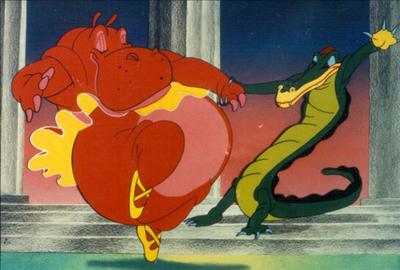
Wolf Woman or Hungry Hungry Hippo?

There's such a difference between knowing something in your head and feeling it in your heart. 

I know that my ex b-f had distorted thinking - about a lot of things, but particularly about food, diet, exercise, body image.  When last I saw him, he was obsessing over being "fat," having put on a few extra pounds around his middle, though at over 6' tall and 160 pounds, no one would accuse him of being overweight.

He would talk with longing in his voice for his teenage days, when he'd gotten down to 95 pounds.  (Of course, he was living off speed and cigarettes then, and it landed him in the hospital, but still...)  Not in the beginning, but after I moved in with him, he made constant derogatory comments about anyone he saw who was overweight - whether he saw them while we were driving, on TV, etc. ( if never to the actual face of an overweight person who happened to be friend or family.)  They were disgusting, they had no self-control (this from someone who would drink to passing out), they looked revolting, all fat people should be shot...

Mind you, when we met, this is how we looked as a couple. 
from Nighthawk News
I was in a "very big girl" stage, and while that didn't matter to him at all during the "honeymoon" period, when we were courting, before that ended I had begun dieting and stepped up my exercising - for me, not for him - and he was very pleased. 

Of course, it wasn't enough.  I got down to within five pounds of my high school weight, and while he would join in the praise around others who would tell me how great I looked, in private, he'd tell me I would look great - if I lost another 10-15 pounds.

Well.  And then his OCPD began rampaging in full about 101 different things, and I became stressed, depressed.  I stopped exercising as much, because he was so jealous of the time it took away from "us," I stopped being as careful about what I ate.  He rationed my food and rode me constantly, at home, about what I should or shouldn't "pig out" on, and I began binging at work during the day.

No surprise, the weight began creeping back up.  I haven't yet regained all that I had lost, over that two years I worked so hard to lose it; but I've regained a lot of it.  And I hate it.  I hate the way my body looks and the way my clothes don't fit and the fact I had to buy another pair of "fat" jeans today because my thunder thighs are about to bust out the sidewalls of my other fat jeans.


I gave myself permission (mentally if not emotionally,) to gain a little weight since the split, but I think now...  part of me didn't think it would really happen.  At first I gobbled up all kinds of "forbidden foods," a natural reaction, I knew (mentally!) to being starved of them/for them for the years I lived with ex b-f.  Like in the story told by Clarissa Pinkola Estes, a wolf that has been starved in the winter will go on a rampage when spring comes.

I figured once I got used to the fact that I could eat these foods, any time I wanted, and nobody was going to take them away from me, my cravings for them would stop, as Geneen Roth said, and for the most part that's happened.

So I'm trying to be kind to myself and I'm trying to be patient.  I've been learning about mindful eating and taking baby steps towards putting it into practice, the past few months.  


from Master Isolated Images at FreeDigitalPhotos
  I still am enjoying foods I wasn't "allowed" to have, then, but not in huge amounts.  I am not binging at work any more.  I am learning to recognize when I am approaching fullness and stopping then, not eating to the point of being overfull.  I am eating lots of broccoli and salads - because I actually enjoy them, and because I feel good about giving my body foods that are healthy for it.  I'm drinking lots of water and very little (though still some) soda.  I'm still doing regular exercise.  (Though I could be doing more - one can always be doing more exercise - I'm not doing less.)  I'm learning to recognize the pull of emotional hunger and to sit and breathe and acknowledge my feelings, instead of stuffing them down with food.

I know, calorie-wise, even if I'm not counting calories or points or carbs, I'm giving my body less of 'em.

So why am I still gaining weight?!?  I know, in my head, that I am taking the right approach.  I know, from bitter experience, that "regular" diets don't work, long-term.  Been there, done that, got the T-shirts - sized XL to L to M, and back again.  Twice.

But I'm scared.  I think I had this unrealistic vision in my mind, that I would start my baby steps of mindful eating, and as a reward, the Skinny Fairy would come bonk me on the head and I'd magically wake one morning, twenty pounds thinner overnight.  And I still hear my ex b-f's voice inside my head, telling me I'm a disgusting fat pig.

I don't want to be patient with myself.  I want results right now!!  And I want all those horrible, negative messages that I've introjected into my brain, from ex b-f, from magazines, from pop culture, to STFU already.

<Sigh.>  I'm just gonna have to do this the long, hard way, aren't I?  One positive affirmation, one baby step, one STFU to the negative messages, at a time.

Have you ever had to struggle with an issue like this?  Where you knew something, in your head, but it wasn't making it down into your heart where you really felt like you believed it? 

Tell me how you did it (please!) in the comments.