Using writing, and meditation, and ice cream, and reading, and dreams,

and a whole lot of other tools to rediscover who I am,

after six years living with a man with OCPD.


Saturday, April 16, 2011

Setting the Curtains on Fire

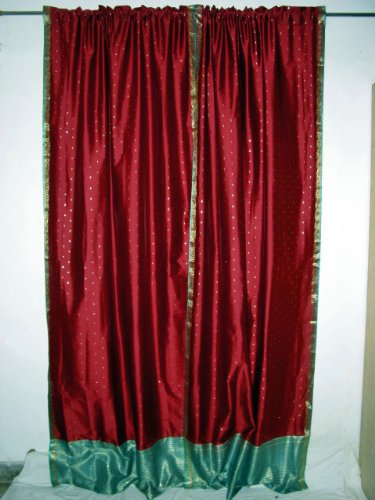
You can buy these curtains here - but why?

What would you do if somebody in your family walked up to a window, flicked his Bic, and set the curtains on fire?

(If they were these curtains, you might say thank you.)

Seriously, you'd probably yell, scream at them, dash around like mad putting out the fire.  Afterwards, there would be more screaming and yelling, because you'd want to make damn sure they didn't pull a stunt like that again.

The problem in living or working with somebody with OCPD, is there tend to be a lot of occasions that are "curtains on fire" emergencies to them, that aren't emergencies at all, to somebody with a healthy, working filter.

Stuff like, oh putting a stirring spoon on a spoon rest.   "Don't do that!  You're getting it all dirty, and then it'll have to be washed."

Uh, yeah.  That's kind of the point of a spoon rest - but I was never allowed to use mine.  Stirring utensils were to go in an empty can, or on the counter.

Funny, it doesn't look evil.
Or putting a fork tines up in the dish drainer.  Tragedy!  (I was taught this was more sanitary, but...)

People who don't have OCPD can usually differentiate between the big things and the little things.  We don't sweat the small stuff.

People who have OCPD don't know what small stuff is.  Everything is potentially dangerous.  You see, that fork, you could prick yourself with it when you go to take it out of the dish drainer and put it away, and then, then you could get blood poisoning and die.  Or become permanently disabled, and then your partner will have to take care of you, because you just didn't think, did you?

One friend I know battling his OCPD signs himself  "Only Contemplates Potential Disasters."

It goes to the Myth of Control, as mentioned in Too Perfect - that by being super-aware, super-alert, by mentally carrying out each scenario to the worst possible extreme, that all disaster can be avoided.

It can't.

The reality is that we are all going to die someday, no matter what precautions we take.  Maybe it will be of natural causes in our nineties, maybe it will be an earthquake followed by a tsunami, in which case the way the chopsticks were placed in a Japanese dish drainer probably didn't make a whole lot of difference.

For "nons" - the more you give in, the more forks you arrange the way the OCPDr wants, the more of the world s/he thinks s/he has to control, the more anxious s/he becomes.  If you stop catering to these fears, eventually s/he will learn that even though you are terribly obtuse and don't realize the danger you're putting everyone in, the sky does not fall when you do it your way, after all.


For those who have (or suspect they may have) OCPD - you don't have to live like you do.  Living like your co-workers, your partner, your children - will set the curtains on fire at any moment, if you are not on guard, ready to spring to action and try to teach them differently is not only eating you up inside, it's alienating the very people you are trying so hard to protect.


Get help - it might take a while, you might have to go through several therapists, but there are professionals who can help you cope with the fears and anxieties that are making your life so hard.

People who are smart enough to realize they need help and get it are smart, strong, admirable people.  Don't rule out anything : medication, Cognitive Behavior Therapy, meditation, support groups, prayer.  Treat yourself like a beloved child who has cancer - is there anything you wouldn't do, to save your child's life?  Is there any article you wouldn't read, any drug you wouldn't try, any rock you'd fail to turn over?

Sadly, though my ex b-f swore he loved me more dearly than his own life, getting help was something he wasn't willing to do.  His fear was bigger than his love.

Your thoughts?

Thursday, April 14, 2011

I Want To Be On A Death Panel


Photo by artist Richard Heeks
Because after all, we're all going to die anyway.

I know, that thought makes most of us uncomfortable.  We don't know, after all, what's on The Other Side, and that's kinda scary.  Some people believe in Heaven (and Hell), some people who believe in reincarnation, some people believe in nirvana, some people believe in being gods on other planets or any number of intriguing possibilities.  And some believe that one is just gone, the consciousness dissolved into nothingness.

But despite any number of fascinating stories from people who were clinically pronounced dead and "came back"  (but were they really, truly dead?) we don't know.

What we do know, for a fact, is we're not getting out of this place alive.

Many of us live like there's an actual, physical Reaper, and if we keep running/busy/active enough, we'll be able to avoid death.  Like he's a bill collector or something.  ("Pull down the shades, turn off the light and the TV, we'll pretend we're not home.")


OCPDrs carry it to extremes, but many people are so worried about what could happen in the future, what terrible thing is lurking around the corner, about protecting against every possible calamity, they fail to enjoy any of the wonderful things that are all around them, every minute of every day.  They're too busy finding green baby galoshes - because it might rain, sometime, in Southern California, and the baby's feet might get wet, and then he might get sick, and then he might die.

They're not so much Pro-Life, as they are Anti-Death.

We have to accept that we are going to die, and we have to accept that people we love are going to die.  That pain and loss are part of the admission price to this crazy Carnival called Life.  We can deny it, we can act like martyrs, and refuse to enjoy the Carnival - as if not enjoying life will entitle us to get more of it.  Hunh?

We can fight to be Cleopatra (Queen of Denial), and live like we have all the time in the world, but we don't.  We need to think about what's on our personal Bucket Lists, our dreams, and work on making them happen.  Is your dream to see the Grand Canyon?  Eat a hot dog on Coney Island?  Watch a taping of The Price Is Right?

Like Captain Picard would say on Star Trek: TNG, "Make it so."

And as far as the death panel thing, yep, there's a whooooole bunch of people I'd pull the plug on.  I don't believe, if one is extremely ill and/or 90+ years old, or in a persistent vegetative state, that it benefits anyone to take extreme measures to keep that person "alive."  (Okay, maybe the hospitals which are making a buck benefit from the care of said "person.") 

I believe that the soul has departed long before, but let's say, just for the point of argument, that it hasn't.  Let's say that the soul and spirit is still in that poor battered shell of a human body, unable to move, wipe itself, or communicate.

Could there be any worse torture than to be trapped there helplessly for weeks, months, years, not able to get out or let people know you're still in there?  To have to watch and listen to hours on end of daytime television programming?  (Whether your preference is Fox or MSN, you know they're gonna have it tuned to the other channel.)  To perhaps be in constant pain, either severe or low-grade, but nobody does anything about it because they don't know about it, and they think there is no pain?

I truly wouldn't wish such a fate on my worst enemy, and I have promised to come back and haunt anyone who does that to me.  (And not in a nice, Casper-the-Friendly-Ghost way.)  If we want to be kind and loving, we should let the person go, allow him or her to move on to...  whatever happens next.  Unless, of course, we know for a fact that the person we are "saving" would want us to fight for every breath.  I know some people in that horrible situation, knowing it's not a kind choice, but it's what their loved one wanted, so they are reluctantly carrying out those wishes.  (I'm so sorry!)

We've come a long way, in terms of preserving the physical bodies of those who would have died, 150, even 50 years ago, but that isn't always a good thing.  As a society, I think we need to reconsider what we often do to people in the last months of their lives, all in the name of "saving" them.  Saving them for what?  More torture? 

Just because we can hook somebody up to any number of modern gizmos and keep the heart beating and the lungs artificially pumped full of air and run a tube down somebody's throat to drip nutrients, doesn't mean we should.  Is an all-out battle to "buy" someone an extra two months of extreme pain, in a hospital, away from the comfort of family and pets and loved ones, always worth it?  (One friend recounted to me at her father's death, she counted - and then recounted, because she was sure she must have made a mistake - 187 tubes and wires running into his body.  187!!)

Newsweek had an interesting article recently on The Myth of Aging Gracefully.  Because of denial, we think we'll be one of the ones who's hardy, running marathons and making love into our nineties, and then drop instantly dead of a convenient heart attack or stroke, but it doesn't always work that way.
There is a 50–50 chance that anyone who survives to blow out 85 candles will endure years of significant mental or physical disability. The risk of Alzheimer’s disease doubles in every five-year period over 65. Furthermore, two thirds of Americans older than 85 are women, who usually become poorer as they age. Many won’t die at home, with the best care money can buy, as Sargent Shriver did in January, but in a Medicaid-funded nursing facility after their life savings have been exhausted.
What about living with gusto and passion?  What about accepting that death comes one to a customer, sooner or later, and making peace with that concept?  Telling loved ones every time you talk to them, that you love them, and treating them with love and kindness now? 

Image via Karen's Whimsy
For myself, I have my own Advance Medical Directive all filled out - copies with my sisters, doctor, and one in the glove compartment of my car.  Not to mention my threat to haunt people.  Your choices may be different from mine, but if you don't already have your AMD filled out, do it now.  No more excuses, no more waiting, no more "I'll do it when I have time," as if you know for sure you''ll have that time.

Cleopatra, Queen of Denial, didn't come to a very nice end, after all.

What are your thoughts on life, and death? 
What are you doing to live your life fully now?
Click a Reactions button, or leave a comment, below.


Tuesday, April 12, 2011

Too Perfect Tuesdays - Chapt 2 (cont) Control Over Others

Fun kinds of games by MaryTClark on Flickr
This post continues with Control Over Others, Control Through Irreproachability, and Control Games, from Chapter Two.

This series will look at a small snippet of The book on the Perfectionist Personality, aka The Obsessive Compulsive disordered Personality, aka OCPD, each week. Please follow along, leave your comments, engage more on the FaceBook website... whatever your heart calls you to do.

Too Perfect, When Being in Control Gets Out of Control by Allan E. Mallinger, M.D. and Jeanette DeWyze was published by Random House in 1992.  If you believe you are dealing with OCPD or someone who is "Too Perfect," whether that's you or a loved one, please buy a copy of the book and read it for additional insights that may not all be covered in these excerpts.
CONTROL OVER OTHERS
The second aspect of the Myth of Control is the need to control others.  <snip>  Most direct are those who rigidly insist that their employees, children, and spouses do things their way, never considering how such a dictatorial attitudes  makes other people feel.  Like anyone else, these obsessives usually want others to view them as kind and nonjudgmental, and are usually surprised when they are not seen that way.  They just can't bring themselves to do what it takes to win that reputation; they can't step back and let the people around them act in their own individual styles.

CONTROL THROUGH IRREPROACHABILITY
<snip> they strive to make people think well of them, always.  The main objective underlying this strategy is to leave no room for criticism.  In early childhood, we learn which behaviors and abilities are labeled "good" by parents, teachers, and others.  Many obsessives master these skills, developing a brilliant facility for identifying those attitudes and behaviors considered virtues in each new social situation and them adopting them absolutely.  Thoughts or images incompatible with this image of perfection are suppressed or rejected.

<snip>  Robert did experience anxiety during this period, especially when he found himself a bit less universally admired, but he also found that the sky didn't fall when he allowed himself to be more genuine and less perfect.  As he gradually stopped hating himself for his phoniness, he became better able to let people get close.  When somebody liked him, he knew it wasn't because of some role he was playing.  He trusted that person's positive response more.  <snip>

Like other aspects of the control myth, trying to control other people's feelings by being wonderful has major drawbacks.  For one thing, it's impossible.  You simply can't embody everyone's idea of virtue.  Anyone who tries is bound to incur someone's disapproval sooner or later.  And when the obsessive can't prevent someone from being angry with him, rejecting him, or doubting his abilities or character, he may find it impossible to let it go.  Often he'll ruminate about the incident, unable to relax, until he devises a way to "fix" it.

CONTROL GAMES
Subtly manipulative control games are another way in which obsessives strive to assert their power over others.  Such power plays whisper: "I've got the upper hand here.  I decide whether or not we will interact.  And if we do, I decide the beginning, ending, and content of those interactions."  Note that I say whisper; you very well may not recognize that you're the object of such tactics.  In fact, the obsessive himself usually is not conscious that he's doing it.  Part of the nature of these ploys is that each has an alternate, perfectly reasonable explanation.  When your colleague shows up several minutes late for a meeting, it may well be that a last-minute phone call unavoidably delayed her.  But when this happens repeatedly, you have to wonder if her slight tardiness doesn't spring from an unconscious need to demonstrate that she, and not other people, decides when she's got to be somewhere.

<snip> The tactic of making another person wait can assume a variety of guises.  It may involve prolonging a decision.  Perhaps you need to know what your spouse if planning for Friday evening, so you can decide whether you're free to attend a professional meeting.  But your spouse just can't seem to come to a decision, leaving you stymied.

<snip>  All these interpersonal control tactics do accomplish their aim to a degree.  However, their net result is often painful and destructive because ultimately they obstruct the sense of connection and intimacy that all humans need and crave.

***

This is where we tend to have the most battles; when Perfectionists try to control us.  My ex would often scold, "I have to show you how to do everything," because I did few things "right" in his eyes, from the way I opened the gate to the driveway, to the way I washed my hands and carried in bags from the grocery store.  Let alone the Shower Rules.

At first, I would do it his way, or JADE (Justify, Argue, Defend and Explain.  The best way to deal is to not JADE;) as those of you who've tried those techniques know, they don't work.  Those with OCPD will simply argue you into the ground until you give up out of exhaustion, and whether you do one or three things his way, he won't do the next thing your way.  He will find 15 more things you're not doing his way.

I've tried to be perfect and irreproachable, myself: the top student in class, the most attractive woman in the room, the best at whatever I turned my hand to.  Like that really worked out!  And so, I've found that despite being a "failure" more often than not, I do pretty well, and most, if not all, people truly like imperfect, unglamorous me.  I'm "over" trying to kill myself to be The Best at something, but will put in as much effort as I think the task deserves.

I've come to realize I have other, more covert Perfectionists in my life, who are, indeed, trying to live in a way that leaves no room for criticism, and whose criticism and control games can be subtle.

ME: I'm going to do X.

Other Person:  Well, that's one way to do it.

Not a criticism, exactly, just a hint of disapproval and suggestion that OP has a (much) better way.  In the past, I'd always bite, and ask, "Oh, what do you suggest, ye wonderful wise person?"   or perhaps, even get into an argument about it.  Now, I'm learning to either ignore the comment, or say cheerfully, "Yep, that's the way it suits me, right now."  Or ask for a suggestion, if I'm interested - but I'm not manipulated into it any more.

On the lateness issue - I have a friend who's always an hour late to anything.  And he used to whine to me about how people didn't understand, how they always took it as a mark of disrespect, blah-blah.  Well, we are still (more distant) friends, and when we plan to meet, anywhere, I always bring a book along and plan to wait for an hour (sometimes it's even less) but now turn a deaf ear to his complaints of busyness and inability to control his lateness.  Like other people aren't busy, too?

It is disrespectful and insulting.  Our friendship has become more distant, in part because I have come to recognize his manipulations and excuses for what they are.  I don't have time and emotional energy for that BS any more.  One very good thing that has come about, as I rediscover myself after being with an OCPDr, is I am recognizing unhealthy dynamics in many of my other relationships, and am working to change them as well.

I, too, have tried to be a "too perfect" friend and confidant, and I realize I need to be my own best friend.  If people think I'm not as "nice" anymore... oh well!

Your thoughts?