Using writing, and meditation, and ice cream, and reading, and dreams,

and a whole lot of other tools to rediscover who I am,

after six years living with a man with OCPD.


Showing posts with label abuse. Show all posts

Wednesday, June 5, 2013

Why Does He DO That? Introduction (Part 5)

We are reading, and, I hope, entering into a healthy discussion of the book Why Does He DO That? Inside the Minds of Angry and Controlling Men by Lundy Bancroft.


Please, do buy your own copy - both because I won't be excerpting all of it, and because this author deserves our $upport.


From the Introduction - How To Use This Book: 

<snip> You may feel ashamed of having a partner who sometimes behaves in unkind or bullying ways, and you may fear that people will be critical of you for not leaving him right away. Or you might have the opposite concern: that people around you are so fond of your partner that you question whether they will believe you when you describe how mean or abusive he can be. But, regardless of these anxieties, it is essential not to stay isolated with your distress or confusion about what is happening in your relationship. Find someone whom you can trust - it might even be a person you have never considered opening up to before - and unburden yourself. This is probably the single most critical step you can take toward building a life that is free from control and abuse.

If your partner’s controlling or devaluing behaviors is chronic, you no doubt find yourself thinking about him a great deal of the time, wondering how to please him, how to keep them from straying, or how to get him to change. As a result, you may find that you don’t get much time to think about yourself  - except about what is wrong with you in his eyes. <snip> I’m hoping that by answering as many questions as possible and clearing away the confusion that abusive behavior creates, I can make it possible for you to escape the trap of preoccupation with your partner, so that you can put yourself - and your children if you are a mother  - back in the center of your life where you belong. An angry and controlling man can be like a vacuum cleaner that successful woman’s mind and life, but there are ways to get your life back. The first step is to learn to identify what your partner is doing and why he does it, which is what the pages ahead will illuminate. But when you have finished diving deeply into the abuser’s mind, which this book will enable you to do, it is important to rise back to the surface and from then on try to stay out of the water is much as you can. I don’t mean that you should necessarily leave your partner - that is a complex and highly personal decision that only you can make. But whether you stay or go, the critical decision you can make is to stop letting your partner distort the lens of your life, always forcing his way into the center of the picture. You deserve to have your life be about you; you are worth it.
***

Shame Helps Keep Us Silent
If we have a partner who is abusive, it's hard to admit, even to ourselves. After all, we chose him (or her). Were we stupid - or blind? Besides, we have continued to stay with a person who treats us this way - what is wrong with us?

We may buy into his argument that we make him angry. Unfair as it seems, sometimes, it is still less unpalatable than admitting s/he is an angry person who would find reasons excuses to be abusive no matter what we did or didn't do.

Living with an abusive person becomes a Through the Looking Glass world where everything is backwards; they behave badly, we feel ashamed.

And yet, when we do begin speaking out, we find help, support, validation. The Emperor has no clothes, after all.


Disclaimer: The information and opinions posted here, and any comment responses, are not to be considered professional advice and are not intended to replace consultation with a qualified medical or mental health professional. If you are involved in a relationship that includes physical, financial, and/or emotional violence, please contact a professional for help and assistance.

In the US:

National Domestic Violence Hotline - 1-800-799-SAFE (7233)  TTY- 1-800-787-3224 
RAINN (Rape Abuse & Incest National Network)
National Coalition Against Domestic Violence (includes downloadable guides for helping women in abusive relationships)
National Alliance on Mental Illness, aka NAMI

International Resources linked here.

Your thoughts?

Wednesday, May 29, 2013

Why Does He DO That? Introduction (Part 4)

We are reading, and, I hope, entering into a healthy discussion of the book Why Does He DO That? Inside the Minds of Angry and Controlling Men by Lundy Bancroft.


Please, do buy your own copy - both because I won't be excerpting all of it, and because this author deserves our $upport.


From the Introduction - My Experience Working with Angry and Controlling Men:
Counseling abusive men is difficult work. They are usually very reluctant to face up to the damage that they have been causing women, and often children as well, and hold tightly to their excuses and victim blaming. As you will see in the pages ahead, they become attached to the various privileges they earn through mistreating their partners, and they have habits of mind and make it difficult for them to imagine being in a respectful and equal relationship with a woman.

From the Introduction - How To Use This Book: 

One of the prevalent features of life with an angry or controlling partner is that he frequently tells you what you should think and tries to get you to doubt or devalue your own perceptions and beliefs. I would not like to see your experience with this book re-create that unhealthy dynamic. <snip>  listen carefully to what I’m saying, but always think for yourself. If any part of what I describe about abusers doesn’t match your experience, cast it aside and focus on the parts that do fit. <snip> If you come upon sections that don’t speak to you - because you don’t have children, for example, or because your partner is never physically frightening - to skip ahead to the piece that can help you more.

Some women will find it being alone with this book is too difficult because it awakens feelings and realizations that are overwhelming. I encourage you to reach out for support from trusted friends and family as you go along. While reading this book is likely to be clarifying for you, it may also awaken awareness that can be painful or distressing. <snip> Again, don’t be stymied by the word abuse; the hotline staff is there to listen to you and to help you think about any relationship in which you are being treated in a way that is making you feel bad.
***

One of the biggest battles I had repeatedly with my ex is he tried, like Orwell's Big Brother, to control my thoughts. He would frequently begin a rant at me with, "You think blah blah blah," and at least that ticked me off enough that I refused to follow him down that particular rabbit hole.

Just like nobody gets to put baby in a corner, NOBODY gets in my face and TELLS me what I am thinking or what I "should" think. The full frontal assault was almost always a fail.


Other mental manipulations - and I am not sure they are/were all conscious - were much more successful at twisting my thoughts and perceptions, to get me to "behave." Acting hurt/wounded by something I said or did. The compliment with a sting in it, "You look good in that color, and if you just lost another five pounds, that dress would look fantastic." Those are the kinds of messages that kept replaying in my mind, planted seeds of doubt. Bruises are easy to recognize and point to, but the slow poisoning of heart and confidence through planting those ugly words and thoughts is much dirtier and more insidious.

Human beings all want others to do what we want, and are manipulative, to a certain degree. If I have a difficult subject to bring up with my boss, for example, I will wait until he is in a good mood (most of the time, luckily for me) and he has an open window of time (that one's more difficult) to really think about my issue and discuss it. Is that manipulation, or common sense? How about letting your partner know that you really, really want to see a certain concert or movie?

Where manipulation turns into abuse is when there is the lack of respect and an equal relationship. In most societies, even Western ones, there is an open assumption that "the man is the head of the house," and so sometimes, it's hard to see where an abusive attitude begins. Isn't church/temple/mosque/society telling the man that he is supposed to rule over "his" woman? If one party believes that he (or she) has the right to dismiss without discussion an idea or plan floated by his (or her) partner, it's not a relationship of equals.

My ex found it nearly impossible to compromise. He wanted to have things his way, the superior way. On occasion, he would allow me to have things my way, but there was very little of the give and take and negotiation that happens in a relationship of equals.

Once when I had described what I wanted, and why, he was (again) locked into the black-or-white thinking, and nastily accused me of  "always wanting things my way." I became so frustrated that I got very sarcastic with him.

"No," I said. "I am trying to work this out together. That's what grown-ups do. I put what I want out on the table, here," I gestured to the right hand side of the coffee table. "You put what you want out on the table, there," I gestured to the left hand side of the table. "Then we work together to try to meet in the middle and find a way for both of us to get our needs and wants satisfied. A win-win. That's what grown-ups do."

I think, in retrospect, that part of his issue was that he either didn't have or couldn't verbalize a position, but felt compelled (demand-resistance, knee-jerk reaction) to say no to what I was proposing, no matter what it was. He simply couldn't let me have the "win" of  "Yes, that sounds like a great idea."

I found it very difficult to work through this book and consider how much of it applied to me.

Yes, my boyfriend often called me names, had jealous spats, wouldn't work together with me. Yes, he frequently liked to refer to women as bitches - but he was only joking.

Even now I have a very hard time talking about it as abuse. But it was.

***

Disclaimer: The information and opinions posted here, and any comment responses, are not to be considered professional advice and are not intended to replace consultation with a qualified medical or mental health professional. If you are involved in a relationship that includes physical, financial, and/or emotional violence, please contact a professional for help and assistance.

In the US:

National Domestic Violence Hotline - 1-800-799-SAFE (7233)  TTY- 1-800-787-3224 
RAINN (Rape Abuse & Incest National Network)
National Coalition Against Domestic Violence (includes downloadable guides for helping women in abusive relationships)
National Alliance on Mental Illness, aka NAMI

International Resources linked here.

Your thoughts?

Wednesday, May 22, 2013

Why Does He DO That? Introduction (Part 3)

We are reading, and, I hope, entering into a healthy discussion of the book Why Does He DO That? Inside the Minds of Angry and Controlling Men by Lundy Bancroft.


Please, do buy your own copy - both because I won't be excerpting all of it, and because this author deserves our $upport.


From the Introduction - My Experience Working with Angry and Controlling Men:
For roughly the next five years I worked almost exclusively with clients were coming to the program voluntarily. They generally attended under heavy pressure from their female partners, who were either talking about leaving the relationship or had already done so. <snip> The men’s main motivation for seeking counseling was the hope of saving their relationships. It was common for them to feel some guilt or discomfort about their abusive behavior, but they simultaneously believed strongly in the validity of their excuses and justifications, so their feelings of remorse would not of been enough in themselves to have kept them in my program. In those early years, the clients I worked with were men who used far more verbal and emotional abuse and physical violence, although most of them had been physically intimidating or assaultive on at least a few occasions.

<snip>...with the result that court-mandated clients started at first to trickle and then to pour in the doors of our program. These men often had a much greater propensity for physical violence than our earlier clients, sometimes involving the use of weapons or vicious beatings resulting in hospitalization of their partners. Yet we observed that in other ways these men were generally not significantly different from our verbally abusive clients: their attitudes and excuses tended to be the same, and they used mental cruelty side by side with their physical assaults. Equally important was that the female partners of these battering men were largely describing the same distresses in their lives that we were hearing about from women who would been psychologically abused, showing us that different forms of abuse have similar destructive impacts on women.

<snip> my colleagues and I have been strict about always speaking to the woman whom our client has mistreated, whether or not the couple is still together. (And if he has started a new relationship, we talk with his current partner as well, which is part of how we became aware of the ways in which abusive men continue their patterns from one relationship to the next.) It is through these interviews with women that we’ve received our greatest education about power and control in relationships. The women’s accounts also have taught us that abusive men present their own stores with tremendous denial, minimization, and distortion of the history of their behaviors and that is therefore otherwise impossible for us to get an accurate picture of what is going on in an abusive relationship without listening carefully to the abused woman.
***

Their Attitudes and Excuses Tended to be the Same

I've heard many people argue that verbal abuse isn't real abuse. I've even made the same argument, myself. But if the abuser who hits "only" with words, dirty looks, and contemptuous body language, has the same attitude, and same goal - to cow and intimidate his/her victim, to make him/her "behave," as the abuser who hits with a closed fist, then it really isn't so different.


Different Forms of Abuse Have Similar Destructive Impacts

Sticks and stones... words will never hurt you, right? Unlike the well-meant childhood fibs about Santa and the Tooth Fairy (sorry if I'm blowing it for you), the LIE about words not hurting us could not be more untrue. I bet everyone reading this, everyone I know, can remember a stinging insult, a painful accusation or comment from our childhood and teen years.

Loser, weakling, incompetent, stupid, untrustworthy, clumsy, selfish... The terrible thing is, even as an adult, if someone we love and trust says something negative about our character or personality, and it hits us in an emotionally vulnerable spot, we'll keep "playing the tape" over and over again in our minds.

If someone tells me, "You're extremely short," I can easily laugh that off. If a stranger who is angry at me tells me, "That's awfully selfish of you," I can usually laugh that off as well - maybe she is trying to hurt me because I didn't go along with her selfish agenda, maybe I was behaving selfishly in that one particular instance.

But I don't want to think of myself as a selfish person. So if my partner says to me, "I can't believe how selfish you are. You're always thinking about yourself, never about other people," I will obsess endlessly over it - especially if he said such a thing more than once. This person knows and loves me. He wouldn't say something like that simply to hurt me. Maybe I am selfish. Hoping to win his approval/praise, I would jump through any number of hoops to prove to him that no, I'm not really selfish. No matter how much it cost me to do so.

And of course, there were always more hoops.


Disclaimer: The information posted here, and any comment responses, are not to be considered professional advice and are not intended to replace consultation with a qualified medical or mental health professional. If you are involved in a relationship that includes physical, financial, and/or emotional violence, please contact a professional for help and assistance.

In the US:

National Domestic Violence Hotline - 1-800-799-SAFE (7233)  TTY- 1-800-787-3224 
RAINN (Rape Abuse & Incest National Network)
National Coalition Against Domestic Violence (includes downloadable guides for helping women in abusive relationships)
National Alliance on Mental Illness, aka NAMI

International Resources linked here.

Your thoughts?

Wednesday, May 15, 2013

Why Does He DO That? Introduction (Part 2)

We're start reading, and, I hope, entering into a healthy discussion of the book Why Does He DO That? Inside the Minds of Angry and Controlling Men by Lundy Bancroft.


Please, do buy your own copy - both because I won't be excerpting all of it, and because this author deserves our $upport.


From the Introduction:
Another central goal of mine is to offer assistance to each woman who is struggling with how she is being treated in a relationship, regardless of what label she may put on her partner’s behavior. Words like control and abuse can be loaded ones, and you may not feel that they fit your particular circumstances. I’ve chosen to use the term abusers to refer to man who use a wide range of controlling, devaluing, or intimidating behaviors. In some cases I’m talking about fiscal batterers and at other times about men who use or insult their partners but never frighten or intimidate them. Some of the men I described in the pages ahead change moods so drastically and so often that a woman could never feel sure what they are like, much less attach a label. Your partner may be arrogant, or may play mind games, or may act selfishly over and over again, but his better aspects may make you feel that he is miles away from being an “abuser.” Please don’t let my language put you off; I’ve simply chosen the word abuser as a shorthand way of saying “men who chronically make their partners feel mistreated or devalued.” You can adopt a different term if you know one that fits your partner better. <snip>

If the person are involved with is the same sex as you are, you have a place here too. Lesbians and gay men who abuse their partners exhibit much of the same thinking, and most of the same tactics excuses, that abusive heterosexual men do. In this book I’ve used the term he for the abuser and she for the abused partner to keep my discussion simple and clear, but abuse lesbians and gay men are very much in my thoughts, right alongside of abuse straight women. Of course, you will need to change the gender language to figure relationship, for which I apologize in advance. You will also find a section in chapter 6 where I speak specifically about the similarities and differences in same-sex abusers.

Similarly, this book includes stories from men from a very wide range of racial and cultural backgrounds. Although the attitudes and behaviors of controlling and abusive men vary somewhat from culture to culture, I found that their similarities greatly outweigh their differences. If your partner is a person of color or an immigrant, or if you are a member of one of these groups yourself, you’ll find that much of what this book discusses, or perhaps all of it, fits your experience quite well. <snip> I further discuss some specific racial and cultural issues in chapter 6.

***

I never wanted to label it abuse.


He was sick, he was stressed out, he had a momentary lapse... And I absolutely loathed the word "victim" as applied to myself.  I am loving, smart, capable, and strong - how could someone like me be a victim?

Reality? He had a pattern of being controlling, demeaning, and verbally abusive to me.  I had a pattern of making excuses for him, and refusing to call it abuse - even to myself.

In the beginning, during the courtship or honeymoon stage, he treated me like he thought I was wonderful, special, valuable... almost all the time. That special treatment never entirely disappeared - and that is why we stay. We keep getting glimpses of who we think the real person, the kind, loving person is, under all the crap, and think if we just did - something - right, better, found the way to explain, we could once again have that incredible relationship with the person we loved.

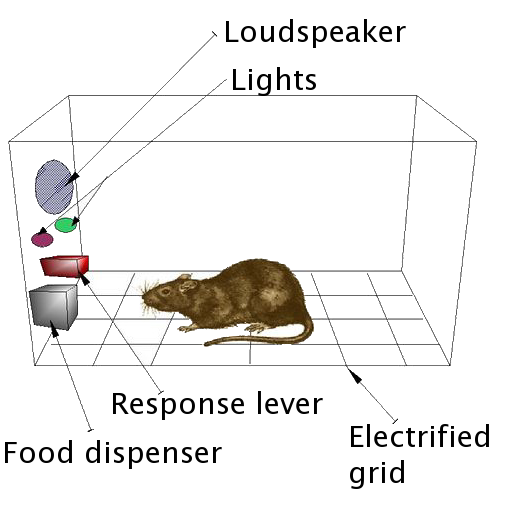
Like those rats in experiments, where if sometimes when they push a bar they get a treat, and sometimes an electric shock, we'll keep pressing that bar, hoping, that next time, it'll be good.

via Wikimedia Commons


Once more, on the male-female thing


Bancroft's book is (primarily) about male on female abuse. Our discussion, here, is not predicated on "bad men; helpless victimized women" because although there are a number of factors that often give men an unfair societal and legal advantage, yes, women abuse men too. Do not feel if you are a man being abused by a woman, that this book and our discussion has little to offer you. Please buy the book and read along.


Disclaimer: The information and opinions posted here, and any comment responses, are not to be considered professional advice and are not intended to replace consultation with a qualified medical or mental health professional. If you are involved in a relationship that includes physical, financial, and/or emotional violence, please contact a professional for help and assistance.

In the US:

National Domestic Violence Hotline - 1-800-799-SAFE (7233)  TTY- 1-800-787-3224 
RAINN (Rape Abuse & Incest National Network)
National Coalition Against Domestic Violence (includes downloadable guides for helping women in abusive relationships)
National Alliance on Mental Illness, aka NAMI

International Resources linked here.

Your thoughts?

Wednesday, May 8, 2013

Why Does He DO That? Introduction (Part 1)

We've begun reading, and, I hope, entering into a healthy discussion of the book Why Does He DO That? Inside the Minds of Angry and Controlling Men by Lundy Bancroft.

Please, do buy your own copy - both because I won't be excerpting all of it, and because this author deserves our $upport.


From the Introduction:


1212mentalhealth-RW
1212mentalhealth-RW
(Photo credit: Robbie Wroblewski)
I’ve been working with angry and controlling men for 15 years as a counselor, evaluator, an investigator, and have accumulated a wealth of knowledge from the 2000 or more cases with which I have been involved. I have learned the warning signs of abuse and control that a woman can watch out for early in a relationship. I’ve come to know what a controlling man is really saying, the meaning that is hidden behind his words. I’ve seen clues to recognizing when verbal and emotional aggression are heading toward violence. I found ways to separate out abusive men who are faking change from those who are doing some genuine work on themselves. And I have learned that the problem of the abusiveness has surprisingly little to do with how a man feels - my clients actually differ very little from nonabusive men and their emotional experience - and everything to do with how he thinks. The answers are inside his mind.

<snip> who can use what I have learned to help themselves recognize when they are being controlled or devalued in a relationship, to find ways to get free of abuse if it is happening, and to know how to avoid getting involved with an abusive man - or a controller or a user - next time. The purpose of this book is to equip women with the ability to protect themselves, physically and psychologically, from angry and controlling men.

To prepare for writing this book, I first generated a list of the 21 questions that women most often asked me about their abusive partner, questions such as:

"Is he really sorry?"
"Why do so many of our friends side with him?"
"Is he going to hit me someday?"


and many others. I then built my explanations around these concerns to make sure that women would be able to look here to find the information they urgently need. <snip>
***


Is He Going To Hit Me?


via kenfotos at freedigitalphotos
That's probably the #1 question for those who've been in a relationship where they have felt verbally battered and deeply frightened, but not yet hit... yet. And there are no guarantees; however, there are warning signs, which will be covered in this book. (Another reason I urge you to buy it now.)

That a person feels s/he has the right to degrade and belittle you is not a sign s/he respects you and values you. If s/he has "accidentally" hurt you - stepping on toes, an elbow in the wrong place, etc., this could be a real red flag that more is headed your way, especially if the response was not an abject apology on the part of the offender, but more a "well, you shouldn't have gotten in my way" attitude.

While many verbal abusers never "graduate" to physical abuse, it is well documented that verbal and emotional abuse always precedes physical violence.


Do not take your safety for granted, ever. 


If you are in a situation where your partner hurts you - even if it is "only" with words, please contact one of the hotlines down below and begin working out an emergency escape plan, even if as of right this minute, you feel sure you will never need one. Especially if you have children at home.

Worst case scenario if you have an escape plan and never need it, is you have "wasted" a few hours. Worst case scenario if you don't have a plan and need one, is it may cost you your life.

I never thought my boyfriend would hit me, either.

Till he did.


Disclaimer: The information and opinions posted here, and any comment responses, are not to be considered professional advice and are not intended to replace consultation with a qualified medical or mental health professional. If you are involved in a relationship that includes physical, financial, and/or emotional violence, please contact a professional for help and assistance.

In the US:

National Domestic Violence Hotline - 1-800-799-SAFE (7233)  TTY- 1-800-787-3224 
RAINN (Rape Abuse & Incest National Network)
National Coalition Against Domestic Violence (includes downloadable guides for helping women in abusive relationships)
National Alliance on Mental Illness, aka NAMI

International Resources linked here.

Your thoughts?
Enhanced by Zemanta

Wednesday, May 1, 2013

Why Does He DO That? Terminology Intro

We're going to start reading, and, I hope, entering into a healthy discussion of the book Why Does He DO That? Inside the Minds of Angry and Controlling Men by Lundy Bancroft.

 Please, do buy your own copy - both because I won't be excerpting all of it, and because this author deserves our $upport.


From the Note on Terminology:

In referring to angry and controlling men in this book, I’ve chosen in most cases the shorter terms abusive man and abuser. I’ve used these terms for readability and not because I believe that every man who has problems with angry or controlling behavior is abusive. I needed to select a simple word I could apply to any man who has recurring problems with disrespecting, controlling, insulting, or devaluing his partner, whether or not his behavior also involves more explicit verbal abuse, physical aggression, or sexual mistreatment. Any of these behaviors can have a serious impact on a woman’s life and can lead her to feel confused, depressed, anxious, or afraid. <snip>


via Wikipedia Commons

<snip> Controlling men fall on a spectrum of behaviors, from those who exhibit only a few of the tactics I describe in this book to those who use almost all of them. Similarly, these men run a gamut in their attitudes, from those who are willing to accept confrontation about their behaviors and strive to change them, to those who won’t listen to the woman’s perspective at all, feel completely justified, and become highly retaliatory if she attempts to stand up for herself. <snip> The level of anger exhibited by controlling man also shows wide variation, but unfortunately it doesn’t tell us much in itself about how psychologically destructive he may be or how likely he is to change, as we will see.

In addition, I have chosen to use the terms he to refer to the abusive person and she to the abused partner. I selected these terms for convenience and because they correctly described the great majority of relationships in which powers being abused.  <snip>.
***

No Gender Discrimination In Our Discussions Here


Mr. Bancroft's experience is with male abusers; he does not have the training or experience to address female-on-male abuse situations, therefore in this book, he does not address it, though he briefly covers controlling and angry dynamics in gay relationships. In most modern societies, even though "we've come a long way, baby" the reality is that men (in general) possess much more political, social, and economic power than women, and in second/third world countries, the power men hold over women is even more extreme. Men kill women and send them to the emergency room much more often than women kill or seriously injure men.

via David Castillo Dominici
at freedigitalphotos
This does not mean that female-on-male violence, especially emotional and verbal abuse, does not frequently occur, or that women in individual relationships cannot be just as angry and feel just as justified as the Angry and Controlling Men of the book title. Sadly, I know many men who've experienced abuse from their mothers or who have lived or still live in abusive relationships with a female partner.

Therefore, if that is your experience, please buy the book and follow along; you will almost certainly gain valuable insights.


Why Does A Discussion about Domestic Violence Belong on a Blog About OCPD?

Some may argue that there is little to no scientific evidence that domestic violence is linked to any mental disorder, including OCPD. I agree - there is no scientifically proven link. My counter-argument is that if the questions are never asked, how reasonable is it to assume that no links exist? Because of stigma and shame, both mental illness and domestic violence are vastly under-reported, under-studied, and misunderstood.
I would also add that statistics show people with a mental illness are far more likely to be victims of a violent crime than perpetrators. No intent here to demonize the mentally ill.

I can state that in my personal experience, and that of many other people with whom I have traded stories, domestic violence and mental illness or brain injury is often linked. This is part of the dynamic that influences our decision to stay in an abusive relationship, perhaps longer than we should. We perceive our partners not as deliberately abusive, but as sick - and what kind of heartless person would abandon a partner suffering from cancer, or heart disease?


Reality - it doesn't matter why we are being abused. Being abused hurts.


Disclaimer: The information and opinions posted here, and any comment responses, are not to be considered professional advice and are not intended to replace consultation with a qualified medical or mental health professional. If you are involved in a relationship that includes physical, financial, and/or emotional violence, please contact a professional for help and assistance.


In the US:

National Domestic Violence Hotline - 1-800-799-SAFE (7233)  TTY- 1-800-787-3224 
RAINN (Rape Abuse & Incest National Network)
National Coalition Against Domestic Violence (includes downloadable guides for helping women in abusive relationships)
National Alliance on Mental Illness, aka NAMI

International Resources linked here.

Your thoughts?

Saturday, April 21, 2012

A-Z: Finding A Scapegoat Doesn't Make Anyone All Better

The Scapegoat by William Homan Hunt via Wikimedia Commons

Got goats?

Most people understand what a scapegoat in modern terms is. It's the wide receiver who dropped the ball on the last play of the game (though the whole team played poorly up to that point); the department head who gets very publicly fired for carrying out the unfair policies set by her superiors; the husband who fails to properly read his wife's mind.

In ancient Syria, Greece, and Biblical times, an actual goat (or beggar, or cripple) was designated as the bearer of sins for the entire community. The scapegoat might be driven out of the community into an inhospitable region (theoretically taking all the evil/sin with it), where presumably it would in fact, die. Or it might be killed outright.

A similar concept was practiced in the Middle Ages, depicted in an old Night Gallery episode called Sins of the Fathers. The Sin-eater would consume food spread around the body of a dying or recently deceased person, so that the soul of the dead person would then be able to rest in peace or float to heaven, free of sin. Of course, if something happened to the village Sin Eater...

Except in certain religious connotations, nobody believes (on paper) in the concept of scapegoating anymore. As a parent with two children, say, we certainly wouldn't punish Child A because Child B misbehaved, right?

In practice... people do it all the time. (See butterfingered wide receiver, above.) Child B may be wearing down his mother's nerves all day long, but when Child A also does something annoying, that's when Mom snaps and takes it out on Child A. Fair? No. Human? Yes.

In real life, scapegoating and 'projection' go hand in hoof. Just as it felt too uncomfortable to drag around the guilt and sin in the village, for many people, acknowledging our own faults, shortcomings, and bad feelings is too heavy to carry. So it's got to be put over there, onto a target. Away from us.

See, we are good people. If there is something wrong, bad, or nasty in the room, it's because somebody else - not us - brought it in here.

From Wikipedia:
According to Sigmund Freud, projection is a psychological defense mechanism whereby one "projects" one's own undesirable thoughts, motivations, desires, and feelings onto someone else. 'Emotions or excitations which the ego tries to ward off are "split out" and then felt as being outside the ego...perceived in another person'.[4] It is a common process.[5] The related defense of 'projective identification differs from projection in that the impulse projected onto an external object does not appear as something alien and distant from the ego because the connection of the self with that projected impulse continues'.[6]
In one example of the process, a person might have thoughts of infidelity with respect to a spouse or other partner. Instead of dealing with these undesirable thoughts consciously, the subject unconsciously projects these feelings onto the other person, and begins to think thatthe other has thoughts of infidelity and that the other may be having an affair. In this way, the subject may obtain 'acquittal by his conscience - if he projects his own impulses to faithlessness on to the partner to whom he owes faith'.[7] In this sense, projection is related to denial, arguably the only more primitive defense mechanism than projection, which, like all defense mechanisms, provides a function whereby a person can protect the conscious mind from a feeling that is otherwise repulsive.
Let's say someone is what we might call "toxic." He seems frequently angry and bitter, is usually finding fault with other people, uses verbally abusive language, and rarely accepts responsibility for his actions.  If we have an interaction with this guy, he may attempt to project his bad feelings onto us, or use us as his scapegoat.

It's got to be pretty painful to walk around with a heart/body overflowing with anger and bad feelings. An emotionally unhealthy person is not going to be mindful, sit with his feelings, decide why they are occurring, and what action, if any, he wants to take when he feels upset. An unhealthy person is going to look for "the person who made me feel this way" as quickly as possible, and "let 'em have it."


If we tend to be Rescuers (see yesterday's post) we may accept, even encourage this person to "let it all out," even come to believe we deserve to be abused or called names, because, after all, we did forget to replace the batteries in the remote (or whatever the error was). Maybe we made a huge mistake, one that cost our boss an important contract. Anyway, we can suck it up and take it; we can "be the bigger person,"  and this will help the toxic person feel better.

No. If we do, we are only feeding fuel to an already unhealthy dynamic. No matter what has gone on, nobody "deserves" to be abused. (We might deserve to be fired, but even if we do, we do not deserve to be kicked on our way out the door.)

When we accept scapegoating, it's bad for us (obviously), but it is also bad for the abusers. They are experiencing momentary relief, true, but we are denying them the opportunity to deal in a healthy way with their feelings and problems. The underlying reasons why they are building up anger and resentment are not being addressed.

We can, firmly and politely, refuse to accept a truck load of toxic abuse dumped onto the front lawns of our hearts. We can put up a hand, and say, "Stop. If you cannot talk to me without name calling and abusive language, the conversation is over. Let me know when you are ready to speak to me respectfully, and I'll be happy to take up the subject again." (Caveat: if you live with a physically abusive person, this approach may not be safe. Please contact a domestic violence support network, and do whatever you need to do to stay safe. In the US, 1.800.799.SAFE www.thehotline.org.  A partial listing of facilities in other countries is available here.)

Everyone deserves to be treated with dignity and respect, and everyone should seek to treat others with dignity and respect, as well.


My A-Z theme is Issues related to Mental Health or Mental Illness.


Have you ever been scapegoated?
Ever scapegoated someone else, and realized it later?
How about projecting your bad feelings onto someone else?
Enhanced by Zemanta

Friday, April 13, 2012

A-Z: Leaving Checklist

Broken Heart symbolBroken Heart symbol (Photo credit: Wikipedia)When we marry or become involved with someone, leaving's the last thing on our minds. There is no safety net - who needs a safety net? We are in love, we are going to make the relationship work.

End of story.


Only, sometimes it's not. Sometimes it is necessary, for our our mental and physical well-being, to leave someone we might still love very much.

So, how do you detach, and emotionally prepare to leave?

During this part of separating from "The Loser", you recognize what you must do and create an Exit Plan. Many individuals fail in attempts to detach from "The Loser" because they leave suddenly and impulsively, without proper planning, and without resources. In many cases, "The Loser" has isolated their partner from others, has control of finances, or has control of major exit needs such as an automobile. During the detachment phase you should...

  • Observe the way you are treated. See how "The Loser" works

  • Gradually become more boring, talk less, share less feelings and opinions. The goal is almost to bore "The Loser" to lessen the emotional attachment, at the same time not creating a situation which would make you a target.

  • Quietly contact your family and supportive others. Determine what help they might be - a place to stay, protection, financial help, etc

  • If you fear violence or abuse, check local legal or law enforcement options such as a restraining order.

  • If "The Loser" is destructive, slowly move your valuables from the home if together, or try to recover valuables if in their possession. In many cases, you may lose some personal items during your detachment - a small price to pay to get rid of "The Loser".

  • Stop arguing, debating or discussing issues. Stop defending and explaining yourself - responding with comments such as "I've been so confused lately" or "I'm under so much stress I don't know why I do anything anymore".

  • Begin dropping hints that you are depressed, burned out, or confused about life in general. Remember - "The Loser" never takes responsibility for what happens in any relationship. "The Loser" will feel better about leaving the relationship if they can blame it on you. Many individuals are forced to "play confused" and dull, allowing "The Loser" to tell others "My girlfriend (or boyfriend) about half nuts!" They may tell others you're crazy or confused but you'll be safer. Allow them to think anything they want about you as long as you're in the process of detaching.

  • Don't start another relationship. That will only complicate your situation and increase the anger. Your best bet is to "lay low" for several months. Remember, "The Loser" will quickly locate another victim and become instantly attached as long as the focus on you is allowed to die down.

  • As "The Loser" starts to question changes in your behavior, admit confusion, depression, emotionally numbness, and a host of other boring reactions. This sets the foundation for the ending of the relationship.

  • Many times, even though it is extremely painful, a relationship can be ended amicably. but if your partner has been physically violent, or has threatened physical violence in the past, keep yourself safe. You are under no obligation to give your partner a face to face goodbye if you believe there is ANY chance s/he might harm you. 

    Sometimes, he or she would rather see his or her partner dead, than see him/her walk out the door. The most dangerous time for a man or woman in a domestic violence situations is often when s/he is telling their partner they are about to end the relationship; trying to walk out the door, or trying to force their partner to leave.

    Do not overrule your instincts because you want to be a Nice Guy/Gal, or because you are afraid of overreacting and looking foolish. Foolish is a much better look for you than a body bag.

    Verbal abuse always precedes physical abuse. This woman had been so cowed that she would stand and take an hour-long rant from her husband in hopes it would defuse him (it didn't).


    Shocking video? Yes. But except for the actual physical violence, the verbal abuse was much like I received on a regular basis. I justified it on his behalf; told myself he was ill and couldn't help himself. Eventually, I realized it didn't matter if he was physically or mentally ill; there is no excuse for abuse.


    BEFORE YOU LEAVE:
    1. Start a private bank account in a bank that your SO doesn't use and put money in it.
    2. Rent a post office box and forward your mail to it.
    3. Have a safe place to stay, preferably where your partner won't easily find you.
    4. Reconnect with responsible and supportive friends and family who were pushed away during your relationship with your partner.
    5. Make copies of important documents that you will need:
      - Bank/Credit Card records
      - Telephone records
      - past tax return copies, bills, financial records etc.
      - educational and medical records for the children
    6. Put the following in a secure location:
      - your credit/debit/atm cards
      - wedding/birth certificates,
      - passports
      - photographs and family treasures that you want to keep
    7. Locate important records concerning your SO
      - Driver license, License plate #
      - Social Security #

    WHEN YOU LEAVE:
    1. Have a bag in the car with clothes, medications & toiletries, spare keys etc.
    2. Close all joint bank accounts, credit cards etc immediately.
    3. Make sure your mail is being re-routed to your new location.
    4. Don't tell your partner you are leaving until you are on the way to the safe place. Use a pay phone on the way, preferably not at your destination city. Do not use the telephone at the safe place as this will show on Caller ID.
    AFTER YOU LEAVE:
    • Stay away!
    • Let the answering machine do the talking for you.
    • Bring backup when you go to collect your things.
    • Don't let yourself be alone with your SO.
    • Police and/or Sheriff are willing go with you in nearly every city.
    Do not assume because you are a big, strong man, that you are safe. Men are also victims of domestic violence, and men are also killed by their partners.


    Everybody deserves to be safe. No one deserves to be berated for hours in front of their children (or even in private behind closed doors). No one deserves to be beaten, slapped, or verbally degraded.

    I just watched a short (15 minute) version of Telling Amy's Story, a documentary about how police unpacked and broke down all the pieces of how a young woman entered a relationship that turned into a violent marriage that ended in her murder, with her parents and children only a few yards away.

    What the detective had to say was very chilling. In a relationship with domestic violence, there are only three outcomes:
    1) The batterer stops the abuse. (Which is extremely rare without outside intervention, such as "anger management classes or jail" options.)
    2) The victim leaves the relationship.
    3) Someone is going to die.
      If you are unclear as to whether you are being emotionally abused, see the link, below. Get help, and get out, as soon as you can do so, safely. Please, be a survivor, not a statistic.


      My A-Z theme is Issues related to Mental Health or Mental Illness.

      Have you ever had to leave a relationship 
      with someone you truly loved?
      Any tips you can share?
      Enhanced by Zemanta

      Tuesday, April 10, 2012

      A-Z: Imposed Isolation Shrinks Your World

      via imagerymajestic at FreeDigitalphotos.net
      You ever fall in love, and at first, you're so happy and delighted with one another, you spend most of your time in a happy little cocoon, shutting out the rest of the world?  You might not even want to be separated from your new love long enough to bathe.

      This may be natural, but as time goes in, in a normal relationship, you begin integrating family and friends back into your activities.  You want your best friend to know (and love) your guy; he wants his mother to meet and like you.

      In a normal relationship.

      In a relationship with a disordered person, the "I want you all to myself" phase continues, although the state of happiness goes from being constant to being rare.

      They may smother you with attention, so you can't have contact with other people without their presence.  They may complain that your family/friends have been horribly rude to them.

      Usually it's not a deliberate, Machiavellian plot to isolate you and make you dependent on the abuse. The disordered person may not even be consciously aware of what s/he is doing.

      The end effect, however, is the same.

      from Gay Partner Abuse Project:
      IMPOSED SOCIAL ISOLATION
      Imposed social isolation occurs with such frequency in domestic abuse that it deserves an independent classification. Partners are robbed of contact with other people, including family, friends, children and other loved ones to create a social deprivation that often causes the victim to be more reliant on the abuser while simultaneously preventing him from seeking support or successfully leaving the relationship. The following behaviors are the most commonly used in the imposition of social isolation:
      • blame of partner's friends or family for the couple's relationship problems
      • monitoring phone calls, mail, or visits.
      • demanding an accounting of partner's daily activities
      • insulting, threatening or assaulting partner's friends/family, driving people out of his life.
      • forcing partner to choose between the couple relationship and loved ones.
      • creating public scenes or disturbances when the partner is out with others.
      • stalking partner or other forms of surveillance.
      If you have a partner who manages to throw a scene nearly every time you go out to dinner with another couple... you're going to cut back on evenings out. Or if, every time you go out with your friends for a girls or guys night out, and return to Armageddon, even though on the surface your partner may agree that you have every right to do so, over time, you may decide the pleasure and relief is outweighed by the cost.

      Imposed Isolation - Isolation from friends, family and supportive communities is common among victims of abuse. Isolation is sometimes caused by an abusive person who does not want their victim to have close relationships with others who may challenge their behavior. Often, isolation is self-imposed by abuse victims, who out of a sense of shame or guilt, fear the judgment of others.
      Sometimes, people with personality disorders use a technique of "Divide and Conquer" to retain control over the people closest to them. One of the most effective ways to maintain an abusive cycle is to ensure that the abuse victim does not have access to outside support. People who represent social rivals or who have a close relationship with Non-PD's are often criticized, split black, and made unwelcome and the Non-PD is warned to stay away.
      Often, those who are victims of abuse participate willingly in the isolation because they are afraid of what might happen if they reach out to others:
      • Other's [sic] might not believe them
      • Other's [sic] might spread embarrassing gossip about them.
      • Others might try to intervene in a counter-productive way.
      • The abuser may find out and punish them.
      Examples of Isolation
      • A woman is afraid to spend an evening with her friends because she knows her husband is jealous of the relationship she has with them and is afraid of how he will react when she comes home.
      • A man is afraid to call his parents long-distance because he knows his wife is jealous of them and will complain about the cost.
      • A young girl is afraid to spend time with peers because she is ashamed of her family abuse and does not want others to find out what goes on in her home.
      • A mother of a girl who has attempted suicide does not attend social gatherings because she is afraid people might ask how her daughter is doing.
      • A man will not speak to others about his wife's abuse of him because he is afraid he will look weak.
      What NOT to Do:
      • Don't assume you are the only person in the world who is going through what you are.
      • Don't be ashamed of your situation.
      • Don't blame yourself for someone else's bad behavior.
      • Don't let yourself become Isolated.
      What TO Do:
      • Remember there are millions of people going through the same thing.
      • Find people who understand Personality Disorders and who understand what you are going through.
      • Find A friend, therapist, coach or mentor who you can trust and visit with them regularly.
      • Pick the lesser of two evils - it is hard to break the silence but it is even harder to struggle alone.
      If you are in a relationship and realize that you've become isolated, do everything you can to maintain or re-establish your lifelines to the outside world. Your number one job is to maintain your own safety and sanity, not to preserve the relationship at any cost.


      My A-Z theme is Issues related to Mental Health or Mental Illness.

      Have you even been emotionally isolated by a partner or parent?
      Have you been concerned about a loved one
      whose partner seems abusive?
      Your thoughts?
      Enhanced by Zemanta

      Thursday, April 5, 2012

      A-Z: Emotional Abuse - But It Was Only Words

      What is emotional abuse?  Can somebody be an abuser even if they've never raised their voice or called you a name?

      You bet your therapy bills they can.

      What is verbal abuse, and what ways can someone be abusive?  They include:

      • Withholding - not sharing one's thoughts and emotions, not listening, the silent treatment...
      • Countering - whatever one says, or begins to say, the abuser jumps in to say it isn't so.  Being told that your reality is wrong.
      • Discounting - one may be told one is too sensitive, overreacting, taking things too seriously...
      • Verbal abuse disguised as jokes - one can be the butt of a really nasty attack, and when one objects, then be accused of not having a sense of humor.
      • Blocking and diverting - you may ask for information, and the abuser withholds it and changes the subject.  "Do you have any plans for Friday night?"  you ask cheerfully.  The response: "Why are you asking?  You've got plans, haven't you?  You're always making plans without consulting me..."
      • Accusing and blaming - one is blamed for the abuser's bad mood, for 'trying to pick a fight'
      • Judging and criticizing - "Do you have any idea how fat/old/slutty you look in that dress?" "You're so stupid, you can't keep anything straight..."
      • Trivializing - conveying that whatever you have done or said is insignificant.  Turning up the TV or walking out of the room when you're mid-sentence.
      • Undermining - squelching any enthusiasm or opinion one might dare to voice, sabotaging exercise or outside interests, friendships.
      • Threatening - "Do what I want or I'll..."
      • Name calling - my b-f decided to dub me "Lumpy" as a pet name.  Nice, huh?
      • Forgetting - either immediately forgetting something abusive that has just occurred, or forgetting a promise made to attend an event - "You never told me we had Back-to-School Night tonight."
      • Ordering - as if the partner or child is a slave.  "Get in here and ..."
      • Denial - "I never said that, You're making it up, You must be crazy..."
      • Abusive anger - there is no right way to be/speak to avert anger, when a partner wants to be angry.  When an abuser who uses anger as his "go-to" emotion is feeling powerless and anxious, he WILL vent by blasting his partner (and then usually blame him/her.) As I've blogged before, anger can become addictive and it has a double pay-off. There's a release of tension, a flow of mood-boosting body chemicals after a blow-up, and the abuser usually cows the victim into doing his/her will.


      Men are abusers - and they are also victims of abuse.  Abuse is not acceptable, no matter who does it.

      Physical violence has never yet been documented to happen without verbal violence preceding it.  Emotional and verbal abusers don't get better if you "try harder." If you "give in more." If you "act nicer."

      Emotional abusers may act as if they are the ones abused, if you tell them, "Stop.  You're hurting me."


      If you believe you are being abused, even if it's "just" emotionally or verbally, get help.  Even if you're a man.

      Nobody deserves to be abused.  Not physically, not verbally, not emotionally.  No children deserve to grow up in a home where one parent abuses another parent.


      My A-Z theme is Issues related to Mental Health or Mental Illness.


      ***

      Please note, this very incomplete list of resources are not just for physical violence, but can offer help to those suffering verbal and emotional abuse as well.  Don't feel you have no "right" to ask for help because you've never been hit.  Abuse includes emotional, verbal, and financial, and these resources are there for you, too.

      USA:
      National Domestic Violence Hotline - 1-800-799-SAFE (7233)  TTY- 1-800-787-3224 
      National Coalition Against Domestic Violence (includes downloadable guides for helping women in abusive relationships)
      National Alliance on Mental Illness, aka NAMI

      Canada:
      National Clearinghouse on Family Violence - you will need to opt for English or French

      UK:
      Women's Aid - 0808 2000 247

      Australia & New Zealand:
      Domestic Violence Information Manual - phone numbers vary by territory

      For Male Victims:
      Menweb
      Why Men Stay in Abusive Relationships

      Your thoughts?
      Enhanced by Zemanta

      Friday, November 11, 2011

      The Victim Is Always to Blame...
      Or Overlooked

      The Lion Shrine at Penn State.Image via WikipediaHave you been following the Penn State Uni child rape saga?

      One thing I find encouraging is at least more people are talking about the rape culture.  That includes the presumption that somehow the victim "deserves" to be assaulted, based on what s/he wears, or behaves, or simply being in the wrong place at the wrong time.  Like the Congo, or Latin America, or being a boy on the grounds of Penn State in the company of a pedophile.

      In a nutshell: Jerry Sandusky, who was the Defensive Coordinator for the Penn State football program for many years, was investigated in 1998 for inappropriate sexual conduct with young boys.  He was not formally charged, but he did retire in 1999.  (See timeline on Huffington Post.) As an alumni, he continued to have access to the grounds, an office on site, and other perks.

      He had regular contact with young boys via a charitable organization he created in the 1970's called The Second Mile.  This program targeted children with absent or dysfunctional families (which made them particularly ripe for being victimized by someone with ill intent).  These children were taken by Sandusky to football games, guested for overnight visits in his home, given lavish presents, and brought onto the grounds on Penn State University on a regular basis.

      According to the report of the Grand Jury, in 2002 a then graduate assistant (28 years old, 200 lb former quarterback) testified he walked in on Sandusky anally raping a ten-year old boy in the showers of the football building.  Said GA did not rescue the child, or call the police, but did call his daddy for advice, and then reported what he saw to Joe Paterno the following morning.  Who did not call the police, either, but kicked it upstairs, to his superiors.  Somewhere along the way, the anal-raping was minimized to "a little fondling." (After all, everyone knows it's perfectly normal and socially acceptable for a grown man to take a boy into the showers and fondle him, right?) PSU took Sandusky's keys away, and sternly told him - no more bringing boys onto the grounds!

      Nobody called the police.  Nobody tried to track down the victim to find out if he was okay.  Nobody contacted The Second Mile, where Sandusky continued to "mentor" more young "friends," to suggest that maybe somebody should keep an eye on him.  Nobody said word one when for years afterwards, Sandusky squired other young boys from The Second Mile on outings, sat with them in the stands, brought them to the dinner table for meals with all his Penn State U buddies, including Paterno.  Somehow, nobody expressed the slightest squicky feeling about this whatsoever.

      When arrests were being made and the stink about this got too big, the Penn State trustees fired President Graham Spanier and JoePa, and while there hasn't been much of a backlash about Spanier, a number of students are very upset - about Paterno.  How could they fire him - and so ignominiously?  After all, he wasn't a molester - he's just one of several people who didn't call the police.  He didn't see it himself, he was simply told by someone (trustworthy, who also relied on his judgment).  JoePa was a decent, honorable guy, who continued a relationship with the alleged molester and his young "friends" in the following eight years or so.

      Can you imagine?  Somebody has come to you and said, "I saw this guy raping a ten year old in the showers," and being able to turn off that visual?  To share a meal with this guy, even as he's got another ten year old sitting right beside him?  "Pass the salt, please, Jerry."  But this is what happens in families where there is incest, there's this weird doublethink going on where everyone pretends it's not really happening, la-la, I can't hear you.

      Something like this happened in several families I know, where many family members were more upset about the incest or domestic violence being made public by the victims, than by the actual incest or violence itself.

      This is typical of rape culture - an acknowledgment of the victim(s), almost in passing - yes, wasn't that dreadful? and then a quick mental shift to salvage and protect the reputation of the accused - or the institution they represent.

      In an (even more) appalling note, right now at Penn State some of the students are making jokes about "being Sanduskied."  In front of, though they don't know it, the sister of one of the victims.

      This is why it is so hard for rape victims to come forward.  Rather than the blame being cast upon the rapist, quite shortly the victim's life gets put under a magnifying glass.  If s/he has not led a spotless life, then somehow s/he was "asking for it."  Or, there's evidence, perhaps, but not enough evidence.  Dominique Strauss-Kahn ring any bells?

      People who are assaulted are almost always in a position of much less power than their rapist.  They may be children, smaller, drugged, or under extreme economic pressure; they may be on the losing end of a war or weapon. Those who do come forward, against the odds, are incredibly brave souls.

      Nobody wants to imagine himself being assaulted in a shower, or anywhere else.  It makes sense that we want to find reasons/excuses to put the victim at blame.  Because, if in some way, the victim made it happen - then we can simply not do what they did, and we will be safe.

      The ugly truth is, no matter how careful we are, no matter how we dress or what we drink or how carefully we choose our dates, we, or those we love, could still be raped or assaulted at any time.  So how do we deal with that without freaking out?

      Partly, by fighting back.  By saying, this may be how it is, now, but it isn't the way it has to be.  This is part of what SlutWalk is about, to start bringing about a change in the social consciousness: Rapists, not victims, cause rape.  If we want to end rape, instead of trying to teach women and children 120 ways to Tuesday to protect themselves and not "cause" a rape, we need to end rape culture.  We need to end a culture that says it is acceptable, even rewarded, when we take from or bully those who are weaker than ourselves.  Whether it is a 50-something man raping a 10 year old boy, or corporations that take government subsidies to move American jobs overseas (and to pay their top execs huge bonuses), it must become socially unacceptable for the strong to victimize the weak.

      STATE COLLEGE, PA - NOVEMBER 10: Penn State st...Image by Getty Images via @daylife
      PSU Students gather to express
      solidarity & support for the rape victims

      And on bystanders... We need to make bystanders more interested in doing what's right, than doing the minimum amount required by law to cover their own a$$ (if they even do that).  We need to stop demonizing and punishing those who "squeal," "snitch", or "rat out" people who are behaving badly.

      Then there was an interesting take on this by "Marna Nightingale," one of the commenters on the thread below (Omelas State University) on why the grad student didn't intervene when he saw the child being raped, or do more to speak up afterwards, when his father and everybody else was telling him, hey, no big deal:
      I DO feel genuinely badly for that grad student, and I absolutely could have been one of those adults and I am grateful to God that I am not.
      I hope to Hell I never am, but I have to say that looking over my past life, the times I’ve most obviously failed to act on a moral imperative have been those times when I’ve seen – something that I knew was wrong, and I was sure of my facts, but I was also up in a situation where this had been going on for awhile and so everyone around me was Utterly Sure That Everything Was Normal and Fine. And I am sure anyone looking at me would have said that I was obviously Utterly Sure That Everything Was Normal and Fine, too, while my brain was slowly turning Oh My God That Is Horrible What Do I Do into Everyone Is Calm and Cheerful so That Can’t Have Been What Happened, Right? Right? Please Let That Be Right, I Don’t Know What To Do Or How To Start Doing It.
      And after a few hours or days or weeks, somehow… Everything WAS Normal and Fine. Except… not.
      I’m not terribly brave. All I can do is to try to remember that I do that, and admit that if I do that and fail to act I deserve to pay the price of that.
      This is a mindset I think we all need to be conscious of.  That horrible things, done over time, and with the agreement and apparent social pressure to act like everything is fine, just fine, can innure us to terrible injustice.

      Just because it's been like this for a long time, doesn't mean it has to stay like this.  We can all think, we can all act responsibly.  We can all speak out against injustice, even if it means people won't like us.  Even if it costs me my job, I hope I've got enough moral fiber to not see a child being raped, and just close the door - literally or figuratively.


      I can't get out of my head the testimony that the GA opened the door to the showers, saw the child and his rapist, and then left the room.  Maybe he was in shock, okay, he still could have dialed 911.  According to his testimony, he thought they both saw him.  That poor boy must have thought/hoped he was going to be rescued.  What must he have gone through, when that door closed again?  And all the poor kids that received "personal attention" from Sandusky, afterwards.  How can we possibly make it up to them?


      What's your take on this?
      Do you have a rape victim or bystander horror story?
      Have you had to share meals with an abuser?
      Enhanced by Zemanta