Using writing, and meditation, and ice cream, and reading, and dreams,

and a whole lot of other tools to rediscover who I am,

after six years living with a man with OCPD.


Showing posts with label anxiety. Show all posts

Saturday, December 29, 2012

Empathy vs. Sympathy vs. File Not Found

When we say we want a partner to demonstrate empathy, is perhaps what we really mean  sympathy?

From Dictionary.com

em·pa·thy

1.  the intellectual identification with or vicarious experiencing of the feelings, thoughts, or attitudes of another.
2.  the imaginative ascribing to an object, as a natural object or work of art, feelings or attitudes present in oneself. By means of empathy, a great painting becomes a mirror of the self.

sym·pa·thy

1.  harmony of agreement in feeling, as between persons or on the part of one person with respect to another.
2.  the harmony of feeling naturally existing between persons of like tastes or opinion of congenial dispositions.
3. the fact or power of sharing the feelings of another, especially in sorrow or trouble; fellow feeling, compassion, or commiseration.
4.  sympathies
    a.  feelings or impulses of compassion.
    b.  feelings of favor, support or loyalty: It's hard to tell where your sympathies lie.
5.  favorable or approving accord; favor or approval: He viewed the plan with sympathy and publicly backed it.

The point has been made by some of my friends battling OCPD is that it's not that they necessarily lack empathy (though sometimes they do). In fact, when someone they love is hurting, they are often all knotted up inside, hurting with and for their partner, but often, none of that shows on the outside.

Spock
Spock (Photo credit: Tram Painter)
(Others do state they feel little to nothing for others inside. Mr. Spock is their role model; they take pride in working off a pure logic, no emotions model of behavior.)

It's not really fair to expect another person to be a mind-reader and to know what we need, especially if we know or suspect s/he has trouble "connecting" with emotions, let alone ours.  One spouse shared that when she is sick with a cold or the flu, what she wants is to be periodically checked on, for her partner to offer to bring her water or juice or soup or tissue. Her husband wants to be left the hell alone, just let him go to bed, close the door, and don't bother him.

So, until they actually discussed this, they were each irritating the hell out of one another. The wife felt unloved and neglected, the husband annoyed by her solicitousness.  "Do unto others as you would have them do unto you" is an excellent rule of thumb, but sometimes it requires some fine-tuning.

Sometimes the hugs need to be coached.
 
I became very good at "coaching my hugs," communicating my needs to my (now) ex. After kissing him hello and expressing how glad I was to see him, I might specifically say to him, "I had a really miserable day at work today.  Can I bend your ear for 15 minutes and just vent? I don't need solutions, just to let off steam. And a big hug afterwards, maybe a back rub."  What I would receive might be:
a.  "Sure, can I make you a drink first while you change out of your work clothes?"* Followed by decent listening, and a hug - sometimes good, sometimes Sheldon-style. (But never, ever the back rub. Back rubs are icky.)
b.  "You think you had a hard day? Listen to this..."
c.  Allowed to begin, but interrupted five minutes into my rant by his work horror stories
d.  Interrupted by advice, "I can't believe you put up with that! You should just tell that client to stick it up their ass..."
e.  "Well, my day didn't start off very well, either, because somebody forgot to wash her cereal bowl, like I have time to clean up after other people all day long."
 *the "change out of one's work clothes" issue was a big deal to him - the idea of relaxing and eating dinner before changing clothes was unthinkable.  Now that I'm on my own, sometimes I change, and sometimes I don't, and if I spill food on my work clothes, I... wash them. What a concept!

Empathy (software)
Empathy (software) (Photo credit: Wikipedia)
I don't think the problem, in b-d, above, was that he wasn't feeling empathy - clearly, he was emotionally connecting with my "hard day at work" meme.  But instead of giving me the sympathy and support I had asked for, he often springboarded into his own head and his own needs.

On a side note, what he never, ever initiated was negotiation:
a.  "Honey, I am hungry and grouchy - can we postpone your rant till after dinner when I can listen better?"
b.  "Yes, but can we flip a coin, winner goes first, loser goes second? Because I need to vent about my day, too."

In other posts, I've talked about the all-or-nothing, black-or-white nature of disordered thinking, how the idea that people could meet in the middle and both could get their needs met, was something he could only grasp in theory, not in practice. Either it was my way or his way, rarely our way.


One issue that has repeatedly surfaced is lack of support for partners or children of (many, not all) OCPD'rs in a health crisis emergency situation, and not simply because of differing expectations. When I was ill, or experiencing some health scares, my ex refused to come with me to my doctor's appointment, though I invited him and told him it would be extremely helpful to me.

One of my sweet friend Sid's last blog posts included this:
I had a medical procedure, and my doctor scheduled a follow-up appointment on a Thursday. A Thursday where my sister and her family would be visiting my parents' one hour south of where I live.

As I'm often wont to do, I decided to shove "all of my crap into one bag" and go into work that day, go to my follow-up appointment, take Friday off, and hop on the train to visit with my family for the weekend.

First, I look at train schedules. I have two options: Amtrak which goes straight through but the train station is a slight drive south of my folks' home, or Metrolink which is closer to their home but I'd have to change trains.

No decision: Amtrak.

Greg felt differently, however.

G:  You are SO selfish! Now your parents have to go out of their way to get you!

S:  They won't mind.

G: And Metrolink is a few dollars cheaper!

S:  Yes it is.  Could you give me a ride to the station after my doctor's appointment?

G:  Absolutely not. Not if you're taking Amtrak. So selfish, Sid.

This went on for several hours, for a train ride he wasn't taking.

In preparation for the appointment, Greg often reminds me to ask such-and-such of the doctor. I usually ask the questions and share the answers with him, but I never seem to ask it right, or enough, etc. Big point of contention for him almost every time.

S:  If you do take me to the train, you could first GO to the doctor's appointment with me and ask your questions in person. That way you'll know what was asked and exactly what the doctor said without my watering anything down.

G:  No way. NO ONE goes to their partner's doctors appointment. That's crazy.

S:  I don't know. I've seen it happen quite often, but if you're not comfortable... Just trying to get you the information first hand, Dear.

G:  I'll make a list of questions for you to ask the doctor.

S:   No thank you. If you want to control the questions you can do it in person, Sweetheart.

When I refused his question list, Greg refused to assist.  I just planned on taking a cab instead.  Must less agita.
Condensing, a bit: Another friend drove her to the train station. The porters assisted her onto and off of the train (and she ended up vomiting green bile while on the train).
But when I got off the train my mom saw a skeleton, my sister thought I was dead, and apparently I talked in circles that entire first night.

After eating that first meal, my family could see my face fill out a bit within an hour or two.

That weekend with my family, I ate, I slept, and just hung out with loved ones, feeling very safe and accepted.

Unbeknownst to me, my doctor had seen a chemical imbalance between my sodium and potassium in my bloodwork.  Sis talked to a nurse friend of hers who said that my circular discussions were consistent with that condition.

Monday, I returned to Burbank, but instead of beginning a battery of tests at appointments all week, I would admit myself to the hospital for the tests, have a sodium IV round-the-clock, and go through a diet modification and education.
When she got out of the hospital after the tests, Sid was still so weak she could barely walk even short distances. She looked like a Somalian famine victim, except for the red hair and freckles. The "support" she received from Greg while in the hospital was so draining, physically and emotionally, that she asked him to not to come back for the rest of her time there. Two months later, she was dead.  While Sidney was an adult woman, who could and should have taken better care of herself, I also believe that with a more sympathetic and supportive partner, she might still be alive.

I believe that in Sid's situation, in my similar experiences, in those of other people who have shared stories of a denial/refusal to help a loved one during a health crisis - it's not that the OCPD'r doesn't have empathy, doesn't care. So if we think we could have a better result, if only they had more empathy - maybe we're going in the wrong direction. Maybe they already have gobs of empathy, crippling amounts of empathy, but they need training/help in sympathy.

I posed this question on the free forums site: We all know (I hope) that if your spouse tells you, "Honey, I think I broke a bone; will you please drive me to the emergency room?" that The Right Thing to do is get the car keys and not argue - am I right?

Here was one reply, from someone with an OCPD spouse and mother, who suspects perhaps a bit of OCPDness in herself:
I see it as denial or deliberate self-delusion based on caring too much, rather than caring too little. My mental model of it (Note the term mental model - I'm not saying that it's an accurate reflection of anyone's thinking) is:

- It's the OCPDer's job to discover, implement, and enforce all of the rules that keep the universe spinning and keep anything bad from ever, ever happening.

- Something bad happened.

These two things are incompatible. They lead to a choice between two equally intolerable conclusions:

- Bad stuff just happens sometimes, with no way to prevent it, or

- The OCPDer committed an error in performing his job to ensure that nothing bad ever happens.

We know that the first is true. The OCPDer may logically know the same thing. But emotionally, no. To accept that is, I think, to undermine the whole underpinning for OCPD. It would be an instantaneous cure. That's not going to happen.

And the second is equally intolerable. If the OCPDer can make mistakes re: things that are desperately important, like their spouse, then the whole protective structure that they've built around themselves is utterly worthless.

So it's necessary to go on to less logical but more palatable explanations. Some possible explanations that I can see are:

- Nothing bad has actually happened; the event is just an ordinary everyday thing.

- The bad thing is not the OCPDer's fault, it's the fault of the person that it happened to.

- The OCPDer doesn't actually care about the person. Look at them, after all, how imperfect and annoying they are.
Another interesting reply to the question: We all know (I hope) that if your spouse tells you, "Honey, I think I broke a bone; will you please drive me to the emergency room?" that The Right Thing to do is get the car keys and not argue - am I right? came from someone diagnosed with and struggling with this disorder:
Yes, you're right. :) But you're right in a language the OCPDr, at least in my experience, doesn't grasp in practice. Intellectually, in theory, in fantasy, sure. But in taking action? That alien, otherness that I often speak of - this is the heart of it.

What happens in these situations is a system breakdown, "file not found," from what I can tell. The rest - any action the OCPD'r does actually take - is fallout, dysfunctional, nonfunctional, whatever. Shame, frustration, fear, become defensiveness, anger, blame.

Empathy & compassion flow on impulse, a word more often associated with things like fun and spontaneity. But when you think about situations calling for empathy, some being illnesses, accidents, emergencies, these are unmapped territories that a person acts on with impulse, to caretake, to help, to allow the other to heal and feel better, without concern for doing it right. I'm not talking morally here, I'm talking protocol, even where and when protocol simply doesn't apply. We impose the word moral here sometimes in regard to the OCPDr but as I have before, I disagree with that. OCPD'rs work with plans and maps and protocol, those sorts of sanctioned "right" ways. But no two situations like these are alike, even if an illness repeats, or some detail may be similar, there are so many x factors that each one is completely unknown and uncharted. There's literally no conduit for the empathy to flow from.

Now, if a situation does repeat closely enough, or I've observed someone else taking the exact same action that's called for - I may do fine. If my brain detects a match, inside what happens is "aha, I know this one. I can do this one." Break a second bone a week later and I'll drive you to the ER without hesitation, so long as there's a clean & clear view of action to be taken.

sympathy doll
sympathy doll (Photo credit: brendaj)
So, IMO, it's not that those with this disorder lack empathy - but they lack sympathy. They can't express what they feel in a way that is helpful to you. Much like a computer given a command it doesn't recognize, you'll get: File Not Found.  Maybe the average person doesn't need a script, doesn't need to be coached in the appropriate length of a hug, or not to argue with a partner who needs a ride to the hospital or a train station, but those with this and similar disorders do.

To expect them to "exceed their programming limitations" in times of crisis is akin to expecting your bird to start catching mice.


The problem is that when you as the partner are experiencing the heart attack, broken bone, or life-threatening illness, you may not have the time or patience to clearly and calmly help your partner or parent through their meltdown over your health crisis.

Your thoughts?


Enhanced by Zemanta

Tuesday, November 27, 2012

Too Perfect Tuesdays - Chap 10 -
Don't Take Their Foibles Personally

via imagerymajestic at
FreeDigitalPhotos
This post continues with Chapter 10 - Living With the Obsessive: 1 - Don't Take Their Foibles Personally from Chapter Ten.

This series looks at a small snippet of The book on the Perfectionist Personality, aka The Obsessive Compulsive disordered Personality, aka OCPD, each week. Please follow along, leave your comments, engage more on the FaceBook website... whatever your heart calls you to do.


When Being in Control Gets Out of Control by Allan E. Mallinger, M.D. and Jeanette DeWyze was published by Random House in 1992.  If   you believe you are dealing with OCPD or someone who is "Too Perfect," whether that's you or a loved one, please buy a copy of the book and read it for additional insights that will not all be covered in these excerpts.

1. Don't Take Their Foibles Personally
Obsessive behaviors usually stems from deep-seated fears, and not from any malice toward you. Yet it's easy to lose sight of this. If hardly a day passes without your spouse criticizing something you do, you may feel he or she regards you in a fairly dim light. Worse, you may start seeing yourself that way.

Try to remember that your mate's finely tuned sensors would find fault with even the saintliest, most infallible person. <snip>

Remember that the obsessive's personality was formed long before he met you, and he would demonstrate this behavior with anyone - especially someone important to him. This understanding can make the obsessive's comments or actions less hurtful.

***

Foibles is such a fun-sounding word, isn't it?  Like fur mated with marbles, round and soft and cuddly.  Dictionary.com defines a foible as: a minor weakness of failing of character; slight flaw of defect: an all-too-human foible.

Some of the behaviors exhibited by a perfectionist personality may feel very personal: the parent who sighs heavily or makes a sarcastic comment about a report card with five A's and a B; the spouse who freaks out when you're driving; the twenty-minute lecture about the toaster left plugged in.

via Ambro at FreeDigitalPhotos
It's very, very hard not to take it personally when the other person employs name calling and "you" language.  I was at the receiving end of some horrific rants that used a lot of nasty, accusatory language, "You don't care about our home; you're such a slob; you can't do anything right..." The issue at hand being something clearly incendiary like forgetting to hang the bathmat over the shower rail when I was done dressing, or bringing home a new kind of food product from the grocery store.

But when you talk to others who live with a person with similar behaviors, or review the "Crazy Rules" or similar stories by spouses, children or siblings of those with these issues, it is easier to see that it is truly not personal.  It ain't you (most of the time), and truly, it ain't them, either, it is the mental disorder which has them "under the influence."

Only you can decide if the benefits of the relationship outweigh the disadvantages, and yes, the pain of living with a person who sees flaws/problems everywhere s/he looks - and never seems to stop looking or pointing them out.  "Foibles" of a Perfectionist Personality aren't generally cute and cuddly.

It's like (I hear) living in Seattle: it rains there, a lot. You can buy wonderful raingear and take frequent trips to sunnier locales, but if you find clouds and frequent rain unbearably depressing, Seattle is probably not a good environment for you.  Others may thrive there.

And please, don't take the distorted vision of a person with a mental disorder as your mirror. You are not a slob if you occasionally leave a towel hanging crooked in the bathroom, or a slacker if you get B's as well as A's on your report card. Do not let him or her shake your faith in yourself as a worthy and lovable person, even if occasionally you do make mistakes or exhibit your own foibles.

Your thoughts?


Tuesday, January 31, 2012

Too Perfect Tuesdays - Chap 7 - The Thinkaholic:
Worry, Rumination & Doubt


from Flickr via Slideshow Bruce
This post continues with The Thinkaholic: Worry, Rumination and Doubt from Chapter Seven.

This series looks at a small snippet of The book on the Perfectionist Personality, aka The Obsessive Compulsive disordered Personality, aka OCPD, each week. Please follow along, leave your comments, engage more on the FaceBook website... whatever your heart calls you to do.


Too Perfect, When Being in Control Gets Out of Control by Allan E. Mallinger, M.D. and Jeanette DeWyze was published by Random House in 1992.  If you believe you are dealing with OCPD or someone who is "Too Perfect," whether that's you or a loved one, please buy a copy of the book and read it for additional insights that will not all be covered in these excerpts.

The Thinkaholic: Worry, Rumination and Doubt
Imagine yourself pedaling down a bike lane that runs beside a country highway. The morning sunlight warms the earth, and colorful flowers scent the air. But even in this rustic locale, traffic streams by. At times farm vehicles lumber beside you, filling your head with their noise. Faster-moving cars whiz by, and you can hear their whining engines far into the distances. Only for a few brief moments do you have the road to yourself, and only then can you savor the breeze, or hear the birds sing, or revel in the power of your hardworking muscles.
For many obsessives, life is a little like that journey down the country road. A steady stream of worries and painful thoughts distracts them from life's joys. In a sense, they think too much: it's nearly impossible for them to turn off the flow of concentrated observation, analysis, and reflection. "My mind is a regular worry machine," one woman said. "Sometimes I'll churn through every conceivable aspect of a problem, then I'll tell myself, 'That's enough,' and will try to shift to something more pleasant. A few minutes later my thoughts have crept right back to my worries. It's as if worrying is as automatic as breathing, something my mind keeps doing, no matter what."

Worry and rumination have few redeeming qualities. Once something bad has happened, Ruminating over it only prolongs your pain. And worrying is at least as pernicious. If the object of your worry doesn't come to pass, you've suffered needlessly. And when misfortunes do occur, they will be just as irritating or devastating as they would have been even if you'd spent more time enjoying yourself and less time worrying. Worries trade chronic misery for the pallid hope of being a little less devastated.
***

I have a friend, who I've suspected of being a little OCPD (and another friend, who I also suspect of having OCPD, who argues that I am now seeing OCPD behind every bush.  She may be right.)

Anyway, Friend A once confided in me that whenever things were going really great, whenever he was in the middle of a terrific love affair or party or even a movie, he would become quite sad, because he would begin thinking about how it couldn't last.  He would start obsessing about how it would end, how things would go wrong... He couldn't let himself be in the moment and enjoy what was happening right then.

I found this terribly sad; still do.  There's a saying, "Don't borrow trouble, the interest rate's too high."  Or the Bible, Matthew 6:34: Do not be anxious about tomorrow, for tomorrow will be anxious for itself. Let the day's own trouble be sufficient for the day.

We're human, we do worry.  We do sometimes look behind us and play the game of what-if - as if, had we done something different, the outcome would have been better (could've been worse, too, we have no way of knowing).

But it's like being on that country road, after the farm vehicles and the cars have gone by, and instead of noticing and appreciating the flowers and birds and fresh air, we're stuck churning over what it looked and felt like when the cars were crowding us.


Trouble will come - and it will go, and it will come again.  We don't have to live in "trouble-mode" all the time.  That's a choice.

Me, I'd rather smell the roses.


Your thoughts?
Enhanced by Zemanta

Tuesday, January 10, 2012

Too Perfect Tuesdays - Chap 6 - The Need To Stand Alone &
Suspiciousness

This post continues with The Need to Stand Alone and Suspiciousness  from Chapter Six.

This series looks at a small snippet of The book on the Perfectionist Personality, aka The Obsessive Compulsive disordered Personality, aka OCPD, each week. Please follow along, leave your comments, engage more on the FaceBook website... whatever your heart calls you to do.

Too Perfect, When Being in Control Gets Out of Control by Allan E. Mallinger, M.D. and Jeanette DeWyze was published by Random House in 1992.  If you believe you are dealing with OCPD or someone who is "Too Perfect," whether that's you or a loved one, please buy a copy of the book and read it for additional insights that will not all be covered in these excerpts.


THE NEED TO STAND ALONE
Earlier, I talked about how some obsessives fear being emotionally dependent on other people.  As a "solution," they may try to become as self-reliant as possible, even to the point of disavowing their emotional need for loved ones.

Margaret, for example, found herself unable to tell her husband, Jim, how much she missed him whenever he called home from business trips.  When I asked what made it so difficult, she told me that she disliked feeling dependent on anyone.  Pressed further, she admitted feeling afraid of being let down. <snip>

People who fear dependency ware often extremely reluctant to ask their friends and loved ones for such things as time together, affection, sex, or emotional support.  When I ask about this reluctance, at first patients will proudly cite their self-reliance.  Eventually, additional explanations emerge.

For example, they feel that anyone who really cared about them would know what they need, and give it without being asked.  Having to ask becomes evidence that they aren't truly loved. <snip>

Asking poses other risks.  The obsessive fears that the other party may secretly feel contemptuous of the "weakness" revealed by supplication.  Wost of all, the request might be denied, a turn of events that would be devastating to the obsessive.<snip>

Some obsessives may even avoid asking for much-needed assistance.  They may, for example, feel they have to be the one to fix anything needing repairs around the house.  <snip>
Many obsessives hate to take medications.  First they see the need for drugs as an acknowledgment that they already lack some degree of control.  And, second, they fear they will become psychologically dependent on the drug and will have trouble giving it up.  <snip>


Suspiciousness
<snip> He lived with a girlfriend, but the ulterior motives he ascribed to her kept undermining his positive feelings for her.  "I wonder if she isn't just trying to avoid being along for the rest of her life," he said.  "I also wonder if maybe she only thinks she loves me.  Her self-esteem is pretty low, so how can she truly love somebody?  I'm always in the detective mode, looking for the deeper meaning behind what she says."


<snip> But obsessives also fear exploitation in more than just close relationships.  I recently overheard a graphic example of this in a local photo shop, where a man was questioning the clerk about how his pictures would be processed.  What if he didn't like the way they turned out?  Did the business offer any sort of written guarantees?  Who would be the judge of whether the pictures were of adequate quality and would would the criteria be, he demanded.  He persisted, asking increasingly picayune questions, while his fear of "being taken" made him oblivious to the line of people rolling their eyes and expressing their exasperation behind him.
***
These things all become self-fulfilling prophecies.  Would he tell me he missed me?  Sometimes, and I tried to reinforce who charming I found it, but other times he wouldn't tell me, he would throw a tantrum because I was away for a few hours.  Which made me less than eager to rush home. 

I also got lectures about how people who loved each other should just be able to "tell" what the other was thinking.  To a certain degree, that's true, people learn to ready body language, but it's also true that he would get very upset when I didn't "read" him properly, and instead of telling me what he thought or felt, blame me for not being properly attuned to him.  Likewise, he was sure he knew what I was thinking or feeling - and if what I said contradicted what he assumed/thought he knew about me, then obviously, I was lying.

Exhausting.  As well as the third (or thirteenth) degree cross-examination of any merchant from whom we might consider buying a four dollar part.  Exhausting, embarrassing, humiliating.

He was convinced all along, talking of suspicious, that I was having an affair.  One year out of our relationship, and I still don't feel even ready to DATE.  Although it did cross my mind, perioidically, the old "You've got the name, why not have the game?" especially after he'd been particularly dreadful,  In some ways, it would have been lovely to be touched with tenderness and passion, rather than waiting for the next attack to come.  I cannot fault those in this kind of relationship to being vulnerable to outside consolation.


Your thoughts?
Enhanced by Zemanta

Tuesday, December 13, 2011

Too Perfect Tuesdays - Chap 6 - Too Guarded

Castillo Turegano via Wikimedia
Theoretically, the door will open eventually.
Or the walls will crumble of old age.
This post continues with Too Guarded from Chapter Six.

This series looks at a small snippet of The book on the Perfectionist Personality, aka The Obsessive Compulsive disordered Personality, aka OCPD, each week. Please follow along, leave your comments, engage more on the FaceBook website... whatever your heart calls you to do.

Too Perfect, When Being in Control Gets Out of Control by Allan E. Mallinger, M.D. and Jeanette DeWyze was published by Random House in 1992.  If you believe you are dealing with OCPD or someone who is "Too Perfect," whether that's you or a loved one, please buy a copy of the book and read it for additional insights that will not all be covered in these excerpts.


Too Guarded
It shouldn't be surprising that many obsessives tend to be too "guarded."  If nothing else, obsessives are alert to everything that might go wrong in life.  Unconsciously they yearn to protect themselves against all potential risk - an understandable desire.  But, more than other people, obsessives seem blind to the costs of too much "protection."  And there are always costs.
Some degree of frugality is laudable, for example, but guarding your money also costs the time and energy wasted in comparison-shopping for even small items.  It costs the pleasures forgone because they're "too frivolous," the generosity unexpressed because you "can't afford" to share.
Similarly, self-reliance is a good trait.  But some obsessives are so uncomfortable with the idea of being dependent on anyone else that they guard their autonomy too fiercely.  They may be unable to delegate work, for example, and must then spend the time and effort doing what someone else could do adequately.  
Even more pernicious are the consequences of being overly guarded emotionally.  This tendency can make it almost impossible to have mutually satisfying relationships.  The need to hold yourself back from others can make you feel chronically constrained and tense; even worse, you may come to feel alone in the universe, unconnected, a stranger almost everywhere you go.  The sense that no one truly knows you, or cares about you, is a sad and painful burden.
***
Because  he couldn't trust me, couldn't open up with me, my ex was like one big festering wound of distorted thoughts, suspicions, and poisons.  It wasn't until after we'd been living together nearly three years he confessed he was certain when I went to get my hair done that I was hooking up with an ex-boyfriend, because no way a hairdresser would open up for an 8:00 am appointment.  (I did usually brunch with a girlfriend afterwards, which he knew - occasionally I even put her on the phone to say hi to him.)

Sometimes I wonder, if he'd trusted me with his fears right from my first hair appointment, if things would have been different.  Lancing the wound to let all the poison out.

But of course, he didn't trust me with anything.  He couldn't share chores, because I might do small thing differently.  By the end, I was living with an angry, surly stranger.  He did occasionally have times when he would tell me he loved me, would make love to me with his body.  But he would never share his deeper thoughts or feelings, and did everything he could to keep me from sharing mine.

When he cried, he wouldn't even let me put my arms around him to offer comfort.  When you get rejected, over and over and over again, you eventually stop trying to storm that castle.  There's a song a friend of mine wrote, "(In My) Trembling Hands," about a woman, not young, not unscarred by life, shakily offering herself, soul and heart, to a new love.  It perfectly encapsulates how I felt.  "I'm a gift for you," goes the chorus.

But he would have had to open the door to accept that gift.  And I might have been a Trojan horse.  So, he stayed inside, bitter and barricaded, and finally, I decided that the gift of my love was too precious to keep offering to someone who would never be brave enough to open the door.  He chose fear over love.

They say it's better to have loved and lost, than never to have loved at all, and that's absolutely true.  I think he loved me despite his best efforts to protect himself, but because he stayed too guarded, afraid to love and lose, he lost me anyway.

Please don't make that mistake.
Enhanced by Zemanta

Tuesday, September 13, 2011

Too Perfect Tuesdays - Chap 4 - Who's Afraid of Romantic Commitments
& The Uncommitted Marriage

This post continues with Who's Afraid of Romantic Commitments & The Uncommitted Marriage from Chapter Four.

This series will look at a small snippet of The book on the Perfectionist Personality, aka The Obsessive Compulsive disordered Personality, aka OCPD, each week. Please follow along, leave your comments, engage more on the FaceBook website... whatever your heart calls you to do.

Too Perfect, When Being in Control Gets Out of Control by Allan E. Mallinger, M.D. and Jeanette DeWyze was published by Random House in 1992.  If you believe you are dealing with OCPD or someone who is "Too Perfect," whether that's you or a loved one, please buy a copy of the book and read it for additional insights that will not all be covered in these excerpts.

 WHO'S AFRAID OF ROMANTIC COMMITMENTS?
Although the majority of my patients who fear romantic commitments have been obsessive men like Marty, I have also known women to be the phobic party in these matches.  Sometimes both partners share the hidden terror of commitment.  <snip>
Mallinger goes on to write about a woman named Denise,  who'd pick the wrong men, but even when she found someone perfect, she would make excuses to not be with him - she didn't want to cut back on her jogging time, he might not like her cats, blah blah, woof woof.

THE UNCOMMITTED MARRIAGE

Some individuals may actually go through the motions of making a commitment, moving in with their partner, even getting married.  But years later their behavior and their attitude may continue to reflect a desperate desire to keep their options open.

Bart, an architect, declared at our first meeting, "In a nutshell, my problem is women."  For five years he had been married to a woman named Bea, and had gradually lost interest in her, physically and emotionally, over the course of their marriage.  When I met him, he was plagued by sexual fantasies of other women, and had had three short-lived extramarital affairs.

Bart went so far as to tell Bea that he wanted to see other women and when she objected to this, he became angry.  However, when Bea began to voice her own doubts about the future of the relationship, Bart felt surprisingly anxious.  He told me, "It's one of the worst possible things that could happen.  I see divorce as one of the ultimate expressions of failure."  <snip>

He realized that whenever he was with Bea he typically focused on his conflict over their marriage, or dwelt on her flaws:

"In my usual state, I pretend to be happy, but really feel anxiety or anger that I don't express... Bea asks, 'Why don't you let yourself be happy?'  But that ties in with commitment.  When we're together and I'm felling happy, it's as if I'm conceding that I'm going to be married to Bea forever, and that really depresses me."  <snip>

***
I belong to several wonderful support boards, and one of the questions that comes up periodically is, "Do those with OCPD cheat?"  Some members proclaim ABSOLUTELY NOT.  I think the evidence indicates that while most do not, some do, for precisely "Bart's" reason.  Having extramarital flings is one way to avoid being truly committed to the relationship, of keeping one foot outside the door, as well as being able to pin the blame on one's partner as failing in yet another way.

Frankly, as I read this, I wanted to smack Bart upside the head.  Granted, this is just a small snippet, and apparently he did buckle down and work on the marriage - but it was all about him, his feelings, his fantasies, his freedom.  No hint that he felt guilty or sad for how he was behaving, or recognition that his actions were hurtful and unfair to Bea.  To me, the thought of being married to a "Bart" for the rest of my life would be completely depressing.

And while I think that, someday, finding another partner is key to being truly healed from my last relationship, I am in no hurry.

Have you ever drawn back or been pushed back from a relationship because of 
made up excuses, like cats, jogging, personal time?
Have you been hurt, or hurt others, by outside affairs?
Can you commit to Reactions button or a comment, below?  :-)

Saturday, July 9, 2011

Guest Post - The Sentence

photo by gnuckx at Flickr

The Sentence by "Thusie"

'Tis not good for man to be alone, yet to be myself is not allowed
So, here I stand on my own, isolated in a crowd
A secret hidden deep inside, too terrible to be known
With no one ever to confide, I face these demons all alone.

Perhaps, I could just say a word, but no one understands.
My voice too jumbled to be heard, like a stranger in foreign lands.
My worries, struggles, can't be seen, buried so deep inside
The mystery of who I’ve been, cut off, access denied.

Alone, an island, forgotten lost, far out in the sea.
My soul pays an untold cost, my heart cries out an unheard plea.
My very life a prison cell, of pain and agony.
And who guards this living hell? Oh God, it's only me!

***

The poem, above, was written by someone grappling with the question as to whether he is truly helping his OCPD partner by staying with her, or whether he should leave.  Has he, by helping her disguise this condition and put on a good front for family, neighbors, and others, been doing more enabling than supporting?  Will his leaving, if he does leave, provide that "cosmic two-by-four" as some with OCPD have called it, forcing her to wake up and see that she needs more help than he can provide?  

Or, if he leaves, will her condition continue to deteriorate?

I don't want to, for one moment, minimize how hard many with OCPD struggle against the condition, and how brave those people are.

For those who see the overly perfectionistic behaviors as a benefit, a superiority, and don't realize the deep pain they may be bringing to those they love - it's not as a simple as denial.  They truly don't "get" that they have a mental disorder.  It's possible that this is due to the very wiring in their brains that makes them different from a "normal" person (whatever that is) in the first place.

However, when you have stayed with someone for years, hoping to help them, and rather than improving, they are clearly getting worse, it is agonizing.  As beautifully expressed in this poem.

Your thoughts?

Tuesday, June 21, 2011

Too Perfect Tuesdays - Chap 3 - Physical Clutter

illustration from Wikimedia 
Dragon Hoards are jewels and gold
OCPD hoards are old boxes and spoiled food
This post continues with Physical Clutter, from Chapter Three.

This series will look at a small snippet of The book on the Perfectionist Personality, aka The Obsessive Compulsive disordered Personality, aka OCPD, each week. Please follow along, leave your comments, engage more on the FaceBook website... whatever your heart calls you to do.

Too Perfect, When Being in Control Gets Out of Control by Allan E. Mallinger, M.D. and Jeanette DeWyze was published by Random House in 1992.  If you believe you are dealing with OCPD or someone who is "Too Perfect," whether that's you or a loved one, please buy a copy of the book and read it for additional insights that will not all be covered in these excerpts.


Physical Clutter

Just as some perfectionists' speech is cluttered with too much detail, others have trouble discarding things in their lives.  They are crippled by the fear that they may make an irreversible error in throwing something away, and by their inability to prioritize.

<snip> When I met him, Karl had been living in his apartment for almost two years, yet boxes and packing crates were piled four to six feet high, filling most of the living space.  Though Karl had arranged a neat path between them to connect the various rooms, so little space was left that he had almost no furniture.  He even slept on the floor.

He told me that the boxes contained newspapers, magazines, and books he planned to read, "as soon as I get the time."  Nor could he discard old letters, broken tools, or empty containers because "you never know when something will come in handy."  Of course, Karl couldn't invite people to his apartment, where they would see the appalling clutter, so his social life foundered.  Yet each time he decided that he had to discard something, he was overwhelmed by the pressure of prioritizing; somehow everything seemed equally important.  <snip>

As we'll see in chapter 8, some obsessive go to the opposite extreme; they're too orderly.  But milder variations of Karl's disorderliness are common in obsessives.  They might generally be sloppy, or the disorder might be confined to one area of their lives - to their car, say, or to one particular closet.  In many cases the ironic underlying cause of the mess is perfectionism.  Cleaning up would require scrubbing every surface, removing every molecule of dust, finding a place to store every possession, a task so herculean that it would daunt anyone.

***

We've discussed the hoarding, a few (billion) times.  To those not involved with a hoarder, there's a train-wreck style fascination - how can you possibly let it get that bad?


It gets that bad because people with a hoarding partner either put up with it, hoping/praying they will get better and eventually be prepared to get rid of the clutter. The hoarder promises s/he will, "soon," but "soon" never arrives for them.  You have a better chance of standing in the yard waiting to get struck by lightning, than of a hoarder voluntarily deciding today is the day to start decluttering.

In some cases, the hoarding will break up the relationship.  This is largely why I left my ex, because he was not willing to address  the issue and get help.  (Yes, he had other issues, and became emotionally abusive, but much of the time he would "go off" in defense of the hoard when I would press the issue.)

There is every excuse in the world - I'll get to it later, there's still a use for it, do you know how much I could sell that for?  (Then why don't you, sell it?  Another excuse comes up.)

Many hoarders end up living alone (after all, there's not much room for anybody else.)

Some hoards include heaps of garbage and old clothes, some have neatly stacked boxes and goat paths, but a hoard is no way to live.  For a fascinating graphic & statistics, click here.

Yes, people who are hoarders are truly mentally ill.  But if you love them, if they totally refuse help, and you don't want to live as consort to the King or Queen of Empty Boxcity, what can you do but leave?

Your thoughts?

Saturday, May 14, 2011

JADE: Good for Jewelry,
Bad for Relationships

The Jade Buddha for Peace

Nephrite, or Jadeite, the two minerals we think of as Jade, can make stunning jewelry and beautiful objets d'arts.

JADEing, as a technique for dealing with someone with OCPD or other personality disorders, sucks rocks.

We have the right, as adults, to decide what we want to eat, drink, wear.  If we want to go to a movie or a party, or not.  Just because we want to - or don't want to.  We are responsible for our choices and their consequences.

With a normal person, we might explain, "No thanks, I'm just not in the mood to see a movie tonight.  Perhaps tomorrow night?"  Or, "I'm up for a comedy, or something light, but not in the mood for anything deep or dramatic."

With a disordered person, they have boundary issues.  They don't really "get" that they could be in the mood for TV, and we could be in the mood for reading, because we are supposed to think like they think, want what they want.

When we JADE, we are agreeing with the presumption that they are entitled to an explanation, as if we can only read, go to the movies, or perform some household task by their standards or with their permission.  Unless they are actually our work supervisor, that’s simply not true.

JADE stands for Justify, Argue, Defend and Explain, and it's something we all tend to do, but it feeds into never-ending, circular arguments and the Land of Frustration.

"Don't JADE” doesn't mean “don't disagree,” or giving them the silent treatment.  It means that we don't follow them down the rabbit hole of disagreements and explanations and their arguments against our explanations and our arguments against their arguments.
 
An example:
Him: “Did you eat that whole bag of cookies?”
You not JADEing: “I am in charge of what I eat.”
Him: “But you're supposed to be on a diet! You never stick to anything!”
You JADEing: “I missed lunch, and I'm not supposed to get too hungry on the diet, or I'll binge later.
The book says...”
Him: “If you keep eating this way, you're going to have a heart attack and die. And you'll deserve it!”
You JADEing: “I haven't eaten any junk food in two weeks! And what about that bushel of cheese fries you had last Thursday?”
not JADEing: “I am, once again, in charge of what I eat. And I'm done talking about this.”
Him: “And what if I wanted a cookie? Did you think of that? You never think of anyone but yourself!”
not JADEing: “I'm done talking. You seem to be having trouble letting this go, so I'm headed out to the movies. See you in a couple of hours.”
 
How about someone partner whose is "concerned" when her husband goes out for lunch; both because of the money he's "wasting," and because she feels it is her job to be the Food Police.

"Did you go for lunch with anyone?"
"Yep, Joe and I went to Chili's."
"How can you waste money that way? Don't you know how unhealthy Chili's food is?"
"We can afford the occasional lunch out, and I'll manage my own food choices."
"We still have a mortgage! You have no business spending extra money while we still have debt!"
"Hon, I love you very much, but even married adults make their own food choices and their own decisions about small expenditures. I'm not going to discuss this any further."
"Most adults make sensible choices! I know you had fajitas, didn't you? Don't you know that cheese will kill you? You'll have a heart attack and the kids and I will be left homeless!"
"Hon? I love you, but I'm done talking about this."
"You don't care about us! You never communicate."
"Love you. Done talking."
"How would the kids feel if they knew their father hated them?"
"The talking? Is done."
"Why did you even get married if you were planning to have a heart attack before age fifty?"
"I'm going to watch Grey's Anatomy now. I'd be happy for you to stay and watch it with me, because I love you, but I'm not going to talk any more."

Another example - the Perfectionist wife has been getting very upset over the "wrong way" in which the grocery bags are packed at the store, and the order in which they are carried into the house from the car. It’s not like people can stop eating, after all, and the Perfectionist wife has back problems so the husband can’t just leave all the grocery shopping and loading up to her, much as he'd like to. Now he's tense and dreading the weekly drama.

OCPD Wife: “What are you doing?  You’re doing it all wrong, I can’t believe you <hissy hissy, fit fit>
JADEing: “Look, it doesn't matter what order I carry the bags in. If the ice cream goes into the freezer a minute and a half later than it could have, it's not going to be ruined. No, it's not. No, ice crystals are not going to form in a minute and a half. Look, I'm not going to evaluate every cold item in the groceries and make a plan like the Battle of Normandy to get them in the freezer in the right order. No, I don't want you to get salmonella, but chicken doesn't go bad in a minute and a half either! What do the crackers have to do with it; we were talking about cold stuff? No, the crackers aren't going to go stale if they're in the bag for half a minute with the apples. No, and they're not going to make the apples go bad. I don't care what they say about ripening apples with a piece of bread, that has nothing to do with...”
fit.>”

Not JADEing: “Hon, if you don't like the way I'm carrying in the bags, maybe you shouldn't watch.”

You see why JADEing is a bad idea? The argument will never, ever end. You will never, ever be anything but wrong in her eyes. All you can do is refuse to cater to her demands, and let her accept, over time, that you are determined to be wrong. Over time she may come to see that you're being “wrong” will not result in horrible doom for both of you, and she may be able to relax her fears for a couple of minutes before the next threat comes along.


When you JADE, you are feeding the dynamic that you have to get their permission/approval to carry out your personal actions.  This creates more anxiety for them.  Remember, the OCPD person is convinced that if s/he doesn't take charge of as much as possible, catastrophe is around the corner. 

Will the disordered person be upset if you don't JADE?  Yes. 
Will they be upset if you DO JADE?  Yes, and so will you. 

Key to making not JADEing work is

a) the 4 C's: Staying Calm, Cool, Collected, and Confident.
b)  Practice!  Run some of the most frequent arguments through a script process, above, and see if you can't take what you usually do, whether it is justifying, arguing, defending, or explaining your point of view, and try not JADEing.  

It takes being prepared and balanced to practice not JADEing.  If we start off-balance, it is that much easier for OCPD to knock us off our feet and into the drink.


Just pretend you're Crush, Queen of Joust. Do a little mental booty dance.

Have you had experiences with not JADEing vs. JADEing?
Tell us how it worked out.

Saturday, April 16, 2011

Setting the Curtains on Fire

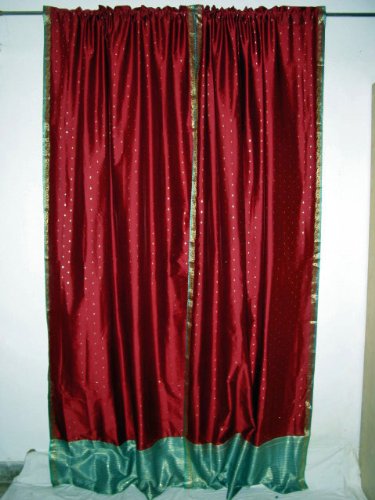
You can buy these curtains here - but why?

What would you do if somebody in your family walked up to a window, flicked his Bic, and set the curtains on fire?

(If they were these curtains, you might say thank you.)

Seriously, you'd probably yell, scream at them, dash around like mad putting out the fire.  Afterwards, there would be more screaming and yelling, because you'd want to make damn sure they didn't pull a stunt like that again.

The problem in living or working with somebody with OCPD, is there tend to be a lot of occasions that are "curtains on fire" emergencies to them, that aren't emergencies at all, to somebody with a healthy, working filter.

Stuff like, oh putting a stirring spoon on a spoon rest.   "Don't do that!  You're getting it all dirty, and then it'll have to be washed."

Uh, yeah.  That's kind of the point of a spoon rest - but I was never allowed to use mine.  Stirring utensils were to go in an empty can, or on the counter.

Funny, it doesn't look evil.
Or putting a fork tines up in the dish drainer.  Tragedy!  (I was taught this was more sanitary, but...)

People who don't have OCPD can usually differentiate between the big things and the little things.  We don't sweat the small stuff.

People who have OCPD don't know what small stuff is.  Everything is potentially dangerous.  You see, that fork, you could prick yourself with it when you go to take it out of the dish drainer and put it away, and then, then you could get blood poisoning and die.  Or become permanently disabled, and then your partner will have to take care of you, because you just didn't think, did you?

One friend I know battling his OCPD signs himself  "Only Contemplates Potential Disasters."

It goes to the Myth of Control, as mentioned in Too Perfect - that by being super-aware, super-alert, by mentally carrying out each scenario to the worst possible extreme, that all disaster can be avoided.

It can't.

The reality is that we are all going to die someday, no matter what precautions we take.  Maybe it will be of natural causes in our nineties, maybe it will be an earthquake followed by a tsunami, in which case the way the chopsticks were placed in a Japanese dish drainer probably didn't make a whole lot of difference.

For "nons" - the more you give in, the more forks you arrange the way the OCPDr wants, the more of the world s/he thinks s/he has to control, the more anxious s/he becomes.  If you stop catering to these fears, eventually s/he will learn that even though you are terribly obtuse and don't realize the danger you're putting everyone in, the sky does not fall when you do it your way, after all.


For those who have (or suspect they may have) OCPD - you don't have to live like you do.  Living like your co-workers, your partner, your children - will set the curtains on fire at any moment, if you are not on guard, ready to spring to action and try to teach them differently is not only eating you up inside, it's alienating the very people you are trying so hard to protect.


Get help - it might take a while, you might have to go through several therapists, but there are professionals who can help you cope with the fears and anxieties that are making your life so hard.

People who are smart enough to realize they need help and get it are smart, strong, admirable people.  Don't rule out anything : medication, Cognitive Behavior Therapy, meditation, support groups, prayer.  Treat yourself like a beloved child who has cancer - is there anything you wouldn't do, to save your child's life?  Is there any article you wouldn't read, any drug you wouldn't try, any rock you'd fail to turn over?

Sadly, though my ex b-f swore he loved me more dearly than his own life, getting help was something he wasn't willing to do.  His fear was bigger than his love.

Your thoughts?

Thursday, April 7, 2011

There Is No "Trying It On For Size"

Milton H. Greene [Public domain],
via Wikimedia Commons
Like a lot of women, I have no f@#king clue what size I wear, most of the time.  It's not my fault that I don't know.  Some clothing manufacturers vanity size their clothes - so that a size 12, like Marilyn wore, is today equivalent to a size 8.  Other don't do vanity sizing.  Still others size their clothing slightly smaller than industry norm.

I have had times in my life where a size 8 hung on me like a sack, while a size 14 was way too tight to wear.


Guys, now do you get why clothing shopping can be so stressful for women?

We learn what colors and styles suit us, mostly, and a general guess as to our current size for most clothing makers.  Still, women often need to do a lot of trying things on when shopping.

Let me meander over to the point.  One of the things I noticed about OCPD ex-b-f, was his absolute misery whenever I wanted to "try something on for size" around the house.  For instance, there was a spot on the wall that needed a picture, only we weren't which picture should go there.  My way of handling this would have been to hang the primary candidate, live with it for a few weeks, and see if it "felt" right to us.

His way was to think about it for 2-3 years, and only then could we hang the picture I wanted to put up (one that he brought into the relationship, btw, not one of my own.)   He would go absolutely spastic whenever I wanted to decorate for the holidays - and I love decorating for the holidays, all of the holidays, not just Christmas, but Valentines' Day, Easter, Fourth of July, Halloween...

This seems to be a pattern for many with OCPD, similar to something that autistics experience.  Nothing is supposed to change.  Ever.  If you've read earlier comments on this blog, you'll know that one reader has an OCPD husband who will rake the lawn down to dirt, because he can't stand it when there's a single leaf on the grass, even for one day.  I had a friend tell me about a similar "trying it on" experience.  She'd wanted a clock in her living room, and they were throwing one away at her work, so she brought it home and hung it in her living room.  She wasn't sure that she liked it, but hey, the price was right.  So she wanted to hang it and see if she liked it after a few days, or didn't.

Her (suspected Asperger's) boyfriend absolutely freaked out, could not sit still, couldn't focus on conversation with her, but sat drumming his fingers against his knee (stimming) because of this one change she'd done in her living room.  She had to take the clock down and rehang the picture she'd had up on that hook, so that he could calm down and get back to normal.  (Normal for him, that is.)

The other night I was on a chat session that included both people with OCPD and "nons."  I asked them about the "trying it on" experiment, and it was interesting as one of the OCPDrs tried to explain to me, that he needs to know a comparative value.  How can one know if the picture on the wall is good or not - you need something to compare it to (uh, a blank wall?) and who's to say, and how can one say, if this is a quantitively good or bad "fit"?

Another young man had posted that following being placed on medications (not just for OCPD, but for ADHD, and other conditions) he was able, for the first time in years, to go into a store and try on clothing, and buy pants that fit.  He had always felt too self-conscious and "weird" to try on pants before, so he would just guess at the size, and if he got them home and they didn't fit, he would throw them in the closet.  (Taking them back to the store would have been too embarrassing.)

Photo by dailyfood at Flickr
The idea that decisions about minor things don't have to be made, once, for all time <imagine a long reverb effect on the "for all time-time-time," please> seems to be beyond the grasp of many with OCPD.  It's not a case of this time they can choose the salmon at the restaurant, next time something different; they feel they must choose something good every single time, or... what, exactly?  We don't know, but it must be terrible.

This behavior is one of the things that drives Significant Others up the wall, and yet, it seems so petty when we speak or write about it.  So they don't want to order anything different when you go out to eat, so what?  So they don't like moving around the furniture, or putting up holiday decorations, what's the big deal?

One at a time, these things are all minor and no big deal, but all together, because the person with OCPD will often apply them to many, many areas in their life, it is a big deal.

What are your thoughts or experiences with this behavior?

Thursday, March 31, 2011

Going Off Script

From The Oatmeal's Why I'd Rather
Get Punched in the Testicles
Than Call Customer Service

So I got a new computer.  Joy! 

Except that there were the inevitable bobbles, for which I had to contact.... Customer Service.  <you can cue the Jaws theme music here.>

When I moved away from OCPD ex b-f in June, I switched from DSL internet connection to cable, and due to who knows why, my ISP had to assign me a new username and passcode for my new connection.  I should have written it down, but I had a lot on my mind then, and anyway, I'd picked an easy name and passcode, because I knew I would remember it...

You knew I wouldn't, right?

So I decided that, instead of calling in to my ISP helpline, and trying to verbally communicate with "Muffy" and "Jeff" and "Ashleigh," whose thick Indian accents have almost driven me to eating my own head in the past, I would try to resolve it via chat on my work 'puter during my morning break.  I got "Rocky" and "Juliet," instead.

I'm not unsympathetic to Rocky and Juliet.  (Or even Muffy and Jeff.)  They work long hours, don't earn a lot of money, and are working in an unfamiliar language.  Plus, many of the people they're trying to help are idiots.  (I might even count myself as one of those idiots.)  I'm sure I would do much worse as a Customer Service Rep if I was trying to communicate in their language.  I don't want to be nasty to Rocky & Juliet.

I just wish communications felt a little less like Rocky & Bullwinkle.

So I'm typing away, but Rocky is intent on going through the full script.  He's not listening to what I'm saying (or in this case, typing.)

ME: Hi, I have a new home computer, I need to find out my online log-in name for my cable connection, so that I can log in.

ROCKY: Congratulations on your new computer.  We can certainly help you with this.  For help with your cable connection, you will have to contact your local cable company.

ME: There's nothing wrong with my cable, it was working fine with my old computer.  I just need the username, which I forgot, so that I can get online with the new computer.

ROCKY: Are you chatting from your new computer?

ME <taking a deep breath>: NO, I can't get online from my new computer.  I need the username which logs me onto the cable connection.

ROCKY: Let me direct you to the site which gives you the steps to get online.

ME: Thank you, see that first step?  Login with your username.  You guys set me up with a new username in June, but I don't remember what it is.  I just need the username for the account, and possibly a password reset.

ROCKY: Are you online from your new computer now?

ME: No, I CAN'T GET ONLINE FROM MY NEW COMPUTER.  Look, just give me the CS to call, I'll call later from home.  (Meanwhile, I have scrolled through My Account and finally located the mystery username - it's my usual username, plus the number 1.  Genius!)

I get off chat with Rocky, try fruitlessly to log in or reset the passcodes myself to that username e-mail account, and eventually "Juliet" does a passcode reset for me.  When I get home later that evening, voila!  All better.

But this reminded me soooo much of a discussion on one of my "boards" about those with OCPD and their scripts.  Sometimes it feels like we are trying to have a discussion, and the other person isn't so much listening and responding to us, but stuck in a groove.  Like they're onstage, and are trying to feed us a cue.  And they're going to keep tossing it to us, regardless of what we say back to them. 

Which leads to fights and bad feelings all around.

Some OCPDrs themselves have described this seeking for the "right" answer, the right response.  They may not know exactly what they wanted to hear back, but they knew they weren't getting it, so they felt obligated to press on, until they heard - whatever it was - that they needed to hear.  This was unlikely, depending on how long the interaction had gone on, to be a true reflection of their partner's feeling or thoughts, but it was the right answer.

Here's what one frustrated partner joked:
I have told my DW rather than having a pointless discussion she should prepare a script in advance. She'd give me a copy. She'd read her lines. I'd read my lines. I'd know when I'm allowed to speak and when I'm not. She'd hear exactly what she wants to hear. We could even use the same scripts over and over. I'd know when it was going to end. We could both be happy.
Has this ever happened to you?
Frequently, I would begin speaking. DW would anticipate that I was about to say X. She would cut me off and start responding to X. I would tell her I was not going to say X; I was going to say Y. She would then insist that I was lying. We would then get into a ridiculous argument about what I would have said had she not interrupted.
I have been there, done that.  And <hanging my head in shame> have done my share of interrupting others as well, though I've never gotten into arguments about what somebody else would have said.

Maybe we need to take a bit of advice from Patsy.


So how does one deal with someone who won't "Stop, look and listen"?

One tactic is to walk away and start ignoring the person.  They'll ask why.  Answer: "It seemed you were not interested in a conversation, but a monologue.  Since my participation is not required, I thought I'd keep myself occupied while you finished up."  (It's important if you take this approach, to keep your tone neutral and pleasant - no heavy sarcasm in your tone, please.)

Another is to yell at them to Quit Interrupting!

Another is to simply not answer at all, unless asked why.  Then give the same answer (my participation seemed unnecessary.)

You can buy your own sock monkey puppet at
Colonial Candle
I thought about trying a sock puppet, myself.  Talk to the monkey!

Theoretically, you could talk to the Rambler during a moment of lucidity, like I did, and say, "You know, sometimes one of us might be talking, maybe when we've had a bit too much to drink, or are really excited about something, and we kind of talk right over the other person, and don't listen very well.  How about we agree on a signal so the other person realizes they're doing it?  A code word, holding up a hand or something...?" 

I thought, by making it neutral, by saying this is something we both do, something we both should be allowed to halt, that he would agree.  And he did.

Agree, that is.

In practice... it didn't work so well.  Often his mouth was like the Aerosmith song, "Train keep a-rollin', all night long."  But not in a good way.

I don't think there is any one approach that will work with everyone, all the time, because we are all individuals, and so are the people who, uhmmm, have their scripts.

For myself, I'm going to try to work on the bad habit of interrupting others in my own conversations.  To be aware that if what I have to say is that important, the opportunity to say it will arise again, and if it doesn't... maybe what I had to say wasn't that important, after all.

To realize that every moment does not have to be filled with noise, to babble words just for the sake of filling the empty pauses.  Silences are meaningful, and often, beautiful and essential parts of listening.

To breathe more.  To smile more.  To hold up a hand or walk away if others interrupt me.

What are you going to do to improve the quality of your conversations?
Leave a comment, below.