Using writing, and meditation, and ice cream, and reading, and dreams,

and a whole lot of other tools to rediscover who I am,

after six years living with a man with OCPD.


Showing posts with label denial. Show all posts

Wednesday, May 15, 2013

Why Does He DO That? Introduction (Part 2)

We're start reading, and, I hope, entering into a healthy discussion of the book Why Does He DO That? Inside the Minds of Angry and Controlling Men by Lundy Bancroft.


Please, do buy your own copy - both because I won't be excerpting all of it, and because this author deserves our $upport.


From the Introduction:
Another central goal of mine is to offer assistance to each woman who is struggling with how she is being treated in a relationship, regardless of what label she may put on her partner’s behavior. Words like control and abuse can be loaded ones, and you may not feel that they fit your particular circumstances. I’ve chosen to use the term abusers to refer to man who use a wide range of controlling, devaluing, or intimidating behaviors. In some cases I’m talking about fiscal batterers and at other times about men who use or insult their partners but never frighten or intimidate them. Some of the men I described in the pages ahead change moods so drastically and so often that a woman could never feel sure what they are like, much less attach a label. Your partner may be arrogant, or may play mind games, or may act selfishly over and over again, but his better aspects may make you feel that he is miles away from being an “abuser.” Please don’t let my language put you off; I’ve simply chosen the word abuser as a shorthand way of saying “men who chronically make their partners feel mistreated or devalued.” You can adopt a different term if you know one that fits your partner better. <snip>

If the person are involved with is the same sex as you are, you have a place here too. Lesbians and gay men who abuse their partners exhibit much of the same thinking, and most of the same tactics excuses, that abusive heterosexual men do. In this book I’ve used the term he for the abuser and she for the abused partner to keep my discussion simple and clear, but abuse lesbians and gay men are very much in my thoughts, right alongside of abuse straight women. Of course, you will need to change the gender language to figure relationship, for which I apologize in advance. You will also find a section in chapter 6 where I speak specifically about the similarities and differences in same-sex abusers.

Similarly, this book includes stories from men from a very wide range of racial and cultural backgrounds. Although the attitudes and behaviors of controlling and abusive men vary somewhat from culture to culture, I found that their similarities greatly outweigh their differences. If your partner is a person of color or an immigrant, or if you are a member of one of these groups yourself, you’ll find that much of what this book discusses, or perhaps all of it, fits your experience quite well. <snip> I further discuss some specific racial and cultural issues in chapter 6.

***

I never wanted to label it abuse.


He was sick, he was stressed out, he had a momentary lapse... And I absolutely loathed the word "victim" as applied to myself.  I am loving, smart, capable, and strong - how could someone like me be a victim?

Reality? He had a pattern of being controlling, demeaning, and verbally abusive to me.  I had a pattern of making excuses for him, and refusing to call it abuse - even to myself.

In the beginning, during the courtship or honeymoon stage, he treated me like he thought I was wonderful, special, valuable... almost all the time. That special treatment never entirely disappeared - and that is why we stay. We keep getting glimpses of who we think the real person, the kind, loving person is, under all the crap, and think if we just did - something - right, better, found the way to explain, we could once again have that incredible relationship with the person we loved.

Like those rats in experiments, where if sometimes when they push a bar they get a treat, and sometimes an electric shock, we'll keep pressing that bar, hoping, that next time, it'll be good.
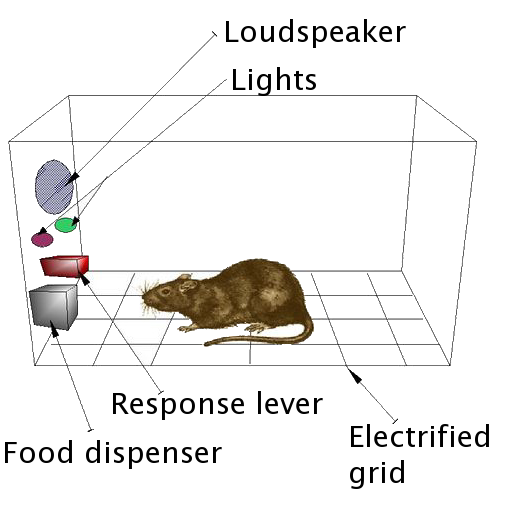
via Wikimedia Commons


Once more, on the male-female thing


Bancroft's book is (primarily) about male on female abuse. Our discussion, here, is not predicated on "bad men; helpless victimized women" because although there are a number of factors that often give men an unfair societal and legal advantage, yes, women abuse men too. Do not feel if you are a man being abused by a woman, that this book and our discussion has little to offer you. Please buy the book and read along.


Disclaimer: The information and opinions posted here, and any comment responses, are not to be considered professional advice and are not intended to replace consultation with a qualified medical or mental health professional. If you are involved in a relationship that includes physical, financial, and/or emotional violence, please contact a professional for help and assistance.

In the US:

National Domestic Violence Hotline - 1-800-799-SAFE (7233)  TTY- 1-800-787-3224 
RAINN (Rape Abuse & Incest National Network)
National Coalition Against Domestic Violence (includes downloadable guides for helping women in abusive relationships)
National Alliance on Mental Illness, aka NAMI

International Resources linked here.

Your thoughts?

Sunday, October 28, 2012

This Time It's Personal

Right around the time I was leaving my OCPD ex, and voraciously reading everything I could on OCPD and hoarding, I came upon an interesting website called My Mother In Law Is Still Sitting Between Us. In it the author chronicled her boyfriend's efforts to clean out the hoarding house of his mother, who'd recently passed away.

Besides the train-wreck fascination of the pictures, the writing! Snappy, funny, insightful, and never mean-spirited or nasty. I fell in serious girl crush. And after finding that the author lived next door, so to speak, I got in touch with her. Once I convinced Sid I was not a crazy stalker-person, we did meet, and became good friends. I lured her into joining my writers critique group. Her voice and ideas were good for our group, and getting out of the house and talking about writing was good for her.  I frequently commented on her blog, and she was a frequent commenter here.

Her boyfriend is also OCPD, and the unhappy relationship dynamics that so many experience, that *I* experienced, were also part of her experience. He was a drinker/she was a drinker, even after it began to create serious health problems for her. She cut back.

Still, the relationship was eating her up on the inside, especially when, over two years into the clean-up process of the hoarding house, there was no end in sight. And of course, he could neither give it up nor hire someone to help. I tried to support Sid, as best I could, without pushing or telling her what to do.

It frustrated me to watch her spirit get eroded over time, drip, drip, drip, but still, it wasn't MY job to save her. She did have a supportive family. And Sid was the stubborn kind of person who needed to do things in her own way, in her own time. So mostly, I was the listening ear who understood, and who told her what a great person she was.

One of my online friends has pointed many to an excellent book called, "When the Body Says No," about the damaging health effects that accumulated stress may have on a person. See, sometimes if WE don't learn to say no, the body says it for us, by getting sick.  Or we swallow our feelings with alcohol, drugs, food, sex, shopping...


Sid was the kind of caregiving person who poured herself out for others.  She took pride in being STRONG, not asking for help, but giving it to others. She blogged and worked part time and was active in Children of Hoarders. She co-founded a local group called SoCalLady Bloggers. On October 8 she appeared as part of this streaming video chat on hoarding on Huffington Post.


Her ex was not and is not a bad person. In his own way, Greg, too, is heartbroken. He was the reason she was found, still clinging to life, after she missed a scheduled meeting with him and he would not let it go. I am very grateful that her parents and I got to say goodbye to her when she was still technically breathing, rather than after lying dead in her apartment for days. But his own overwhelming anxieties did not allow him to SEE how sick she was, or to help her in any meaningful way.  As she described here when she was going to visit her parents, very sick, and he got hung up on the cheapest train fare.

After another hospitalization this summer following that train trip, during which the b-f was anxious, bossy, "knew" more about what she needed to do than the doctors, and demanded attention and energy she simply didn't have left in her to give him, she realized that though she still loved him deeply, if she stayed with him, it would literally kill her. She'd already been making emotional plans to leave; her parents helped her out financially, and she moved into her own place a month ago.

Sid was SO happy in her new place. She could eat, walk, work on the computer, and breathe, without being criticized. She was so proud, showing off her new place - which had been IMMEDIATELY unpacked, no boxes hanging around for her! She showed me her cool rooftop patio and talked about having a party up there, excited, because her ex never wanted to have people over. She still loved him, and they were friendly, trying to work out the sale of their house amicably. She was taking her meds and NOT drinking and working hard to regain the weight she'd lost during the summer, but she was still so frail...

The damage to her body was too great, her remaining physical resources too low. She had a heart attack just a week ago due to the chemical imbalance in her body, and then another, in the hospital. No alcohol found in her system.

Last Monday I sat with her parents and her ex, in the hospital. Both before and after they turned off the respirator.  Today is her "Celebration of Life."

She was beautiful and vibrant and funny and 43 years old.

I am angry and heartbroken. This did NOT have to happen. For all of you still with a disordered partner - I am not telling or urging you to leave.  Only you can make that call, if or when it is right for you. But please, please, PLEASE, do not pour yourself out entirely for your partner and other people, until there is not enough left for your own body or soul. It may be the hardest thing you will ever have to do, but learn to put yourself FIRST.

Friday, June 29, 2012

I Feel What I Feel When I Feel It

via Wikipedia

Recently, along with a lot of other folks, I felt caught up in exultation and "justice served, at last!" at the overwhelmingly "Guilty verdict" passed on child molester Jerry Sandusky.

Reading some of the message boards, I was struck by one commenter, who didn't "get" why so many people were rejoicing, and that made me take a closer look at myself.

I am not, and never have been, a prepubescent boy. True, I also experienced an incident of molestation when I was 12 (in central Pennsylvania, no less). However, without ever requiring my testimony or the cops even talking to me at all, the perp did did go to jail, where, rumor has it, he ended up dying an agonizing, long-drawn-out death of cancer several decades ago.

Karma wins - which is not always the case.

And while what happened to me was highly unpleasant, it wasn't the worst thing that ever happened to me; it wasn't something that ruined my life or haunted me.

As the saying goes, I "had no dog in this fight."

So why am/was I following the Sandusky case so closely? Why did it stir me up so much?

Was it because I related to the victims? To the struggling single mothers who thought that contact with a coach willing to act as a father figure would be good for them? Do I feel guilty as a former resident of Pennsylvania?

I don't fully know. I may never know.

What I do know, is that it's okay to feel what I feel. When I feel it. Maybe I want to sit down and pick that feeling apart, maybe I just want to notice it. You know, the whole Zen thing, sitting by the side of the stream, watching the stream, the leaves and twigs floating in it.  There's a feeling; how interesting.

I don't have to come up with a reason why I feel what I feel - not to myself, not to anybody else. I don't have to limit myself to only feeling certain emotions.

via Project Adventure
 There were years when, as a child, I was expected to suppress what I felt.

There were many years when I didn't allow myself to have certain feelings, at all, because it wasn't safe. I lost my mother to breast cancer when I was ten, but didn't begin serious grief work until I was 30 years old, and *I* was ready and felt safe enough to do so.

There were years living with my OCPD b-f when I was often told, if I expressed certain feelings, that they were wrong, and instructed as to what I "should" feel instead. I have had (former) friends try to do the same thing, tell me I was wrong/silly/unjustified in feeling a particular emotion.

I am SO done with that. I am done with anyone (outside of a trusted mental health professional) telling me that my feelings are over- or underdone; that they are inappropriate or wrong, somehow.

 I'm letting myself feel what I feel, when I feel it. Period.

How about you?
Have you ever been told you "shouldn't" feel a particular way?
Did you rejoice in the Sandusky verdicts?

Enhanced by Zemanta

Friday, April 27, 2012

A-Z: Xcess - That Invisible Dividing Line from Quirky to Crazy

How do we tell when somebody has crossed the line from quirky to crazy? That's part of the problem, because many symptoms of mental illness actually look quite admirable - in smaller doses.

The key is Xcess and Xtreme. (Getting a bit creative with the spelling here, so what.) Take someone who is bipolar. During a more low key manic cycle, she may be animated, creative, fun to be around. Then perhaps a little down and sad. During an extreme cycle, she may want the entire family to join her in painting the kitchen - at 2:00 a.m. Or be unable to drag herself out of bed for days at a time.

Cleanliness, admirable. Sterilizing kitchens and bathrooms like a hazmat team, not so much.

Being an ardent recycler and repurposer, great. Having an endless collection of boxes, pen lids, and food containers... hoarder.

From  My Mother In law is Still Siting Between Us... Randomness (7/29/10). All pictures used by permission.

Pen lids
Hundreds and hundreds of crosswords, cut out, dated (aren't they already?), and meticulously labeled. She had a note on each, about whether or not she had checked the answers, and a list of the numbers (6 across, 17 down) which she hadn't yet checked. Some of these date back to '89.
Crossword puzzles
 
Empty See's candy boxes - apparently, one can never have too many.
Burned out light bulbs, with notes as to the date each burned out, and the fixture.
What's so bad about keeping some useless junk? Nothing, if it stops at a small stash of empty boxes or burned out light bulbs.  But too often, it crosses the line to this:
The Kitchen

Inside the fridge

Yeah. Horrifying, isn't it? The tragic thing, for adult children of hoarders, is that even when their parents "maintain" a home in conditions like this (or worse), there are legally no options to force them to get the help they so clearly need. It's a matter of having to wait until they die, and then...cleaning the Augean Stables. Only there's usually not a handy river nearby.

Other areas where a line gets crossed:

Having a close personal relationship with God/Jesus/Allah, perhaps even believing that He speaks to you... harmless, perhaps even helpful. Hearing the Voice of God/Jesus/Allah telling you to kill your children/congresspeople... dangerous.

With OCPD, in moderation, there are many wonderful qualities. They're usually very tidy and timely, give great attention to detail, and truly care very deeply about people they love.  There's a great blog written by an OCPD'r I know on the subject, The Gift of OCPD.

We would have many fewer inventions and modern conveniences that we take for granted, were it not for people with Aspergers, OCPD, and many other mental illnesses. Peter Roget (Roget's Thesaurus) probably had OCPD. Steve Jobs may have had it. When OCPD symptoms become extreme, however, they are devastating to both those who have the condition, and those who live with and love them.

The line is where the "quirks" become either harmful or dangerous, to oneself or others. Unfortunately, it is almost impossible for the person with the mental illness, or someone who has lived with him/her for a long time and perhaps become desensitized to odd behavior, to determine when the line has been crossed. Or what to do if it has.


My A-Z theme is Issues related to Mental Health or Mental Illness.

Have you ever had quirks that went to extremes?
If so, how did you recognize it, and what did you do?
Have you ever lived with someone who seemed to go "too far"?

Thursday, April 5, 2012

A-Z: Emotional Abuse - But It Was Only Words

What is emotional abuse?  Can somebody be an abuser even if they've never raised their voice or called you a name?

You bet your therapy bills they can.

What is verbal abuse, and what ways can someone be abusive?  They include:

  • Withholding - not sharing one's thoughts and emotions, not listening, the silent treatment...
  • Countering - whatever one says, or begins to say, the abuser jumps in to say it isn't so.  Being told that your reality is wrong.
  • Discounting - one may be told one is too sensitive, overreacting, taking things too seriously...
  • Verbal abuse disguised as jokes - one can be the butt of a really nasty attack, and when one objects, then be accused of not having a sense of humor.
  • Blocking and diverting - you may ask for information, and the abuser withholds it and changes the subject.  "Do you have any plans for Friday night?"  you ask cheerfully.  The response: "Why are you asking?  You've got plans, haven't you?  You're always making plans without consulting me..."
  • Accusing and blaming - one is blamed for the abuser's bad mood, for 'trying to pick a fight'
  • Judging and criticizing - "Do you have any idea how fat/old/slutty you look in that dress?" "You're so stupid, you can't keep anything straight..."
  • Trivializing - conveying that whatever you have done or said is insignificant.  Turning up the TV or walking out of the room when you're mid-sentence.
  • Undermining - squelching any enthusiasm or opinion one might dare to voice, sabotaging exercise or outside interests, friendships.
  • Threatening - "Do what I want or I'll..."
  • Name calling - my b-f decided to dub me "Lumpy" as a pet name.  Nice, huh?
  • Forgetting - either immediately forgetting something abusive that has just occurred, or forgetting a promise made to attend an event - "You never told me we had Back-to-School Night tonight."
  • Ordering - as if the partner or child is a slave.  "Get in here and ..."
  • Denial - "I never said that, You're making it up, You must be crazy..."
  • Abusive anger - there is no right way to be/speak to avert anger, when a partner wants to be angry.  When an abuser who uses anger as his "go-to" emotion is feeling powerless and anxious, he WILL vent by blasting his partner (and then usually blame him/her.) As I've blogged before, anger can become addictive and it has a double pay-off. There's a release of tension, a flow of mood-boosting body chemicals after a blow-up, and the abuser usually cows the victim into doing his/her will.


Men are abusers - and they are also victims of abuse.  Abuse is not acceptable, no matter who does it.

Physical violence has never yet been documented to happen without verbal violence preceding it.  Emotional and verbal abusers don't get better if you "try harder." If you "give in more." If you "act nicer."

Emotional abusers may act as if they are the ones abused, if you tell them, "Stop.  You're hurting me."


If you believe you are being abused, even if it's "just" emotionally or verbally, get help.  Even if you're a man.

Nobody deserves to be abused.  Not physically, not verbally, not emotionally.  No children deserve to grow up in a home where one parent abuses another parent.


My A-Z theme is Issues related to Mental Health or Mental Illness.


***

Please note, this very incomplete list of resources are not just for physical violence, but can offer help to those suffering verbal and emotional abuse as well.  Don't feel you have no "right" to ask for help because you've never been hit.  Abuse includes emotional, verbal, and financial, and these resources are there for you, too.

USA:
National Domestic Violence Hotline - 1-800-799-SAFE (7233)  TTY- 1-800-787-3224 
National Coalition Against Domestic Violence (includes downloadable guides for helping women in abusive relationships)
National Alliance on Mental Illness, aka NAMI

Canada:
National Clearinghouse on Family Violence - you will need to opt for English or French

UK:
Women's Aid - 0808 2000 247

Australia & New Zealand:
Domestic Violence Information Manual - phone numbers vary by territory

For Male Victims:
Menweb
Why Men Stay in Abusive Relationships

Your thoughts?
Enhanced by Zemanta

Saturday, July 23, 2011

You've Got To Fight Dirty To Take On OCPD

Feeling weak and powerless isn't just about body size and strength.
A pattern I've noticed among those who love a partner with OCPD, when they finally have that light bulb moment, is first, a tremendous feeling of relief.  Wow, that's what this is!  It's not me - and it's not really him/her either.  It's a mental disorder.

Then there's hope, which is sometimes deflated when those who've been battling for a while tell them how hard this is.  And a certain discounting of how hard it might be.  Surely that's an exaggeration.  Or, maybe it was like that for them, but it won't be like that for us.  I know my partner really loves me.

There's also a dismissal of certain tactics, because they seem... mean.  Setting firm boundaries.  Refusing to accept bad treatment, even for a moment.  Refusing to JADEShouldn't we ease into this?  I know s/he can be reasonable at times.  I don't know if I can hold my ground.

If you truly want to help your partner with OCPD, you've got to realize that succumbing to pity when s/he is "under the influence" of OCPD behavior, telling yourself that s/he can't help her/himself doesn't work.  Yes, understand it's not deliberate, and yes, feel sorry for the person with OCPD, but you need to get fightin' mad at OCPD, the disorder.

A person with OCPD can't help the compulsions, the anxiety, the way s/he feels inside.  But s/he can learn to stop the behaviors - if s/he really wants to.  Bad habits can be broken, and good habits can be formed.

For myself, what helped was imagining that OCPD was an evil crack-whore third wheel to our relationship.  If it had been me and the b-f, we could have worked things out just fine, but OCPD-the-crack-whore didn't want us to work things out.  She wanted my b-f to herself, so she could run things her way, and get her next fix, though like all junkies, the more fixes she got, the more she wanted, and the shorter time it would be till her next fix.

OCPD, like a true alcoholic or junkie, will do anything, say anything (and probably mean it) to get that next fix.  The only effective way to fight is to not get sucked into that rabbit-hole of distorted thinking, to maintain our own clarity, and be willing to do whatever we have to do to defend the boundaries and yes, to be "mean" if we have to.

There are two songs that come to mind" Alice Cooper's No More Mr. Nice Guy, and this one, that you not have heard:
 
The title cut, Fight Dirty, from Charlie in 1979

lyrics by Terry Thomas
I've been a nice guy too long, I must make myself strong
Gotta make myself harder than nails
I've been learning real quickly, there's no-one gonna trick me
If the try, well they surely will fail

Gonna learn to fight dirty, ain't no-one gonna hurt me
I'll soon know every trick of the trade

When I think of the times I've been cheated
And the times that I've been badly treated - it makes me mad
Tried to keep all my options wide open
All I get are those promises broken - it makes me mad
And it makes me so sad that I've got to change

I've been cornered and now I will fight back
Gonna push, gonna watch all those smiles crack - I'll make them mad
I will show all those people no favours
I have finished with my best behaviour - I'll make them mad
But it makes me so sad that I've got to change

I've been a nice guy too long, now I know I've been wrong
I've been used and I've just realised
All that haze has been lifted, I'm no longer restricted
Oh, the nice guy you knew has just died
No More Mr. Nice Guy by Robert A. Glover is another book highly recommended by many male partners of OCPD wives and girlfriends.  (See the GoodReads bookshelves on the right for recommendations for books already read and on the to-be-read list.)

Begging bullies, "Please don't kick sand in my face," never worked for anyone, and it doesn't work with OCPD, either.  But just like building up the body, you can (and must) build up your relationship muscles, and refuse to let OCPD beat you up anymore.  Your mental/emotional muscles will take time and energy to develop, and if you're like a lot of partners, at the end of your rope, you might feel like you don't have it in you.  The pay-off is being better emotionally developed, with better boundaries, is not wasted effort, but will pay off in every aspect of your life.

Will it save your relationship?

In all honesty, probably not.  It didn't save mine, and I know very few people who have managed a long-term "successful" relationship with an OCPD partner. It's still your best shot.

After all, how's what you've been doing working out for you?

Sometimes I wonder, if I'd known about OCPD earlier on, if I'd begun enforcing boundaries and practicing not JADEing before I was physically and emotionally spent, might it have made a difference?  Possibly.  I have to say, the year I spent with my (now) ex after learning about OCPD and "fighting dirty" was substantially better for both of us.

But the behaviors didn't disappear, and I reached a point where I wasn't willing to live with the hoarding, the OCPD, and he wasn't willing to get professional help.  I needed and realized I deserved, to have a home where I felt emotionally safe, not on constant guard for the next attack.  My only regret is his choice to refuse help, not mine to leave.

I truly hope your story has a different ending.

Please share your feedback, and any experience with "Fighting Dirty", 
in the comments, below.

Tuesday, June 28, 2011

Too Perfect Tuesdays - Chapt 3
Not So Perfect Relationships
Social Inhibititions & Being Right

This post continues with Not So Perfect Relationships, from Chapter Three.

This series will look at a small snippet of The book on the Perfectionist Personality, aka The Obsessive Compulsive disordered Personality, aka OCPD, each week. Please follow along, leave your comments, engage more on the FaceBook website... whatever your heart calls you to do.

Too Perfect, When Being in Control Gets Out of Control by Allan E. Mallinger, M.D. and Jeanette DeWyze was published by Random House in 1992.  If you believe you are dealing with OCPD or someone who is "Too Perfect," whether that's you or a loved one, please buy a copy of the book and read it for additional insights that will not all be covered in these excerpts. 

Not So Perfect Relationships

The most serious effects of perfectionism can be seen in personal relationships.  Such problems spring from
  • the fear of having other people see one's flaws
  • the need to be right about everything
  • a constantly critical attitude

SOCIAL INHIBITIONS
Let's look first at the fear of letting other people see one's shortcomings.  This fear is responsible for a variety of social inhibitions that can range in intensity from slight apprehension to full blown terror, complete with pounding heartbeat, weakness, upset stomach, and other symptoms.

<snip> While the form of the specific fear may vary widely, most socially inhibited people harbor distorted fears of being noticed and having their flaws exposed.  The vast majority feel themselves to be under scrutiny much more than is the case, and they believe that others will reject them or will respect them less if any slips or imperfections show through.  <snip>

BEING RIGHT - AT ALL COSTS
A different way in which perfectionism can damage personal relationships stems from the perfectionistic need to be right -about everything.  Errors are anathema to the perfectionist, but everyone is wrong sometimes.  (After all, perfectionism is a myth.  Human existence cannot be mistake-free.)  Lots of obsessives will admit in abstract terms that they make mistakes.  Being able to recognize one's shortcomings is, after all, part of being "the perfect person."  However, perfectionistic obsessives tend to avoid owning up to specific errors, particular in important matters, and this often alienates other people.

It's simply unpleasant to be around someone who always has to show he was right.  <snip>

Perfectionists often try to talk their errors away.  In a discussion, they gently hammer away at their opponents' position until the others back down, if just from fatigue.  Or they will explain how their position was misunderstood.  They nimbly dodge admitting their own culpability.

Should a mistake be absolutely undeniable, they may still have trouble calmly acknowledging their error.  Often they will become defensive, tossing off so many buts, howevers, and other qualifications that their listeners can barely hear the admission within the verbal thicket.  Even in admitting error, perfectionists seem to be saying they they were... semi-right.  Somehow they make it seem that, given the circumstances, being slightly in error was the most intelligent position to have taken.  Throughout, they fail to notice how repelled others can be by this stubborn pretense at infallibility.

<snip>perfectionistic obsessives may even try to convince a hurt or angry friend that his feelings are inappropriate or "wrong."  <snip>  One person will blurt out to the other, "You shouldn't feel that way!"  In each case the obsessive may be surprised when the other person feels alienated still further after being proved "wrong" for feeling a certain way.  The obsessive fails to see the damage done by trying to transform a sharing of feelings into a debate: all too often it pushes the other person into keeping future complaints to himself while smoldering under the surface.  <snip>

***
When I was in my teens, and early twenties, when buying feminine hygiene products at the grocery store I would seek out a female cashier and bagger.  It was simply too humiliating to have a man handle such intimate items, because if they did, they would know that I used them.  They might even think I was menstruating right at that very moment.  The horror!

Well.  I got over it.  I realized that even the male cashiers and baggers handled such items dozens of  times a day, and gave it no more thought than if I was buying tomatoes or shampoo.  They.  Couldn't.  Care.  Less.  If they were thinking about anything while handling my purchases, it was probably about what time they got off work, or how they were going to spend their paycheck, or that cute girl (or guy) that just got hired.

Somehow, those with OCPD are stuck into "they're all thinking about me, they're all looking at me" mode, which becomes self-fulfilling.  If you feel particularly self-conscious and act that way, people will look at you more.  I'm not sure if it's egotism, or immaturity, but mostly, just as in my tampon example, above, we all need to realize that people care a lot more about their own affairs than about us.

I think everybody, perfectionist or not, tends to be at least somewhat defensive about making mistakes.  I don't like finding that I've made a mistake, but I've learned to accept that I do.  I even call attention to my mistakes at work.  "I forgot to do X, I filled out this form the wrong way; I missed picking up the message; now here's how I suggest correcting it."  I work at devising systems, for myself and others in my department, not that prevent mistakes from being made, but that will detect them quickly. My bosses appreciate that I'm more focused on making things work, than trying to deflect blame or Covering My A$$.

Ex was the dinner-preparer, and on rare occasion, he would over or undercook something.  He did learn to joke about that (somewhat), but his attitude towards most mistakes was defending the pass at Thermopylae (think The 300).  Nothing was going to get through or be admitted without a long and bitter battle.

shirt available from Spreadshirt.com
As noted above, that kind of stance is highly detrimental to a relationship.  I experienced all of the defensive tactics noted above: the wall of argument, the admission buried in a pile of qualifications, being told my feelings were wrong, being told I shouldn't feel what I felt...  It's emotionally exhausting, and it erodes trust. 

I had one friend who was actually (somewhat) supportive of our relationship, and who was liked by the ex and welcome in our home ( a very short list), until... she offended him (in his eyes.)  She and I had gone out somewhere, it was a hot summer day, and when she dropped me off, she got out of the car to greet him.  She was a very fastidious person, and he'd been working outside, with no shirt on.  He wanted to hug her hello/goodbye, in all his sweaty glory.  She insisted on shaking hands, instead, which I believe wounded his vanity tremendously.  He couldn't forgive her for the "insult," and nothing I could say would convince him otherwise.

From then on, she was a horrible snob, no longer welcome in our home, and I met bitter resistance to going out to do girly things with her (which was perhaps every other month.)  If I even mentioned her name, I met with petty complaints and ugliness, which encouraged me to keep my feelings to myself.  There was an ever-growing list of Unmentionables.  I don't think he ever sat down and thought about how that kind of behavior did not bring us closer together, but drove us apart.  He would pay lip service to "better communication" being essential to our relationship, he would even bring it up, but how can you communicate with someone who can't accept your feelings or admit being wrong?

Have you lived through the Debate that Wouldn't Die?
Are you more likely to find a winning lottery ticket on the sidewalk 
than have your Perfectionist admit having made a mistake?

Tell about it in the comments.

Thursday, April 28, 2011

My Favorite Mistake??
I Don't Think So

In Newsweek on April 17, Judith Regan wrote a piece called "My Favorite Mistake."   Regan, you might remember, was a powerful editor at Simon & Schuster.  Newsweek describes her as the biggest woman in publishing in 1986. In 2006, following her controversial decision to publish OJ Simpson's book "If I Did It," she ended up leaving HarperCollins, under something of a cloud.  Most recently she has begun a radio show, hence the publicity push.
Photo by chillihead at Flickr

I never could understand why a woman would choose to publish such a work, but then, I never understood the attraction of some women to the incarcerated, either.  Although one might reasonably argue I don't have a great track record in choosing men, I never considered, "Oooh, I want to marry one of the Menendez brothers, he's so cute and I'm sure that blasting the parents to bits with a shotgun was an accident."

So, in this short article she talks about falling in love, and what happened next.
It was in my rearview mirror that I first saw him. He was trying to steal my parking space and I flew off the handle until I took a good look at his face. He was the most beautiful man I’d ever seen, and when he jumped out of his car and came toward me, he smiled, leaned in my window, and asked, with infinite charm, if I’d have lunch … and a baby with him. I said yes, and I did, and it was wild, passionate, and, yes, crazy.
Our son was born. A year later, placenta previa ignited my labor and our premature daughter passed away. This man turned violent: black eyes, broken windows, suicide threats, and, finally, he took off. Our son was just a toddler.
photo by Creativity103 at Flickr


For years I wanted to fix him, to get him help so he could be the father I thought my son deserved. I rented him an apartment in New York so he would visit. But he drank too much, caroused too much, and hurt us too much. After years of disappointment, I let go of him. For me, he was no longer my son’s “father.” He was just “The Inseminator.”
This was actually a healthy reaction - at last.  The trying to fix him, to get him help - all co-dependent behaviors, and all doomed to failure, because we can't fix somebody who doesn't want to be fixed.  No matter how long or how hard or earnestly we try.

So, years pass, the OJ Simpson fiasco has come and gone, and her son is getting married.  She sees the abusive ex again at the wedding, only now he's sick and attended by a nurse.
<snip>He seemed not at all the image of the irresponsible swashbuckler I’d carried with me for so long. I was filled with overwhelming regret that I had turned my back on him.

I should have answered his calls. I should have forgiven him. I should have let go of the disappointment long ago. What a horrible mistake I’d made to abandon all hope, to empty my heart of any possibility of love or compassion.
This woman is kicking herself because she finally stopped laying down like a doormat for somebody who'd treated her and her children so badly, and begging him to come take another stroll.  Wipe the dog poo off his shoes, jump up and down, it's all good.

Now I think I understand why she had so much sympathy for OJ Simpson, and felt the poor man should really be able to tell his story.   I am guessing (of course, I am not inside her head) that she felt she was doing something noble by giving OJ a book deal when nobody else would touch him with a 20 foot pole.

What I find scary is the idea that other women (and men) would read something like her article and say, "Oh, gee, maybe later I will regret not giving Igor another chance.  It's true, I did give him 32 second chances, but maybe the 33rd would have been the one that did the trick for him.  Maybe I gave up too soon."

photo by Steve Snodgrass on Flickr

No.  There is a difference between "forgiving" someone, and being a sucker.  There is a difference between abandoning false hope that we can make someone change, and holding onto a grudge.  Compassion does not mean accepting whatever sh*t the other person wants to dish out, until such time as his/her arm gets worn out scooping it on our heads.

What do you think of that article?  (Click the link to read it in full)
Do you think Regan is offering a good lesson, 
or do you think her regrets are unhealthy? 
Leave a comment and weigh in.

Thursday, April 14, 2011

I Want To Be On A Death Panel


Photo by artist Richard Heeks
Because after all, we're all going to die anyway.

I know, that thought makes most of us uncomfortable.  We don't know, after all, what's on The Other Side, and that's kinda scary.  Some people believe in Heaven (and Hell), some people who believe in reincarnation, some people believe in nirvana, some people believe in being gods on other planets or any number of intriguing possibilities.  And some believe that one is just gone, the consciousness dissolved into nothingness.

But despite any number of fascinating stories from people who were clinically pronounced dead and "came back"  (but were they really, truly dead?) we don't know.

What we do know, for a fact, is we're not getting out of this place alive.

Many of us live like there's an actual, physical Reaper, and if we keep running/busy/active enough, we'll be able to avoid death.  Like he's a bill collector or something.  ("Pull down the shades, turn off the light and the TV, we'll pretend we're not home.")


OCPDrs carry it to extremes, but many people are so worried about what could happen in the future, what terrible thing is lurking around the corner, about protecting against every possible calamity, they fail to enjoy any of the wonderful things that are all around them, every minute of every day.  They're too busy finding green baby galoshes - because it might rain, sometime, in Southern California, and the baby's feet might get wet, and then he might get sick, and then he might die.

They're not so much Pro-Life, as they are Anti-Death.

We have to accept that we are going to die, and we have to accept that people we love are going to die.  That pain and loss are part of the admission price to this crazy Carnival called Life.  We can deny it, we can act like martyrs, and refuse to enjoy the Carnival - as if not enjoying life will entitle us to get more of it.  Hunh?

We can fight to be Cleopatra (Queen of Denial), and live like we have all the time in the world, but we don't.  We need to think about what's on our personal Bucket Lists, our dreams, and work on making them happen.  Is your dream to see the Grand Canyon?  Eat a hot dog on Coney Island?  Watch a taping of The Price Is Right?

Like Captain Picard would say on Star Trek: TNG, "Make it so."

And as far as the death panel thing, yep, there's a whooooole bunch of people I'd pull the plug on.  I don't believe, if one is extremely ill and/or 90+ years old, or in a persistent vegetative state, that it benefits anyone to take extreme measures to keep that person "alive."  (Okay, maybe the hospitals which are making a buck benefit from the care of said "person.") 

I believe that the soul has departed long before, but let's say, just for the point of argument, that it hasn't.  Let's say that the soul and spirit is still in that poor battered shell of a human body, unable to move, wipe itself, or communicate.

Could there be any worse torture than to be trapped there helplessly for weeks, months, years, not able to get out or let people know you're still in there?  To have to watch and listen to hours on end of daytime television programming?  (Whether your preference is Fox or MSN, you know they're gonna have it tuned to the other channel.)  To perhaps be in constant pain, either severe or low-grade, but nobody does anything about it because they don't know about it, and they think there is no pain?

I truly wouldn't wish such a fate on my worst enemy, and I have promised to come back and haunt anyone who does that to me.  (And not in a nice, Casper-the-Friendly-Ghost way.)  If we want to be kind and loving, we should let the person go, allow him or her to move on to...  whatever happens next.  Unless, of course, we know for a fact that the person we are "saving" would want us to fight for every breath.  I know some people in that horrible situation, knowing it's not a kind choice, but it's what their loved one wanted, so they are reluctantly carrying out those wishes.  (I'm so sorry!)

We've come a long way, in terms of preserving the physical bodies of those who would have died, 150, even 50 years ago, but that isn't always a good thing.  As a society, I think we need to reconsider what we often do to people in the last months of their lives, all in the name of "saving" them.  Saving them for what?  More torture? 

Just because we can hook somebody up to any number of modern gizmos and keep the heart beating and the lungs artificially pumped full of air and run a tube down somebody's throat to drip nutrients, doesn't mean we should.  Is an all-out battle to "buy" someone an extra two months of extreme pain, in a hospital, away from the comfort of family and pets and loved ones, always worth it?  (One friend recounted to me at her father's death, she counted - and then recounted, because she was sure she must have made a mistake - 187 tubes and wires running into his body.  187!!)

Newsweek had an interesting article recently on The Myth of Aging Gracefully.  Because of denial, we think we'll be one of the ones who's hardy, running marathons and making love into our nineties, and then drop instantly dead of a convenient heart attack or stroke, but it doesn't always work that way.
There is a 50–50 chance that anyone who survives to blow out 85 candles will endure years of significant mental or physical disability. The risk of Alzheimer’s disease doubles in every five-year period over 65. Furthermore, two thirds of Americans older than 85 are women, who usually become poorer as they age. Many won’t die at home, with the best care money can buy, as Sargent Shriver did in January, but in a Medicaid-funded nursing facility after their life savings have been exhausted.
What about living with gusto and passion?  What about accepting that death comes one to a customer, sooner or later, and making peace with that concept?  Telling loved ones every time you talk to them, that you love them, and treating them with love and kindness now

Image via Karen's Whimsy
For myself, I have my own Advance Medical Directive all filled out - copies with my sisters, doctor, and one in the glove compartment of my car.  Not to mention my threat to haunt people.  Your choices may be different from mine, but if you don't already have your AMD filled out, do it now.  No more excuses, no more waiting, no more "I'll do it when I have time," as if you know for sure you''ll have that time.

Cleopatra, Queen of Denial, didn't come to a very nice end, after all.

What are your thoughts on life, and death? 
What are you doing to live your life fully now?
Click a Reactions button, or leave a comment, below.


Saturday, March 26, 2011

Death of an Assclown

In case you're wondering, assclown is a marvelous word coined by the marvelous Natalie Lue who writes Baggage Reclaim.  Because calling a certain type of man a "player" or a "ladies' man" or a "Don Juan" is giving a sleazeball entirely too much undeserved respect and dignity.

Photo by :mrMark: at Flickr
(just a regular, not an AssClown)
"You know he’s an assclown when he liberally presses The Reset Button – He possesses a ‘special’ ability to reset the relationship to whatever point that he feels most comfortable with, which is effectively like erasing the past. This is how he breezes his way back into various exes lives, disappearing for long enough and then bamboozling his way back in and trying to force out the memory of his misdemeanours. You’ll either remember them but be so fricking relieved to have him back and feel like you’ve ‘won’ that you go along with his ‘brainwash’ or you’ll try to reason with him and explain your point of view about past events and he reacts negatively, effectively teaching you (see below with passive aggression) that if you ‘remember’, he’ll be offski or difficult to deal with." (from "How to Spot An Assclown")

So, I have this cousin who belongs in the Assclown Hall of Fame.

Well, had this cousin.  Because I just got the news he died of cancer, and I'm not sure how I feel about it.

Cancer is an ugly way to die for anybody.  I've been given to understand that Cousin D had reconciled with his estranged children, and had actually remarried Wife #1 (more on that, below) last February.  My aunt, his mother, is understandably grieving, as any mother would.

I did not hear if his two brothers or his sister, my cousins, are planning to attend the funeral, or if they were even on speaking terms in recent years.

Photo by NickPiggott at Flickr
So why is Cousin D an assclown?  Marriage #1 - I'm slightly unclear on the details, whether his wife was still pregnant with offspring #3, or whether offspring #3 was an infant.  What I do know, according to family legend, is Cousin D went out one day to pick up some milk for the family... and never came home.  Dead?  Wandering somewhere with amnesia?  Abducted by aliens?

Nope, as his worried family found out some years later, Cousin D was perfectly safe and healthy.  He had to get back in touch in order to get a divorce from Wife #1, in order to marry Wife #2, with whom he'd run away while playing milkman.

At such time, Aunt and Uncle were relieved to find their Baby Boy was alive... Wife #1 was, understandably, more than a trifle miffed; his offspring were angry (and hurt,) and his brothers, Cousins A & B were furious.  Declared Cousin D a total assclown, and demanded Aunt & Uncle choose whether to have contact with them, or with dishonorable Cousin D.  His sister, Cousin C, played neutral party as much as possible.

Eventually, for whatever reason, Cousin D's marriage #2 did not work out (could it have been him?)  But he married again, a lovely woman with two children of her own.  I met them all, briefly, when he brought them to our old hometown for a semi-family reunion.  Cousins A & B did not attend, but Cousin D's oldest son came to the house and everybody made nice.

Cut to: several years later.  Cousin D abandons Wife #3, but this time, no divorce, because, Surprise!  He's still married to Wife #2, he was never legally married to Wife #3 at all.  (See why he belongs in the Assclown Hall of Fame?)  Why they didn't put him in jail as a bigamist, I truly don't know.

Now, this guy was my cousin by blood, but we'd never been emotionally close.  He was about 15 years older than me, and we probably never exchanged more than 100 words during our entire lives. 

Apparently he exerted some magical, seductive power over women which I never saw, because despite the absolutely abominable way he treated her, Not-Quite-Wife #3 continued to pine after him for quite some time, asking me and others in the family how he was doing, if we could explain his thought processes (uh, no!) and so on. 

Photo from Willy D on Flickr

We're still FaceBook friends, and I wonder how she's taking the news, which my oldest sis, who'd gotten The Call from our Aunt, thus had all the info, was planning to break to her over the phone.  Sis and I agreed that, legal wife or not, #3 deserved to be informed, via an old-fashioned phone call.  Having lived as his wife for 10+ years, sending her a message on FB seemed... wrong.

And, as mentioned above, he and Wife #1 remarried last year (presumably after he did secure a legal divorce from Wife #2)

The mind boggles, truly it does.  I don't get it, why Cousin D (he wasn't bad looking, but he was no George Clooney)  had all these women ready to lay their lives at his feet, how he could treat them all so horribly and still sleep at night. 

I don't get them.  As badly as he behaved, as much as he cheated and lied and they watched him screw other women over, Cousin D's wives could still accept it and tell themselves, "Yes, but he's different with me," or, "It's different this time, he's changed."

And then, I look back at so many of my own romantic relationships, including the last one, and realize I've done the same kind of thing, accepted the intolerable, made excuses, told myself a man wouldn't treat me the way he treated the other women in his past. Or that he wouldn't treat me again the way he just had.  I, too, was a Queen of Doublethink and Denial.  <rolling my eyes and sighing at my younger self.>

Hopefully, this time I've changed.

And I don't get how I'm supposed to feel about Cousin D's death.  I'm kind of sad for those who loved him, I guess.  I know that in his later years, Cousin D did do quite a bit for his elderly parents, especially caring for his mother after his father died.  I know that cancer is a cruel beast (don't know what kind he had, but none of them are pretty) and the suffering he must have gone through may have been a bit of karmic payback.

And, if his children and (some of) his wives can forgive him, who am I to hold a grudge on their behalf?

Still, there's a piece of me that simply isn't sorry at all he's dead.  That thinks the planet would be a much better place if all Assclowns were gone from it, like, yesterday. 

Have you ever experienced a death, either of a former lover or family member, that left you with very mixed feelings?  Please click a Reaction or share in the comments (as much as you feel comfortable doing.)

Wednesday, March 23, 2011

NASCAR, Mental Illness, Women, & the Affordable Care Act

Contrary to popular stereotype, people who love NASCAR aren't inbred, big-bellied, red-necked hicks, but come from every walk of life.  I know plenty of smart, funny, well-educated people who follow Jimmie Johnson, Ryan Newman, Jeff Gordon and other drivers.  I've watched plenty of NASCAR races myself, and have even attended a NASCAR race, where I happily sat on Junior (okay, I sat on a Dale Earnhardt Junior cushion.  Never mind what my fantasies were.)

[Disclaimer:  This particular post is going to go a bit political, which is something I normally try to avoid here.   However, I strongly feel that taking care of those in our society who are vulnerable - children, pregnant women, the mentally ill and disabled, the elderly, and those who care for and love all of the above - is an important issue, related to my main blog subject.  Skip reading any further if you don't want to hear how that relates, IMO, to a currently controversial subject, the Affordable Care Act.]

Sorry, turned a bit left there (but then, if you know NASCAR, you know that it's all about turning left.)  Right now when everybody is being asked to sacrifice, where teachers are being told to suck it up and do more for less, when CEO's and those sitting on fat trust funds aren't asked to sacrifice at all, when many in Congress are complaining that we can't afford the Affordable Care Act, when mental health services are being slashed all over the country, because of costs, it seems wrong that one of the sacred cows, whose Budget Cannot Be Touched, is NASCAR.  With an annual price tag of 7 million dollars, plus two-three million more or so tossed in, but who's counting?

I'm not saying there aren't good reasons for the Army to sponsor NASCAR - there are.  I actually agree with the Pentagon's logic, that it makes more sense to advertise for Army recruits through NASCAR sponsorship than, say, at chess tournaments.  However, there used to be some perks attached to men earning more money and having ultimate power over women's lives.  If your ship hit an iceberg, men generally hung back and let the women and children board the lifeboats first.

Nowdays - no more perks for you, ha ha, you silly women who wanted equality!  We'll pretend to give it to you, but you'll still earn less than a man does for the same job skillset and experience, and you can get to the back of the line for the lifeboats, too!  If there are cuts to be made in funding, we won't apply them to everyone universally, just to the stuff that's less important (to men.) 
Here's one thing that I didn't realize. "Before the law was enacted, a 22-year-old woman could pay 150 percent more than a 22-year-old man for the exact same health insurance. Yet her coverage often failed to meet her needs. Thanks to the law, in 2014 it will be illegal to charge women extra for health insurance." From Dr. Carrie's Better Living
Now, you might read that and think, yes, but women get pregnant, and men don't, so it's only fair for women to be charged more.  Then I did some digging.  What "failed to meet her needs" means is, women were often offered plans that did not cover birth control, pregnancy, or childbirth, at all - and still had to pay more than men!  The little pink pill was not covered (birth control), but the oval blue pill (Viagra) was.  How fair (or smart) is that?


Original Photo via spaceodissey via Flickr

Have you ever been pregnant; perhaps had a miscarriage, or C-section?  Sorry, some insurers consider that a pre-existing condition

Did you ever experience or report domestic violence?   Good for you that you escaped, bad for you that you dared to report it.  But even if you didn't officially report it to the police, too many visits to the ER for "falling down the stairs" and you're high risk and could be denied health insurance in 8 states and Washington, DC.

Of course, mental illness is also a pre-existing condition.  For which, under ACA, insurance companies can no longer deny coverage.  This is huge improvement, if not a step far enough.

Used to be,  if you had a child born with a health problem, or diagnosed later with autism or a mental illness, heaven help you, because that's about all who would.  If you were even able to get health insurance coverage for the child, under the parents' health plan, when s/he turned 18, goodbye coverage, never mind if s/he was stable enough to attend college or get a job.
 
What the Affordable Care Act does, is level the playing field somewhat.  It makes the insurance companies play fairer (as long as they are based on "the bottom line" and turning a quarterly profit, insurance companies will continue to be more focused on cutting costs and denying services than on playing fair with their rate-payers.)  The ACA gives women, children, and men, too, a better chance at a healthier life, with expanded coverage for preventative care and vaccinations.  This saves every American taxpayer money, because healthier, insured people don't use the emergency room as their sole medical care, leaving the bill for somebody else to pay.

From Texas' Comptroller's Office

Does the ACA "stick it" to small businesses or cause a loss of jobs?  No, it actually offers small businesses a tax credit for insuring their employees, and claims that it will result in lost jobs are rated totally false by PolitiFact.

How about the idea that the ACA increases the deficit - which the US really can't afford?  Not so in the long-term, says the non-partisan Congressional Budget Office.  Much like repairing a roof before existing leaks cause major structural damage, the costs are significant up-front, but in the long run, save much more money than allowing the roof to fall in and having to rebuild roof, support beams, and walls.

Civilized societies find a way to take care of their weaker members: pregnant women, children, the elderly, the disabled, the mentally ill.  They support those who are thrust into a family caregiving role: taking care of Grandpa who has Alzheimer's, or an autistic child, or a soldier home from war with brain injuries or PTSD.  (Caregivers being usually, but not always, women.)  That the United States, wealthy as it is, can allow those living off inherited wealth, and large corporations to avoid taxes (legally, if not morally,) while we are told "but we can't afford to insure all Americans," and the middle class gets squeezed almost out of existence is obscene, IMO. 

There's a joke that goes, a corporate CEO, a union worker, and a Tea-Bagger are seated at a table.  In the middle of the table is a plate holding a dozen cookies.
There may actually be more than a dozen cookies here.

The CEO immediately grabs 11 of the cookies.  "Watch out," he says to the Tea-Bagger,  "That greedy union guy wants a piece of your cookie."

As Americans, we need to be standing together against greed and for fairness, and not be tricked by those who are hogging all the cookies, into squabbling over the crumbs.

But, some wail, most of the people for voted for ACA didn't even read the whole thing!  True.  (That's also true those of are calling for its repeal.)  

I have on my bookshelf two big fat tomes: Webster's Dictionary, and Roget's Thesaurus.  Must I read and analyze every single word before I decide if they're a helpful resource or not?  Or, can I decide based on spot-checks and professional reviews by non-biased sources?  If one takes the position that a Congress Rep can only vote for a bill that s/he has read in its entirety, the logical counterpoint is that a Rep can only vote against or move to repeal a bill that s/he has read in its entirety.  (Think that's gonna happen anytime soon?)

Is the Affordable Care Act perfect?  Hell, no!  Lots of places it needs to be tweaked, fixed, and adjusted - just like every other major piece of legislation that has ever been passed in America.  The idea that we can only have a good law if it's "perfect" and if everyone agrees on it, right from the start... that's really an OCPD-think, black-or-white argument. 

Somebody with OCPD will want to trash something out of general principal (aka Demand Resistance,) simply because s/he didn't have control over the process.  They'd rather do nothing, than take action to repair the roof that all agreed was leaking, if it can't be done all at once, perfectly.  And really, who can agree on how to fix the roof, when there are so many companies to get bids from, so many colors to choose for roofing materials, but if we choose, say, burnt sienna as the roofing color, will we still be able to get replacement tiles 15 years from now?  Or maybe we shouldn't get tiles at all, maybe we should get a slate roof, let's throw out all the bids and start the process all over again from the beginning...

Enough!  The roof was leaking, and it's been repaired.   Only a total idiot would rip off a roof and expose their house to the elements without having something better to immediately hammer into place.

The ACA is better - not perfect - but better - for working families and their children, than what we had before.  It's more fair to women than the previous free market free-for-all (which was free for nobody.)  It offers more protection and help to those with mental illness and disabilityEnough help?  No, but more than there had been.  We can (and should) work together to improve it, but enough of the babble about repeal.


And to those whining about the costs?  Sorry, you got drowned out by Ryan Newman revving his engine, I couldn't hear you.

Comments respectful in tone and language will be welcomed, 
along with any factual links.
Trolls will be sent back to their bridges.