Using writing, and meditation, and ice cream, and reading, and dreams,

and a whole lot of other tools to rediscover who I am,

after six years living with a man with OCPD.


Sunday, August 9, 2015

Popping in to Blow You a KIss

English: Angel throwing a kiss Italiano: Un an...
English: Angel throwing a kiss Italiano: Un angelo che getta un bacio (Photo credit: Wikipedia)
Mwah!

No, I haven't blogged here in a very long time. #sorrynotsorry

Once upon a time, I would have felt terribly guilty about this. But I have gotten sooooo much better about my boundaries, about putting myself first and being loving to myself, that I actually don't feel more than a twinge or two.

Last fall, I actually began dating again. 4+ years after moving away from my ocpd ex, 3 1/2+ years after our official split.

Yes, it did take me that long for me to heal. YYMV.

I also had to come to terms with my body image issues. How could I date, when I was so damn fat?!?

A lover turned friend turned lover turned - lets just says there've been lots of blurred lines. Anyway, he inspired me to truly think of myself as sexy again, EVEN THOUGH I was heavy.

I thought deeply about how often we delay loving ourselves - because of some perceived flaw. I will do XYZ, I will buy myself ABC, I will travel to DEF - all tied to some future thing - when I retire, when I am thin enough, when I have completed GHI.

Decided that, in fact, I was worthy of being loved RIGHT NOW, just as I was. To stop procrastinating on the self-love.

So I got out there on OKCupid, and to my surprise and delight, there were plenty of men (of all ages) interested in a chubby menopausal woman with commitment issues.

I also found much help and support in the Sex Positive World. Real life exercises in saying no, in saying no and negotiating for something else. In checking in with myself and deciding 1) Yes, I really do want this, or 2) Not feelin' it.

Learning to say yes or no to EVERY kind of physical touch, from kisses and hugs to just a touch on the arm, has been super-empowering.

And then.... breast cancer happened. Luckily for me, super-early detected, super slow growing, I think my cure rate (not remission rate, but CURE rate) is something like 98-100%.

However, dealing with even early stage breast cancer is like a second job all by itself, all kinds of appointments and tests and treatments and follow-up appointments.

As I post this, I've gone through 1) mammogram, 2) biopsy, 3) genetic testing, 4) MRI, 5) Pre-op testing, 6) Lumpectomy, 7) Pap smear.... and I am currently at the front end of six weeks radiation treatment, with hormone-blocking treatment to follow.

Oh, and I got my eyes checked, too.

I did tell my ocpd ex about me dating again, months ago, and his reaction was... not upset. He seemed genuinely glad for me. I never expected that (and I am still getting major "I love and miss you's" with every convo, so I keep them short and spread far apart), but am glad he seems to accept that.


The ductal tumor they found was very deep, .7cm long, .4cm wide. Wouldn't have found it until it was quite well established, so don't skip your mammograms, ladies!

My ex is upset about the breast cancer, and I am SO GLAD I am no longer under the same roof as him. I believe the constant tension and conflicts would be enough of a drain on my spirits and body that I would become one of the 1% who manage to escape life die from this.

While there's no way to tell for certain when my cancer began, best estimates are 6-10 years ago. When I was with my ex - though I'm not saying "my ex gave me cancer!" But it is highly likely, IMO, that the stress and constant tension impaired my immune system, so it didn't catch and destroy the cancer cells when there were only a few of them.

I do know that living in stressful situations can make you gain - or lose weight, develop high blood pressure, and have many other bad effects on our health.

But for now, though I am heavy, I am also pretty healthy, apart from the BC. Good blood pressure, decent cholesterol levels.strong, good energy, all parts more or less work. Some work great [naughty smile here].


I feel... FABULOUS. Loved and supported and getting healthier and truly blessed.

In honesty... my boob hurts, despite frequent reapplication of boob cream. I'm not looking forward to give more weeks of radiation, when it's this tender already. Though maybe it will toughen up...? (If my hope is misplaced, don't tell me - let me live the dream!)

Still, emotionally, I feel good, happy, upbeat. Loved by the world, and oddly enough, by myself. One of my new boyfriends (yes, there's more than one) calls me "Sunshine."

I will check back here periodically, but not sure how often it'll be. Between BC and BF's (boyfriends), I expect to be pretty busy the next several months.

My heart still goes out to all of you battling ocpd, as people with it, as people who love someone with it. I hope with every fiber of my body that we find a cure or treatment for it. Too many wonderful people are damaged by it.    {{{{{hugs}}}}}

Sunday, August 17, 2014

Mourning #RobinWilliams - But Not My Father

Robin Williams and Pam Dawber as Mork and Mindy
Robin Williams and Pam Dawber
as Mork and Mindy
(Photo credit: Wikipedia)
I know that a lot of people who didn't know him personally felt trashed by Robin Williams' suicide. As did I.

But it bugged me. Why?

And I felt guilty, because a few years ago this month, my father passed, and mostly, my reaction was "Good riddance to bad rubbish!"

Which is not entirely fair, as my father did have his good qualities, even if it doesn't take more than one handful of fingers to enumerate them.

Still. I loved Robin Williams. My heart still aches with what his loss means to me, and what it must mean to his kids, his wives (past and present), and to his friends.

But he wouldn't have known ME if I'd gone up to him on the street and bit him in the ass.


What dawned on me was something another amazing, recently passed person said.
You see, on rare occasions, my father made me feel happy or good about myself. Mostly, he made me feel like crap, an inconvenience, a burden, something in the way.


Robin Williams Made Me Happy


From Mork & Mindy to Genie from Aladdin, Robin Williams made me laugh. The first non-musical album I blew my rent and grocery money on was his: "Reality... What a Concept."

List of Disney's Aladdin characters
Photo credit: Wikipedia)
Sometimes he made me cry, in works like The Fisher King and Dead Poets Society and What Dreams May Come, but it was always a good kind of crying, if that makes sense.

I probably spent more hours, total, with Robin Williams than I did with my father. And unlike time with my father, my time with Robin was always positive. His innate kindness always shone through everything he did. I always looked forward to the next movie or show or comedy routine or video clip.

And so, I'm re-examining my own life. As my oldest sister recovers from cancer - she's currently considered in full remission, yay, I think about her, and my other sister, and who I want to be.

AVIANO AIR BASE, Italy-- Comedian Robin Willia...
AVIANO AIR BASE, Italy-- Comedian Robin Williams
performs as part of a USO holiday show held for
the Aviano community, Dec. 22, 2007.
(Photo credit: Wikipedia)
One of my sisters always uses a cheery tone, a smile you can hear in her voice, and will say, "Hello, my sister! It's so good to hear your voice."

The other sister often begins a litany of complaints within minutes, if not upon first greeting, which at least half of the time sounds tense, as if the call is an annoyance.

Guess which sister I want to emulate?

While I don't plan on dying any time soon, and am taking various steps to better care for myself, I want to be like Robin Williams and my happy-voice sister. I want people to be trashed when I die, because they're going to miss me.

Because I made them feel good.


How did you feel about the death of Robin Williams,
when you first heard?
How do you feel about it now?
Do you make people feel more good, than otherwise,
or are you not sure?
You thoughts?


Sunday, August 3, 2014

Purge, Baby, Purge!

I've always had a sneaking sympathy toward hoarders, because in my own life, it's often, very, very hard for me to get rid of material possessions.

Every object has bound up in it a thousand memories, or so it seems. If I throw them away, it feels like I am ripping away a part of myself.

Take these programs. Many, many moons ago, I was falling deeply in love with This Guy, and This Guy and I went to these shows together.


Are we together now? No.

Are we likely together to be together anytime in the foreseeable future? No.

What is the feeling when I look at them? Pain, rejection, regret.

So I was holding onto them because....? Who knows - I'm a stupid masochist?

Will I forget the good times we shared, if I don't have the keepsakes any longer? Unless I get Altzheimers, not damn likely.

So I am cluttering up my home with them because...?

Hello, shredder, goodbye, flyers.


I have this towel, that every time I look at it, gives me a twinge of pain.

Goodbye, towel that I bought for Guy to use when we went camping together. Hello, Goodwill donation!


All those pictures of me and (another) ex in my family photos frames? Goodbye, goodbye, goodbye.


Part of this hoarding thing, of course, is inertia.  It takes a fair amount of work to take the photo collages off the wall, to choose new photographs that already are or can be resized to replace the old ones. Easier to just let the old ones stay hanging out on the wall. And, bite me, I gotta go buy new INK cartridges before I can print out my new photos!

Yet. If I want, someday, to bring a new lover into my life (and I do), it's not a real promising start if I am bringing him into an environment overflowing with pictures and keepsakes from ex-boyfriends.

I wouldn't react very positively if the situation was reversed. *I* don't want to visit a new flame's home and feel like it is so crowded with keepsakes and memorabilia of bitches from his prior life that I would have to wedge myself into a small, unobtrusive corner.

Everybody i carrying around baggage, But do we have to keep it on display in the living room?

Prolly not.

In other personal news:

My sister's cancer is officially in remission.  Yay!

A second "celebration of life" was held for my brother-in-love in Sequoia National Forest. It was beautiful, and sometimes fraught with small personal dramas, and many tears. I miss him, and it hurts.


All my loved ones are all now moving forward with life, love, and dealing with our personal angels and demons.

As do we all, every day.

Hugs and healing to you.
Your thoughts?

Sunday, May 4, 2014

Back in the Saddle?

April 15-3
April 15-3 (Photo credit: cj&erson)
Not quite, but soon. This spring has been one that has been overwhelming, as I coped with:

  • Extremely demanding day job (hint: no let-up until April 15).
  • Oldest sister undergoing chemo treatment for a rare form of cancer.
  • Her husband simultaneously declining in health due to a stroke combined with a failing liver. He required 24/7 nursing care, and was released from the hospital in February. While I was mostly only able to help on the weekends, I also became airport shuttle for family members flying in to help care for him.

    He passed on April 19.

Since this ordeal began, I've not had the time, energy, nor motivation to write, neither here nor elsewhere, but I am beginning to feel "stirrings" again.

In the meantime, we have held the first of two memorials/"celebrations of life" for my brother-in-lawlove. He was a beautiful, if damaged soul, who entered my life when I was four, so, yes, I am deeply grieving, even if also relieved he is no longer in pain nor struggling for breath. And our family awaits word on the latest tests that may indicate whether my sister's cancer is in remission... Or not.

In the meantime, I'm reading "Your Mind is What Your Brain Does For a Living" which offers a mix of memoir, CBT, mindfulness exercises, and transactional analysis.  So far, it is neither blowing me out of the water with new insight, nor gluing me to the page with the brilliance of the writing; HOWEVER, for those battling ocpd, it may offer important tips for you.

Sometimes it just takes looking at something from a different angle for the light bulbs to go off. There's a heavy focus on computer programming analogies and understanding how the brain is wired, and can be REwired, that could potentially be helpful.

Wishing health and healing to all my readers, and their loved ones. I'll be back when I can.
Enhanced by Zemanta

Sunday, February 9, 2014

Olympic Twizzles vs. OCPD

Figure Skating Queen YUNA KIM
(Photo credit: { QUEEN YUNA })
As I write this, I'm enjoying the 2014 Winter Olympics.

Years ago, I fell in love with figure skating and ice dancing. I attended actual in-person ice shows. Watched the Nationals on TV, and every bit of the Olympics for these sports. Bought videotapes so I could watch performances over and over again.

I admired all the other Winter Olympic sports, too, from short track racing to ski jumping and moguls, even the weird stuff like the biathlon, because doesn't everyone need to ski, then target shoot?

I'm reflecting now, about the very first Olympics I remember watching as a child. At some point, as I watched the Opening Ceremonies, as I watched the tears roll down the face of the athletes from other countries on the medal platforms when their national anthems were played, I realized that they loved their native countries as much as I loved the USA.

Up to that point, I always "knew" that the best country in the world to live in was the USA, and I felt a kind of smug compassion for all those unfortunate people in inferior countries who couldn't also be Americans.

Suddenly I was faced with the idea that were people who believed that they lived in the best country in the world  (however mistaken they might be).

And I realized that my perspective was just that: MY perspective.

One that others didn't always share.

Four years ago when the last Winter Olympics were held, I was still "with" my OCPD ex. As I was for the 2006 Winter Olympics.

It's okay that my ex didn't love ice dancing.


I fell in love, some years after their incredible performance, with Torvill and Dean. I always loved (and never felt competent at) dancing, in any form. But the two of them left me breathless.


But ice dancing, and in second place in my heart, all the other artistic ice sports: individual female and male competition pairs figure skating, I couldn't get enough of.

I "got" that he didn't want to watch it, 24/7, as would have made me happy.


The problem was, he wouldn't let me watch any of it.


When I wanted to enjoy these programs, something always came up. sex; he "wasn't in the mood" for it right now; he had something else he wanted to watch (like a "Cops" rerun he could've watched any time).

It was like Alice at the Mad Tea Party: Jam yesterday, jam tomorrow, but never jam today.

When I pressed to watch ice dancing, or figure skating, on "our" TV via the cable I was paying for, that never happened.

Because, not knowing any better, I initially gave in... Certainly he was more important to me than watching some sports program on TV. Even one I loved. Even though I put up with and tried hard to love the NASCAR races that he loved, and it seemed only fair that he would try to like something I loved, or at least, to tolerate it.


Cropped transparent version of Image:Olympic f...
Cropped transparent version of Image:Olympic flag.svg (Photo credit: Wikipedia)

I'm happy, now, watching these competitions. And I'm sad.


I still think ice dancing and figure skating are breathtaking and beautiful, and I love watching them. But I am sad, too, thinking of my ex.

I don't know why my ex couldn't "let me" enjoy something I loved. Did he feel that he was robbed of something, was he jealous? Was it demand resistance - because he knew he "owed it to me" to be as tolerant as I was of his love for NASCAR, did that unspoken expectation get in the way? Did he have some secret ice skating trauma he never shared with me?

Ashley Wagner skated her short program to Pink Floyd's Shine On, You Crazy Diamond. He loves Pink Floyd... you'd think it wouldn't be that far a stretch for him, for anyone who loves music, to appreciate an artistic interpretation of some of his favorite music.

But it was.

OCPD, its rigidity, control issues, and demand resistance, means those who suffer from it - and their loved ones - miss out of so many of the pleasurable things in life, because they are not on the list, not permitted, too frivolous...


And in other news...


My sister is in the middle of her chemotherapy. Although my brother-in-law has been diagnosed as being in end-stage liver disease (in addition to his stroke), we hope he'll be discharged this week. Family well-being has occupied much of my time and energy, but this blog is NOT abandoned.

Thanks for for love and support.

Your thoughts?

Enhanced by Zemanta

Wednesday, January 8, 2014

Neglected, Not Abandoned

Greetings, my long-neglected friends.

I have not abandoned this blog.

I have, however, been dealing with some personal issues, from frozen shoulder (still healing) to more serious family issues. Just days after my sister underwent major surgery for gall bladder cancer, her husband suffered a major stroke. He is still hospitalized, and she begins heavy-duty chemo-therapy later this month.

http://training.seer.cancer.gov/module_anatomy...
http://training.seer.cancer.gov/module_anatomy/images/illu_pancrease.jpg (Photo credit: Wikipedia)

And another family member experienced his first bi-polar manic episode, a baddie. Yep, it does feel like it's all being piled on for our family right now. Physically, emotionally, and mentally, it's putting us all to the test. Have enjoyed, even in this rough time, a sense of family cohesion and support that is truly beautiful and a blessing.

I can now don a disposable hospital gown and a set of gloves in seconds flat, and discuss the good and bad points for both USC-Keck and UCLA-Ronald Reagan ICU and regular hospital rooms. Staff at both facilities has been both skilled and supportive.

Lessons I've learned and shared here will continue to help me, and I am making sure to get enough water, as much rest as possible (lately having a lot of dreams, some good, some horrifying), and eating well, and drinking juices full of anti-oxidants.

Hope you are likewise taking the best care of yourself possible. I'll be back when time/energy permits.

Namaste.


Enhanced by Zemanta

Thursday, October 31, 2013

What Did You Get in Your Bag?
A #Fat-Shaming Letter!

Everybody who's ever been an American kid can remember the thrill of Halloween: the excitement of deciding what to "be," the fun of dressing up and showing off to our grandparents and teachers, the excitement of going door to door "in disguise" to get treats from the neighbors.

And remember this part? Comparing the goodies with our friends?


This year, there's a nasty letter circulating on the 'net, that some woman calling herself "Cheryl" purportedly claimed to a radio station that she intended to hand out to those children she deems "moderately obese," instead of candy.


My hope is that "Cheryl" really enjoys cleaning TP and eggs off the side of her house.


What makes the Charlie Brown clip funny, is that we know and trust that adults wouldn't really give some kids candy, and give another child a rock. The inherent unfairness is obvious.


Now, there is some chatter that "Cheryl," and the letter itself, are a prank and it's not going to be passed out to kids after all. This is a good thing.

But here's what I find disturbing and a sign of sickness in our society.

That while most people are in agreement that the idea is horrific and cruel, a minority are openly expressing their support for "Cheryl" and this letter. They think the way to solve childhood obesity is by shaming fat children.

Basically, fat people in our society are treated much like Jews in early 1930's Germany - it was not only accepted, but expected you would harass them. (Mind you, I'm talking about the time before Jews and many other people were rounded up and sent to concentration camps, when they were "only" being spit on and beat up.)

Like Jews wearing a yellow star, or people of color living in a primarily white-skinned community, or those in a wheelchair, fat people never "pass" as "normal" people.

But unlike being a person of color or Jewish, being fat is a choice, right?


Actually, scientific evidence is pointing to many signs that obesity is very complicated. There are genetic factors, environmental factors, links to the influence of various poisons and chemicals that now permeate our bodies in a way they didn't a few hundred years ago. And there is also substantial evidence that people on various medicines "blow up" or lose weight, and it has nothing to do with willpower, diet or exercise. In a poignant rant on my other blog, TL Hamrick said:
As a person who was painfully thin until my early twenties, and struggled (and still struggle) with weight, especially at about age 30, when my PCOS went into full swing. I spent a good part of my 30's overweight or obese, lost weight, kept it off for about 2 years, received a treatment/implant that caused my diet/exercise to fail and gained it all back, plus... and lost it again. Now I am on the too skinny side due to a serious health issue that I am recovering from, and will I ever be morbidly obese again?
I hope not. But... if I am, I will continue my striving for health at any weight, and the body comments? Do. Not. Want.


Shaming People Doesn't Work - But Let's Do It Anyway


Let's put aside medical issues, and all the other reason people may be too fat. Let's accept (for a moment) the premise that there are many people who CHOOSE to be overweight because they are lazy and undisciplined, yada yada. Let's accept the (now scientifically disputed) premise that being even moderately overweight is unhealthy.

Therefore, as a society, we want to help these people lose weight.

What's the best way we, as a society can do this?

Scientific studies (I know, again with the science!) point out that shaming, whether self-shaming or shaming by frenemies and outsiders, not only doesn't work for long-term weight loss, it actually has been proven to have the opposite effect.

Okay. So when we point out to people that a) people are fat for many different reasons, and b) fat-shaming doesn't work, they stop, right?


That Would Make Sense, But No


I have found, though engaging with people on places like FaceBook and various chat boards, there are some people (OCPD? who knows?) who insist on their right to continue bullying fat people, even fat children, because "they are disgusting." Because "it's for their own good."

They express every intention to continue to hate on fat people, even fat children, who are at the mercy of genes, medicine, and parental control, for being fat. While at the same time, they want to assume the high moral ground. They want credit for being "good people," they are deeply offended when people call them even mild things like cruel or "willfully ignorant" or bullies.

But they are bullies.

My ex was like this, too, and that's one of many reasons he is my ex. He thought he was doing me a favor when he would tell me that I would look really good "if you lost another ten pounds" or when, if I dared to eat a modest lunch, he'd curl his lip in disgust and make a comment about me "pigging out again."

Even when I tried to talk to him about how harmful what he was doing was, to me and to our relationship, he could not adjust his settings.

If you are one of those people who feels justified in making negative comments about fat people (or skinny people, or white people, black people, people of a different religion, whatever), it's not because THEY have a problem.

It's because you do.


Have you ever been bullied about your weight?
Are you aware when a fat-shaming message comes out of your mouth?
Your thoughts?


Friday, September 6, 2013

When The Body Says No


When we have been prevented from learning how to say no, our bodies may end up saying it for us.
Why do some people get sick, become disabled, or even die from diseases like cancer, ALS, Alzheimer's, while others with the same exposure to environmental toxins never get sick? Why do some people get cancer that goes into remission, and others, like my mother, die from it?
Studies at the US National Cancer Institute found that natural killer (NK) cells, an important class of immune cells we have already met, are more active in breast cancer patients who were able to express anger, to adopt a fighting stance and who have more social support.... The researchers found that emotional factors and social involvement were more important to survival than the degree of disease itself.

I am still working to absorb and learn the many lessons this book presents, both for myself as a human being, as a daughter trying to come to terms with the death of my mother and of others I've loved, and (probably least importantly) as a writer trying to create believable characters.

We often treat our bodies as if they are separate from our hearts, minds, and emotions, kind of like a biological automobile. As if a health "breakdown" is a purely mechanical problem that can be fixed by diet, exercise, the right pills, and adjusting air pressure in the tires.

Reality: Emotions affect the body.

Watch a scary movie. Even though you are in no physical danger, doesn't your heart pound, your breath get tight in your chest? Read a sexy novel. If it's good enough, you'll feel rigidity in certain body parts, wetness in others. Receive a gift. From your partner, tickets for a dream vacation may make you feel happy and excited; from your cat, a squirming rat may make you feel queasy.

When the Body Says NO examines studies and examples of psychoneuroimmunoendocrinology: the way the body's nervous system, immune defenses and endocrine or hormonal apparatus all work together. (Called the PNI system in short, because psychoneuroimmunoendocrinology is a mouthful.) It looks at patients for whom Dr. Maté has consulted, as well as more famous case studies, from Stephen Hawking (ALS) to Betty Ford (substance abuse, breast cancer) to Gilda Radner (ovarian cancer, bulimia) to Ronald Reagan (Alzheimer's).


Stress - More Than A Feelin'

Stress consists of the internal alterations – physical or not – that occur when the organism perceives a threat to its existence or well-being.
via inserbia.info
Stress - if a bear appears - can save your life. Stress triggers the PNI system to send, "Let's get the hell out of Dodge!" or "Stand and fight!" messages throughout the body.

Just like circulation to the extremities will shut down in freezing temperatures, because you can survive without a toe, or two, stress (temporarily) shuts down the systems that kill cancer cells or other long-term threats, process food products in the digestive tract, and more. Like Scotty on Star Trek diverting all energies to the warp drive, your body gives "all she's got, Captain" where it thinks it will be needed, on a totally automatic level.
The stress response is nonspecific. It may be triggered in reaction to any attack – physical, biological, chemical or psychological – or in response to any perception of attacker threat, conscious or unconscious. The essence of threat is a destabilization of the body’s homeostasis, the relatively narrow range of physiological conditions within which the organism can survive and function. To facilitate fight or escape, what needs to be diverted from the internal organs and muscles, and the heart needs to pump faster.

Whenever stress occurs, even when we don't consciously feel stressed, changes occur in our bodies.

Stress, as we will define it, it is not a matter of subjective feeling. It is a measurable set of objective physiological events in the body, involving the brain, the hormonal apparatus, the immune system and many other organs. Both animals and people can experience stress with no awareness of its presence.

That whole "with no awareness of its presence" aspect cannot be overemphasized. The physiological effect on the body is the same whether we are aware or unaware of stress. Especially for children who experience recurring stress, the state of being stressed can become the New Normal.
Eventually, having unmet needs or having to meet the needs of others is no longer experienced as stressful. It feels normal. One is disarmed.

Recurring or chronic stress (such as being an abused child, or watching a parent be habitually abused by his/her partner, while being unable to intervene), being neglected, leaves permanent marks, both on the immune system and other bodily defenses (think of the story of the Boy Who Cried Wolf), and in the relationship patterns we form later in life. We are more likely to choose life partners whose behaviors mirror those we knew growing up, whether those behaviors were healthy or unhealthy.
For those habituated to high levels of internal stress since early childhood, it is the absence of stress that creates unease, evoking boredom and a sense of meaninglessness. People may become addicted to their own stress hormones, adrenaline and cortisol... To such persons stress feels desirable, while the absence of it feels like something to be avoided.
Chronic stress actually changes the way our brains function.
In people who’ve experienced chronic stress, the prefrontal cortex and related structures remain in a state of hypervigilance, on the lookout for danger. Pre-frontal activation is not a conscious decision by the individual; rather, it is the result of the automatic triggering of nerves pathways program long ago.
In situations where the body's balance is continually disrupted in response to a perceived threat, the balance of the body is thrown out of whack, And whenever that happens, cancer, or other long-term diseases, have the perfect opening to take over.


Natural Born Killers - The Body's Best Friend


In a healthy body, there are NK cells, which serve as the body's Angels of Death.

Just like in any factory, the body frequently produces cells which which would be labeled abnormal or flawed, but inside the body, there is no TJ Maxx or Nordstrom's Rack to send "irregular" material.

NK cells track down abnormal cells, such as cancer cells and destroys them, so that the majority of cells in the body are healthy and functional.


There have been many cases where the NK cells have caused full remission of cancer, most significantly in cases of melanoma (skin cancer). Why this cancer and not others? Why in some cases and not others? It can't be wholly attributed to DNA, environmental toxins (or lack thereof), but to family systems and work environment systems.

When the Body Says No refers to several studies in which tiny clumps of cancer are often found in an elderly person's body after death from other causes. Perhaps as we age we all have tiny clusters of cancer growing in our bodies, which our NK cells routinely eliminate before they are large enough to be detected.
In short, for cancer causation it is not enough that DNA damage occur: also necessary is failure of DNA repair and/or an impairment of regulated cell death. Stress and the repression of emotion can negatively affect both of those processes.


The Blame Game


On thing that has made me uneasy in reading similar books, such as Louise Hay's You Can Heal Your Life, is my perception (or misperception, perhaps) that the victim was being blamed for his/her own illness. Dr. Maté debunks that idea:
Blaming the sufferer – apart from being morally obtuse – is completely unfounded from a scientific point of view.
He doesn't even jump on the easy way many shrinks do - it's all the mothers' fault. While be acknowledges that hurts/patterns learned during childhood or generationally may have a lasting effect:
Emotionally draining family relationships have been identified as risk factors in virtually every category of major illness, degenerative neurological conditions to cancer and autoimmune disease. The purpose is not to blame parents or previous generations or spouses but to enable us to discard beliefs that prove dangerous to our health.

The point of doing so is that we can recognize and interrupt those patterns, rather than repeat them.

We are not doomed, the helpless victims of our genes and environmental toxins and terrible childhoods, destined to get sick and not be able to do anything about it. I think that's a good message.


Differentiation: Dance Space of Champions


Remember the wonderful rehearsal scene in Dirty Dancing where Johnny (Patrick Swayze) explains to Baby (Jennifer Grey) "This is my dance space, that is your dance space"? Everyone needs good physical and emotional boundaries to be healthy.

When we are born, we have no boundaries. We assume the whole world, including Mother, revolves around US. We don't understand or realize that Mother is a separate being, that she doesn't feel our hunger, wet diaper, tummy cramps at the same instance we feel them.
A fundamental concept in family systems theory is differentiation, defined as “the ability to be in emotional contact with others yet still autonomous in one's emotional functioning.” The poorly differentiated person “lacks an emotional boundary between himself and others and lacks a ‘boundary’ that prevents his thinking process from being overwhelmed by his emotional feeling process. He automatically absorbs anxiety from others and generates considerable anxiety within himself.”
Later, we realize that when we are scared, hurt, cold, etc., Mother doesn't necessarily share our feelings. Just as we don't share her feelings. But in some cases, we will be emotionally enmeshed with Mother (or Father) and take on the role of protecting her:
The child of an unhappy mother will try to take care of her by suppressing his distress so as not to burden her further. His role is to be self-sufficient and not “needy”...

What it all boils down to is a lack of clear boundaries.

Boundaries are that thing that says: 
This is my dance space, this is your dance space. 

When boundaries get confused within the body itself, when the body cannot recognize, "This is ME; this is Other," then we get diseases where the body's immune system doesn't defend against intruders, but is so confused it attacks its own cells, as is the case in MS, ALS, schleroderma, and other auto-immune diseases.

Anger - The Emotion We Love to Hate


Especially as women, we are socially conditioned to think of anger as a "negative" emotion. If we are "nice girls/women," we won't get angry with people.
“I never get angry,” a Woody Allen character says in one of his movies, “I grow a tumor instead.” Throughout this book we've seen the truth of that droll remark in numerous studies of cancer patients.

Here's the problem: we can't control being angry. Anger, according to this and other research, is the natural reaction of an organism to perceived loss, or threat of loss. Picture an angry wild animal warning another off his/her kill (see the bear, above). Usually animals do not fight to the death over a meal or a mate, but the creature with the biggest display of anger wins. "I won't let you take this from me" is the message.

Being angry is not about being a Mean Girl. It is not about going into a rage.
If you ask in physical, physiological terms what they are experiencing in their body when they feel rage, for the most part, people describe anxiety in one form or another.

Allowing oneself to feel angry in the appropriate circumstances can be an empowering experience.
The repression of anger and the unregulated acting out of it are both examples of the abnormal release of emotions that is at the root of disease.... The real experience of anger “is physiologic experience without acting out. The experience is one of a surge of power going through the system along with the mobilization to attack. There is, simultaneously the complete disappearance of all anxiety.”
I had just finished reading When the Body Says No, when in October 2012, my super-kind, beautiful friend Sidney Patrick died of a heart attack, in large part due to cirrhosis of the liver. She was 43.

She epitomized the disease-sufferer profiled within this book; swallowing feelings with food, drugs, or alcohol, always being kind and supportive of everyone but herself.
The inability to process and express feelings effectively, and the tendency to serve the needs of others before even considering one’s own, are common patterns in people who develop chronic illness. These coping styles represent a blurring of boundaries, the confusion of self and non-self on the psychological level.

I remember telling Sid's mother, shortly after Sid passed, "I am so angry." I was hurt, I was grieving, but over all, I felt so angry at the waste, at being deprived of my friend, who I loved and needed.

I remember so many conversations with Sid; whenever the subject would turn to her, she would divert the conversation as swiftly as possible to other people. She was wholly uncomfortable addressing her own needs, hurts, and dreams. Her long-term boyfriend was mentally ill, often called her names and verbally abused her, even when she was in the hospital, yet she did not want to be cruel enough to "abandon" him.

She did, belatedly, realize that something had to change. After being released from the hospital in August 2012, she told me,"If I stay with him, it's going to kill me."

That is the exact same feeling I had, after being diagnosed in 2009 with "unusual" breast lumps and cysts, which spurred me to break with my then-boyfriend in 2010.

Sadly, Sid was right. She left him in September 2012. If only she had left a month or two earlier...


Betty Ford, Betty Koschin Diehl, and Breast Cancer


Betty Ford was, of course, the first Lady of the United States of America, wife of a fairly ambitious politician. My mother, Betty Koschin Diehl was, comparatively, a nobody; eldest daughter in a family of four children. She signed up to serve in the military (Coast Guard) during WWII, as did many women. Besides the name, both women were diagnosed with breast cancer in the same approximate era, and received similar medical treatment.
Research has suggested for decades that women are more prone to develop breast cancer if their childhoods were characterized by emotional disconnection from their parents or other disturbances in their upbringing; if they tend to repress emotions, particularly anger; if they lack nurturing social relationships in adulthood; and if they are the altruistic, compulsively caregiving types.
Betty Ford's mother was a perfectionist; Betty never felt as though she measured up to her mother's standards. Betty Koschin's mother: also harsh and demanding.
The emotional repression, the harsh self judgment and the perfectionism Betty Ford acquired as a child, through no fault of her own, are more than a “good recipe for alcoholism.” They are also a “good recipe” for cancer of the breast.
Both Betty's had husbands whose professional and emotional needs came first. My mother suppressed anger, definitely, though her husband was a "rager." Altruistic, compulsively caregiving - yep. Additionally, in her last year of life, my father decided to transplant our family to another state, away from my mother's supportive network of family and friends.

My mother's breast cancer, which had been in remission, returned, and killed her. She was 49.


Emotional Competence - Who Dat?


The goal of When the Body Says No, and life, isn't to whine about what a raw deal we got (think about that scene in Slumdog Millionaire where the way out is through the outhouse), but figure out what tools we do have, and work toward becoming emotionally competent. Regardless of how we were raised, we can do this.

Emotional competence requires
  • the capacity to feel our emotions, so that we are aware when we are experiencing stress;
  • the ability to express our emotions effectively and thereby to assert our needs and to maintain the integrity of our emotional boundaries;
  • the facility to distinguish between psychological reactions that are pertinent to the present situation and those that represent residue from the past. What we want and demand from the world needs to conform to our present needs, not to unconscious, unsatisfied needs from childhood. If the situations between past and present blur, we will perceive loss or the threat of loss where none exists; and
  • the awareness of those genuine needs that do require satisfaction, rather than the repression for the sake of gaining the acceptance or approval of others.

We may have had little control about what happened to us as children, but we can take control of how we handle our emotions now. By taking control, that doesn't mean pretending life is all kittens and rainbows, or suppressing "negative" emotions like anger or fear, but learning to recognize what we feel, when we feel it.


When the Body Says No closes with seven specific "A" areas of healing:Acceptance, Awareness, Anger:
Since anger does not exist in a vacuum, if I feel anger it must be in response to some perception on my part. It may be a response to loss or the threat of it in a personal relationship, where it may signal a real or threatened invasion of my boundaries. I am greatly empowered without harming anyone if I permit myself to experience the anger and to contemplate what may have triggered it.
Autonomy, Attachment, Assertion, and Affirmation.

This post is reblogged with permission from Writing in Flow.

Have you read this book? What did you think?
How do you deal with anger?
Do you suppress any emotions (that you know of)?


Enhanced by Zemanta

Sunday, June 9, 2013

Bud Clayman vs. Bradley Cooper

Bradley Cooper is, to conventional wisdom, HAWT. Yet another BC, once upon a time, was also HAWT.

Here's Bradley Cooper depicting Pat, from Silver Linings Playbook, with Oscar winner Jennifer Lawrence and an all-star cast:


And here's Bud Clayman in OC87: The Obsessive Compulsive, Major Depression, Bipolar, Asperger's Movie


What's the difference, besides Bradley Cooper being an actor who can quickly move on to The Hangover, Part Eleventy-Seven, or the next Hollywood flick?

Not so very much. As I discovered when my friend Sidney Patrick and I caught a showing of OC 87 on my birthday last June, BC (Bud Clayman) was sexy, charming, and smart... before mental illness tackled him.

There is no vaccine against mental illness.


Catherine Zeta-Jones
Cover of Catherine Zeta-Jones
It happens to smokin' hot men and sexy girls. (Charlie Sheen and Catherine Zeta-Jones, anyone?)

It is not nearly as glamorous in real life as in the Hollywood version.

Drugs have real side effects, like weight gain and sleepiness, which is why many mentally ill people resist or refuse to take them. They also have real co$t$, which is why some people who would take them, if they could only afford then, aren't on their meds, or are taking half the recommended dosage.


I was blown away by the lineup of pill bottles prescribed to Bud Clayman, to keep him approaching normalcy.

via OC87
And yet, I have to applaud Bud's courage in fighting his way back to sanity. It takes a hella lot more courage to swallow the pills, than to not swallow them.


Wheelchair Warriors Are Our Heroes. The Mentally Disabled? Not so  much.


Except in Hollywood. Hollywood loves the Drama of Mental Illness. But it generally glosses over the ugly dangly bits. Casts glamorous actors and actresses in the parts of the mentally ill, and almost never allows them to get fat, too dirty, or otherwise unphotogenic.


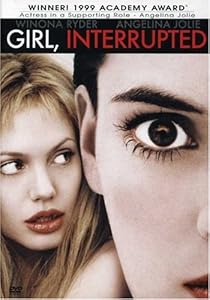
Cover of "Girl, Interrupted"
Cover of Girl, Interrupted
Maybe you've seen some of these:

  • Psycho
  • Sybil
  • A Beautiful Mind
  • Girl, Interrupted
  • Rainman
  • The Fisher King
  • One Flew Over the Cuckoo's Nest
  • Black Swan
  • Matchstick Men
  • The Aviator
  • Fatal Attraction
  • Lars and the Real Girl

There are hundreds more.

IRL (In Real Life), the people struggling with mental illness or developmental disabilities, like autism, can't call "cut" at the end of the scene and go back to "being normal."

I very much enjoyed Silver Linings Playbooks, which I caught on my friend Sid's birthday weekend. Sadly, unlike OC87 which she and I watched together on my birthday weekend, I had to see Silver Linings without her, because only a few months after OC87, the long term effects of living with a mentally disordered partner, and alcoholism, had taken Sid's life.

I encourage you to buy, rent, or stream, the much lesser known documentary OC87.


And support mental health issues. Via contributions to NAMI, and encouragement to your government representatives to provide funding and research grants for mental health issues.

Today, you may be one of the few lucky ones, with no family members or loved ones affected. Tomorrow?

Follow my blog with Bloglovin
Your thoughts?
 Related articles
Enhanced by Zemanta

Wednesday, June 5, 2013

Why Does He DO That? Introduction (Part 5)

We are reading, and, I hope, entering into a healthy discussion of the book Why Does He DO That? Inside the Minds of Angry and Controlling Men by Lundy Bancroft.


Please, do buy your own copy - both because I won't be excerpting all of it, and because this author deserves our $upport.


From the Introduction - How To Use This Book: 

<snip> You may feel ashamed of having a partner who sometimes behaves in unkind or bullying ways, and you may fear that people will be critical of you for not leaving him right away. Or you might have the opposite concern: that people around you are so fond of your partner that you question whether they will believe you when you describe how mean or abusive he can be. But, regardless of these anxieties, it is essential not to stay isolated with your distress or confusion about what is happening in your relationship. Find someone whom you can trust - it might even be a person you have never considered opening up to before - and unburden yourself. This is probably the single most critical step you can take toward building a life that is free from control and abuse.

If your partner’s controlling or devaluing behaviors is chronic, you no doubt find yourself thinking about him a great deal of the time, wondering how to please him, how to keep them from straying, or how to get him to change. As a result, you may find that you don’t get much time to think about yourself  - except about what is wrong with you in his eyes. <snip> I’m hoping that by answering as many questions as possible and clearing away the confusion that abusive behavior creates, I can make it possible for you to escape the trap of preoccupation with your partner, so that you can put yourself - and your children if you are a mother  - back in the center of your life where you belong. An angry and controlling man can be like a vacuum cleaner that successful woman’s mind and life, but there are ways to get your life back. The first step is to learn to identify what your partner is doing and why he does it, which is what the pages ahead will illuminate. But when you have finished diving deeply into the abuser’s mind, which this book will enable you to do, it is important to rise back to the surface and from then on try to stay out of the water is much as you can. I don’t mean that you should necessarily leave your partner - that is a complex and highly personal decision that only you can make. But whether you stay or go, the critical decision you can make is to stop letting your partner distort the lens of your life, always forcing his way into the center of the picture. You deserve to have your life be about you; you are worth it.
***

Shame Helps Keep Us Silent
If we have a partner who is abusive, it's hard to admit, even to ourselves. After all, we chose him (or her). Were we stupid - or blind? Besides, we have continued to stay with a person who treats us this way - what is wrong with us?

We may buy into his argument that we make him angry. Unfair as it seems, sometimes, it is still less unpalatable than admitting s/he is an angry person who would find reasons excuses to be abusive no matter what we did or didn't do.

Living with an abusive person becomes a Through the Looking Glass world where everything is backwards; they behave badly, we feel ashamed.

And yet, when we do begin speaking out, we find help, support, validation. The Emperor has no clothes, after all.


Disclaimer: The information and opinions posted here, and any comment responses, are not to be considered professional advice and are not intended to replace consultation with a qualified medical or mental health professional. If you are involved in a relationship that includes physical, financial, and/or emotional violence, please contact a professional for help and assistance.

In the US:

National Domestic Violence Hotline - 1-800-799-SAFE (7233)  TTY- 1-800-787-3224 
RAINN (Rape Abuse & Incest National Network)
National Coalition Against Domestic Violence (includes downloadable guides for helping women in abusive relationships)
National Alliance on Mental Illness, aka NAMI

International Resources linked here.

Your thoughts?

Wednesday, May 29, 2013

Why Does He DO That? Introduction (Part 4)

We are reading, and, I hope, entering into a healthy discussion of the book Why Does He DO That? Inside the Minds of Angry and Controlling Men by Lundy Bancroft.


Please, do buy your own copy - both because I won't be excerpting all of it, and because this author deserves our $upport.


From the Introduction - My Experience Working with Angry and Controlling Men:
Counseling abusive men is difficult work. They are usually very reluctant to face up to the damage that they have been causing women, and often children as well, and hold tightly to their excuses and victim blaming. As you will see in the pages ahead, they become attached to the various privileges they earn through mistreating their partners, and they have habits of mind and make it difficult for them to imagine being in a respectful and equal relationship with a woman.

From the Introduction - How To Use This Book: 

One of the prevalent features of life with an angry or controlling partner is that he frequently tells you what you should think and tries to get you to doubt or devalue your own perceptions and beliefs. I would not like to see your experience with this book re-create that unhealthy dynamic. <snip>  listen carefully to what I’m saying, but always think for yourself. If any part of what I describe about abusers doesn’t match your experience, cast it aside and focus on the parts that do fit. <snip> If you come upon sections that don’t speak to you - because you don’t have children, for example, or because your partner is never physically frightening - to skip ahead to the piece that can help you more.

Some women will find it being alone with this book is too difficult because it awakens feelings and realizations that are overwhelming. I encourage you to reach out for support from trusted friends and family as you go along. While reading this book is likely to be clarifying for you, it may also awaken awareness that can be painful or distressing. <snip> Again, don’t be stymied by the word abuse; the hotline staff is there to listen to you and to help you think about any relationship in which you are being treated in a way that is making you feel bad.
***

One of the biggest battles I had repeatedly with my ex is he tried, like Orwell's Big Brother, to control my thoughts. He would frequently begin a rant at me with, "You think blah blah blah," and at least that ticked me off enough that I refused to follow him down that particular rabbit hole.

Just like nobody gets to put baby in a corner, NOBODY gets in my face and TELLS me what I am thinking or what I "should" think. The full frontal assault was almost always a fail.


Other mental manipulations - and I am not sure they are/were all conscious - were much more successful at twisting my thoughts and perceptions, to get me to "behave." Acting hurt/wounded by something I said or did. The compliment with a sting in it, "You look good in that color, and if you just lost another five pounds, that dress would look fantastic." Those are the kinds of messages that kept replaying in my mind, planted seeds of doubt. Bruises are easy to recognize and point to, but the slow poisoning of heart and confidence through planting those ugly words and thoughts is much dirtier and more insidious.

Human beings all want others to do what we want, and are manipulative, to a certain degree. If I have a difficult subject to bring up with my boss, for example, I will wait until he is in a good mood (most of the time, luckily for me) and he has an open window of time (that one's more difficult) to really think about my issue and discuss it. Is that manipulation, or common sense? How about letting your partner know that you really, really want to see a certain concert or movie?

Where manipulation turns into abuse is when there is the lack of respect and an equal relationship. In most societies, even Western ones, there is an open assumption that "the man is the head of the house," and so sometimes, it's hard to see where an abusive attitude begins. Isn't church/temple/mosque/society telling the man that he is supposed to rule over "his" woman? If one party believes that he (or she) has the right to dismiss without discussion an idea or plan floated by his (or her) partner, it's not a relationship of equals.

My ex found it nearly impossible to compromise. He wanted to have things his way, the superior way. On occasion, he would allow me to have things my way, but there was very little of the give and take and negotiation that happens in a relationship of equals.

Once when I had described what I wanted, and why, he was (again) locked into the black-or-white thinking, and nastily accused me of  "always wanting things my way." I became so frustrated that I got very sarcastic with him.

"No," I said. "I am trying to work this out together. That's what grown-ups do. I put what I want out on the table, here," I gestured to the right hand side of the coffee table. "You put what you want out on the table, there," I gestured to the left hand side of the table. "Then we work together to try to meet in the middle and find a way for both of us to get our needs and wants satisfied. A win-win. That's what grown-ups do."

I think, in retrospect, that part of his issue was that he either didn't have or couldn't verbalize a position, but felt compelled (demand-resistance, knee-jerk reaction) to say no to what I was proposing, no matter what it was. He simply couldn't let me have the "win" of  "Yes, that sounds like a great idea."

I found it very difficult to work through this book and consider how much of it applied to me.

Yes, my boyfriend often called me names, had jealous spats, wouldn't work together with me. Yes, he frequently liked to refer to women as bitches - but he was only joking.

Even now I have a very hard time talking about it as abuse. But it was.

***

Disclaimer: The information and opinions posted here, and any comment responses, are not to be considered professional advice and are not intended to replace consultation with a qualified medical or mental health professional. If you are involved in a relationship that includes physical, financial, and/or emotional violence, please contact a professional for help and assistance.

In the US:

National Domestic Violence Hotline - 1-800-799-SAFE (7233)  TTY- 1-800-787-3224 
RAINN (Rape Abuse & Incest National Network)
National Coalition Against Domestic Violence (includes downloadable guides for helping women in abusive relationships)
National Alliance on Mental Illness, aka NAMI

International Resources linked here.

Your thoughts?

Wednesday, May 22, 2013

Why Does He DO That? Introduction (Part 3)

We are reading, and, I hope, entering into a healthy discussion of the book Why Does He DO That? Inside the Minds of Angry and Controlling Men by Lundy Bancroft.


Please, do buy your own copy - both because I won't be excerpting all of it, and because this author deserves our $upport.


From the Introduction - My Experience Working with Angry and Controlling Men:
For roughly the next five years I worked almost exclusively with clients were coming to the program voluntarily. They generally attended under heavy pressure from their female partners, who were either talking about leaving the relationship or had already done so. <snip> The men’s main motivation for seeking counseling was the hope of saving their relationships. It was common for them to feel some guilt or discomfort about their abusive behavior, but they simultaneously believed strongly in the validity of their excuses and justifications, so their feelings of remorse would not of been enough in themselves to have kept them in my program. In those early years, the clients I worked with were men who used far more verbal and emotional abuse and physical violence, although most of them had been physically intimidating or assaultive on at least a few occasions.

<snip>...with the result that court-mandated clients started at first to trickle and then to pour in the doors of our program. These men often had a much greater propensity for physical violence than our earlier clients, sometimes involving the use of weapons or vicious beatings resulting in hospitalization of their partners. Yet we observed that in other ways these men were generally not significantly different from our verbally abusive clients: their attitudes and excuses tended to be the same, and they used mental cruelty side by side with their physical assaults. Equally important was that the female partners of these battering men were largely describing the same distresses in their lives that we were hearing about from women who would been psychologically abused, showing us that different forms of abuse have similar destructive impacts on women.

<snip> my colleagues and I have been strict about always speaking to the woman whom our client has mistreated, whether or not the couple is still together. (And if he has started a new relationship, we talk with his current partner as well, which is part of how we became aware of the ways in which abusive men continue their patterns from one relationship to the next.) It is through these interviews with women that we’ve received our greatest education about power and control in relationships. The women’s accounts also have taught us that abusive men present their own stores with tremendous denial, minimization, and distortion of the history of their behaviors and that is therefore otherwise impossible for us to get an accurate picture of what is going on in an abusive relationship without listening carefully to the abused woman.
***

Their Attitudes and Excuses Tended to be the Same

I've heard many people argue that verbal abuse isn't real abuse. I've even made the same argument, myself. But if the abuser who hits "only" with words, dirty looks, and contemptuous body language, has the same attitude, and same goal - to cow and intimidate his/her victim, to make him/her "behave," as the abuser who hits with a closed fist, then it really isn't so different.


Different Forms of Abuse Have Similar Destructive Impacts

Sticks and stones... words will never hurt you, right? Unlike the well-meant childhood fibs about Santa and the Tooth Fairy (sorry if I'm blowing it for you), the LIE about words not hurting us could not be more untrue. I bet everyone reading this, everyone I know, can remember a stinging insult, a painful accusation or comment from our childhood and teen years.

Loser, weakling, incompetent, stupid, untrustworthy, clumsy, selfish... The terrible thing is, even as an adult, if someone we love and trust says something negative about our character or personality, and it hits us in an emotionally vulnerable spot, we'll keep "playing the tape" over and over again in our minds.

If someone tells me, "You're extremely short," I can easily laugh that off. If a stranger who is angry at me tells me, "That's awfully selfish of you," I can usually laugh that off as well - maybe she is trying to hurt me because I didn't go along with her selfish agenda, maybe I was behaving selfishly in that one particular instance.

But I don't want to think of myself as a selfish person. So if my partner says to me, "I can't believe how selfish you are. You're always thinking about yourself, never about other people," I will obsess endlessly over it - especially if he said such a thing more than once. This person knows and loves me. He wouldn't say something like that simply to hurt me. Maybe I am selfish. Hoping to win his approval/praise, I would jump through any number of hoops to prove to him that no, I'm not really selfish. No matter how much it cost me to do so.

And of course, there were always more hoops.


Disclaimer: The information posted here, and any comment responses, are not to be considered professional advice and are not intended to replace consultation with a qualified medical or mental health professional. If you are involved in a relationship that includes physical, financial, and/or emotional violence, please contact a professional for help and assistance.

In the US:

National Domestic Violence Hotline - 1-800-799-SAFE (7233)  TTY- 1-800-787-3224 
RAINN (Rape Abuse & Incest National Network)
National Coalition Against Domestic Violence (includes downloadable guides for helping women in abusive relationships)
National Alliance on Mental Illness, aka NAMI

International Resources linked here.

Your thoughts?